Direction of Travel at Night
Riding an ATV or UTV in Saskatchewan after dark can feel like a whole different ballgame compared to daylight hours. The wide-open prairies and grid roads might seem forgiving, but the moment the sun dips below the horizon, specific regulations kick in that many riders unfortunately overlook. This guide is here to demystify the rules surrounding the direction of travel for off-road vehicles at night, helping you stay safe, seen, and on the right side of the law.
Understanding the "Half an Hour After Sunset" Rule
When it comes to operating your ATV or UTV in Saskatchewan, particularly off designated trails and near public roadways, the time of day isn't just a suggestion—it's a legal trigger. The rules for night riding, including the crucial direction of travel, officially come into effect from [Half an Hour After Sunset] until half an hour before sunrise. This isn't just a casual guideline; it's a specific legal parameter that dictates everything from your lighting requirements to how you must position your machine on or near a highway.
Many riders, especially those new to the province or new to off-roading, might think that if there's still a bit of light in the sky, they're fine. But the law is precise, and peace officers are trained to know exactly when that "half an hour after sunset" window begins. It means you can't just rely on your own subjective assessment of how dark it feels. This rule is designed to ensure maximum visibility for all road users during those transitional hours when natural light is fading, and vehicle lights become essential. Ignoring this transition period can put you and others at risk, as drivers of larger vehicles might not expect to encounter an ATV or UTV in low-light conditions if you're not following the prescribed safety measures. It’s also the time when animal activity tends to increase, adding another layer of risk to night operations.
The Mandate for Traveling With the Flow of Traffic
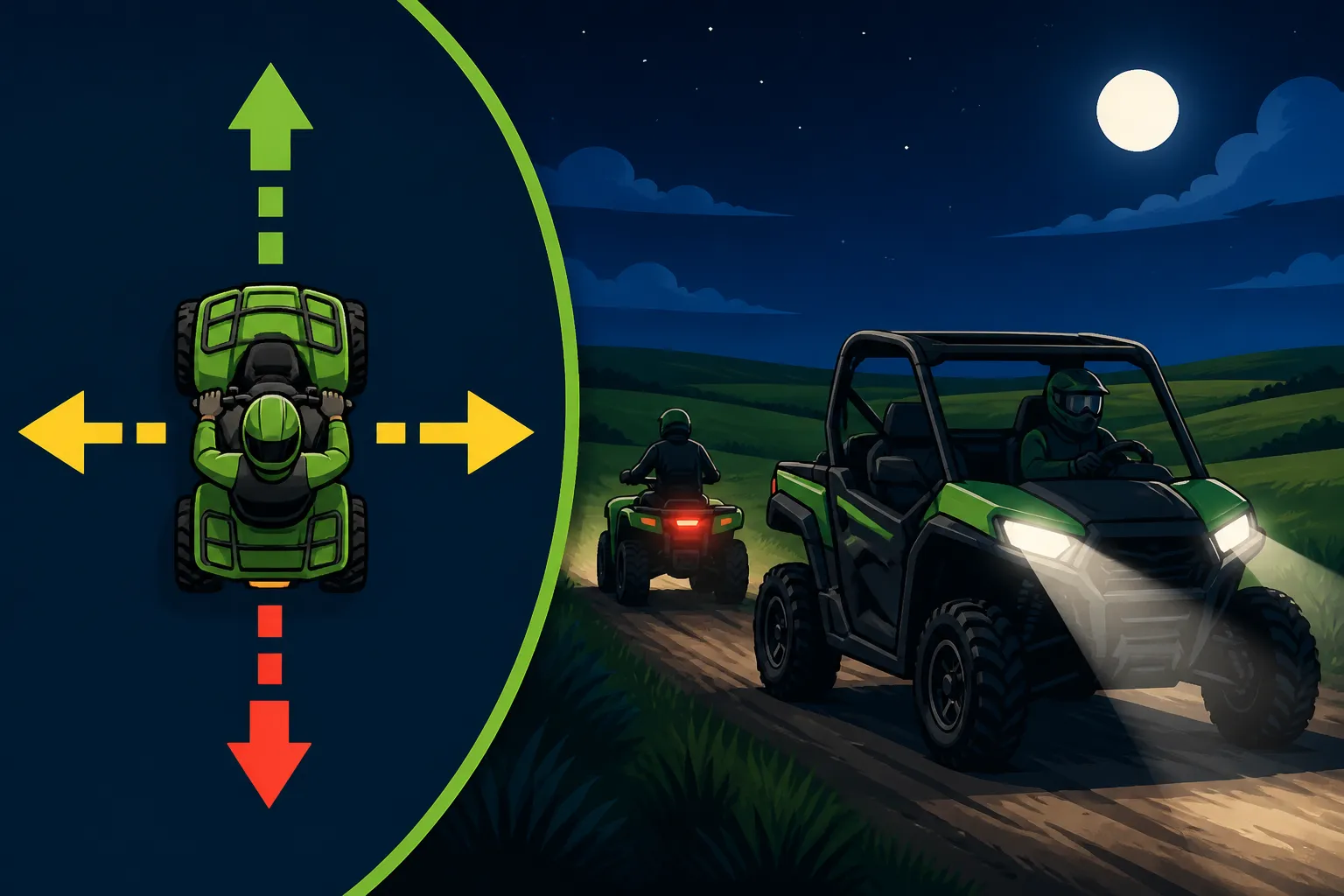
Once the night riding rules are in effect, one of the most critical regulations for ATVs and UTVs operating on or adjacent to public roadways in Saskatchewan is to travel in the same direction as the adjacent traffic. This isn't just about common sense; it's a fundamental safety principle embedded in the province's [Saskatchewan ATV Road Rules Explained]. Think about it: if you're riding against traffic, even on a ditch or shoulder, you're creating a head-on encounter, which significantly reduces the reaction time for both you and oncoming drivers.
This rule is a cornerstone of visibility and accident prevention. When you travel with the flow of traffic, all vehicles are moving in a predictable pattern. Your rear lights are visible to vehicles approaching from behind, and your front lights (while less relevant for traffic approaching from behind) contribute to your overall profile. If you're going against traffic, you become an unexpected obstacle, and while your headlights might be visible, the brain of an oncoming driver is wired to expect vehicles coming at them from their own lane, not from the ditch or shoulder. This can lead to misjudgments of speed and distance, especially in the dark. This is particularly vital on those long, straight Saskatchewan roads where speeds can be high and visibility, even with good lights, can be compromised by dust, fog, or terrain.
Applying the Rule to Ditches and Road Shoulders
Saskatchewan allows for [Saskatchewan Ditch Riding and the 2-Metre Rule] in many areas, which is a fantastic privilege for off-road enthusiasts. However, this privilege comes with responsibilities, especially at night. When riding in a ditch or on a road shoulder after dark, you must still adhere to the principle of traveling in the same direction as the adjacent traffic on the highway. This means if you're on the east side of a north-south highway, you must be heading north, and if you're on the west side, you must be heading south.
It might feel counter-intuitive if your destination is in the opposite direction, but the rule is unequivocal. You cannot simply cross to the other side of the road and ride against traffic in the ditch. If you need to change direction, you must do so safely and legally, often involving a legal crossing of the highway and then continuing in the appropriate ditch on the other side. The purpose here is to prevent confusion for other drivers. Even though you might be two metres from the travelled portion, your lights are still visible, and your presence needs to be predictable. This rule also extends to the less common instances where municipal bylaws might allow ATVs on certain local roads; in such cases, you are essentially treated like any other vehicle and must follow the standard rules of the road, including direction of travel.
Why These Rules Matter for Your Safety (and Your Wallet)
It's easy to dismiss regulations as burdensome, but the rules around night riding direction are fundamentally about preventing serious accidents. Ignoring them isn't just a minor infraction; it's a gamble with significant consequences for your well-being and your finances. In Saskatchewan, where vast distances and often quiet roads can lull riders into a false sense of security, understanding and adhering to these rules is paramount.
Enhanced Visibility and Accident Prevention
Traveling with the flow of traffic at night is one of the simplest yet most effective ways to enhance your visibility and prevent collisions. Imagine a semi-truck approaching you at highway speeds. If you're in the ditch, heading towards it, the driver's eyes are scanning for vehicles in their lane, not necessarily for a set of lights coming at them from the periphery. Even if they spot you, the unexpected direction can cause confusion and slow their reaction time. Conversely, if you're traveling in the same direction, your rear lights (if properly installed and maintained as per [Saskatchewan Lighting Requirements on a Machine]) blend into the natural flow of traffic visibility.
These rules also indirectly reduce the risk of wildlife collisions. While not a direct mandate, the predictability of your travel path makes it easier for you to spot animals moving towards the road, and for drivers to anticipate your presence if you're following typical traffic patterns. Proper lighting, combined with correct direction of travel, creates a safer environment for everyone. It helps prevent "target fixation" for other drivers, where their eyes might be drawn to your lights only to realize too late that you're an unexpected obstacle. Safety isn't just about what you can see; it's about being seen in a predictable manner by others.
Avoiding Tickets and Fines
Let's be blunt: breaking these rules can hit your wallet hard. Peace officers in Saskatchewan are well-versed in the [Saskatchewan Rules for Riding After Dark] and will not hesitate to issue citations for non-compliance. While the maximum [Saskatchewan Fines Capped at $1,000] might seem steep, even a smaller [Saskatchewan Ticket Costs for Riders] for an infraction like incorrect direction of travel can quickly add up, especially once court costs and victim surcharges are factored in. This is not just a theoretical penalty; it’s a very real consequence for those who choose to ignore established safety protocols.
Beyond the immediate financial hit, there are other potential costs. An infraction could impact your insurance rates, particularly if it's tied to an accident. While ATVs don't have provincial registration, your personal driving record could still be affected if the citation is linked to your driver's license. Furthermore, if you're involved in an accident while riding against the flow of traffic at night, even if you believe the other party was at fault, your non-compliance could be used to assign partial or even full liability to you. This could lead to massive out-of-pocket expenses for repairs, medical bills, and legal fees. Always remember to carry proof of [Saskatchewan Insurance Requirements for Riders] when you're out on the trails or ditches, as this is something an officer can and will ask for.
Practical Considerations for Safe Night Riding
Beyond simply knowing the rules about the direction of travel, making your night rides safe and enjoyable requires a holistic approach. It's about preparation, equipment, and a heightened sense of awareness that daylight riding doesn't always demand. Saskatchewan's landscapes are beautiful at night, but they also hold unique challenges.
Essential Lighting and Equipment Upgrades
Your ATV or UTV's factory lighting is designed to meet minimum safety standards, but for serious night riding, especially on unfamiliar terrain or in less-than-ideal conditions, considering upgrades is a smart move. [Saskatchewan Lighting Rules at Night] mandate certain lights, but enhancing them can make a huge difference.
- Headlights: Brighter LED headlights or auxiliary light bars can dramatically improve your forward visibility. Look for flood patterns to illuminate the ditch and shoulder effectively, and spot patterns for distance. Brands like SuperATV offer a range of robust lighting solutions designed for off-road use, which can significantly outperform stock options.
- Taillights and Brake Lights: Ensure these are fully functional, bright, and clean. Consider adding extra rear lights or reflective tape to increase your visibility from behind. Remember, traveling with traffic means your rear is your primary point of concern for other vehicles.
- Whips and Flags: While often associated with dune riding, a lighted whip can significantly increase your vertical profile, making you more visible to truck drivers whose line of sight might be higher than your machine.
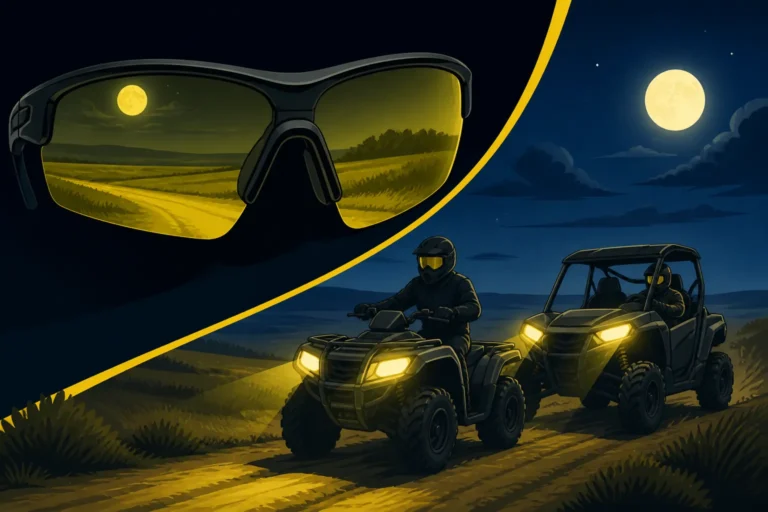
- Helmets and Eye Protection: Your [Saskatchewan Helmet and Eye Protection Rules] are year-round, but at night, a clear visor or clear goggles are crucial. Tinted visors or sunglasses are a huge no-go after dark as they reduce your already limited vision. A helmet with good reflective decals can also help.
| Equipment Type | Importance for Night Riding | Key Features/Considerations |
|---|---|---|
| Headlights/Light Bars | Critical for forward vision | LED, Flood/Spot patterns, Durability, Aiming |
| Taillights/Brake Lights | Essential for rear visibility | Brightness, Functionality, Reflective elements |
| Lighted Whip/Flag | Increases vertical profile | LED, Flexible, Secure mounting |
| Clear Eye Protection | Unobstructed vision | Goggles or clear visor, Anti-fog properties |
| Reflective Gear | Personal visibility | Jacket, helmet decals, Backpack straps |
| GPS/Navigation | Route finding in darkness | Backlit screen, Pre-loaded maps, Offline capability |
| Winch & Recovery Gear | Self-reliance in remote areas | Rated for machine weight, Tree saver, Snatch block |
| First Aid Kit | Emergency preparedness | Comprehensive, Accessible, Includes personal medications |
Pre-Ride Checks and Route Planning
Before you even think about firing up your machine for a night ride, a thorough pre-ride check is non-negotiable. This includes verifying all your lights (headlights, taillights, brake lights), checking your tire pressure, fuel levels, and ensuring your machine is in good working order. Any mechanical issues that are minor annoyances in daylight can become serious hazards in the dark.
Route planning for night riding is also paramount. Stick to familiar trails or routes if possible. If exploring new areas, do so during the day first to understand the terrain, potential obstacles, and any tricky sections. Always let someone know your planned route and estimated return time. Carry a fully charged cell phone (though be aware of [Cell Dead Zones in Northern Saskatchewan]) and a reliable GPS device with pre-loaded maps. Some riders even go as far as to download GPX or KML files from clubs for known trails to stay precisely on track. Having a plan B in case of mechanical issues or getting lost is also wise. Consider how [Saskatchewan Municipal Bylaws on Roads] might impact your route, as some areas may have specific night-time restrictions.
Navigating Different Road Types at Night
Saskatchewan offers a diverse range of riding environments, and each presents its own challenges at night.
- Grid Roads: These are the backbone of rural Saskatchewan, often gravel, and can be deceptive at night. Dust kicked up by other vehicles can severely reduce visibility. Always assume there could be oncoming traffic, even if the road seems deserted. Keep your speed appropriate for conditions and remember to adhere to the direction of travel rule even on these less-trafficked roads.
- Ditches and Road Shoulders: As discussed, the direction of travel rule applies here. Be acutely aware of culverts, hidden obstacles, and changes in terrain that are easily missed in the dark. The "2-metre rule" is harder to judge at night, so err on the side of caution and maintain a generous distance from the paved or gravelled portion of the highway.
- Municipal Streets (where permitted): If you're in a community that has bylaws allowing ATVs on certain streets (which is not common province-wide but does exist in some municipalities like Candle Lake or the District of Lakeland), treat your machine like any other vehicle. Follow all traffic laws, speed limits, and, crucially, the correct direction of travel. Many municipal bylaws also specify lighting requirements that might go beyond the provincial minimums. Always check local bylaws before riding within town limits, as communities often have specific [Saskatchewan Municipal Prohibited Areas] or unique rules like a [Saskatchewan Lakeland Speed Limits]. For example, the District of Lakeland and Candle Lake are known to have their own permit and plate schemes, and these communities will have specific rules for night riding within their jurisdiction. Even if your machine is not required to be registered provincially, a municipal plate or permit might be necessary. You can often find this information by [Asking Your Rural Municipality About a Grid Road] or checking their official websites.
Riding your ATV or UTV in Saskatchewan after dark can be an incredible experience, offering a unique perspective on the landscape. However, it demands respect for the rules, diligent preparation, and a commitment to safety. By understanding and following the specific regulations around the direction of travel, and by equipping yourself properly, you can ensure your night rides are as safe as they are exhilarating.
Disclaimer
This article is for general informational purposes only and does not constitute professional advice. Laws, prices and regulations vary by location and change over time. Consult a qualified professional for guidance on your specific situation.