Coming to a Full Stop Before You Cross
Riding ATVs and UTVs across Saskatchewan's vast landscape is an incredible experience, but nothing brings a day of outdoor adventure to a screeching halt faster than a misunderstanding about road rules, especially when it comes to crossing a highway. Many riders feel a sense of unease or outright confusion when they encounter pavement, wondering exactly what steps they need to take to stay safe and avoid a hefty ticket. This guide is here to untangle those worries, clearly outlining the essential rules and practical advice for every ATV and UTV operator in Saskatchewan who needs to cross a highway, ensuring you can navigate these moments with confidence and compliance.
The Non-Negotiable Rules for Crossing Highways
Navigating Saskatchewan's road network with an ATV or UTV isn't just about knowing where you can ride, but crucially, how to safely interact with areas where you can't be for long. Crossing a paved highway can feel intimidating, a quick dash from one side to the other, but there are very specific, non-negotiable rules set out in [Saskatchewan ATV Road Rules Explained] that every rider must follow. These aren't just suggestions; they are legal requirements designed to keep you, your passengers, and other motorists safe. Ignoring them can lead to serious fines, accidents, or worse.
The Mandatory Full Stop Before the Pavement
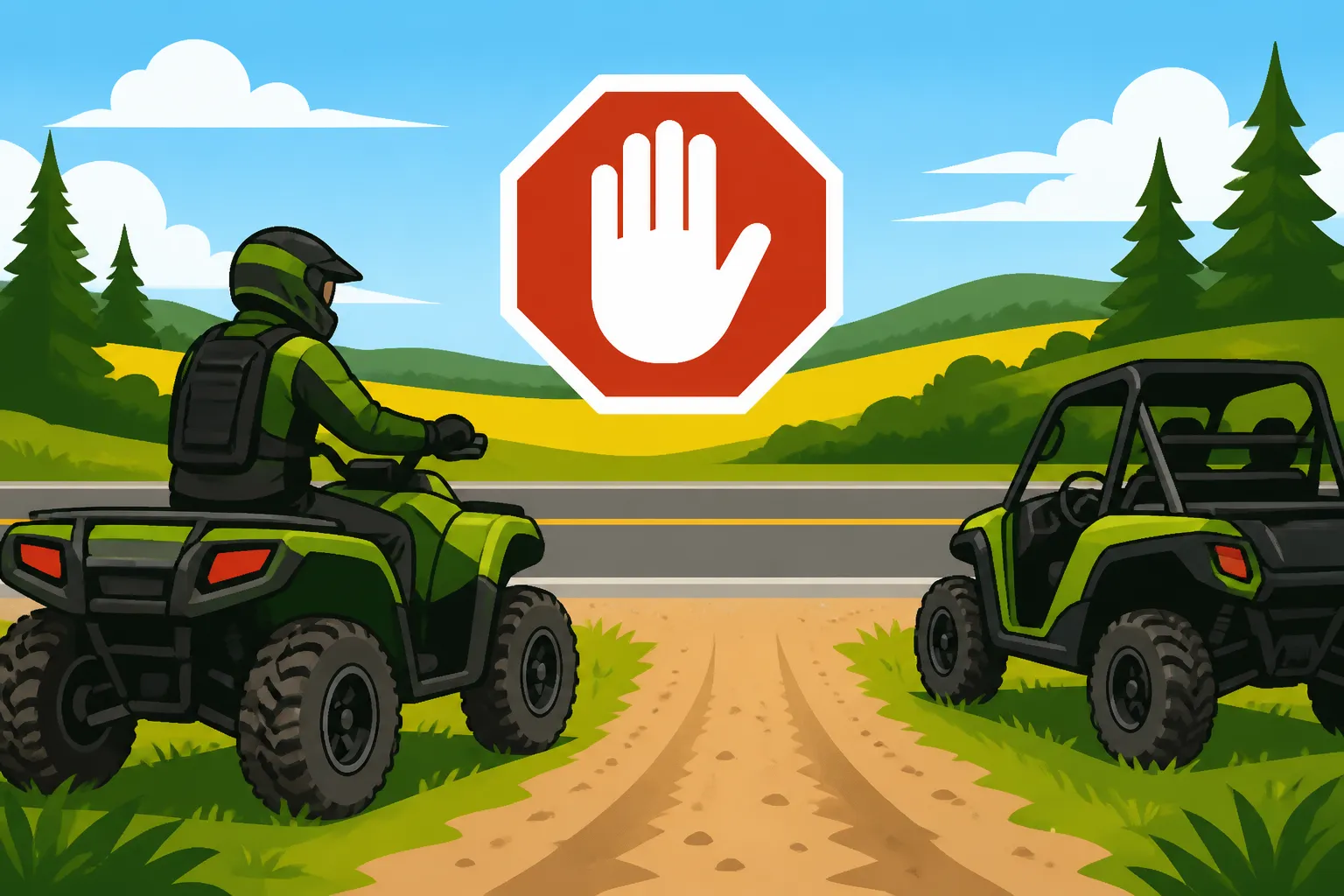
This is perhaps the most fundamental rule, yet it's one that some riders, in their haste to get across, might be tempted to rush. Before your tires even touch the asphalt of a provincial highway, you are legally obligated to bring your ATV or UTV to a complete and utter stop. We're not talking about a slow roll, or a quick glance and a gentle slowdown. We mean a full, come-to-rest, wheels-not-moving stop, just as if you were at a stop sign in your car. This isn't just a formality; it's a critical safety measure.
The purpose of this mandatory stop is twofold: it gives you ample time to thoroughly scan the highway in both directions for oncoming traffic, and it signals your intent to cross to any vehicles that might be approaching. Imagine the frustration and danger of an approaching semi-truck seeing an ATV appear seemingly out of nowhere. Coming to a full stop allows you to make eye contact with drivers, assess speeds, and ensure you have a clear, safe window to cross. It buys you those precious extra seconds to make a safe decision, which can literally be the difference between a smooth crossing and a catastrophic collision. A moment of patience here is absolutely paramount.
Crossing by the Shortest Route Possible
Once you've made that mandatory full stop and assessed that it's safe to proceed, the next critical rule is to cross the highway by the shortest route possible. This means crossing directly, as close to perpendicular to the highway as you can manage. You're not permitted to ride along the shoulder or in the ditch parallel to the highway for any extended distance, even if you think it's a "safer" spot to cross further down. The rule about [Saskatchewan's 2-Metre Rule] for ditch riding still applies when you're preparing for a crossing, but the actual act of crossing must be as direct as possible.
This regulation exists to minimize the time your machine spends on the highway itself, reducing your exposure to high-speed traffic. The longer you're on the pavement, the greater the chance of a misjudgment by either you or an oncoming driver. Picture trying to merge into fast-moving traffic from the shoulder versus a quick, straight shot across. The straight shot is quicker, more predictable, and statistically safer. It also makes your intentions clearer to other drivers – they see you stop, they see you aim straight across, and they can anticipate your path, rather than wondering if you're going to turn or ride alongside them.
Dismounting Passengers Before the Crossing
This is a rule that often surprises riders, especially those who frequently carry a passenger on a two-up ATV or a side-by-side. Before you even begin your crossing maneuver onto the highway, any passengers must dismount from the ATV or UTV. They must then walk across the highway separately, rejoining the machine on the other side once the operator has safely completed the crossing. This might seem like an inconvenience, especially if you're in a hurry or the weather is less than ideal, but it's a vital safety measure.
The primary reason for this rule is to enhance the stability and control of the ATV or UTV during the brief, high-risk period of crossing. A machine with a passenger is less nimble and can be more challenging to control, especially if an unexpected maneuver is required. It also allows the operator to focus entirely on the act of crossing and watching for traffic, without the added distraction or weight shift of a passenger. While many modern UTVs and larger ATVs are designed for multiple occupants, this specific legal requirement during highway crossings underscores the extreme caution mandated when interacting with public roads. It's a small temporary inconvenience that significantly mitigates risk and ensures compliance.
Understanding the "Where" and "How" of Highway Crossings
Knowing that you need to stop and cross directly is one thing, but understanding the nuances of where and how these rules apply is equally important. Saskatchewan's diverse landscape means you'll encounter various types of roads, and not all crossings are created equal. It's crucial to distinguish between different road classifications and understand specific situations like bridges and limited visibility.
Identifying What Counts as a "Highway"
When the regulations refer to a "highway," many riders immediately think of multi-lane provincial arteries like the Trans-Canada or Highway 11. While these certainly fall under the definition, the term "highway" in Saskatchewan's legislation is much broader. It generally encompasses any public road maintained by the province or a municipality that is primarily intended for vehicular traffic, including many paved secondary roads and even some gravel roads that serve as main thoroughfares. This means that a seemingly quiet paved road you use to access your cabin or a friend's farm might still be classified as a "highway" for the purposes of ATV crossing rules.
It's a common mistake to assume that if a road isn't bustling with traffic, the rules don't apply with the same strictness. However, the legal definition doesn't account for traffic volume; it accounts for the road's classification. This distinction is critical, as the rules for crossing a provincial highway are far more stringent than those for riding on a [Saskatchewan Rules for Riding a Grid Road] or a [Saskatchewan Rules for Riding a Town Street], where municipal bylaws might offer different allowances. Always err on the side of caution: if it looks like a road designed for cars and trucks and it's not explicitly designated for ATV use, assume it's a highway and follow all crossing protocols.
Navigating Bridges and Weirs Safely
Bridges and weirs present a unique challenge when it comes to ATV and UTV operation. In Saskatchewan, the rule is quite clear: you are generally prohibited from operating an ATV or UTV on a bridge or a weir. These structures are integral parts of the highway system, often narrow, and designed for vehicular traffic, not off-road machines. Attempting to ride your machine across a bridge that spans a river or a weir at a control structure is not only illegal but extremely dangerous due to limited space, high traffic speeds, and potential structural vulnerability. There are very specific rules for [Saskatchewan Bridges and Weirs] that further clarify these prohibitions.
If your chosen route requires you to get from one side of a body of water to the other, and the only crossing point is a bridge or weir that is part of a highway, you must treat this as an absolute barrier for your machine. You would need to find an alternative route that does not involve riding on these structures. This might mean trailering your machine to the other side, or finding a designated crossing point that is specifically permitted for ATVs, which are usually not part of the main highway infrastructure. Always consult local regulations or maps for authorized crossing points, as riding on these structures can lead to severe penalties and put everyone at risk.
The Role of Visibility and Awareness
Beyond the letter of the law, practical safety measures like visibility and awareness are your best friends when crossing any road. Even if you've made a full stop and are crossing by the shortest route, you are still inherently vulnerable on a highway. Other drivers, particularly those in larger vehicles like semi-trucks or grain haulers, might not expect an ATV to appear on the pavement, even for a brief crossing. It's not enough to be legally compliant; you need to be seen and understood.
Consider ways to enhance your visibility. Brightly coloured helmets and riding gear are a good start. Some riders even equip their machines with bright flags or additional lighting, especially when operating in dusty conditions or near dusk. Products from companies like SuperATV, known for their off-road accessories, sometimes include enhanced lighting or safety whips that can boost your presence. Before you even approach the highway, plan your crossing point where visibility for both you and oncoming traffic is maximized. Avoid blind hills or sharp curves. Make eye contact with drivers whenever possible, and if there's any doubt about their awareness of your presence, wait for an even clearer window. Your life, and the lives of others, depend on your vigilance.
Penalties, Insurance, and Preventing Mistakes
No one wants to face a ticket, let alone an accident. Understanding the consequences of non-compliance and taking proactive steps to avoid mistakes is just as important as knowing the rules themselves. A moment of carelessness when crossing a highway can have far-reaching financial and legal repercussions.
Fines and Legal Consequences of Non-Compliance
Saskatchewan's All Terrain Vehicles Act outlines clear penalties for operators who fail to adhere to its provisions, and this certainly includes violations related to highway crossings. If a peace officer observes you failing to make a full stop, crossing improperly, or carrying a passenger during the crossing, you can expect to be pulled over and issued a citation. While specific fine amounts can change, be prepared for a significant hit to your wallet. [Saskatchewan Fines Capped at $1,000] are possible under the Act, and even a standard ticket for an infraction can easily run into the hundreds of dollars, not including potential court costs if you choose to dispute it.
Beyond the immediate financial sting, there can be more severe legal consequences, especially if your non-compliance leads to an accident. If you are deemed to be operating your ATV or UTV negligently, or in direct violation of the Act, you could face charges far beyond a simple ticket. This could include implications for your driver's licence (if you have one, which is required for operating an ATV on a public road, as per [Saskatchewan Requires a Driver's Licence]), and potentially even criminal charges in the event of serious injury or fatality. It’s a sobering thought, but one that underscores the importance of strict adherence to these crossing rules.
Insurance Implications After an Incident
The financial fallout from an accident caused by an improper highway crossing extends well beyond fines. This is where your ATV or UTV insurance comes into play, or, more accurately, where it might not come into play as you expect. While [Saskatchewan's Minimum Insurance Requirement] for ATV operators is generally a liability policy of at least $200,000, the terms and conditions of that policy are crucial. Insurers can and often will deny claims if the operator was found to be in violation of the law at the time of the incident.
Imagine a scenario where you failed to make a full stop, and as a result, collided with a car on the highway. Your insurance company could argue that your illegal operation voids your coverage for that incident, leaving you personally liable for the damages to the car, any medical expenses for its occupants, and your own machine repairs. This could amount to tens or even hundreds of thousands of dollars, a burden no one wants to shoulder. It’s absolutely vital to understand your policy and ensure you're always operating within the legal framework to maintain your coverage. If you're unsure about your specific coverage for incidents involving road crossings, it's always best to contact your insurance provider or broker and review your policy. For more information, you can also look into [Saskatchewan Insurance Claims Without a Plate] and [Saskatchewan Owner Liability Rules].
Practical Tips for a Stress-Free Crossing
Ultimately, the goal is to make every highway crossing as safe and stress-free as possible. Beyond legal compliance, there are some practical tips that can significantly reduce risk and anxiety for you and your riding group. First and foremost, planning is key. If you know your route involves highway crossings, identify them in advance. Look for areas with good sightlines, minimal traffic, and ideally, a clear, flat approach and exit on both sides of the pavement.
When riding in a group, implement a buddy system. The lead rider should signal their intent to stop and cross, ensuring everyone behind them understands the procedure. One rider might even act as a spotter, if feasible and safe, to help confirm the highway is clear. Communication is paramount. Ensure everyone in the group is aware of the dismount rule for passengers. Also, consider the condition of your machine. Make sure your brakes are in top working order, and your lights are functional, especially if there's any chance of low light conditions. Some riders, for added peace of mind, even carry their [Saskatchewan Insurance Proof on the Trail] and other necessary paperwork in a waterproof pouch on their machine, ready to present if stopped for an [Saskatchewan Equipment Checks by Officers]. A little preparation goes a long way in ensuring your day on the trails remains enjoyable and safe.
| Action | Description | Why It's Important |
|---|---|---|
| Full Stop | Bring your ATV/UTV to a complete halt before any part of the machine enters the highway. | Allows full visual scan, signals intent to crossing traffic, prevents rushing. |
| Scan Thoroughly | Look left, right, left again for oncoming traffic. Assess speed and distance of approaching vehicles. | Ensures you have a clear, safe window to cross without impeding or endangering others. |
| Passenger Dismount | Any passengers must get off the machine and walk across the highway after the operator. | Enhances machine stability and operator focus; legal requirement. |
| Shortest Route | Cross directly perpendicular to the highway, minimizing time spent on the pavement. | Reduces exposure to high-speed traffic, makes your intentions clear to other drivers. |
| Maintain Awareness | Stay vigilant, make eye contact with drivers, and be prepared for unexpected situations. | Legal compliance isn't enough; active safety measures reduce risk in dynamic environments. |
| Re-mount Safely | Passengers can re-mount once the operator and machine are safely off the highway on the other side. | Ensures full safety protocols are maintained throughout the entire crossing procedure. |
Disclaimer
This article is for general informational purposes only and does not constitute professional advice. Laws, prices and regulations vary by location and change over time. Consult a qualified professional for guidance on your specific situation.