Saskatchewan Night Travel Direction Rules
Riding your ATV or UTV in Saskatchewan after the sun goes down can be an incredible experience – the quiet, the stars, the unique challenge. But let's be honest, it also brings a whole new layer of rules and potential headaches that can leave even seasoned riders scratching their heads. You're trying to enjoy the ride, but also constantly wondering if you're on the right side of the law. This guide is here to shed some light on the specific direction rules for night travel on your off-road machine in Saskatchewan, helping you navigate the darkness with confidence and stay safe.
The Basics of Night Riding in Saskatchewan
There's a special kind of magic that comes with riding your ATV or UTV after dusk. The air often feels cooler, the sounds of nature seem amplified, and familiar trails take on an entirely new character. However, this enchanting experience comes with a significant increase in risk. Reduced visibility isn't just a minor inconvenience; it dramatically impacts your ability to see obstacles, judge terrain, and, critically, be seen by others. It's a fundamental shift from daytime riding, demanding extra caution and a thorough understanding of the regulations.
While the focus here is on night travel direction, it's crucial to remember that all the general rules of operating an ATV or UTV in Saskatchewan still apply. This means you still need a valid driver's licence (with specific age exceptions and supervision rules), you must wear an approved helmet, and you absolutely need to carry proof of insurance. These aren't just daytime requirements; they're foundational to safe and legal operation, whether the sun is high or tucked away for the night. The frustration often stems from the feeling that the rules aren't always clear-cut or universally applied, especially when crossing from one jurisdiction to another or dealing with different types of land.
When Is "Night" Defined?
One of the most fundamental questions for any night rider is, "When exactly does 'night' begin according to the law?" It might seem like a simple question, but getting it wrong could have consequences. In Saskatchewan, the All Terrain Vehicles Act clarifies this explicitly: night means the period from one-half hour after sunset to one-half hour before sunrise. This isn't just a suggestion; it's a legal definition that dictates when specific lighting and direction rules kick in.
This precise definition has practical implications for how you plan your rides. If you're heading out for an afternoon adventure in the fall, where the sun sets early, that half-hour window can fly by quicker than you think. Suddenly, what started as a bright, sunny trail ride can legally become a "night ride" before you even realize it, triggering all the associated requirements. It means constantly being aware of the time and the local sunset/sunrise schedule, especially if you're exploring new areas. Being caught unprepared, with insufficient lighting or unaware of the direction rules, isn't just unsafe; it can lead to a roadside chat with an officer and potentially a ticket.
Essential Lighting Requirements
Before you even think about heading out after dark, your machine's lighting must be in top-notch condition and compliant with the regulations. This isn't just about seeing where you're going; it's about making sure everyone else sees you. The law requires your ATV or UTV to have both a white headlight (or headlights) that can illuminate the path for a reasonable distance ahead and a red taillight visible from a certain distance behind. Beyond that, strategically placed reflectors are also a non-negotiable part of your machine's safety profile, catching the light from other vehicles and adding an extra layer of visibility.
However, "legal" lighting isn't always "optimal" lighting for challenging night conditions. Many riders find the stock headlights on their machines to be adequate for basic visibility but fall short when tackling technical trails, deep bush, or operating at higher speeds. This is where many riders turn to aftermarket solutions. Brands like SuperATV offer a range of auxiliary lighting options, from powerful LED light bars that turn night into day, to specialized floodlights that widen your field of vision, helping you spot wildlife or obstacles off to the side. Investing in these enhancements isn't just about convenience; it's a significant safety upgrade that can prevent accidents and improve your overall night riding experience. Always ensure any aftermarket lights are installed correctly and used responsibly, dimming them for oncoming traffic when necessary, just as you would with a regular vehicle. [Saskatchewan Lighting Requirements on a Machine] provides more detailed information on what's expected.
Understanding Travel Direction on Highways and Ditches
This is where things can get particularly confusing for ATV and UTV riders in Saskatchewan, especially when you're riding near roads. Unlike vehicles on the pavement, off-road machines often operate in the ditches or on road allowances, which introduces a unique set of rules regarding travel direction. The core principle behind these rules is safety: to make ATVs and UTVs predictable to other road users, minimizing the risk of head-on collisions or unexpected maneuvers, particularly when visibility is low. It's about ensuring that even though you're not on the highway, you're moving in a way that aligns with the flow of traffic beside you.
Imagine you're driving your truck down a grid road at night. You expect other vehicles to be coming towards you in their lane or going the same direction as you. The last thing you want is an ATV suddenly appearing, going the wrong way, in the ditch right next to your path. The night exacerbates this danger, as depth perception and reaction times are reduced. That's why understanding and adhering to these direction rules is paramount. Ignoring them isn't just a minor infraction; it's a direct threat to your safety and the safety of others.
Riding in Ditches and Road Allowances
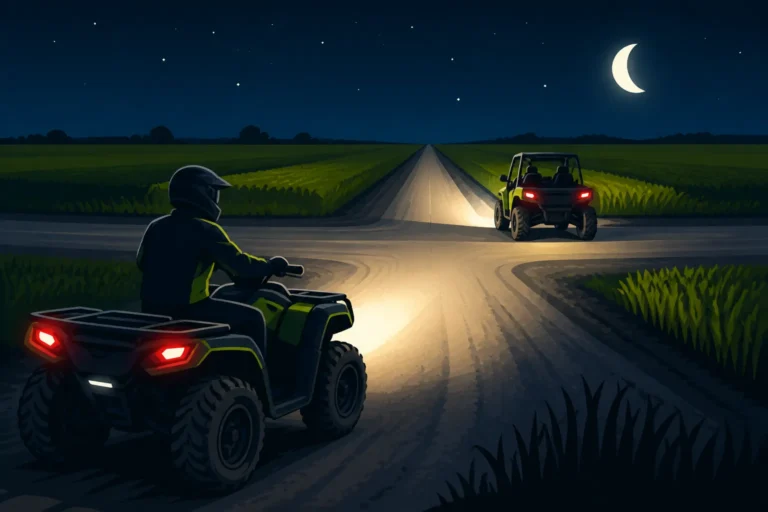
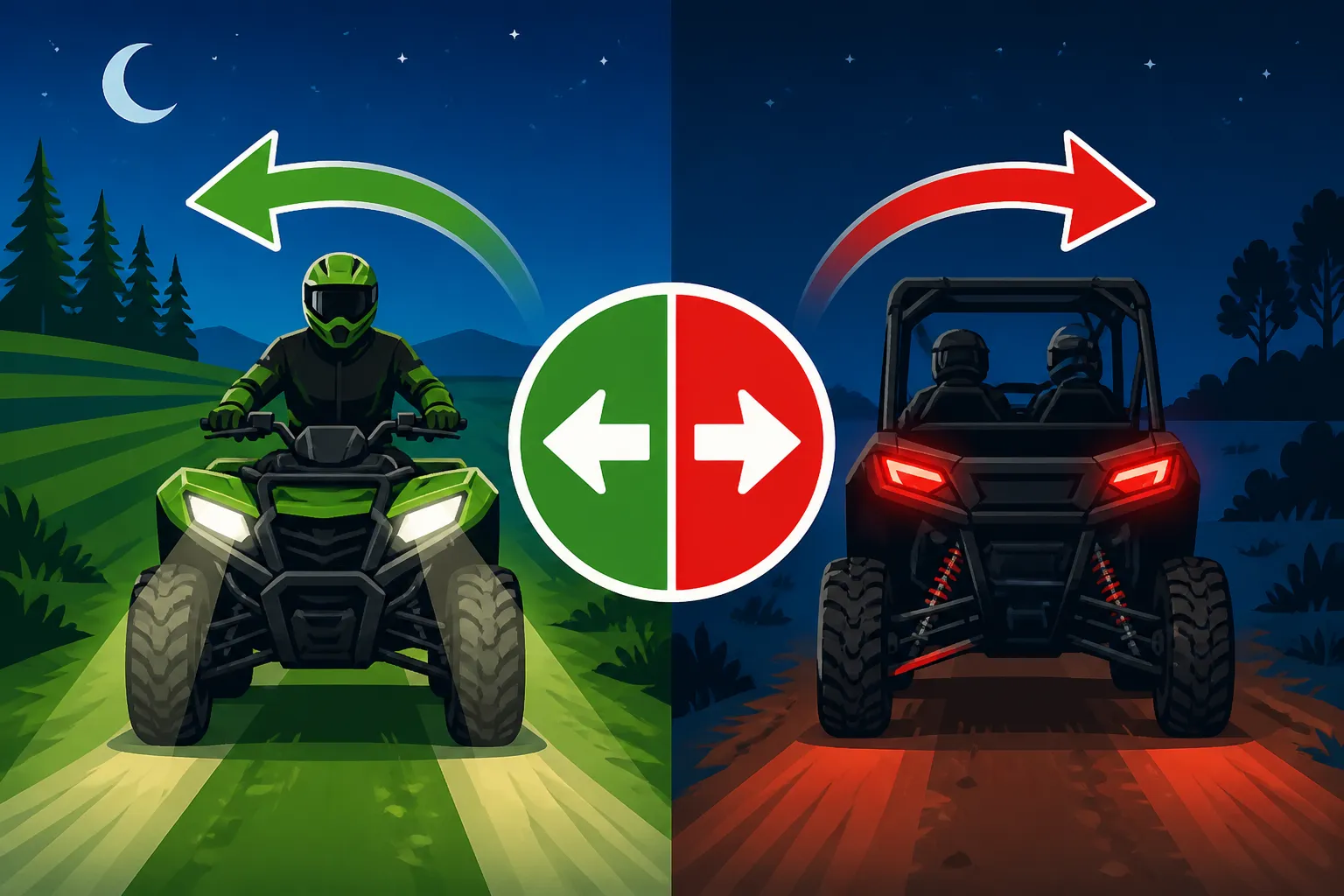
The primary rule governing the direction of travel for ATVs and UTVs when operating in ditches or on road allowances at night is quite specific. You must ride "as near as practicable to the right-hand edge of the travelled portion of the highway and travelling in the same direction as traffic on the nearest lane of the travelled portion." Let's break that down, because it's a mouthful and often misinterpreted. Essentially, this means if you're riding along a road, you need to be on the right-hand side of that road, moving in the same direction as the vehicles travelling on the paved or gravel part of the road closest to you.
The phrase "as near as practicable to the right-hand edge" refers to staying as close to the actual road as safely possible, given the terrain of the ditch. It's not about being in the middle of the ditch if the right-hand side is clear. Crucially, this rule works in conjunction with the [Saskatchewan Ditch Riding and the 2-Metre Rule], which states you must keep your machine at least two metres from the travelled portion of the highway. So, you're on the right side, moving with traffic, and maintaining that two-metre buffer. Imagine you're coming home late from a hunting trip on a familiar grid road north of Yorkton. It's dark, you're tired, and you know the ditch well. Even if the ditch seems empty, you must remember to maintain that two-metre separation from the grid road and travel in the same direction as any potential traffic on that road, or in the direction traffic would flow if it were present. This ensures that if a vehicle approaches, they expect you to be moving away from them on their right, not towards them.
Navigating Road Crossings and Medians at Night
Crossing a highway or road, even a minor one, is always a moment that demands extra caution for ATV and UTV riders, and at night, that caution needs to be amplified tenfold. The basic rules for crossing remain the same: you must come to a full stop before entering the travelled portion, you should cross by the shortest and most direct route possible, and any passengers must dismount and walk across. At night, these actions become critical safety measures. The reduced visibility means that both you and oncoming traffic have less time to react. Coming to a complete stop allows you to scan for headlights that might be obscured during the day, and crossing by the [Saskatchewan Crossings by the Shortest Route] minimizes your time in a potentially dangerous area. Having passengers dismount, as detailed in [Saskatchewan Crossings Require Passengers to Dismount], ensures their safety in the event of an unexpected collision.
Medians also present a unique challenge, especially if you're navigating a divided highway at night. The rules state that you generally cannot ride on a median that is less than 50 metres wide. If you encounter a median at night, the temptation might be to just keep going, thinking no one will see you. However, the same principles of travel direction and caution apply. If you must use a median (and only if it's legally permissible and over 50 metres wide), you still need to be mindful of traffic flow on both sides and proceed with extreme care. The darkness can make judging median width and traffic speed incredibly difficult, so when in doubt, it's always safer to find an alternate route or wait for full daylight.
Exceptions and Local Bylaws
While the provincial All Terrain Vehicles Act sets the baseline for ATV and UTV operation in Saskatchewan, it's not a one-size-fits-all document. There are important exceptions and, perhaps even more significantly, local bylaws that can alter what's permissible in specific areas. This can be a major source of confusion for riders who might travel across different regions of the province, each with its own nuances. What's perfectly legal on a grid road south of Regina might be prohibited on a specific street in Candle Lake, for instance. Understanding these variations is key to avoiding penalties and ensuring you're a responsible rider, especially when venturing out after dark.
The provincial act provides some flexibility for certain situations, recognizing that the vastness and varied terrain of Saskatchewan necessitate some practical allowances. However, this flexibility doesn't mean a free-for-all. It's about specific, legislated carve-outs designed for particular circumstances. Furthermore, the power of municipalities to enact their own bylaws means that relying solely on provincial law can leave you unprepared for local restrictions.
Winter Exception for Frozen Lakes and Rivers
One of the most notable exceptions to the general rules of ATV and UTV operation, particularly relevant for night travel, comes into play during the winter months when the province's many lakes and rivers freeze over. The All Terrain Vehicles Act recognizes that frozen water bodies can serve as legitimate travel routes, and during these times, certain restrictions on direction and location might be temporarily relaxed. Essentially, when it comes to riding on a [Saskatchewan Rules for Riding a Frozen Lake] or river, the strict "stay two metres from the travelled portion and travel with traffic" rule can be modified.
This exception is rooted in practical necessity and the unique safety considerations of ice travel. On a wide-open frozen lake, there isn't a "travelled portion" of a highway in the conventional sense, nor is there a ditch. However, this doesn't mean you can throw caution to the wind. Night riding on ice carries its own severe risks, including poor visibility of ice conditions, open water, or pressure ridges. While the direction rules might be more flexible, the need for proper lighting, extreme caution, and adherence to ice safety practices becomes even more critical. Remember, this exception typically applies on the frozen water body itself. It generally does not exempt you from the standard rules when you're on the shoreline, using trails to access the ice, or when crossing public roads to get to the lake. Always check local conditions and be absolutely certain of ice thickness before venturing out, day or night. [The Winter Exception for Frozen Lakes and Rivers] delves deeper into these specific rules.
Municipal Bylaws and Night Riding
This is perhaps the biggest wildcard for many riders: the patchwork of [Saskatchewan Municipal Bylaws on Roads] that can significantly impact where and how you can ride your ATV or UTV, especially at night. While the provincial act sets the minimum standards, municipalities across Saskatchewan have the authority to enact their own bylaws that can either restrict or, in some cases, even permit ATV use on certain roads or within specific areas. This means that a specific street in the District of Lakeland might have completely different rules than a similar road in Candle Lake, or even a neighboring rural municipality.
The frustration this causes riders is understandable. You might be planning a late-night ride from your cabin, assuming you're compliant with provincial law, only to discover a local bylaw prohibits ATV operation on that particular road after dark, or sets a much lower speed limit. These bylaws are often enacted by local councils to address community concerns about noise, safety, or property damage. For example, some municipalities might have specific streets where ATVs are allowed to travel to access trails, while others might ban them from all public streets, especially after a certain hour. If you're planning a trip to a new area, particularly one known for its recreational opportunities like Candle Lake or the District of Lakeland, it's absolutely essential to do your homework beforehand. A quick call to the local village office or a check of their municipal website can save you a lot of grief and ensure your night ride is both enjoyable and legal.
| Aspect of Night Riding | Provincial Rule (General) | Municipal Bylaw (Potential Variation) | Key Safety Consideration |
|---|---|---|---|
| "Night" Definition | 1/2 hour after sunset to 1/2 hour before sunrise | Usually aligns with provincial | Plan rides carefully, especially in fall/winter |
| Travel Direction | Right-hand edge, same direction as nearest traffic, 2m from travelled portion | Can restrict/prohibit road allowance use entirely | Avoid head-on collisions with other vehicles |
| Lighting | White headlight, red taillight, reflectors | May require additional lighting in specific areas | Be seen by others, illuminate obstacles |
| Road Crossings | Full stop, shortest route, passengers dismount | May designate specific crossing points or ban entirely | High-risk intersections, sudden traffic |
| Frozen Water | Exception to direction rules on ice | May have local ice safety warnings/rules | Ice thickness, open water, disorientation |
| Speed Limits | 80 km/h in ditches/road allowances (provincial max) | Can set lower limits (e.g., 30 km/h) on municipal roads | Reduced reaction time, unforeseen hazards |
| Prohibited Areas | Certain Crown Lands | Specific streets, parks, residential zones | Trespassing, fines, community relations |
Safety Considerations Beyond the Law
While adhering to the letter of the law is non-negotiable for safe and legal night riding, true safety extends far beyond simply avoiding a ticket. The darkness itself introduces a myriad of challenges that demand proactive measures and a heightened sense of awareness. You can have all your lights working perfectly and be travelling in the correct direction, but if you're unprepared for the unique conditions that night brings, you could still find yourself in a tricky situation. It's about embracing a mindset of preparedness and understanding that even the most familiar trail transforms when the sun goes down.
Think about it: during the day, you rely heavily on peripheral vision to spot branches, ruts, or sudden changes in terrain. At night, your field of vision narrows dramatically, focusing primarily on what your headlights illuminate. This shift requires a different approach to riding, where anticipation and the ability to enhance your visibility become paramount. It's not just about what the law says you need; it's about what practical steps you can take to mitigate risk and ensure every night ride is a return trip.
Enhancing Rider and Machine Visibility
Your machine's legal lighting is a good starting point, but for serious night riding, many experienced riders go the extra mile to enhance both their own visibility and their machine's ability to light up the path. For the rider, this means investing in high-visibility gear. Helmets with reflective strips, jackets with bright colours and reflective accents, and even reflective tape on your boots can make a huge difference. When a headlight from an approaching vehicle hits these reflective surfaces, you become much more noticeable, which is a critical safety factor when operating in ditches or crossing roads.
Beyond your personal gear, upgrading your machine's lighting is a game-changer. Stock headlights often provide a narrow beam that's sufficient for legal compliance but inadequate for truly dark, uneven terrain. This is where products from companies like SuperATV really shine. Their range of high-performance LED light bars can vastly improve your forward visibility, casting a wider and brighter beam that reveals hidden obstacles, deep ruts, or lurking wildlife that a standard headlight might miss. Furthermore, side-mounted floodlights can illuminate the area immediately to your left and right, giving you a better sense of your surroundings and helping you navigate tight turns or dense bush with greater confidence. Don't forget to regularly check your battery and charging system; all these extra lights put a greater demand on your electrical system, and the last thing you want is to lose power in the middle of a dark trail.
Planning and Preparedness for Night Excursions
Spontaneity is part of the fun of ATV and UTV riding, but at night, a little planning goes a long way. The darkness reduces your ability to navigate by landmarks, assess distances, and identify potential hazards. Therefore, knowing your route beforehand is crucial. If you're venturing into an unfamiliar area, consider doing a daytime reconnaissance run first to get a feel for the terrain, obstacles, and potential bailout points. Riding with a buddy or a group is another golden rule for night excursions. In case of a breakdown or an accident, having another person there ensures help can be sought and immediate assistance provided.
Beyond route knowledge and companionship, a well-stocked emergency kit is non-negotiable. This should include a robust first aid kit, reliable communication devices (a satellite messenger is a wise investment in areas with no cell service), tools for basic repairs, and extra fuel. The weather can also change rapidly in Saskatchewan, and night temperatures often drop significantly. Packing extra layers of warm, waterproof clothing is essential, even if it felt mild during the day. A small, high-quality headlamp for hands-free work or map reading is also incredibly useful. Remember, the goal isn't just to follow the rules, but to return safely and comfortably from every adventure, especially when you're riding after dark. [Saskatchewan Trail Conditions Before You Haul] is a good resource to check before any ride, day or night.
Penalties and Enforcement
No one wants to think about getting a ticket or facing legal trouble while out enjoying their ATV or UTV, but understanding the potential penalties and how enforcement works is a critical part of being a responsible rider. The rules, including those for night travel direction, aren't just suggestions; they're codified in law to protect both riders and the public. Ignorance of the law is rarely an excuse, and a lapse in judgment, especially during the more challenging conditions of night riding, can lead to significant consequences.
The presence of peace officers on or near trails, grid roads, and other riding areas is a reality for riders in Saskatchewan. Their job is to ensure compliance with the [Saskatchewan's All Terrain Vehicles Act] and any relevant municipal bylaws. They're not just looking for reckless behaviour; they're also checking for adherence to foundational rules like proper licensing, insurance, helmet use, and, yes, appropriate lighting and travel direction, especially after dark. Getting stopped can be an inconvenience, but facing a penalty or, worse, being involved in an accident due to non-compliance is far more disruptive.
Fines and Legal Consequences
The financial sting of a ticket for an ATV or UTV infraction in Saskatchewan can be significant. While specific fine amounts can vary, the All Terrain Vehicles Act sets out a maximum penalty of [$1,000 for most offences]. This means that operating your machine at night without proper lighting, or, more relevant to this discussion, travelling in the wrong direction in a ditch or road allowance, could lead to a substantial fine. Beyond the initial monetary penalty, there are often additional court costs or administrative fees that can pile on, making a simple oversight much more expensive.
The consequences can escalate if the offence is more serious. For instance, if you're found operating your ATV or UTV at night while your driver's licence is disqualified for other reasons, the penalties can be far more severe, potentially including higher fines, vehicle seizure, and even jail time in extreme cases. Furthermore, an infraction could impact your insurance premiums. While [Saskatchewan Insurance Requirements for Riders] mandates a minimum liability coverage, a history of tickets or unsafe operation could lead to your insurer increasing your rates or even declining to renew your policy, making it harder and more expensive to continue riding legally.
What an Officer Might Look For
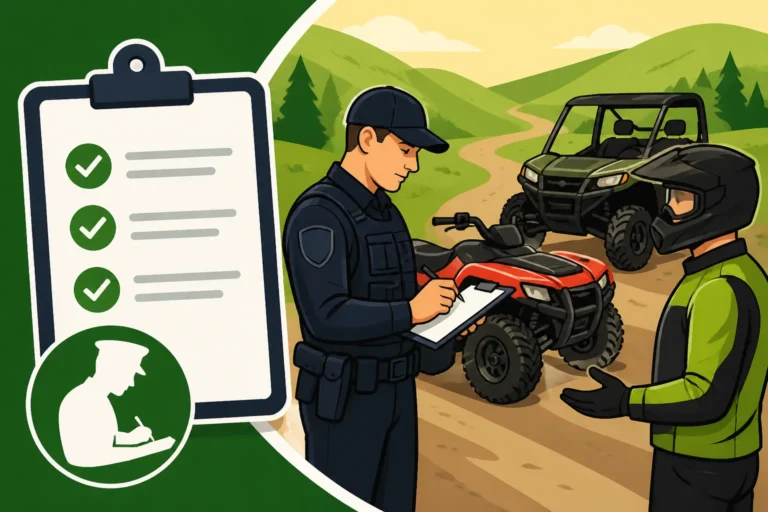
When a peace officer stops an ATV or UTV operator at night, they're typically conducting a comprehensive check to ensure overall compliance and safety. They won't just be looking for one thing; rather, they'll be assessing several aspects of your operation and your machine. First and foremost, they'll likely ask for proof of your valid driver's licence and, critically, proof of insurance. Carrying these documents on your person or within the machine is essential, as inability to produce them can lead to further issues. [Saskatchewan Insurance Proof on the Trail] confirms this requirement.
Beyond documentation, your machine's condition and your operating practices will come under scrutiny. An officer will pay close attention to your lighting: are your headlights and taillights fully functional and clean? Are your reflectors visible? If you have aftermarket lights from a company like SuperATV, they'll want to ensure they're used responsibly and don't blind oncoming traffic. For the core of our topic, they will observe your travel direction. If you're riding in a ditch or on a road allowance, they'll be checking to see if you are travelling on the right-hand side and in the same direction as the nearest traffic, and that you are maintaining the required two-metre separation from the travelled portion. If you have a youth rider, they'll also check for compliance with [Saskatchewan's 365-Day Supervisor Rule] or the appropriate safety course certification, as night riding adds another layer of risk for younger operators.
Disclaimer
This article is for general informational purposes only and does not constitute professional advice. Laws, prices and regulations vary by location and change over time. Consult a qualified professional for guidance on your specific situation.