Orders That Close Crown Land to Quads
It can be incredibly frustrating to load up your quad or side-by-side, drive out to a favourite riding spot or a new area you've been itching to explore on Saskatchewan's vast Crown land, only to arrive and find it blocked off with "No Entry" signs. This guide is here to shed light on why these unexpected closures happen, what kinds of orders can close Crown land to ATVs, and how you can stay informed so your next adventure isn't cut short by unforeseen restrictions.
Understanding Crown Land and Its Management in Saskatchewan
Saskatchewan is a province of immense natural beauty and vast open spaces, much of which falls under the umbrella of Crown land. This land is often seen as a resource for everyone, but its management is a complex dance between conservation, resource extraction, recreation, and public safety. When it comes to ATV and UTV riding, understanding how Crown land is categorized and managed is the first step to knowing where you can and cannot ride.
What is Crown Land?
Simply put, Crown land in Saskatchewan is public land owned by the provincial government (or sometimes federal, but we're focusing on provincial here). This includes provincial forests, parks, ecological reserves, wildlife management areas, and large tracts of undeveloped land that might be leased for grazing, forestry, or other uses. It's not all pristine wilderness; some of it is working land, and its designation can impact recreational access. For many riders, Crown land offers the allure of endless trails and remote exploration, a stark contrast to the more regulated municipal or private land riding.
The sheer scale of Crown land means it encompasses a huge variety of ecosystems, from the boreal forests of the north to the grasslands in the south. This diversity is why managing it effectively is such a big job, often requiring different rules for different areas. It's not a one-size-fits-all situation, and what's permitted in one area might be strictly prohibited in another, even if both are technically Crown land.
Who Manages Crown Land and Why?
Several provincial ministries and agencies are involved in managing Saskatchewan's Crown land, each with specific mandates. The Ministry of Environment, for example, oversees provincial parks, wildlife lands, and forestry, while others might manage agricultural Crown land leases. Their primary goals include protecting biodiversity, conserving natural resources, managing timber and mineral rights, supporting agriculture, and ensuring public safety. These goals sometimes intersect and sometimes conflict, leading to specific regulations and orders that dictate land use.
When you're out riding, the people you might encounter enforcing these rules could be conservation officers, park rangers, or even local RCMP. Their role is to ensure that everyone is respecting the land and abiding by the current orders and bylaws in place. It's their job to uphold the various pieces of legislation, like [Saskatchewan Crown Land Prohibition Regulations], that dictate what activities are allowed or forbidden in specific areas. It’s always best to be prepared and knowledgeable about the regulations before you head out, to avoid any unwelcome encounters or fines.
The Role of Regulations and Orders
Regulations are the more permanent rules established under provincial acts, such as the Parks Act or the Wildlife Act. These set the general framework for land use. Orders, on the other hand, are typically more temporary or specific directives issued by the government or relevant authorities. They are often reactive to current conditions, such as a high fire risk, or might be used to designate a new protected area. Orders are legally binding, just like regulations, and can carry significant penalties if violated.
For ATV riders, these orders can mean sudden changes to access. An area that was open last week might be closed today due to an urgent conservation need or a public safety concern. This is why staying current with official notices is paramount. You can't just assume that because a trail was open last season, it's open now. Always check before you travel, especially if you're venturing into less-frequented areas or making a long haul to a riding destination.
Specific Orders That Close Crown Land to Quads
When you find a "No Entry" sign on Crown land, it's usually there for a very good reason. These closures aren't arbitrary; they're put in place to protect the environment, wildlife, or the safety of the public. Understanding the common types of orders can help you anticipate closures and plan your rides more effectively.
Wildfire-Related Closures: A Common Reality
One of the most frequent reasons for Crown land closures in Saskatchewan, especially during the dry spring, summer, and fall months, is the risk of wildfires. Our province can experience extremely dry conditions, and even a single spark from an ATV exhaust or an improperly extinguished campfire can devastate vast tracts of land. During periods of high or extreme fire danger, the government often issues fire bans and may outright close large sections of Crown land to all recreational activity, including ATV riding. These are often broad "administrator orders" covering entire regions.
When a wildfire ban is in effect, it means precisely that: no open fires, no off-road vehicle use in specified areas, and sometimes even complete access prohibition. The goal is to prevent new fires and allow emergency services to focus on existing blazes without worrying about public safety in dangerous areas. Ignoring these bans can lead to serious legal consequences, not just fines but potentially liability for firefighting costs if your machine is deemed responsible for starting a fire. Always remember your [Saskatchewan Wildfire Act Duties for Riders] before heading out during fire season. Carrying a shovel and an extinguisher on your machine can be a good habit, but when a ban is on, it's best to stay off.
Ecological Reserves and Protected Areas
Saskatchewan is home to many unique ecosystems and vulnerable species, and to protect these, certain areas of Crown land are designated as ecological reserves, wildlife management areas, or other types of protected zones. These designations often come with strict rules regarding human activity, and ATV riding is frequently restricted or entirely prohibited within their boundaries. The goal here is conservation: to minimize disturbance to sensitive habitats and give wildlife a refuge.
For instance, if an area is critical nesting ground for a rare bird, or if it contains delicate plant life, a permanent order may be in place to keep motorized vehicles out. These aren't usually temporary; they are long-standing rules designed to preserve the natural integrity of the land. It’s essential to know [What an Ecological Reserve Means for Saskatchewan Riders] before you even consider planning a route through such areas. Always consult maps and official resources to identify these protected areas well in advance of your trip. Sometimes these areas are clearly marked with signage, but not always, particularly in remote regions.
Seasonal and Specific Use Restrictions
Beyond wildfires and ecological protection, other orders can limit ATV access to Crown land, often seasonally or for specific purposes. For example, some areas might be closed during critical wildlife periods, such as calving season for moose or deer, to prevent stress and disturbance to animals. Other closures might be put in place for forestry operations, mineral exploration, or even to allow for controlled burns that are part of forest management. These are usually temporary but can last for weeks or months.
Another common scenario involves land that has a dual purpose. A section of Crown land might be leased for grazing cattle, and while general access might be allowed, specific restrictions might apply to ATV use to protect livestock or infrastructure. Some areas might also have specific [Saskatchewan Crown Land Access Rules] related to hunting seasons, where access might be regulated to manage hunter numbers or to prevent conflicts between different user groups. For riders navigating through areas with mixed uses, reliable gear like heavy-duty skid plates from SuperATV can be a godsend if you happen to stray onto less-maintained trails or encounter unexpected obstacles.
| Type of Closure | Typical Reason | Duration | Impact on Riders |
|---|---|---|---|
| Wildfire Ban/Closure | High fire risk, active fires | Seasonal/Temporary | Full prohibition of ATV use in designated areas |
| Ecological Reserve | Habitat protection, species conservation | Permanent | Restricted or prohibited ATV access |
| Wildlife Management Area | Wildlife protection, breeding seasons | Permanent/Seasonal | Restricted or prohibited ATV access, sometimes seasonal |
| Forestry/Resource Ops | Logging, exploration, road construction | Temporary | Restricted or prohibited access for safety |
| Administrative Orders | Public safety, land management projects | Temporary/Specific | Varies, can range from partial to full closure |
How Riders Learn About Crown Land Closures
One of the biggest headaches for ATV riders is showing up to a trail only to find it closed. The key to avoiding this disappointment is proactive research. While there's no single, universally accessible billboard listing all Crown land closures, there are several reliable ways to gather information before you even hook up your trailer.
Official Sources for Information
The most authoritative source for Crown land closures will always be the Saskatchewan provincial government. Specifically, the Ministry of Environment website is a crucial starting point for general fire bans, park closures, and any major administrative orders affecting large tracts of land. They often have dedicated sections for wildfire information, [Saskatchewan Fire Ban Lookups], and provincial park updates. It’s not always the most user-friendly process to find specific trail closures, but it's where the official notices are posted.
Another excellent resource, particularly for provincial parks like Moose Mountain or Narrow Hills, is to directly contact the park office itself. Park staff are usually well-informed about current conditions, local fire restrictions, and any specific trail closures within their jurisdiction. If you're heading to a specific area with a known park or designated recreation zone, a quick phone call can save you a wasted trip. Always double-check information from a few sources, especially if you're planning an extended trip.
The Importance of Local Knowledge and Community
While official sources are essential, sometimes the most up-to-date and granular information comes from local sources and the riding community itself. Local residents, especially those living near Crown land access points, often have firsthand knowledge of current conditions, recent orders, or whether an area is experiencing issues like flooding or deep mud. Joining a local ATV club can be an invaluable way to tap into this network. Clubs like the Saskatchewan All-Terrain Vehicle Association (SATVA) often share updates from their members and might even have connections with local land managers.
Online forums and social media groups dedicated to Saskatchewan ATV riding can also be good places to check for discussions about current trail conditions and closures. However, it's vital to cross-reference any information you find online with official sources, as rumors or outdated posts can circulate. Think of it as gathering intel: official sources for broad strokes, and community intel for the fine details on specific trails or access points.
What to Do if You Encounter a Closed Area
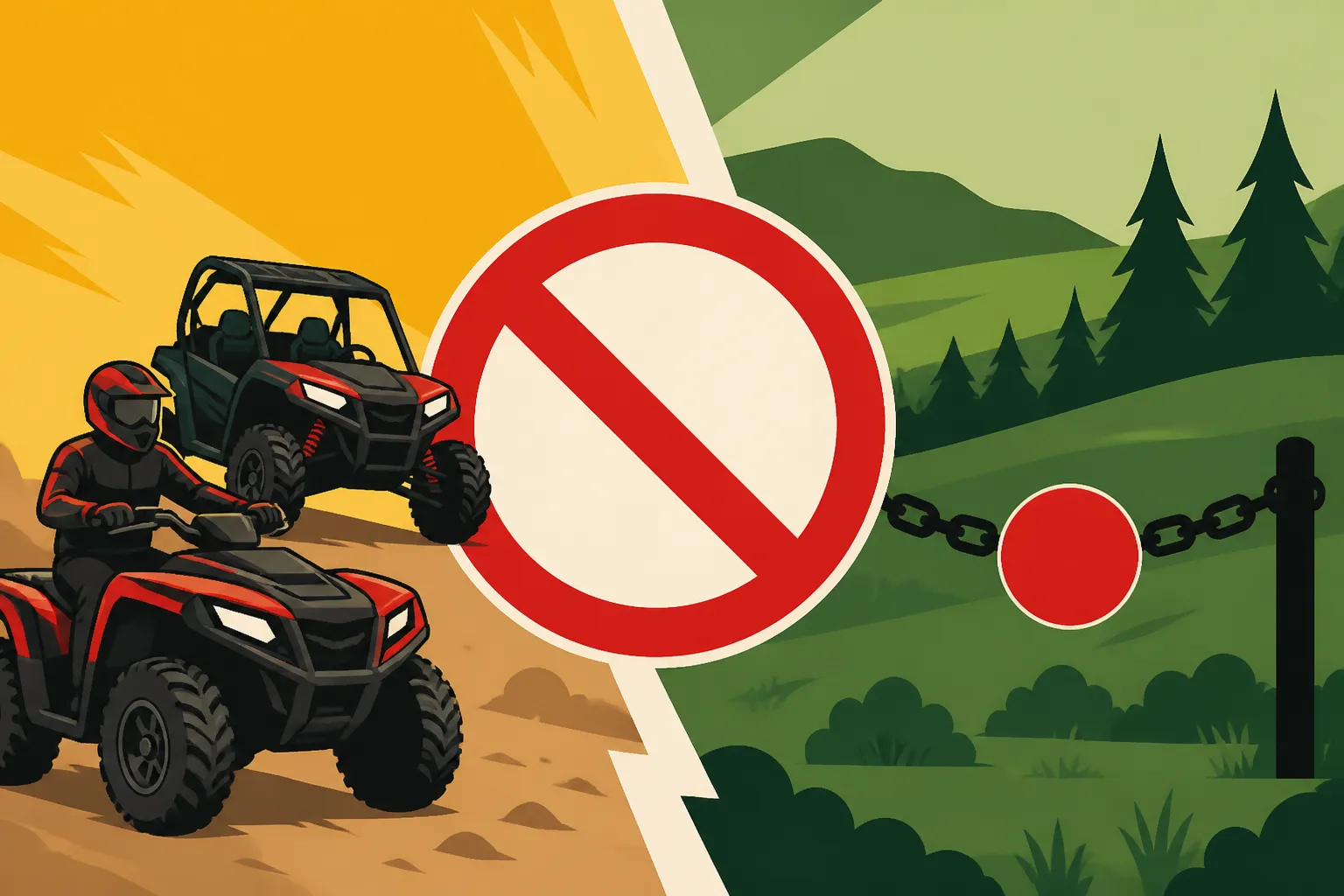
Despite your best efforts, you might still occasionally arrive at a Crown land access point only to find it unexpectedly closed. When this happens, the most important thing to do is respect the closure. Do not ignore "No Entry" signs, closed gates, or barricades. These are in place for safety, conservation, or both, and violating them can lead to significant [Saskatchewan Penalties for Riding a Closed Area]. Fines under the Wildlife Act or the Provincial Parks Act can be substantial, and you could even face charges if your actions lead to damage or endanger others.
If you're unsure about the reason for the closure, look for contact information on the signs, or make a note of the specific location and contact the appropriate ministry or park office when you have cell service. It's frustrating, absolutely, but choosing to ride elsewhere is always the safest and most responsible option. Have a backup plan or two for your riding destinations, especially during peak wildfire season or in areas known for sensitive ecosystems. This way, if one area is closed, your day isn't completely derailed.
Riding Responsibly When Crown Land is Open
Even when Crown land is open and clear for ATV use, responsible riding is paramount. Our ability to access these incredible spaces depends on all riders adhering to best practices and respecting the land, wildlife, and other users. A single rider's careless actions can lead to stricter regulations or closures for everyone.
First and foremost, always stick to designated trails and routes. While the idea of "making your own path" might sound adventurous, it can cause severe environmental damage, leading to erosion, habitat destruction, and the spread of invasive species. Many areas, particularly provincial parks, have explicit [Saskatchewan Park Regulations for Machines] that dictate where ATVs are allowed. If no designated trail exists, it's often a sign that motorized vehicle use isn't encouraged or is outright prohibited in that specific area.
Carry all your garbage out with you, and then some. "Leave no trace" isn't just a suggestion; it's a critical philosophy for preserving our natural spaces. This includes everything from snack wrappers to broken machine parts. Beyond trash, be mindful of your machine's impact on noise levels and air quality. Ensure your ATV is in good working order, with a properly functioning spark arrestor to prevent accidental fires. This is not just good practice, it's a [Saskatchewan Spark Arrestor Guidance] requirement under the law.
Respect wildlife and other land users. If you encounter wildlife, give them ample space and do not pursue or harass them. Remember that Crown land is also used by hikers, campers, hunters, and Indigenous communities. Slow down and be courteous when passing others, and always yield the right-of-way. Consider what kind of impact your presence might have. For instance, if you're riding a grazing lease, be extra cautious around livestock and always respect any specific access rules provided by the leaseholder. Having robust equipment from a brand like SuperATV, such as a heavy-duty winch, can be beneficial, not just for getting yourself out of a bind, but also for assisting others or clearing small obstacles safely without damaging the environment. This kind of preparation reflects responsible riding.
Lastly, ensure you have the proper safety gear, including an approved helmet and eye protection, and that your machine is properly insured. While Saskatchewan does not require province-wide ATV registration, having valid insurance is a must. [Saskatchewan Insurance Requirements for Riders] is a crucial part of responsible ownership, protecting you and others in case of an accident. Always ride within your skill level and the capabilities of your machine, and consider taking a certified ATV safety course if you're new to the sport or just want a refresher. Our ability to continue enjoying Saskatchewan's Crown land depends on every rider acting as a steward of these incredible natural resources.
Disclaimer
This article is for general informational purposes only and does not constitute professional advice. Laws, prices and regulations vary by location and change over time. Consult a qualified professional for guidance on your specific situation.