Leaving a Note on a Machine
It’s an all too common nightmare scenario for any ATV or UTV owner in Saskatchewan: you return to your machine, whether it’s parked at a trailhead, on the shoulder of a grid road, or even in a municipal parking lot, only to discover a fresh dent, a new scratch, or a broken light. Your heart sinks. And then the second wave of frustration hits: there’s no one around, and no note. This guide is here to walk you through the proper way to leave a note if you’re involved in an incident with an unattended machine, and what to do if you find one on your own.
The Legal Obligation to Leave a Note in Saskatchewan
When you’re out enjoying the vast landscapes of Saskatchewan on your ATV or side-by-side, it’s easy to forget about the rules that govern incidents involving property damage. However, just because our machines aren’t registered like cars doesn’t mean we’re exempt from the basic tenets of responsible conduct. If you’re involved in an incident where you damage another person’s unattended property, the law, and common decency, dictate that you must take steps to identify yourself.
This isn't just about being a good neighbour; it's a critical part of [Saskatchewan Accident Reporting Duties]. While often associated with vehicle-on-vehicle collisions on public roads, the spirit of these regulations extends to any situation where you cause damage to someone else's property, even if that property is an ATV parked by the trail. Ignoring this responsibility can lead to serious consequences, far beyond the initial inconvenience of leaving a note.
When Your Machine Is Hit by Another
Few things are as maddening as discovering damage to your beloved quad or side-by-side, only to find no one willing to take responsibility. You might have parked your machine carefully, perhaps even away from heavy traffic, and yet someone managed to ding your bumper or scrape your fender. Without a note, you're left with the bitter taste of a hit-and-run, and the burden of repair falling squarely on your shoulders.
This situation can feel particularly frustrating because, unlike a car, your ATV doesn't have a standard licence plate that makes it easy to track down. This is where your own diligence in documenting the scene becomes paramount. If you return to your machine and find damage, immediately take photographs from multiple angles, capturing the damage itself, the overall context of where your machine was parked, and any distinguishing features of the area. Note the date and time you discovered the damage. If, by some stroke of luck, you find a note, make sure it’s legible and secure before you touch it, and then proceed with the steps outlined later in this guide. Remember that even without a provincial registration, you may still be able to pursue [Saskatchewan Insurance Claims Without a Plate], but good documentation is key.
When You Hit an Unattended Machine
Picture this: you're expertly navigating a tight corner in a staging area, perhaps backing up your truck with a trailer, and you misjudge the distance. Or maybe you're parking your own SuperATV-equipped side-by-side, and you hear that awful crunch of plastic against plastic. You realize you've just bumped an unattended quad. Your first instinct might be to look around, see no one, and consider just driving away. But don’t. This is precisely the moment when your actions define your character and can save you a world of trouble down the line.
Leaving the scene of an accident, even one involving only property damage and no human injury, can have serious legal ramifications. It could be considered a form of hit-and-run, leading to fines and potential civil liability. The ethical choice, and the legal requirement, is to make every reasonable effort to identify yourself and contact the owner. This includes taking steps to leave a clear, concise, and weatherproof note. Even if the damage seems minor, it's not your call to make; the owner deserves to know what happened and how to reach you. The small inconvenience of leaving a note pales in comparison to the stress and legal costs associated with being tracked down later for an unreported incident.
What Information Your Note Needs to Contain
Okay, so you’ve had an incident and you know you need to leave a note. But what exactly should that note say? This isn't the time for a vague apology or a hasty scribble. You need to provide enough clear, actionable information so that the owner can easily understand what happened and how to get in touch with you. Think about what you would want to find if it were your machine that had been hit.
Essential Contact Information
The absolute most important part of your note is how the other person can reach you. Without this, the note is essentially useless.
Here’s what you absolutely must include:
- Your Full Name: Use your legal name.
- Your Phone Number: Provide a number where you can be reliably reached. Double-check that you've written it correctly.
- Your Email Address (Optional but Recommended): An email can be a great backup contact method, especially if the owner isn't immediately available by phone.
When writing, make sure your handwriting is clear and legible. If you have a business card, attaching one to the note can be an excellent idea, as it's professional and ensures all your contact details are accurate. Also, it's good practice to note the date and time you left the note. This helps establish a timeline for the owner. For instance, if you're riding your SuperATV and accidentally scratch a parked machine, you'd want the owner to have all the details readily available.
Details of the Incident
Beyond who you are, the owner needs to know what happened. Be honest and factual, without admitting fault in a legal sense, but clearly explaining the circumstances.
Here’s what to include about the incident:
- A Brief Description of What Happened: Something like, "I accidentally bumped your quad while trying to park my side-by-side," or "My trailer scraped your front fender while I was backing up." Keep it concise and to the point.
- The Location: Be specific. "Near the picnic area at Moose Mountain Provincial Park," or "On the shoulder of Range Road 3072, about 5 km east of Highway 4."
- Observed Damage: Briefly describe what damage you noticed on their machine. For example, "I saw a small scratch on your front left fender" or "It looks like your rear taillight might be cracked." This manages expectations and provides a baseline for any future discussion. Before you even write the note, it’s highly advisable to take photos of their machine, specifically focusing on the damage you observed. This serves as vital documentation for your records, proving the extent of the damage at the time you discovered it.
Being transparent here helps build trust and facilitates a smoother resolution. Avoid lengthy explanations or apologies that could be misinterpreted; stick to the facts.
Practical Steps for Leaving a Note Effectively
Writing the note is only half the battle. You need to ensure it actually reaches the owner and survives the elements long enough to be found. A soggy, illegible scrap of paper blowing away in the Saskatchewan wind is just as unhelpful as no note at all.
Material Matters: Weatherproofing Your Message
Our prairie weather can be unpredictable. A clear, sunny day can turn into a downpour or a blustery wind storm in a matter of hours. Your note needs to be able to withstand this.
- Paper Choice: Don't just grab a napkin. Use sturdy paper, like a page from a notebook or even a piece of cardstock if you have it.
- Writing Instrument: A ballpoint pen or permanent marker is best. Pencil can smudge and fade easily with moisture.
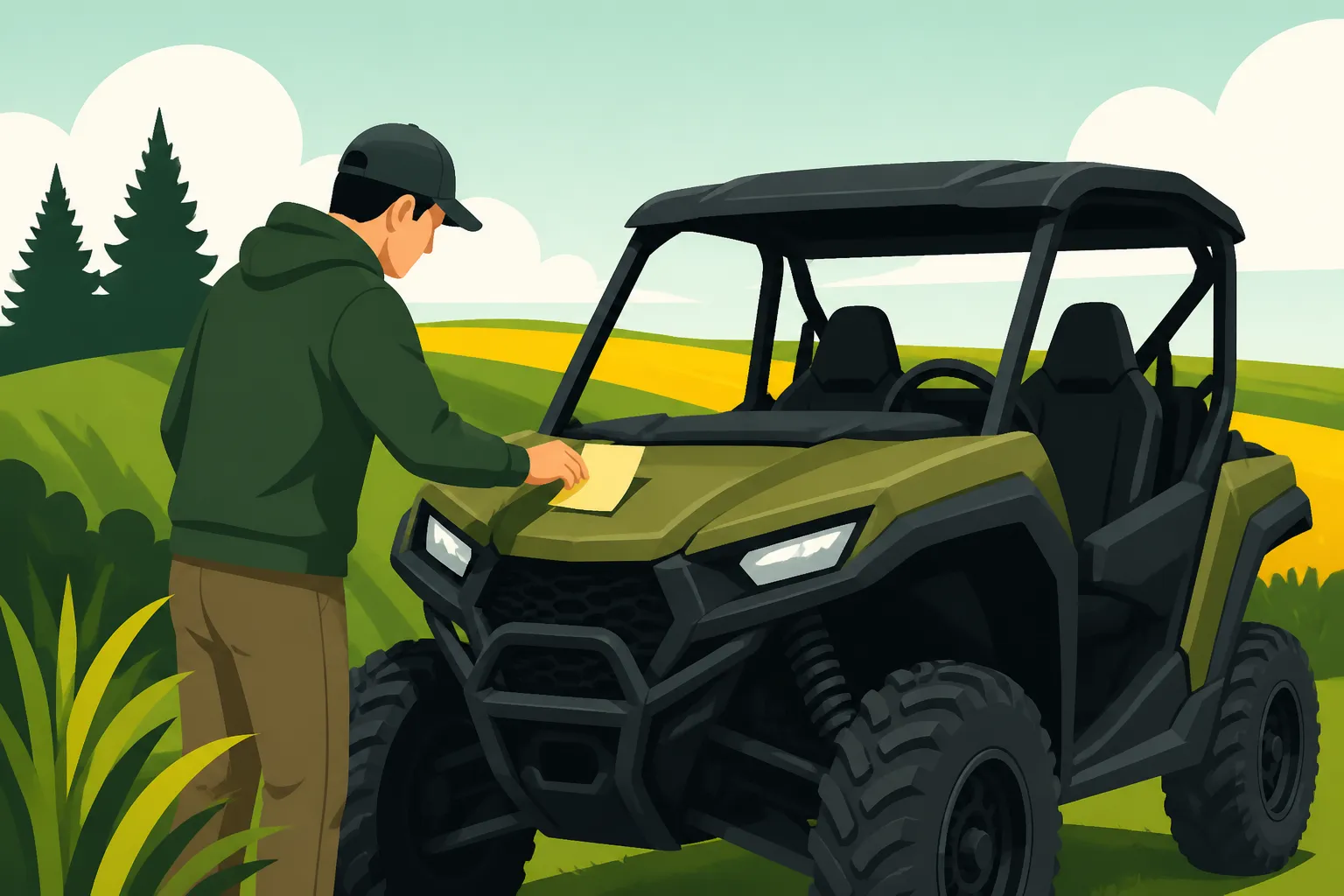
- Protection: This is crucial. The best method is to place your note inside a clear, sealable plastic bag (like a Ziploc baggie). If you don't have one, wrap it tightly in any plastic you can find, or at the very least, fold it several times and secure it with tape.
- Placement: Where on the machine will it be most visible and secure?
- Windshield/Dash: If it's a side-by-side, tuck it under the windshield wiper or secure it to the dash.
- Handlebars: For a quad, tie or tape it securely to the handlebars.
- Seat: Tuck it under the seat or secure it to the seat cover.
- Mirror: If they have a mirror, you might be able to secure it there.
The goal is for the note to be immediately obvious to the owner and resistant to wind and moisture. Imagine yourself returning to your machine; where would you look first? You want it to be securely affixed so it doesn't blow away, but also easily retrievable by the owner.
Documenting the Scene for Your Records
Leaving a note is a responsible act, but it's also wise to protect yourself. Thorough documentation of the incident scene will be invaluable, regardless of how the situation unfolds.
- Take Photos: Use your phone to take multiple photos.
- Photos of both machines involved.
- Close-up photos of the damage you caused (or observed) on their machine.
- Photos of your machine, especially if there's any reciprocal damage.
- Crucially, take a photo of your note clearly affixed to their machine, showing its placement and legibility. This proves you followed through on your obligation.
- Photos of the surrounding area and how the machines were situated.
- Note Down Details: Beyond photos, write down the specifics in your own records:
- The exact date and time of the incident.
- The precise location, including any landmarks or GPS coordinates if available.
- The make, model, and any distinguishing features of the other machine. (While Saskatchewan doesn't have a provincial ATV registry, recording details can help if you need to involve authorities later).
- The licence plate number of your own vehicle if it was involved (e.g., your truck and trailer).
This meticulous record-keeping serves several purposes. It provides concrete evidence for your insurance company, should a claim arise. It protects you from accusations of causing more damage than you actually did. And it simply gives you peace of mind that you've covered all your bases. Remember, [Saskatchewan Insurance Requirements for Riders] are in place for a reason, and good documentation makes any claim process much smoother.
| Item to Include on Note | Why It's Important | Tips for Success |
|---|---|---|
| Your Full Name | Identifies you as the responsible party | Write clearly and legibly. |
| Your Phone Number | Allows direct contact from the owner | Double-check accuracy; include area code. |
| Your Email (Optional) | Alternative contact, useful for sharing photos | Ensure it's an email you check regularly. |
| Date & Time of Incident | Establishes a timeline | Be precise, "Approx. 2:30 PM, Oct 26th." |
| Brief Description | Explains what happened concisely | Factual and objective; avoid excessive blame/apology. |
| Location | Helps owner understand context | Be specific (e.g., "Moose Mountain trailhead, north lot"). |
| Observed Damage | Sets expectations for the owner | Note only what you saw; take photos of this damage. |
What if There's No Note, or You Can't Get Through?
Even with the best intentions, things don't always go smoothly. You might find damage on your machine with no note in sight, or you might leave a note and never hear back. These situations can be incredibly frustrating, but there are still steps you can take.
When You Find Damage on Your Machine (No Note)
This is perhaps the most common and infuriating scenario. You’ve just discovered a significant scratch on your SuperATV bumper, or a crack in your headlight, and there’s absolutely no indication of who might have done it. The feeling of helplessness can be overwhelming, especially when you consider the cost of repairs.
Here’s what you should do:
- Document Everything Thoroughly: Just as you would if you were leaving a note, immediately take extensive photos and videos of the damage, your machine, and the surrounding area. Note the date and time of discovery. This meticulous documentation is your best friend.
- Contact Your Insurance Provider: Even though ATVs don't have a provincial registration, many riders carry separate off-road vehicle insurance. Reach out to your insurance company. Provide them with all the documentation you've gathered. They can guide you through the process of making a claim, even for a hit-and-run incident. Remember, [Saskatchewan Insurance Claims Without a Plate] are indeed possible.
- File a Police Report (Especially for Significant Damage): While the police might not be able to track down the culprit without more information, filing a report creates an official record of the incident. This can be important for insurance purposes, and in rare cases, if similar incidents occur in the area, it might help connect the dots. Don't expect a detective on the case, but the paper trail is valuable.
- Check for Witnesses or Security Cameras: In some areas, like a resort parking lot or a gas station, there might be security cameras that captured the incident. It’s a long shot, but worth checking. Similarly, ask around if anyone saw anything.
It’s disheartening, but sometimes, despite your best efforts, you might not find the person responsible. However, taking these steps ensures you've done everything you can to protect your interests and potentially recover some costs. The challenge of [Saskatchewan Theft Recovery Without a Registry] highlights how crucial any form of documentation becomes in the absence of a centralized database.
When Your Note Goes Unanswered
You've done the right thing: you wrote a clear, weatherproof note with all your contact information and placed it securely on their machine. You've taken photos for your records. Now you wait. But what if days pass, and your phone doesn’t ring?
- Allow for Reasonable Time: People don't always check their machines daily, especially if they're parked for an extended period, perhaps at a cabin on [Saskatchewan Machines Used at a Cabin] or during a long hunting trip. Give it at least a few days, maybe even a week, before assuming your note has gone unnoticed.
- Attempt One More Contact (If Possible): If you recorded a distinct feature of the machine (like a specific custom decal or a unique SuperATV accessory), and you happen to see it again in the same general area, you could consider leaving a second note, perhaps with a slightly different message indicating you're still trying to reach them. However, avoid anything that could be construed as harassment.
- You've Done Your Due Diligence: If, after a reasonable period, you receive no response, you have fulfilled your legal and ethical obligation. You made a good-faith effort to contact the owner and provided all necessary information. Keep all your documentation (photos, copy of the note, date/time notes) in a safe place. This evidence protects you if the owner eventually contacts you, or if the incident escalates for some unforeseen reason. While the maximum [Saskatchewan Fines Capped at $1,000] might seem high, a simple note goes a long way in proving you acted responsibly and avoiding such penalties.
Sometimes, the owner might simply decide the damage is too minor to pursue, or they might not check their machine. Regardless of their reasons, once you've made a reasonable, documented attempt to contact them, your responsibility in the matter is generally considered discharged.
Disclaimer
This article is for general informational purposes only and does not constitute professional advice. Laws, prices and regulations vary by location and change over time. Consult a qualified professional for guidance on your specific situation.