Saskatchewan Park Use Acknowledgement Forms
When you’re planning an ATV ride in a Saskatchewan provincial park, the paperwork can feel like one more thing to sort out before you even unload. A park use acknowledgement form helps confirm that you understand the conditions for riding there. This guide explains what the form does, how to prepare, and why signing it does not replace park rules or permission.
What a Saskatchewan park use acknowledgement form does
It records that you understand the conditions
A park use acknowledgement form is a way for the park to document that you have received and understood information about riding in that park. The details may cover designated routes, operating conditions, safety responsibilities, or other requirements that apply to the riding area. Read the form rather than treating it as a routine signature: the terms are meant to help you understand what is expected before you set off.
The form is not a general licence to ride anywhere in Saskatchewan. It relates to the park and activity described by the park’s process, and it does not override posted signs, trail closures, park rules, or restrictions on particular roads and areas. If a route is closed or not designated for machines, signing an acknowledgement does not make it open.
It is also useful to distinguish an acknowledgement from a permit. A form may be one step in a park’s process for issuing or displaying a trail permit, but the documents do different jobs: one records your understanding, while a permit may identify that you have completed the park’s requirements. Confirm what you need for the specific park and ride. [Saskatchewan Park Use Acknowledgement Forms]
It does not replace permission or other rules
Riding in a provincial park is not the same as riding on private land, Crown land, or a municipal road. Each setting can have its own access conditions. A park may restrict machines to designated trails or roads, and a route that appears on a general map may not be open to ATVs. Before unloading, check the current information for that park, look for signs at the trailhead, and ask park staff if anything is unclear.
The acknowledgement also does not replace obligations that apply to riders generally. Depending on the circumstances, you may still need to meet requirements for insurance, age and supervision, protective equipment, and safe operation. The form is not a substitute for understanding [Saskatchewan Park Regulations for Machines] or the broader [Saskatchewan ATV Road Rules Explained].
Think of the form as one piece of a larger pre-ride check. For example, a family heading to a park might complete the paperwork and still need to confirm that their chosen trail is open, that each machine is suitable for the route, and that the younger rider has the required supervision. Completing one step does not automatically complete all the others.
How to prepare before signing
Confirm the park’s process before you travel
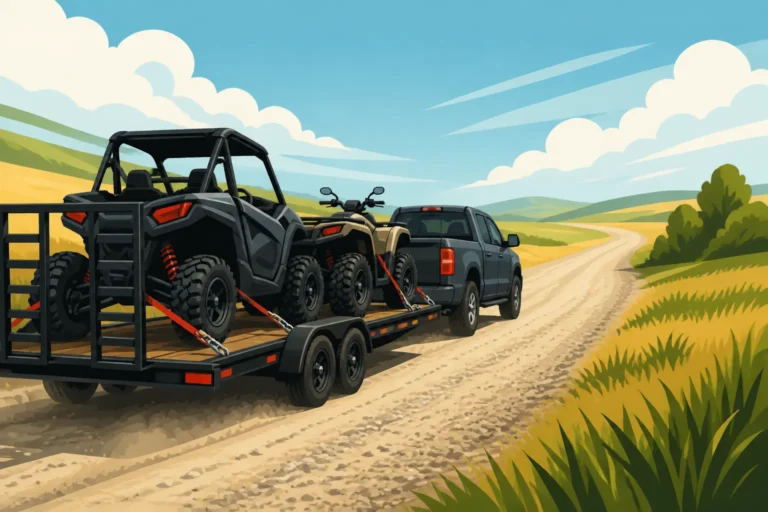
Start with the specific park, not a general assumption about Saskatchewan riding. Moose Mountain and Great Blue Heron are among the provincial parks associated with designated machine trails, but access and requirements can differ by location and conditions. Check the park’s current guidance before making a long drive, especially if you are travelling with a trailer or planning a group ride.
Ask practical questions before leaving home: Is an acknowledgement form required? Does it need to be signed at a particular office or session? Is a trail permit issued as part of the same process? Where should the permit be displayed? Are there seasonal closures or trail restrictions? Park staff can tell you what applies to that location, while the relevant pages on [Saskatchewan Permit Questions Riders Ask] help explain the kinds of details riders commonly need to verify.
It can be tempting to rely on an old form, a friend’s recollection, or a photo of a permit from a previous visit. Those may not reflect the process or conditions for your trip. If you have not visited in a while, confirm the requirements again. A few minutes of checking can prevent a frustrating arrival where the office is closed, the trail is unavailable, or a required step has been missed.
Read the document before entering your details
When you receive the form, take a moment to read the entire document. Look for the park name, the activity it covers, the responsibilities you are accepting, and any statements about routes, conditions, or permitted use. If it refers to an attached map or separate rules, ask to see those materials before signing.
Be clear about who the form covers. If you are bringing several riders or machines, do not assume that one person’s signature automatically covers every participant. The park’s process will determine whether each rider, operator, or group representative needs to complete a step. If a child is riding, ask how the form is handled for a minor and what supervision rules apply.
If something is unclear, ask before signing rather than guessing. For instance, a rider might want to know whether the acknowledgement covers only a specific designated trail system or also certain connecting roads. Staff can explain the local process. Keep any instructions you are given with your trip documents so that the group has a clear reference later.
From form to trail: a practical sequence
Complete the park’s required steps in order
The exact sequence can vary, so use the park’s directions rather than assuming every location follows the same routine. A sensible preparation checklist looks like this:
- Choose a park that permits the kind of machine riding you plan to do.
- Check the park’s current trail information and closures.
- Confirm whether an acknowledgement form, information session, or permit is required.
- Complete the form and any other steps the park specifies.
- Ask where the permit or other documentation must be displayed or kept.
- Review the route and safety instructions with everyone in your group before riding.
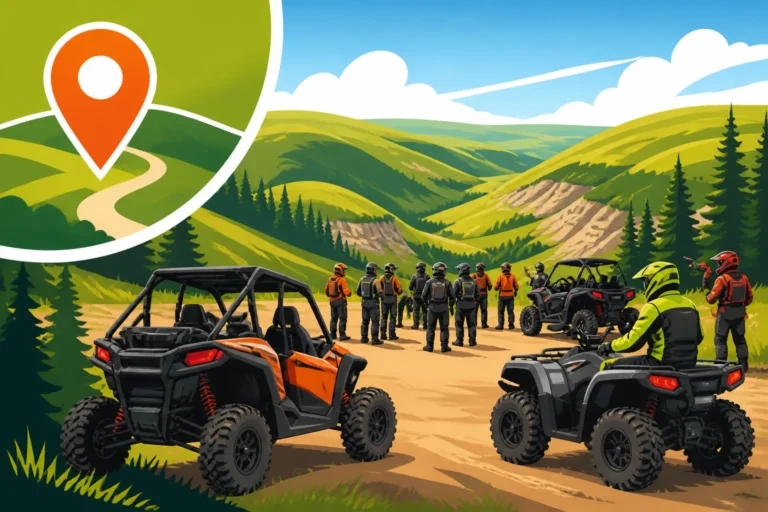
This order helps avoid a common mix-up: arriving with a completed form but not knowing whether you still need a permit, or carrying a permit without understanding where it is valid. If the park offers an information session, treat it as a chance to clarify local conditions, not just a box to tick. The park may explain where machines can travel, what areas are off limits, and what to do if conditions change.
For park-specific preparation, see [How to Get a Saskatchewan Park Trail Permit] and [Signing the ATV Use Acknowledgement Form First]. These topics can help you frame the questions to ask, but the park’s own directions should guide your visit. Keep the form and permit accessible in the way staff instruct, and do not assume a phone photo is an acceptable substitute for a required document.
Check your route and equipment separately
Once the paperwork is sorted, make a separate trail-readiness check. Confirm that your chosen route is open to the type of machine you are bringing and that the trail difficulty suits the least experienced rider in your group. A family planning a short loop near a campground may need a very different plan from experienced riders setting out for a longer route.
A map can help you understand the area, but it is not proof that every line shown is open for ATV use. Apps such as onX Offroad can be useful for organizing a route or comparing map information, but use park information and posted signs to confirm where riding is allowed. If the map and local signs appear to conflict, stop and ask park staff rather than treating the app as authorization.
Check the machine and gear before unloading, too. Consider fuel, tires, lights, helmets, eye protection, communication between riders, and any equipment needed for the conditions. For a longer outing, bring water, basic first aid supplies, and a plan for what the group will do if a machine breaks down. The acknowledgement form does not make an unsuitable route or unprepared machine safe.
| Before the ride | What to confirm | Why it matters |
|---|---|---|
| Park access | The park permits the type of riding you plan | Not every park area is open to machines |
| Acknowledgement | Whether the form is required and who must sign | Group and minor-rider procedures may differ |
| Permit | Whether a separate permit is issued and how to display it | A signed form may not be the only required step |
| Trail status | Designated routes, closures, and local restrictions | Maps can be outdated or show routes with different access rules |
| Rider readiness | Supervision, insurance, protective equipment, and machine condition | Park paperwork does not replace safe-operation requirements |
Park-specific details riders should verify
Moose Mountain and Great Blue Heron
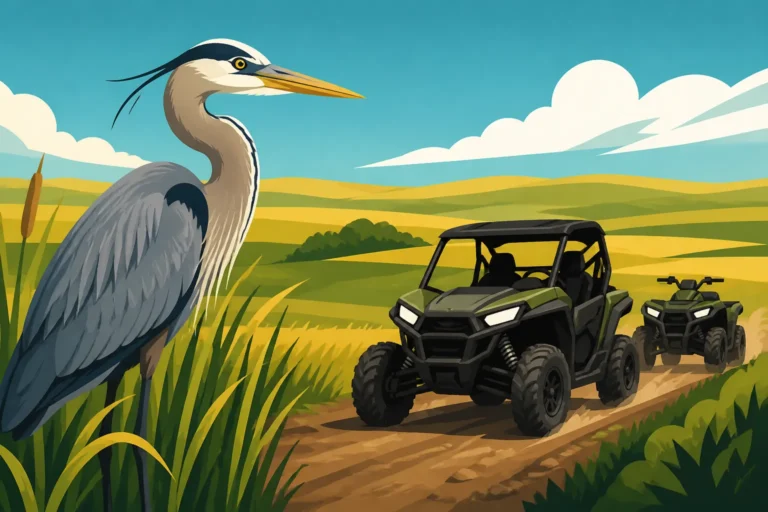
Moose Mountain Provincial Park and Great Blue Heron Provincial Park are often part of Saskatchewan riders’ planning because they have designated trail riding opportunities. Still, do not treat a mention of a park as blanket permission to ride throughout its boundaries. Confirm which routes are designated, whether they are open for your visit, and what the park requires before riding.
For Moose Mountain, check the park’s own directions for permits, any information or acknowledgement steps, and trail conditions. You can also review [Saskatchewan Free Permits at Moose Mountain] and [Moose Mountain Provincial Park ATV Trails] as planning references. For Great Blue Heron, confirm the same kinds of details directly with the park, including how to complete the required paperwork and where riding is permitted. [Saskatchewan Free Permits at Great Blue Heron] and [Great Blue Heron Provincial Park ATV Trails] provide related topics to investigate.
The practical difference between the parks matters. A process that worked at one location may not be the process at another, even if both offer designated trails. If you are planning a two-park trip, make a separate checklist for each stop instead of assuming one acknowledgement or permit covers both. Ask whether you need to repeat a session, form, or permit step at the second park.
Trail closures and park boundaries
Park conditions can change because of weather, maintenance, fire risk, or other management decisions. An acknowledgement completed before your trip does not guarantee that a particular trail will remain open. Check for notices shortly before departure and again when you arrive, especially during periods of changing weather or wildfire concern.
Be careful where park trails meet roads, neighbouring land, or another managed area. A trail may connect to a road or route with different rules, and access beyond the park boundary may require separate permission. A route line on a map does not establish that you may cross private property or enter an area with a closure order. For more context, see [Saskatchewan Parks With Designated Trails Only] and [Saskatchewan Trail Closures After a Storm].
If a sign or staff member directs you away from a route, follow that instruction even if the trail appears passable. Riding around a barrier can cause damage, create safety problems, or violate access conditions. If a closure affects your planned loop, ask about an alternate designated route rather than improvising a detour.
Common mistakes and how to avoid them
Treating the signature as a general pass
The most important misunderstanding is assuming that signing the form means you can ride anywhere in the park. It does not. The form is tied to the park’s requirements, and access is still limited by designated routes, closures, signs, and other rules. Before leaving the trailhead, make sure everyone in the group knows which route they are allowed to use.
Another mistake is assuming that a permit from one park applies everywhere else. A permit issued through a particular park’s process may be specific to that location. If you are visiting another park, verify its own requirements. This is especially important for riders who travel with a group and share paperwork, because one person’s documents may not satisfy another park’s process.
Do not assume that a municipal plate, registration document, or an app’s route information replaces park paperwork. These address different issues. The park determines its own access process, and your machine may also be subject to other operating requirements. When uncertain, ask the park what documentation it expects to see.
Leaving questions until arrival
A group can lose valuable riding time by waiting until the last minute to sort out a form or permit. This often happens when riders assume the paperwork is available at any office, at any hour, or online in the exact format they need. Confirm the process, location, and office arrangements before travelling. If the park requires an information session or a particular pickup point, build that into your day.
It also helps to appoint one person to keep the group’s documents together. That person can carry the acknowledgement, permit, insurance information, and emergency contacts, while each rider understands the route and basic rules. If your group splits up, ensure every rider knows what to do and where to meet if plans change.
For a better trip plan, use a map as a planning tool, not as a substitute for local instructions. onX Offroad may help you organize route ideas, while park staff and official trail notices are the right places to confirm access. Before unloading, compare what you planned with what is actually posted at the site.
Failing to keep the form’s meaning in perspective
An acknowledgement form is useful because it creates a moment to pause and understand the conditions of riding. It is not a guarantee against accidents, a replacement for training, or a promise that a trail will suit every rider. A beginner may need a shorter route, more frequent stops, or a more experienced companion, regardless of how much paperwork has been completed.
Use the form as a prompt to talk through expectations with your group. Discuss speed, spacing, stopping points, what to do if someone gets separated, and how to respond to changing trail conditions. If children are riding, review supervision and boundaries with them in plain language before starting. A calm conversation at the trailhead is usually easier than trying to correct confusion halfway through a ride.
Finally, keep the park’s instructions available during the outing. If a question comes up about the route or permitted use, do not rely on memory alone. Check the information you were given, contact park staff where possible, and stay on clearly designated routes. Careful preparation lets the acknowledgement do what it is meant to do: help riders understand the conditions before they head out.
Disclaimer
This article is for general informational purposes only and does not constitute professional advice. Laws, prices and regulations vary by location and change over time. Consult a qualified professional for guidance on your specific situation.