How Much Bug Spray a June Ride Needs
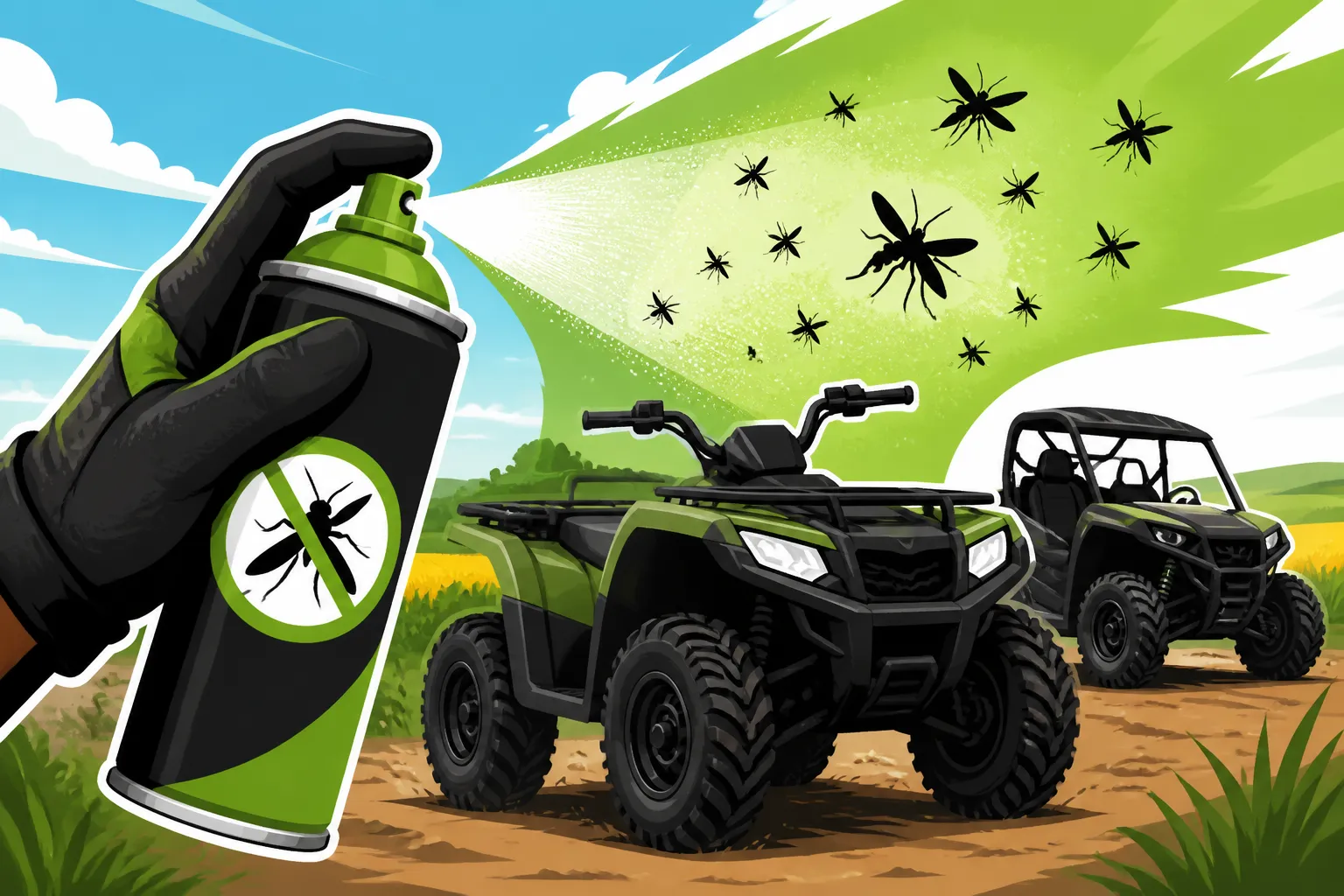
A June ATV ride in Saskatchewan can turn from pleasant to miserable when mosquitoes and blackflies find you at a trail stop, especially in sheltered bush or near wet ground. How much bug spray you need depends less on your kilometres than on how long you’ll be exposed, how often the label says to reapply, and how many riders need coverage. This guide helps you plan a practical amount without overpacking or running short.
Plan for the ride, not just the distance
A fast ride and a full day outdoors need different amounts
A short loop with few stops may take much less repellent than a day that includes lunch, trail repairs, unloading, or time around camp. Bugs often become most noticeable when the machines are parked and the group is standing still. A rider who barely notices them while moving may suddenly need to protect their neck, wrists, and ankles during a break.
Think through the day in blocks: getting ready at the truck or trailer, riding, taking breaks, and packing up afterward. For each block, consider whether you’ll be outside and whether clothing will leave skin exposed. Then check the repellent label for its directions and reapplication guidance. That gives you a better estimate than choosing a bottle based only on how far you plan to ride.
For a full day, a useful starting point is one personal container for each rider, with a spare available for the group. That’s a planning approach, not a promise that one container will last a particular number of hours. Application amount and frequency depend on the product, exposed skin, weather, and how often the label directs you to reapply. A group of four should not assume one small bottle will comfortably cover everyone from morning to evening.
Use conditions to adjust your estimate
June conditions vary across Saskatchewan and from one weekend to the next. Sheltered, damp areas can feel very different from an open, breezy route. Recent rain, standing water, dense vegetation, and still air can all affect how much you’ll want to apply. A route with frequent stops or a long lunch is also likely to require more planning than a continuous ride.
Before loading the machines, check the route and local conditions rather than relying only on last weekend’s experience. A map app such as onX Offroad can help you review the route and think through where the group may stop or regroup; it does not tell you how many insects will be out. For broader preparation, Saskatchewan Trail Conditions Before You Haul and Saskatchewan Riding in Summer are useful topics to consider alongside your repellent plan.
| Ride plan | What to pack | Why |
|---|---|---|
| Short ride with few stops | One personal container per rider | Each person can apply according to the product label without sharing one bottle |
| Full day with several breaks | One personal container per rider and a group spare | Stops extend the time spent exposed, and a spare helps if someone uses more than expected |
| Multi-day trip | A separate supply for each day, plus a reserve | You can keep enough accessible without discovering the shortage at camp |
| Ride with children or sensitive skin | A suitable product selected and applied by an adult | Product directions and age guidance can differ, so check the label before packing |
Choose and use repellent carefully
Let the product label guide the amount
There isn’t one universal amount of bug spray that works for every ride. Products differ in ingredients, concentration, directions, and reapplication intervals. Follow the label for where the product can be applied, how much to use, how often to reapply, and any age-related instructions. Don’t assume a stronger-smelling product or a heavier coating is automatically better.
Apply repellent only where the label allows. If the directions call for applying it to exposed skin or clothing, use those instructions rather than improvising. Keep it away from eyes and mouth, and don’t spray it directly onto your face. Put a small amount on your hands first if the label allows face application, then carefully spread it while avoiding your eyes and lips. Wash your hands afterward, especially before eating.
If you’re riding with children, take the time to read the age directions and have an adult manage application. Children may rub their eyes or touch their mouths without thinking, so careful placement matters. If someone has a reaction or you’re unsure whether a product is appropriate, stop using it and follow the product’s safety directions.
Apply it without creating a gear problem
Bug spray and ATV equipment are not always a good combination. Some repellents may damage or mark plastics, lenses, painted surfaces, grips, or other materials. Avoid spraying near the machine, goggles, helmet visor, controls, or fuel containers. Apply it away from the ATV and your riding gear, following the label, and give it a chance to dry before handling equipment.
A tidy routine helps: park in a safe spot, step away from the machine, apply the product, wash or wipe your hands as directed, and then put on gloves or handle gear. Don’t apply repellent near an open flame or while fueling. If you’re using sunscreen too, follow both product labels; a common approach is to apply sunscreen first and repellent afterward, but the labels should settle any questions about order or use.
Bring the container where you can reach it without digging through a tightly packed trailer. Store it securely so it won’t leak onto clothing, food, or equipment. If you use onX Offroad to plan a stop or regrouping point, remember that route planning and insect protection are separate tasks: set aside time and a safe place for reapplication rather than trying to do it while seated on a running machine.
Make a June ride more comfortable
Cover skin before relying on spray alone
Repellent is only one part of staying comfortable. Long sleeves, long pants, socks, and gloves can reduce the amount of skin exposed to bites. Lightweight, breathable layers are often more practical than repeatedly applying spray to a large area of skin, particularly during a long day. Tuck clothing in where it makes sense for the ride and check for gaps at the wrists, ankles, and neckline.
Clothing can also make the amount of repellent you need more manageable. If your arms and legs are covered, you may have less exposed skin to protect, but you should still follow the product label and avoid treating clothing unless the product directions allow it. Don’t assume ordinary bug spray is suitable for fabric, and don’t use a clothing treatment on skin unless its label specifically permits that use.
A face covering or bug net can be useful at a stationary break if insects are particularly bothersome, provided it doesn’t interfere with safe riding, vision, breathing, or helmet fit. Never let the search for relief compromise your ability to see clearly or operate the ATV. Check that goggles and visors remain clean and unobstructed.
Pack for breaks, brush, and wet ground
A ride near dense bush, damp trails, or muskeg may involve more exposure than an open route, especially when the group stops. Keep a small personal bottle accessible and store the spare in a secure, dry place. If you’re heading into northern terrain, Saskatchewan Muskeg and Machines and Which Tires Handle Muskeg North of Prince Albert can help you think through the riding conditions that may also affect how often you’ll be stationary.
Routes near lakes and wooded areas can mean different surroundings from a dry, open stretch of prairie. If you’re planning a ride near the lake country, Saskatchewan Riding Near Candle Lake is a relevant starting point for trip planning. Use a route-planning tool such as onX Offroad to review where you may stop, but check current local access and trail information separately before setting out.
After riding, check exposed skin and clothing, especially if you’ve been walking through brush or stopping in grassy areas. Repellent does not replace a tick check. Change out of damp riding clothes when practical, and follow the product label for washing treated skin or garments. If you plan another outing the next day, keep the remaining supply together so it doesn’t get forgotten in a gear bag or left in the trailer.
A simple packing method for your group
Count riders, applications, and days
Start with the number of people who need repellent, not the number of machines. Each rider should know where their personal container is and how to follow its directions. Then consider how many separate periods of exposure the trip includes. A single morning outing is different from a long afternoon that runs into evening, and a multi-day campout needs a fresh supply plan for each day.
Next, look at the label’s directions and estimate how many applications each person may need during the trip. Don’t calculate from the bottle’s size alone: two containers with similar-looking packaging may have different directions, and people may need to protect different amounts of exposed skin. Pack a spare for the group, particularly if you’ll be far from the vehicle or store. The spare is a backup, not a substitute for each rider carrying their own supply.
If the ride is in a changing area or you’re uncertain how exposed the group will be, err on the side of having enough rather than assuming you can share one bottle. If you use onX Offroad to organize the route, add a practical regrouping stop where riders can check gear and reapply according to the label. For rides after wet weather, Saskatchewan Riding After Heavy Rain may help you think about conditions that could alter the route and the number of stops.
Keep the plan simple at the trailhead
Before unloading, make sure every rider has the basics: suitable clothing, a personal repellent container, and access to the group spare. Agree that reapplication happens when the product label calls for it, not only when someone is already uncomfortable. Keep food and drink separate from repellent, and apply it away from machines, flames, and fueling areas.
If the bugs are worse than expected, adjust the ride rather than simply applying more product than directed. Shorten a stop, move to a breezier open area when safe and permitted, or add a layer of clothing. A comfortable day is easier to plan when the group treats repellent as one part of its riding gear, alongside route checks, appropriate clothing, and sensible breaks.
Disclaimer
This article is for general informational purposes only and does not constitute professional advice. Laws, prices and regulations vary by location and change over time. Consult a qualified professional for guidance on your specific situation.