Why SATVA Counts Only Four Member Clubs
A small number beside SATVA’s member-club count can make Saskatchewan look like it has almost nowhere to ride. That number is easy to misread: it describes clubs formally counted as members, not every riding group, trail network, or local volunteer effort. This guide explains what the count can—and cannot—tell you, and how to find riding options responsibly.
What SATVA’s Four-Club Count Actually Means
A membership count is not a map of every riding community
When a trail association reports four member clubs, the most straightforward reading is that four clubs are formally included in its membership count. It is not automatically a census of every group of ATV or UTV riders in Saskatchewan. People can ride together, organize local outings, or share information without forming a club or affiliating with a provincial association.
That difference matters if you are searching for a trail near home. A community may have local knowledge, a Facebook group, or a recurring ride but no formal club membership to show on a provincial list. Conversely, a member club may maintain or support a trail area far from its own members’ homes. A four-club figure tells you something about the association’s formal membership; it does not, by itself, tell you how many riders or usable trails exist.
It also does not mean every member club owns a trail system, has year-round access, or allows all machine types. A club may focus on advocacy, volunteer work, organized events, or maintaining a particular network. The best next step is to look at the club’s own information and ask what it currently supports, rather than assuming that membership status guarantees open trails.
“Four clubs” does not mean four riding areas
A club and a riding area are different things. One club can help maintain several connected routes, while a particular riding area might be supported by a local club, a land manager, volunteers, or a combination of them. Some riding opportunities are designated routes in parks; others may depend on agreements and rules that apply only to a specific place or season.
That is why a small association membership count can coexist with a broader map of places riders discuss. The count is about organizational membership. Trail access depends on land status, permissions, local rules, maintenance, seasonal restrictions, and closures. Those factors can change independently of whether a club belongs to an association.
If you are trying to understand the overall picture, use the membership count as one starting point, not the final answer. A useful companion read is [Saskatchewan ATV Clubs Worth Joining], which helps separate the value of joining a club from the basic question of where a machine may legally be ridden. For a wider look at how different kinds of access fit together, see [Saskatchewan ATV Trails: Crown Land and Ditches].
Why the Number May Stay Small
Formal affiliation takes organization and follow-through
A group of riders does not become a formal club simply because its members meet up or share trail information. Formal organizations usually need people willing to take on ongoing responsibilities: coordinating members, communicating plans, keeping records, handling funds if applicable, and representing the group when dealing with land managers or local authorities.
That workload can be a real barrier in rural areas. The same small circle of volunteers may already be maintaining equipment, organizing events, working full-time jobs, and helping with community activities. Adding meetings, administrative tasks, and association obligations can feel like a lot, especially when the club’s members are spread across a large area. A group might still function informally because that is what its volunteers can sustain.
Formal membership may also involve expectations that are useful for coordinated advocacy or trail work but do not suit every riding group. Groups differ in how they make decisions, manage volunteers, communicate with members, or approach land access. Some may prefer to focus on local rides without taking on a provincial affiliation. That does not establish that they are opposed to SATVA; it simply means an informal group and a member club are not the same category.
Geography and volunteer capacity affect how clubs form
Saskatchewan’s size makes it harder to build a single, tightly connected club network than it might be in a compact region. Riders in different parts of the province may have very different nearby terrain, trail opportunities, travel distances, and land-access issues. A club that works well around one community may not have the capacity to serve riders several hours away.
For example, a few volunteers near a northern trail network may be focused on local maintenance and access discussions. A group of riders closer to Regina might be more interested in finding day rides, organizing social events, or advocating for local road rules. Their needs can overlap, but they are not automatically organized into one club. Even where riders share interests, someone still has to initiate the group and keep it functioning.
Volunteer availability can shift, too. A club may become more active when a few committed people step forward, or quiet down when those people move, retire, or take on other responsibilities. A membership number is therefore a snapshot of formal organization, not a permanent measure of how much enthusiasm exists among riders across the province.
Trail access requires local relationships, not just a club label
A club can help build relationships and organize trail work, but affiliation alone does not grant permission to cross land or keep a route open. On public land, access can be affected by the land’s designation, posted restrictions, management decisions, fire conditions, and seasonal rules. On private land or grazing leases, permission and applicable conditions matter. A trail that appears on a rider’s map is not automatically an authorized route.
This is one reason local work can be demanding. A group trying to establish or maintain a route may need to understand who manages the land, communicate with the right people, explain proposed use, and respond to concerns about safety, wildlife, erosion, noise, or other impacts. Those conversations take time. A small club may have to focus on only the projects its volunteers can realistically support.
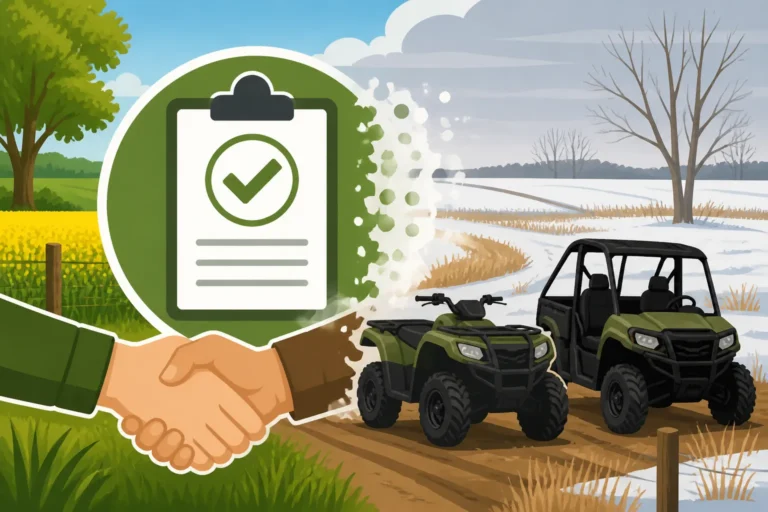
For riders, the practical lesson is simple: ask what the club actually maintains or supports, and confirm access with the appropriate land manager or local authority. The article [The Trail Agreement Behind Crown Land Riding] offers useful context on why organized trail access often depends on agreements rather than a club’s name alone.
How to Find Riding Opportunities Beyond the Member List
Start with the location and the land rules
Instead of starting with “Which club should I join?”, begin with a more specific question: “Where do I want to ride, and who controls that land?” If you are planning a trip near a provincial park, check the park’s machine rules and designated routes. If you are looking at Crown land, check the relevant access conditions and any closures. If your route touches private property or a grazing lease, do not assume that a visible track means you have permission.
A trip near Prince Albert, for example, may involve different land managers and rules from a ride near Moose Mountain or Candle Lake. Even within one broad region, a route can pass through areas with different conditions. Before loading the trailer, confirm that the intended route is open to your type of machine and that you understand any permit, insurance, age, equipment, or seasonal requirements that apply.
For a regional starting point, [Saskatchewan Riding Near Prince Albert] and [Saskatchewan Riding Near Candle Lake] can help you think about the area you want to explore. Treat any trail description as a lead to verify, not a substitute for checking current signs, official notices, and access permission.
Use maps for orientation, not as permission
Mapping tools can make trip planning much easier, particularly when you are unfamiliar with a region or trying to compare possible routes. onX Offroad can help riders explore mapped routes and terrain while preparing an outing. It is useful for orientation and planning, but a line on a map does not establish that a route is open, authorized, or appropriate for your machine.
Before you rely on any mapping app, compare what it shows with official park information, local signage, land-manager notices, and the conditions that apply to the area. Roads, trails, and informal tracks can look similar on a screen, even though their legal status differs. A mapped route may also be outdated, cross a closed area, or lead to a gate or boundary that requires permission.
It can help to save an offline map where service is unreliable, but offline access does not replace preparation. Carry a paper map for remote areas, know how to identify your location, and have a plan for turning around if a route is closed or unclear. [Saskatchewan ATV Trail Map Downloads] is another useful topic to explore when you are comparing trail information and planning a route.
Ask clubs practical questions before joining or travelling
A club’s public description may not answer the questions that matter for your trip. Before travelling a long distance, ask whether the club maintains a specific trail network, whether non-members can use it, what machine types are suitable, and where riders should park or unload. Also ask who is responsible for confirming seasonal access and closures.
If you are considering membership, ask what participation looks like. Some people want organized group rides; others want to volunteer on trail work, support advocacy, or meet local riders. A good fit depends on what you hope to contribute and what the club actually does. Do not assume every club offers the same services, schedule, or access arrangements simply because it belongs to the same provincial association.
A quick, respectful message can save a frustrating day. For example: “I’m planning to ride in the area next month with a side-by-side. Is there a designated route open to that machine, and where should I check for closures before I leave?” That is more useful than asking only whether there are “trails nearby,” because it gives the club enough detail to point you toward accurate local information.
| What you want to know | Best place to start | What to verify |
|---|---|---|
| Whether a group is a SATVA member | SATVA’s membership information or the group itself | Whether the listing is current and what the group does |
| Whether a trail is open | The land manager or official park information | Dates, machine types, permits, and closures |
| Whether a mapped route is usable | Official access information and on-the-ground signs | Permission, boundaries, and route conditions |
| Whether a club suits you | The club’s own contact or public information | Activities, volunteer needs, and membership expectations |
| Whether a local rule applies | The municipality or relevant authority | Bylaws, posted restrictions, and road access |
What Member Clubs Can Contribute
Local knowledge can make a ride safer and more respectful
A local club can be a helpful source of practical knowledge that a broad provincial map may not provide. Members may know where a trailhead is, which routes are suitable for a beginner, where a road crossing requires extra care, or which areas are currently sensitive because of weather or land-use concerns. That kind of local context is especially valuable for visitors who do not know the terrain.
Local knowledge also includes the expectations that keep access relationships healthy. Riders may be reminded to stay on established routes, keep gates as they found them, avoid disturbing livestock, pack out garbage, and slow down near homes or other trail users. These habits are not just good manners. Repeated problems can affect how landowners and communities view future riding.
A club can also connect riders with people who understand local restrictions. That does not make a club member’s advice a legal guarantee, so it is still important to verify official rules. But a knowledgeable local contact can help you ask better questions and avoid mistakes before you arrive.
Organized clubs can help maintain access
Where a club is involved in trail work, its contribution may include clearing debris, maintaining signs, helping with route information, organizing volunteer days, or communicating with land managers. These activities take time and coordination. They are also one reason a member-club count should not be confused with the number of available routes: a club may be responsible for work that is not obvious from a membership directory.
Clubs may also help explain riders’ needs to local decision-makers. A coordinated group can gather feedback, identify recurring problems, and present a more organized account of how a route is used. That can be more effective than a series of disconnected complaints, particularly when a municipality or land manager is weighing safety, maintenance, and community concerns.
If you enjoy using a trail network, ask whether the club needs volunteers or other support. You do not have to be an expert mechanic or an experienced trail builder to be useful. Helping with event setup, communicating closure information, or joining a clean-up day may be valuable. The important thing is to follow the club’s direction and respect the permissions that govern the land.
Membership does not replace your own responsibilities
Even when a club has helped develop or maintain a route, riders are responsible for understanding the rules that apply to their own trip. That can include equipment and insurance requirements, age restrictions, park permits, local bylaws, landowner permission, and closures. Rules may differ between two nearby areas, so do not assume that a route’s connection to a club means the same conditions apply everywhere.
Before you ride, confirm that your machine is permitted, your planned route is open, and you have any required documentation. Keep essential information accessible, especially if you will be travelling away from developed areas. If a sign, gate, or boundary conflicts with what an app or old map suggests, stop and resolve the uncertainty rather than pressing ahead.
For a broader look at how clubs and land agreements can shape access, read [Saskatchewan Club Trails on Crown Land]. For a practical overview of what riders should check before heading out, [Saskatchewan Trail Conditions Before You Haul] is a helpful companion.
How to Read the Four-Club Figure Without Misreading It
Treat it as an organizational clue, not a provincial scorecard
The number can be useful if you are trying to understand how many clubs are formally connected to SATVA. It may also give you a reason to look more closely at how the association supports trail work, communicates with members, or represents riders. But it does not tell you whether Saskatchewan riders are active, whether informal groups exist, or whether a particular trail is available.
A low formal count can reflect the practical difficulty of maintaining volunteer organizations across a large province. It can also reflect how a group defines membership, what it takes to affiliate, how records are presented, or when the count was assembled. Unless the association explains the criteria, the number alone cannot establish which of those factors is responsible.
A careful interpretation avoids two extremes. It is not accurate to conclude that Saskatchewan has only four groups of riders. It is also not safe to assume that many additional informal groups exist in every region. The reliable conclusion is narrower: a reported count of four refers to the clubs counted as members, and you need separate local information to understand other riding communities and access options.
Confirm names and details directly
If you want to contact a club, use SATVA’s own information or the club’s direct contact details, then confirm that the information is current. The named trail organizations associated with Saskatchewan riding include the Little Bear Lake and Big River trail networks, but a trail name, club name, and formal association membership are not always interchangeable. Check how each organization describes itself and what it currently manages.
This is especially important before making travel plans. A club may have changed its activities, a route may be under maintenance, or a seasonal restriction may apply. A listing may also describe a network without promising that every section is open to every machine. Ask specific questions and verify the answers with the relevant land manager where needed.
You can also look beyond association membership when researching a destination. Local tourism and municipal information may help identify contacts, while park offices can explain designated trail rules in provincial parks. For crown land, find the appropriate management information and check for orders or restrictions. These steps take a little extra time, but they are much less frustrating than arriving with a trailer and discovering the route is closed or unauthorized.
Support the kind of riding community you want
If you have been wishing there were more organized rides, clearer trail information, or a stronger local voice for riders, a small club count can be an invitation to get involved rather than a reason to give up. Start by asking nearby riders whether a local group exists. If it does, find out whether it welcomes new members or volunteers. If it does not, talk with other riders about what a realistic, manageable group could do.
You do not need to launch a province-wide organization to make a difference. A handful of people might begin by sharing verified closure notices, organizing a responsible group ride, or contacting a local authority with a clear question about access. If the group grows, it can decide whether formal club status or SATVA affiliation makes sense. The goal is not simply to increase a number; it is to build a dependable community that supports safe, lawful riding.
For riders choosing their next step, the most useful sequence is straightforward: identify the area, verify access, contact the relevant local group or land manager, and decide whether club membership fits your interests. A membership count can point you toward that process, but the real picture comes from the people doing the local work and the rules that apply where you plan to ride.
Disclaimer
This article is for general informational purposes only and does not constitute professional advice. Laws, prices and regulations vary by location and change over time. Consult a qualified professional for guidance on your specific situation.