Saskatchewan Bear Encounters While Riding
A bear appearing around a Saskatchewan trail can turn a relaxed ride into a tense few minutes, especially when the engine is loud and the group is spread out. Knowing how to prevent a close encounter, what to do when you spot a bear, and how to prepare for remote riding helps you make calmer decisions without treating every ride as a crisis.
Why bear encounters can happen on Saskatchewan ATV rides
Where riders are more likely to see bears
Black bears live in many parts of Saskatchewan, and riders are more likely to encounter them in forested and northern areas where bears can find cover, water, and food. A bear may be crossing a trail, feeding near a berry patch, or moving through the same landscape you are travelling across. It may not be interested in your group at all.
The risk is not limited to a marked trail. A route through bush, muskeg, or a quiet gravel access road can bring you near an animal before you notice it. Curves, tall vegetation, and uneven terrain can shorten the distance at which you see what is ahead. Riders in a side-by-side may have a different view from those on an open quad, but neither should assume the machine will keep wildlife away.
Bear sightings are one part of riding in wildlife country. Planning for moose and other animals can also help you think through visibility, spacing, and how your group responds to wildlife; [Saskatchewan Wildlife on the Trail] offers a broader look at that subject.
Why an ATV can make a close sighting more complicated
An engine can mask sounds that might otherwise alert you to nearby wildlife, while a bear may not hear a machine approaching clearly until it is close. Dense vegetation can add to the surprise. If the bear is startled, guarding food, or near cubs, it may react defensively. A sudden close encounter is not proof that it is hunting people, but it is a reason to create distance and avoid provoking it.
Riders can also make a situation worse by trying to get a better look, circling for a photograph, revving the engine, or moving closer to identify the animal. Those actions reduce the bear’s space to leave. They also make it harder for the group to retreat in an orderly way.
Treat any bear sighting as a wildlife encounter, not a trail attraction. Keep people and machines together, avoid blocking the animal’s route, and give it room to move away. If the bear is near a carcass, food source, or cubs, be especially cautious and choose another route rather than trying to pass close by.
What to do when you see a bear on the trail
Stop, gather your group, and assess the distance
If you spot a bear ahead, slow down and stop at a distance that does not bring you closer to it. Alert the riders behind you without revving or rushing forward. Keep children and passengers with the group, and make sure nobody walks toward the bear to take a photo. Do not surround it or block the route it could use to leave.
Take a moment to notice what the bear is doing. Is it moving away, feeding, standing and watching, or travelling with cubs? You do not need to get closer to answer that question. If you cannot safely identify the situation, give it more space and retreat along the route you came from when you can do so without approaching it.
Speak calmly so the bear can recognize that people are present, and avoid sudden movements or yelling. Do not try to chase it off with the machine, drive toward it, or squeeze past it at close range. A bear that has a clear escape route is more likely to leave without further interaction.
Back away without turning the sighting into a chase
If the bear is on the trail and does not move, do not force your way through. Slowly back away or turn around when you have room to do so. Keep the group together and leave the area. A rider who speeds past the bear may startle it or lose control on rough ground; a rider who circles around may unintentionally move between a mother bear and her cubs.
| What you see | Safer response |
|---|---|
| A bear crossing ahead | Stop at a distance and let it cross. Do not follow it into the bush. |
| A bear standing on or near the trail | Do not try to squeeze by. Wait only if you can remain well back, or retreat and take another route. |
| A bear with cubs | Give the family plenty of space and leave the area without getting between them. |
| A bear near a carcass or food source | Do not investigate. Back away and choose another route. |
| A bear approaching your group | Stay together, avoid sudden movements, and prepare to use bear spray if it comes within effective range. |
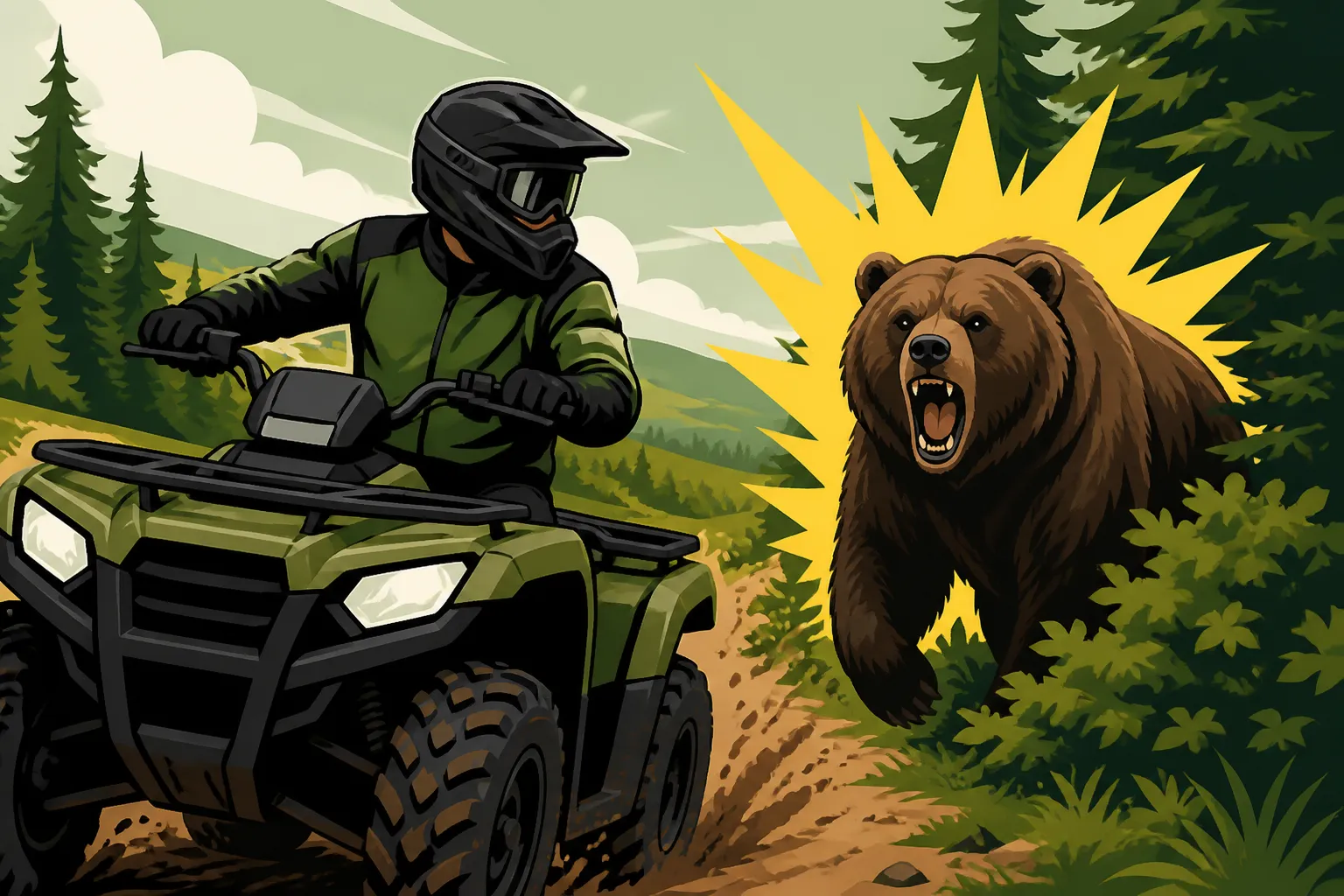
If a bear approaches, do not run. Running can trigger pursuit, and an ATV is not a dependable way to escape a bear safely. Keep facing the animal without moving toward it, speak in a calm, firm voice, and give it room to withdraw. If it continues closing the distance, have bear spray ready and use it according to its instructions when the bear is within the product’s effective range.
Bear-spray guidance depends on the situation and the product. Carry it where you can reach it quickly—not buried in a pack—and learn how to remove the safety and aim it before leaving home. It is a last-resort deterrent, not a reason to approach wildlife or take risks.
If a bear charges or makes contact
A charge can be frightening, and people often have only seconds to respond. Some charges stop before contact; others do not. Do not accelerate toward the bear or attempt a risky high-speed escape through brush, a ditch, or uneven terrain. Keep the group from scattering, and use bear spray if the bear comes within range and you can deploy it.
Advice for responding to physical contact can vary with the bear’s behaviour and the circumstances. A defensive encounter is different from a predatory one, and there is no single response that fits every situation. Before riding in bear country, review current guidance from a recognized wildlife authority and learn how to distinguish the recommended responses. Do not rely on a short trail-side conversation or a social-media tip as your only preparation.
After an encounter, move to a safe place before stopping to discuss what happened. If anyone is injured, seek emergency help. Report a serious or repeated bear conflict to the appropriate local wildlife authority, particularly if the animal appears injured, is repeatedly approaching people, or is behaving unusually.
How to reduce the chance of an encounter
Ride with wildlife in mind
A group can make its presence known without behaving aggressively. Talk normally, keep riders close enough to communicate, and slow down where sightlines are short. Avoid racing through blind corners or dense bush where you cannot stop safely. These habits help with wildlife generally, not just bears.
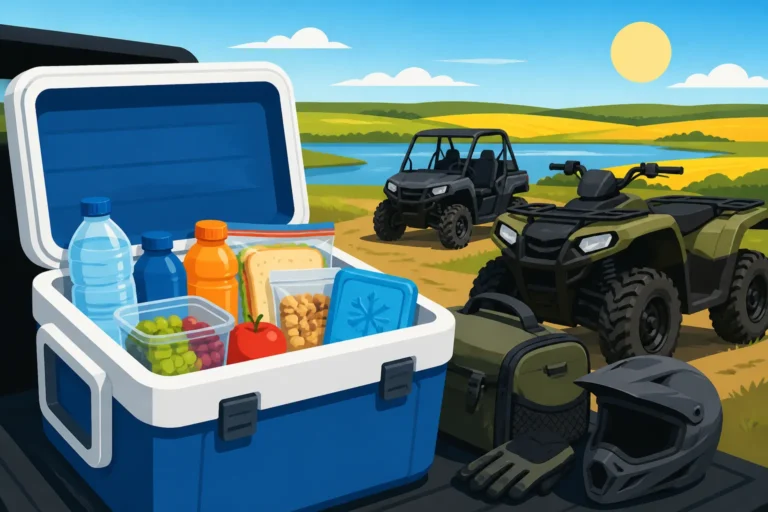
Keep food, garbage, and scented items secured at camp or during breaks. Do not leave snacks or lunch wrappers on a machine, and never feed wildlife. A bear that finds food associated with people may return to the area, creating problems for later visitors as well as your own group.
Plan your route before unloading. Look for trail closures, local notices, and changes to access before making a long drive. The practical preparation in [Saskatchewan Trail Conditions Before You Haul] can help you avoid arriving at a trailhead only to discover that conditions or access have changed. For remote rides, it is also useful to understand [Cell Dead Zones in Northern Saskatchewan] before you depend on a phone for directions or emergency communication.
Prepare your route and communication plan
Tell someone where you plan to ride, who is in the group, and when you expect to return. Agree on a turnaround time and a meeting point if riders become separated. In areas with limited cell coverage, do not assume a phone call or map app will work when you need it. Carry a paper map as a backup and make sure someone in the group can use it; [Carrying a Paper Map Into Northern Bush] covers why that simple backup matters.
Digital mapping tools such as onX Offroad can help riders review routes and organize a trip before leaving, but a phone or mapping app should not be your only navigation plan. Check that you understand the route in advance, and consider whether you will have the information you need if the device loses service or power. onX Offroad may be one part of that planning, while a paper map and a clear group plan provide useful backups.
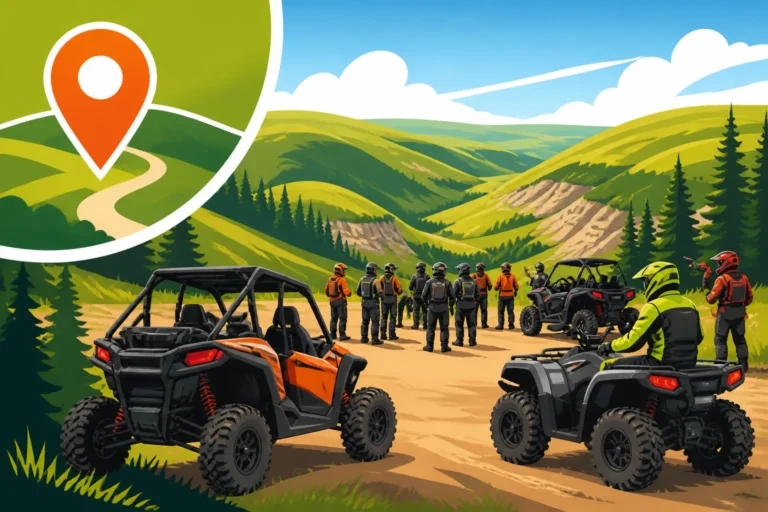
Let the least experienced rider know the plan and make sure everyone understands how the group will respond to a wildlife sighting. A quick conversation at the trailhead can prevent a confusing moment later: stop, stay together, do not approach, and follow the lead rider’s instructions. For a longer remote loop, review [First Aid Kit for a Long Northern Loop] as part of your wider emergency preparation.
What to carry and what to do after a sighting
Build a practical wildlife-safety kit
A bear-aware kit should be easy to reach while you are riding, not packed under tools, spare clothing, and food. Consider carrying bear spray in a secure, accessible holster, a whistle, a first-aid kit, a charged phone, and a backup navigation option. Check the spray canister’s instructions and condition before the trip, and know how wind may affect its use.
Wear clothing suited to the route and weather, and avoid carrying food in a way that leaves strong smells around the machine. If you stop for lunch, keep the group together and pack out every wrapper and scrap. These steps do not guarantee that you will avoid a bear, but they reduce avoidable attractants and make it easier to respond if an animal appears.
Your plan should account for changing access, too. Fire conditions and closures can alter where riders can travel, so check notices before heading out; [Saskatchewan Wildfire Closures and Riding] is a useful companion topic when planning a ride during fire season. Leave extra time for detours instead of pushing ahead because the original route is blocked.
Debrief the encounter and adjust the plan
Once you are well away from the bear, check that every rider is accounted for and calm enough to continue safely. If the group is shaken, tired, or unsure about the route ahead, turning around is a sensible choice. There is no prize for completing a loop after conditions have changed.
Discuss the sighting without blaming the rider who spotted it or the person who called for a stop. Note the location and general behaviour while details are fresh, but do not return to the area to investigate. If you use onX Offroad or another mapping tool to keep trip notes, record only what will help your group avoid repeating a close approach; never treat a sighting marker as an invitation to seek out the animal.
Finally, use the experience to improve the next ride. Did the group leave enough space between machines? Could everyone hear the lead rider? Was bear spray accessible? Did the route have a safe turnaround option? A few practical changes can make the next trip calmer and better prepared. For broader habits that help keep shared trails pleasant and safe, see [Saskatchewan Trail Etiquette Locals Expect].
Disclaimer
This article is for general informational purposes only and does not constitute professional advice. Laws, prices and regulations vary by location and change over time. Consult a qualified professional for guidance on your specific situation.