Washing Mud Off a Quad Before the Next Park
Mud from a Saskatchewan ride can hide in places a quick rinse never reaches, then drop onto a different trail or park days later. That is frustrating when you have already loaded the machine and are ready to go. This guide walks through how to clean a quad or side-by-side before your next park ride, where to look for trapped debris, and how to avoid bringing mud, seeds, and grit along for the trip.
Why cleaning your ATV before a park ride matters
Mud can carry more than mud
Wet soil can cling to tires, fenders, skid plates, footwells, axles, and the underside of a machine. Along with it may come seeds, plant fragments, and other debris picked up from a trail, field, ditch, or roadside. You may not notice any of that when you’re packing up, especially if the mud dries during the drive home.
The concern is not just a dirty trailer or a machine that needs attention later. Debris can be carried from one riding area to another, where it may introduce unwanted plants or organisms. Cleaning before you arrive at a park is a straightforward way to reduce that risk and to make a more responsible start to your ride.
Saskatchewan parks can have specific rules about where machines may travel and what riders need to do before using designated trails. Check the park’s current instructions before unloading, and don’t assume a wash area is available at the trailhead. If you’re planning a trip to a designated area, Saskatchewan Parks With Designated Trails Only is a useful reminder that being ready for the trail includes knowing where riding is allowed.
A clean machine is easier to inspect
Mud can conceal a loose fastener, a damaged tire, a leaking hose, or a branch caught around an axle. Washing gives you a chance to spot issues before they become a problem farther down a trail. It also helps you notice damage that may have happened on the previous ride, while you still remember where and when it occurred.
For example, a rider returning from a wet, rutted section near a northern trail might find a wad of grass packed behind a skid plate. Removing it can help with a closer inspection of the underside. A side-by-side driver might discover that dried mud has covered a cracked fender or obscured a light. Those are easier fixes at home than in a parking area with limited tools.
Cleaning does not replace a mechanical check. It simply makes the check more useful. Once the mud is off, look over the machine before you load it and again before your next ride.
How to wash mud off a quad or side-by-side
Start with the areas that trap debris
Park the machine on a stable surface where runoff will not flow into a storm drain, creek, lake, or other sensitive area. Follow local requirements for wash water and detergents, and avoid washing beside a waterbody. If you’re at home, a driveway or suitable wash area is generally more practical than a spot where muddy runoff can spread into a ditch or drainage channel.
Begin with a visual inspection. Remove larger clumps of mud and plant material by hand or with a soft brush. Pay particular attention to:
- Tire treads and wheel wells
- The underside of the frame and skid plates
- Axles, A-arms, and suspension components
- Footwells and floorboards
- Radiator screens and cooling areas
- Hitch points and trailer-facing surfaces
- The bed, cargo rack, and fender edges
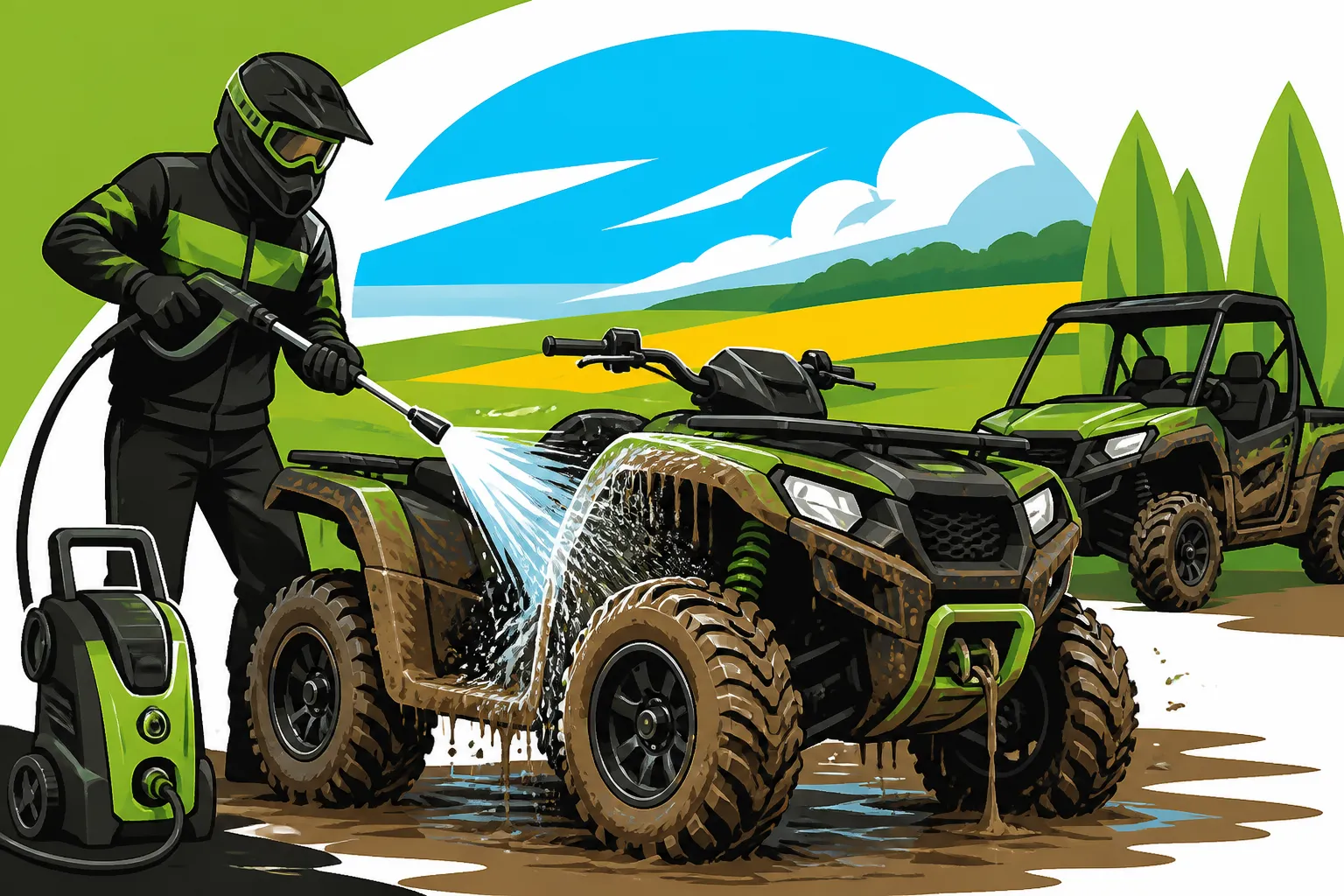
Use a moderate spray rather than holding a pressure washer close to seals, electrical connectors, bearings, or radiator fins. High-pressure water in the wrong place can push grit or moisture where you don’t want it, or bend delicate fins. If you use a pressure washer, keep the nozzle moving and give vulnerable areas extra space. A hose, brush, and patience are often better than trying to blast every patch off in seconds.
Wash, inspect, and dry in a deliberate order
A practical wash sequence is to work from the top down, then make a second pass underneath. Rinse loose dirt first, apply a vehicle-safe cleaner if needed, and use a brush for stuck-on material. Rinse again without soaking sensitive components. If mud has dried into a thick layer, let it soften with water rather than scraping aggressively against plastic, paint, or rubber.
After washing, check for debris that may have shifted rather than come free. Look behind guards and around the suspension, where plant matter can get wound around moving parts. Check the tire grooves individually; a quick glance at the sidewall won’t tell you whether seeds or clumps are packed between the lugs. If something is wrapped around an axle, switch the machine off and remove it safely rather than reaching near moving parts.
Dry the machine before covering it or storing it in a closed trailer. A towel or air blower can help with accessible areas, but avoid directing compressed air into bearings or electrical connectors. If you’ve been riding in especially wet conditions, let the machine air out and check for remaining moisture around the seat, storage compartments, and connectors.
| Area to clean | What can get trapped there | Useful approach |
|---|---|---|
| Tire treads | Mud, seeds, small stones | Inspect each groove and brush out packed material |
| Underside and skid plates | Thick mud, grass, branches | Rinse gently, then inspect behind guards |
| Axles and suspension | Wound vegetation and grit | Remove debris by hand only with the machine off |
| Radiator screen | Fine mud and plant matter | Clear carefully without bending the screen or fins |
| Footwells and cargo areas | Soil, leaves, loose debris | Brush out corners before rinsing |
| Trailer-facing surfaces | Dried mud and plant fragments | Check fenders, hitch area, and tie-down points |
Prepare the machine and your route before leaving
Make cleaning part of the loading routine
It’s easy to arrive home late, unload the cooler, and tell yourself you’ll wash the quad tomorrow. Then the next ride comes around, and the mud is still packed under the machine. A simple routine prevents that last-minute scramble: inspect and clean the machine after a muddy ride, then do a quick check before loading for the next one.
Keep a brush, gloves, a small scraper, and a towel with your riding gear. A portable light is handy for checking the underside when you return after dark. If you have more than one machine, clean each one before it goes on the trailer; one muddy tire can leave debris across the deck and onto another vehicle.
For a group ride, agree on the plan before the day of departure. If one person is bringing machines that were used in deep mud, ask them to clean them at home rather than relying on a park or campground to provide a wash station. That avoids awkward delays at the trailhead and helps everyone start with machines that are ready for the area’s requirements.
Confirm the destination’s instructions
Cleaning the machine is only one part of preparation. Confirm where the park allows machines, whether a permit or acknowledgement is needed, and whether trail access is open for your planned date. Conditions can change with weather, seasonal restrictions, maintenance, or fire-related closures. Do not treat a route shown in a map app as proof that a trail is open or that off-trail travel is permitted.
If you use onX Offroad to organize a route, treat it as a planning aid rather than the final word on park access. Check the park’s own information and posted signs before you ride. The same applies to a route shared by a friend: a saved track can help you navigate, but it does not replace local rules or a current trail check.
onX Offroad can also be useful when you are trying to plan a stop or figure out how far a staging area is from your route. Before counting on a wash facility, verify directly with the park, campground, or service provider that it exists and is available to riders. Wash stations are not guaranteed, and arriving with a muddy machine can leave you without a convenient option.
For broader preparation, Saskatchewan Trail Conditions Before You Haul can help you think through trail status before towing north or heading to another riding area. If you are riding in a park, review Saskatchewan Park Use Acknowledgement Forms and Saskatchewan Machines Washed Before a Park Ride as part of your pre-trip checklist.
Common cleaning mistakes and a better pre-ride checklist
Avoid rushing the rinse
A fast spray over the visible plastic can make a machine look clean while leaving mud under the frame, between tire lugs, or behind a guard. That’s the main reason a second inspection matters. Take a moment to look from both sides and use a light if the underside is hard to see.
Another common mistake is using a very close, high-pressure spray on every component. It may remove mud quickly, but can also force water into places that should not be soaked. Use a sensible distance, avoid sensitive parts, and use a brush for stubborn patches instead of trying to solve everything with pressure.
Don’t forget the trailer. Mud and plant material can drop from tires during transport, then be carried to the next location. Sweep or rinse the trailer deck where appropriate, check tie-down straps for packed dirt, and remove any plant matter caught around ramps or wheel stops.
Use a repeatable departure checklist
A small checklist is easier to follow than relying on memory when you’re excited to get going. Before loading, confirm that the machine is reasonably clean, the tires and underside are free of obvious debris, and no vegetation is wrapped around moving components. Check that the wash area and any runoff are being handled appropriately, especially if you are cleaning near a property boundary or water.
Then confirm the destination’s rules and access details. Saskatchewan Park Trail Permits Are Free covers one part of park planning, while [Saskatchewan Permit Questions Riders Ask] can help you identify questions to resolve before you leave. Requirements can differ by location, so don’t assume the process at one park or trailhead applies everywhere.
A pre-ride checklist might look like this:
- Remove clumps of mud and plant material from the tires and underside.
- Brush debris from suspension parts, footwells, cargo areas, and the radiator screen.
- Rinse gently and inspect the areas that are easy to miss.
- Let the machine dry before covering or transporting it.
- Sweep or clean the trailer deck and ramps if they picked up debris.
- Check the destination’s current access, designated trails, and permit instructions.
- Pack a brush and gloves in case you need to remove fresh debris after the ride.
This routine doesn’t need to be elaborate. A few deliberate minutes after a muddy day can save time at the next trailhead and reduce the chance of carrying unwanted material between riding areas. If you are comparing possible destinations, Saskatchewan ATV Trails: Crown Land and Ditches can also help you distinguish park riding from other kinds of access, where the rules and land permissions may differ.
Disclaimer
This article is for general informational purposes only and does not constitute professional advice. Laws, prices and regulations vary by location and change over time. Consult a qualified professional for guidance on your specific situation.