Saskatchewan Moose Encounters While Riding
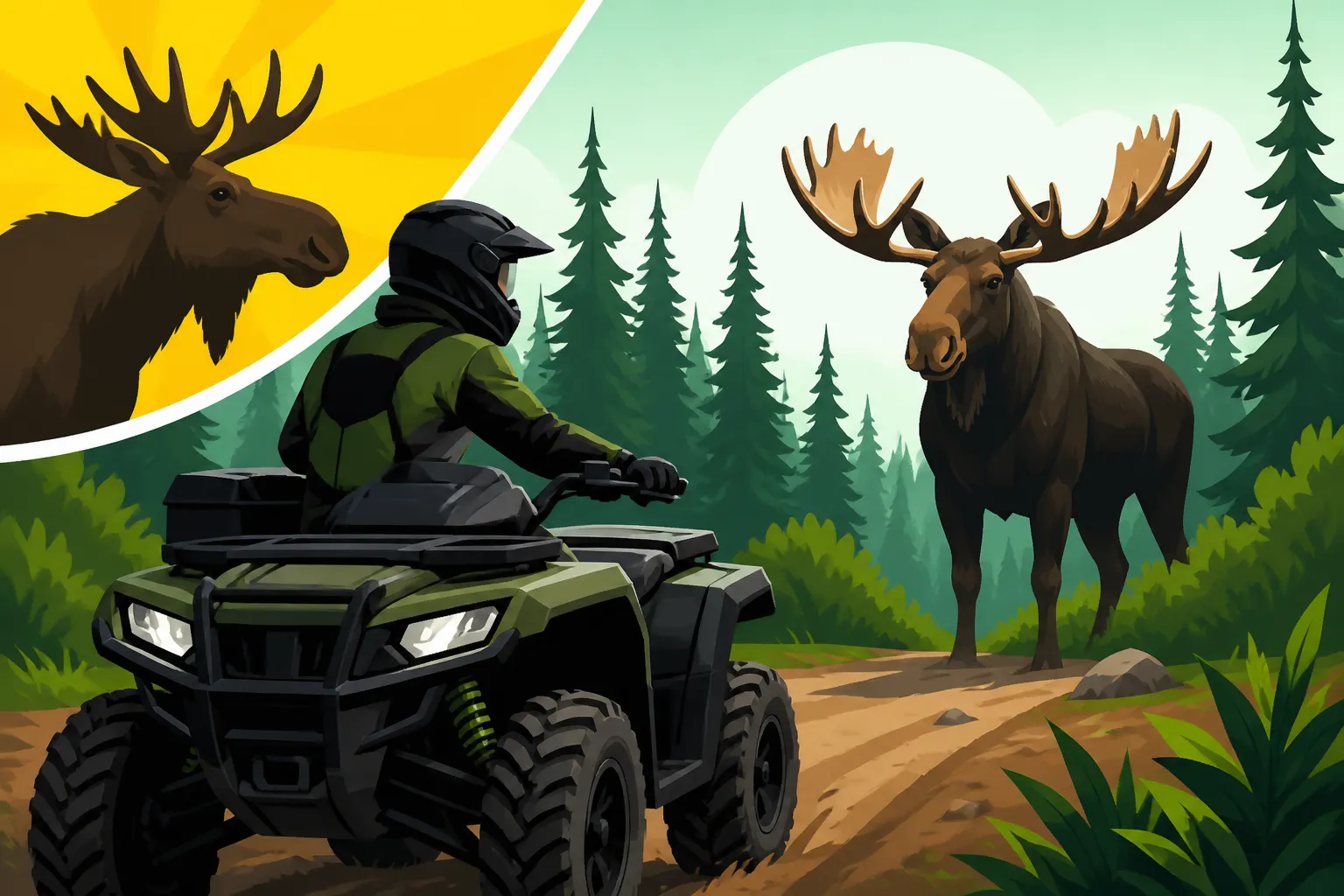
A moose can appear suddenly on a Saskatchewan trail, especially where bush, muskeg, and narrow sightlines leave little room to react. The safest response is to slow down, stop at a respectful distance, and give the animal a clear way to leave. This guide explains how to prepare for an encounter, what to do if a moose approaches, and how to ride more safely afterward.
Why moose encounters happen on Saskatchewan trails
Where and when riders may see moose
Moose live in many parts of Saskatchewan, particularly in forested and northern areas where they can find cover, water, and browse. Riders may encounter one near a trail, in a clearing, beside a wetland, or along a road through the bush. A moose can also be difficult to spot in dense vegetation until it moves.
There is no reliable “moose-free” riding hour. Animals may be active at different times, and poor visibility can make an encounter more surprising at dawn, dusk, or in shaded forest. In spring, a cow may be accompanied by a young calf. In fall, bulls may be more focused on breeding and less predictable. These are reasons for extra caution, not guarantees that a moose will behave in a particular way.
Before heading out, review [Saskatchewan Wildlife on the Trail] and plan for conditions in the area you intend to ride. If your route is near communities such as Nipawin or Prince Albert, or farther into the northern bush, do not assume that a familiar trail will be clear just because it was quiet on a previous trip.
Why an ATV or UTV can make an encounter harder
A machine is noisy, but noise does not ensure that wildlife will move away before you arrive. Bush, wind, terrain, and the engine itself can limit what you hear. A moose may be feeding beside a trail or standing just beyond a bend, leaving little time to choose a safe response.
A vehicle can also make it tempting to keep moving because the rider feels protected by the machine. That confidence can lead to a poor decision: edging closer for a photo, revving the engine to make the animal move, or trying to squeeze past. A moose is large, powerful, and capable of moving quickly. The safest plan is to avoid pressure and give it room to choose its own direction.
Good trail habits help reduce surprises. Keep a speed that allows you to stop within the distance you can see, especially near brush, water, bends, and trail junctions. Keep riders in your group close enough to communicate, but leave enough space that a sudden stop does not cause a collision. [Saskatchewan Trail Etiquette Locals Expect] is useful background for sharing trails responsibly with wildlife and other users.
What to do when you see a moose
Stop, assess, and leave an escape route
If a moose is ahead, ease off the throttle and stop well before reaching it. Avoid sudden acceleration, repeated revving, honking, or shouting. Those actions may startle the animal or make it feel trapped. Keep your group together and communicate calmly so the riders behind you also stop.
Look for the direction the moose could leave. Do not move in front of it, ride around it to block its path, or try to pass between an adult and a calf. If the animal has an open route away from you, remain still and give it time. If it does not move, or you cannot tell where it may go, retreat slowly along the route you came from when that can be done without approaching it.
Do not treat the trail as a viewing spot. Keep people and machines back, and do not get off to walk closer for a photograph. A quiet, patient retreat may feel inconvenient when a group is eager to continue, but it is safer than trying to hurry a large wild animal away.
| What you notice | Safer response |
|---|---|
| Moose standing on or near the trail | Stop well back and wait for a clear route away |
| Cow with a calf | Do not approach, separate them, or pass between them; retreat if needed |
| Moose turning toward your group or acting agitated | Increase distance calmly and leave the area |
| Poor sightlines or no obvious escape route | Back away when safe; do not try to squeeze past |
| Moose near a road or creating an immediate hazard | Keep clear and contact the appropriate local authority |
Recognize when the animal needs more space
A moose may show signs of agitation through its posture or movement. It might stop feeding, focus on the riders, turn toward them, hold its ears back, or move its head and body in a tense way. No single cue predicts exactly what it will do, so do not wait for a specific warning before increasing your distance.
If the moose starts moving toward you, do not try to race it on the trail or steer toward it to make it turn. Move away calmly if there is a clear retreat route. If you can put a substantial barrier, such as a large tree, between yourself and the animal without moving closer, do so. Stay alert and do not assume the animal has left just because it is briefly out of sight.
A UTV cab or ATV may feel like a shield, but it is not a reason to approach or provoke a moose. Keep your hands and body inside the vehicle, and avoid driving toward the animal. If a group is spread out, tell the riders behind you to stop and wait; a moving machine approaching from behind can add pressure to an already tense situation.
How to prepare before a ride
Plan routes with visibility and communication in mind
Before unloading, check the route, access points, and any current trail or area notices. Apps such as onX Offroad can help you review a route and keep track of where your group is headed, but a mapped line does not mean the trail is clear of wildlife or open to riding. Confirm access rules and local conditions separately, and keep a backup way to understand your location if your phone has no service.
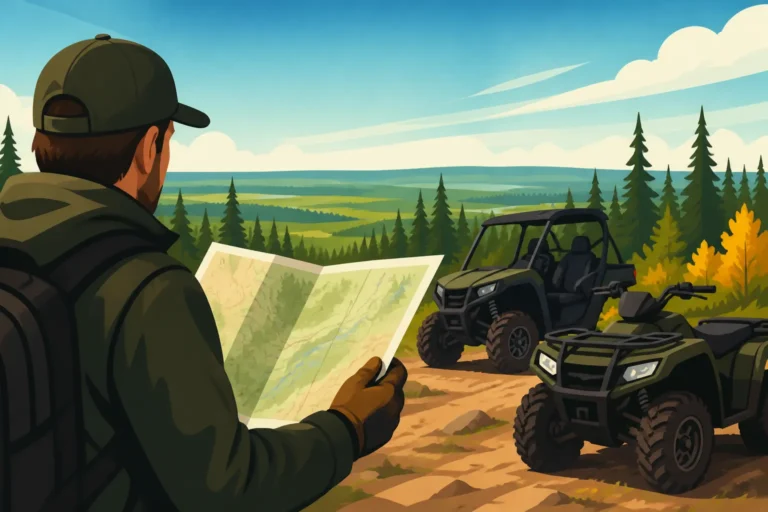
Cell coverage can be limited in remote areas. Share your intended route and expected return time with someone who is not riding with you. For northern trips, review [Cell Dead Zones in Northern Saskatchewan] and consider carrying [Carrying a Paper Map Into Northern Bush] as a backup to a phone or navigation device. A map is only useful if riders know how to use it and have a plan for what to do if the group becomes separated.
Use onX Offroad or another route-planning tool before the ride to identify junctions, turnaround options, and places where the group can stop without blocking a narrow trail. Download or save what you need before leaving reliable service, and do not focus on a screen while moving. The point of planning is to reduce confusion if an encounter forces you to turn back, not to encourage riders to press on regardless of conditions.
Set group rules and carry basic safety gear
Agree on a few simple rules before starting: the lead rider signals hazards, everyone maintains a safe following distance, and the group stops when the person ahead stops. Choose a regrouping point that is away from the encounter rather than asking riders to gather beside the animal. If someone sees a moose, they should alert the group without accelerating toward it or creating a noisy rush.
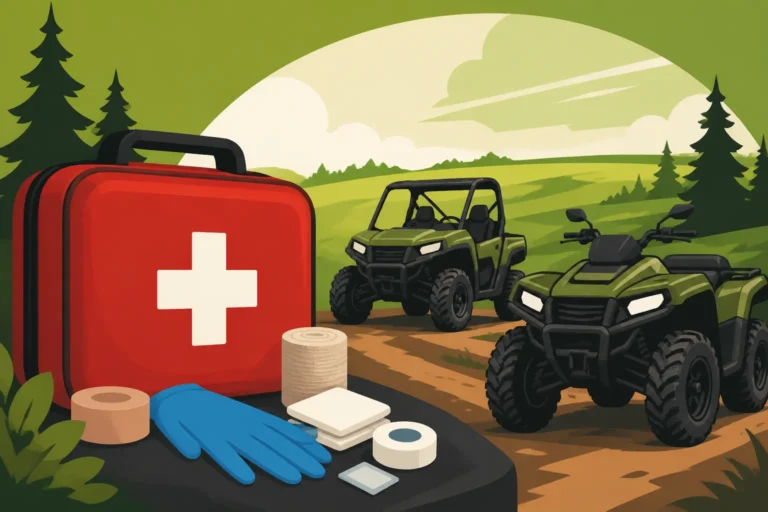
Pack a first-aid kit and the essentials for a delay, especially if the route is remote. [First Aid Kit for a Long Northern Loop] can help you think through what to bring. A charged phone, suitable clothing, water, and a way to navigate back are practical basics, but none replaces keeping distance from wildlife.
Check conditions before trailering as well as before riding. Recent rain, fallen trees, closures, or changing access can alter a route and encourage riders to take unfamiliar detours. Review [Saskatchewan Trail Conditions Before You Haul] and, when riding in fall, account for other outdoor users and changing visibility with [Saskatchewan Riding in Fall Hunting Season]. If your group rides a route repeatedly, do not let familiarity turn into an excuse to travel too quickly around blind corners.
What to do after an encounter
Wait before continuing and avoid following the moose
Once the moose has left the trail, pause and make sure it is not moving nearby or returning to the same area. Do not follow it to see where it went. If you cannot tell whether the route is clear, or the animal remains close, turn back and choose another route rather than forcing a passage.
If you encountered a cow and calf, be especially cautious about continuing through the same area. A calf may be hidden in nearby vegetation, and the adult may remain close. Give the area time and space; do not search the brush for the animal or assume that not seeing the calf means it has left.
Tell the rest of the group what happened and agree on the next move before restarting. If the encounter has shaken someone, take a proper break away from the trail. A rider who is rattled may miss another hazard, particularly on a rough or narrow section.
Report hazards and treat a collision seriously
If a moose is injured, appears trapped, or is creating an immediate hazard on a public road, keep your distance and contact the appropriate local authority. Do not try to move, treat, or approach the animal. If a collision has occurred, get yourself and your group to a safe place first, then seek help and follow the instructions of emergency responders or wildlife authorities.
A close encounter can also be useful information for the group’s future planning. Note the general location and trail conditions without returning to approach or photograph the animal. If you use onX Offroad to record your route, a location note can help you remember where the encounter happened and make a cautious detour next time. Share useful hazard information with the relevant trail organization or local authority where appropriate.
The best outcome is not getting the perfect picture or finishing the loop at any cost. It is leaving the animal undisturbed, getting everyone home safely, and making sensible adjustments to the ride plan. When you cannot confidently give a moose room, turn around.
Disclaimer
This article is for general informational purposes only and does not constitute professional advice. Laws, prices and regulations vary by location and change over time. Consult a qualified professional for guidance on your specific situation.