Washing Your Quad to Stop Invasive Species
Mud packed around a Saskatchewan quad can carry seeds, plant fragments, and contaminated soil from one trail system to another. It is easy to miss the material tucked behind a skid plate or caught in a trailer’s tire tread, especially after a long ride. This guide explains when and how to clean your ATV or UTV, what to inspect, and how to avoid washing debris into sensitive areas.
Why cleaning your ATV helps protect Saskatchewan trails
Mud can carry more than dirt
A clump of mud may look harmless, but it can contain seeds, roots, and plant pieces picked up along a trail, field edge, or ditch. If that material drops at another trailhead, campsite, or riding area, it may help unwanted plants spread. Cleaning a machine between locations is a practical way to reduce that risk.
The same principle applies to equipment that travels with your quad. A trailer can collect soil in its tires, fenders, ramps, and deck. Boots, shovels, tow straps, and recovery gear can also hold mud or plant fragments. If you clean only the ATV, debris left on the trailer or gear can still be carried to the next place you ride.
This matters particularly when a trip includes different kinds of terrain. A machine used on a muddy farm approach, for example, may later be unloaded at a maintained trailhead. Before hauling to another area, check [Saskatchewan Trail Conditions Before You Haul] and consider whether your equipment needs a thorough clean first.
Small cleaning habits make a difference
A full wash is not always convenient at the end of a ride, but even a quick inspection can catch obvious debris before it dries and becomes harder to remove. Look for seed heads, grass, leaves, and thick soil around the tires and underbody. Remove what you can safely reach, then arrange a proper wash before the next riding area.
Cleaning is not just a matter of appearance. A build-up of mud can hide damage or make it harder to notice a leaking hose, loose fastener, or damaged component. Taking a few minutes to inspect the machine while cleaning gives you a chance to spot problems before the next outing.
It also helps protect the places riders enjoy. Saskatchewan has a mix of park trails, club routes, rural land, and public access areas, each with its own conditions. Following local guidance and taking care not to leave mud or plant material behind supports good trail etiquette. For more on respectful riding habits, see [Saskatchewan Trail Etiquette Locals Expect].
When to wash a quad or side-by-side
Clean before moving to a different riding area
The most useful time to wash is between locations, especially when you are leaving a muddy or weedy area and heading to a different trail network. If a proper wash is not available at the first location, remove loose material before loading and clean the machine as soon as you can do so responsibly.
Pay special attention after riding through tall grass, brush, wet ground, or muddy sections. Seeds and plant fragments can cling to body panels, axles, racks, and protective plates. A side-by-side may have more places for debris to collect because of its larger underbody, wheel wells, and cargo area.
Before choosing a destination, check for access rules and closures. [Saskatchewan Crown Land Access Rules] and [Saskatchewan Wildfire Closures and Riding] are useful topics to review because being allowed to ride in one area does not mean every nearby route is open or suitable. A route-planning tool such as onX Offroad can help you organize where you intend to go, but confirm access and current local restrictions through the responsible land manager or municipality.
Wash after especially muddy or seed-heavy rides
A machine that has been through deep mud deserves a closer look than one that stayed on a dry, established trail. Thick deposits can hide plant material and remain packed around the underside. If you are heading out again soon, do not assume that a quick rinse of the visible bodywork has cleaned the machine.
A ride through brush or mature vegetation is another good reason to inspect carefully. Seed-bearing plants may leave material in places that are easy to overlook, including radiator screens, footwells, skid plates, and the space around suspension parts. Remove visible debris without reaching into moving or hot components.
Park use may also come with specific preparation requirements. Review [Saskatchewan Machines Washed Before a Park Ride] before heading to a park, and follow any posted washing instructions at the site. A general cleaning routine is helpful, but it does not replace a park’s own rules.
Do not wash debris into a lake, ditch, or storm drain
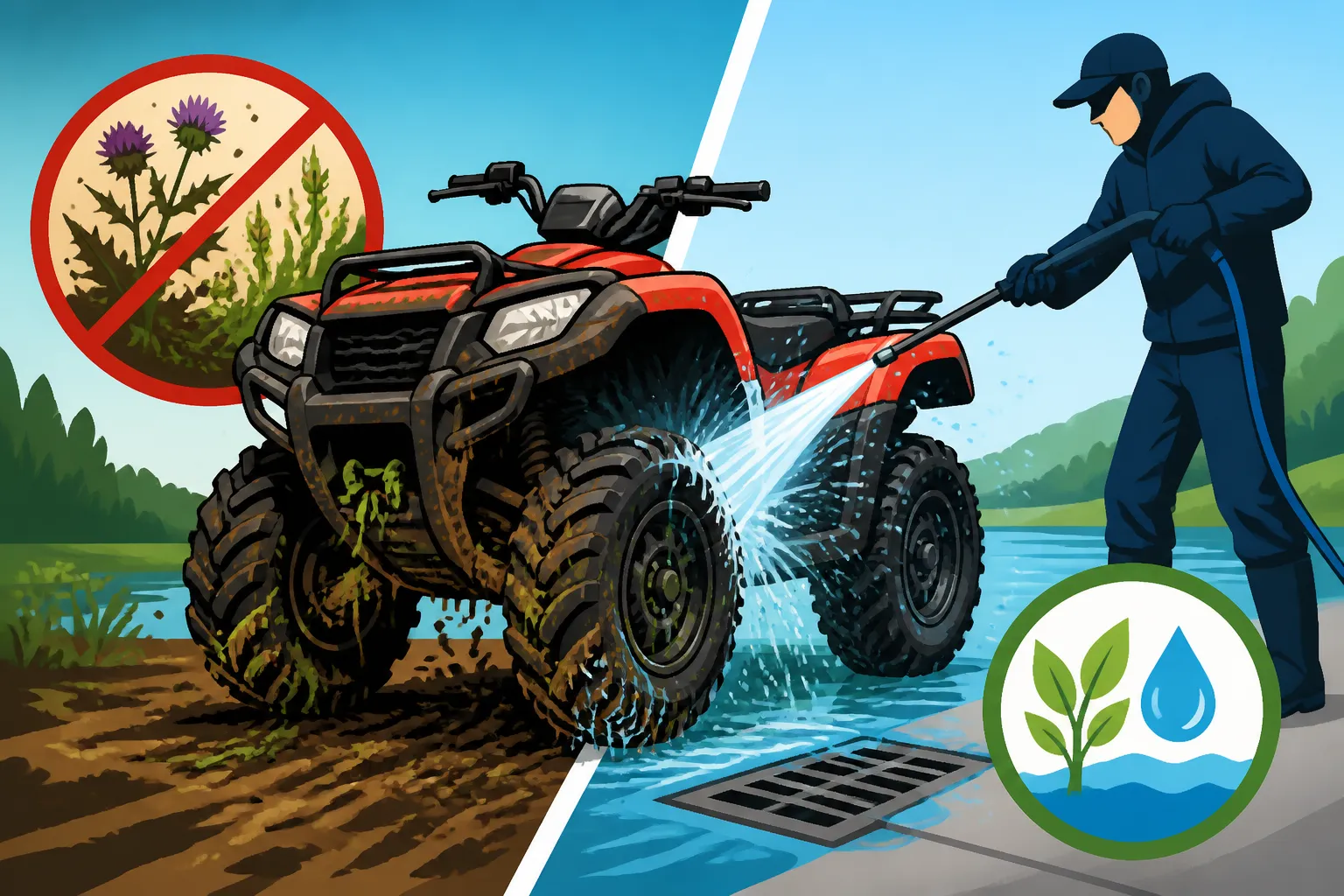
A convenient rinse beside a lake or creek can send soil and plant material straight into the water. Avoid washing a machine where runoff can flow directly into a water body, ditch, storm drain, or sensitive habitat. Use a designated wash area when one is available, and follow its instructions about where the water goes.
If you are washing at home, choose a location where debris and runoff can be managed responsibly. Do not assume that a driveway rinse is harmless just because the mud looks ordinary. Sweep or collect larger clumps first, and avoid directing contaminated runoff toward a street drain or watercourse.
Where local rules or wash-station directions are posted, follow them even if your usual routine is different. Conditions can vary by location, and a designated area may have specific procedures for managing soil and wash water.
How to wash an ATV or UTV thoroughly
Start with a careful inspection
Before spraying anything, park on stable ground, switch off the engine, and let hot components cool. Check the owner’s manual for cleaning guidance, particularly around electrical connections, air intake openings, bearings, seals, and cooling components. A pressure washer can force water or grit into areas that are not designed for it, so do not treat every part of the machine the same way.
Remove loose plant material by hand or with a suitable brush. Wear gloves if you are handling unknown vegetation, and avoid scattering seeds or fragments across the yard or wash area. Put removed debris in a suitable container rather than shaking it off beside a trailhead.
Use the following checklist before washing:
| Area to check | What may collect there | Cleaning approach |
|---|---|---|
| Tires and wheel wells | Mud, seeds, grass, small roots | Remove packed material and inspect tread |
| Skid plates and underside | Thick soil, plant fragments | Rinse carefully after loosening heavy clumps |
| Radiator screen and grille | Leaves, grass, debris | Clear gently without damaging fins or screens |
| Footwells and floorboards | Mud, seeds, plant matter | Brush or rinse while checking drainage |
| Racks and cargo areas | Leaves, twigs, soil | Empty, brush, and wash as appropriate |
| Trailer tires and ramps | Mud and vegetation | Clean before hauling to another area |
| Boots and recovery gear | Soil, seeds, plant fragments | Brush off and clean before the next trip |
The checklist is a starting point, not a substitute for the manufacturer’s instructions. If access to a component is difficult, do not force a tool into a tight space or put your hands near moving parts.
Work from the heaviest deposits to the details
Begin by removing large clumps of mud and visible plant material. This makes the rinse more effective and prevents you from simply spreading debris around. Once the bulky material is off, rinse the machine in a controlled way, paying attention to the underside, tires, wheel wells, and areas behind protective panels.
Use a brush or cloth where water alone does not remove lodged material. Be gentle around seals, electrical parts, cooling fins, and other delicate components. If the manual recommends avoiding direct water pressure on a particular area, follow that instruction. For a side-by-side, check under the seats and in the cargo box as well as around the exterior.
After the wash, inspect the machine again. A second look often reveals mud that was hidden behind a panel or lodged near a wheel. Let the machine dry as directed in the manual, and check that important components are clear before riding. If you notice damage, unusual noise, or a warning light, address it before the next trip rather than assuming the wash caused no issue.
Remember the trailer, boots, and equipment
Cleaning the ATV but leaving the trailer dirty defeats part of the purpose. Check the trailer’s tires, fenders, ramps, tie-down points, and deck. Mud may sit in tread grooves or collect where the ramp meets the trailer. Remove visible plant material before loading the cleaned machine for another destination.
Brush boots, gloves, shovels, and recovery equipment as well. Straps and fabric gear can trap seeds and soil in folds, while shovel blades and winches may carry clumps of mud. Clean gear in a place where the material will not be spread to another trailhead or waterway.
If your trip includes several stops, plan the order so that cleaning is easier. A route plan using a map service such as onX Offroad can help you think through trailheads, travel legs, and where you may need to pause. Still, do not rely on a map alone for wash facilities or access permission; check with the relevant park office, municipality, or trail organization.
Make cleaning part of a responsible ride plan
Build a simple routine before and after every trip
Before leaving home, pack gloves, a brush, a small scraper, and a bag or container for removed debris. You do not need an elaborate kit to catch the most obvious material. A few basic supplies make it easier to clean the tires, footwells, and trailer before the mud hardens.
At the trailhead, check posted signs and follow any instructions about washing, permits, or designated routes. Saskatchewan parks and riding areas do not all operate under identical rules, so verify requirements for the specific destination. For permit details, start with [Saskatchewan Park Trail Permits Are Free] and confirm the rules for the park you plan to visit.
After the ride, inspect the machine before it goes back on the trailer. If you are tired or the weather is poor, at least remove large clumps and schedule a complete wash before the next outing. That small pause can prevent debris from being carried from one riding area to another.
Match your route plan to the conditions
Trail conditions can change after rain, during dry spells, or when access restrictions are in place. If a route is unusually muddy, avoid widening it by riding around wet sections unless the trail authority specifically directs riders to do so. Riding off the established route can expose the machine to more vegetation and soil, and it can damage the trail.
Keep your plan flexible. If a trail is closed, do not try to find an informal way around the restriction. Check [Saskatchewan Wildfire Season Rules for Riders] before a trip during fire season, and look for notices from the local land manager or trail group. Fire restrictions and trail closures are separate from invasive-species prevention, but both belong in a responsible ride plan.
Map tools, including onX Offroad, can help you keep track of intended routes and nearby riding areas. Use them as planning aids, not as permission to enter land or proof that a trail is open. A quick check with the park office or local authority can save a long drive and help you avoid arriving at a closed or restricted area.
Keep the habit practical and repeatable
A cleaning routine works best when it is simple enough to follow after a long day. Focus first on the parts most likely to carry soil or vegetation: tires, wheel wells, the underside, footwells, and trailer. Then check gear and boots before packing them away.
If you ride with family or a group, assign a few tasks instead of leaving everything to one person. One rider can inspect tires while another checks the trailer and gear. This is especially helpful when several machines have been used in different conditions and are being hauled together.
Finally, take local instructions seriously. A wash area may have limits, a park may require particular preparation, and a trail organization may post seasonal notices. Cleaning your machine does not guarantee that all biological material has been removed, but careful inspection and washing reduce the chance of carrying mud and plant debris to your next destination.
Disclaimer
This article is for general informational purposes only and does not constitute professional advice. Laws, prices and regulations vary by location and change over time. Consult a qualified professional for guidance on your specific situation.