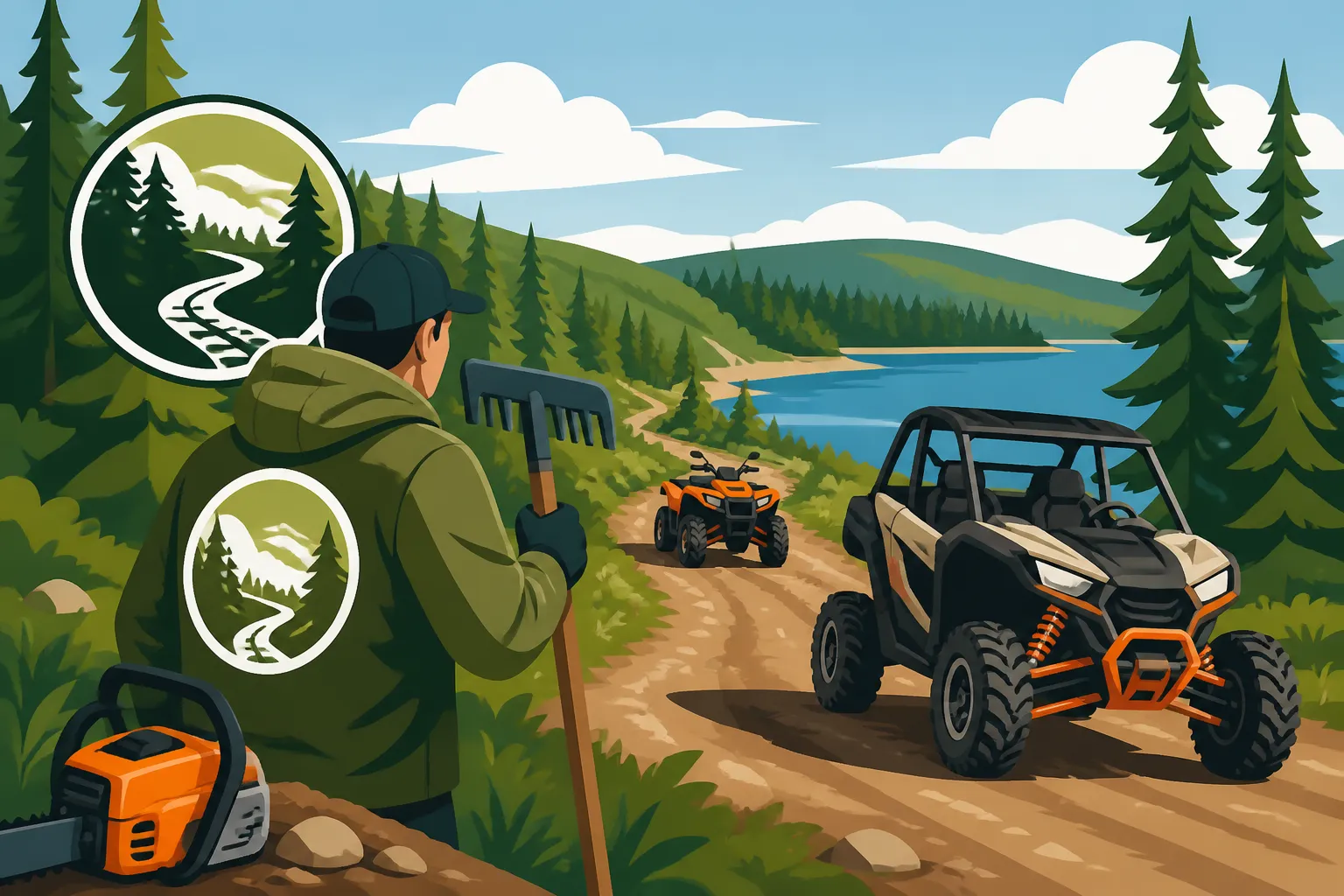
The Club That Maintains the Little Bear Lake Trails
Little Bear Lake can look like an easy place to ride until you reach a junction, find a muddy section, or discover that the trail you expected to use is closed. Local volunteers help keep the network rideable, but conditions and access can change. This guide explains how trail maintenance works, how to prepare, and how to ride in a way that supports the club’s work.
Why the Little Bear Lake trail club matters
What a local club contributes
A trail network does not stay usable just because it appears on a map. Routes need regular attention: fallen branches may need clearing, signs can become hard to read, and wet or damaged sections may need to be assessed before riders use them again. At Little Bear Lake, the local club’s maintenance work helps make riding more predictable and helps protect the land around the trails.
That work is often carried out by volunteers who know the area well. They may help with trail checks, clearing, marking, or communicating changing conditions to other riders. Even when a route looks straightforward, it can take time and effort to keep it that way. A quick report from a rider about a blocked trail or missing sign can be useful, especially when it gives a clear location and avoids assumptions about who is responsible.
The club also helps create a shared understanding of where riding is appropriate. A visible trail is not automatically permission to ride anywhere nearby. Stay on designated routes, respect signs and closures, and check that the trail you plan to use is open. For broader context on how club routes and access agreements work, see The Club That Maintains the Little Bear Lake Trails and The Trail Agreement Behind Crown Land Riding.
Trail work depends on riders’ choices
Maintenance is easier when riders avoid creating new problems. Cutting around a muddy section can widen the trail, damage vegetation, or make it harder for volunteers to restore the original route. If a trail is wet, soft, or rutted, turning back may be the more responsible choice, even if it means shortening your ride.
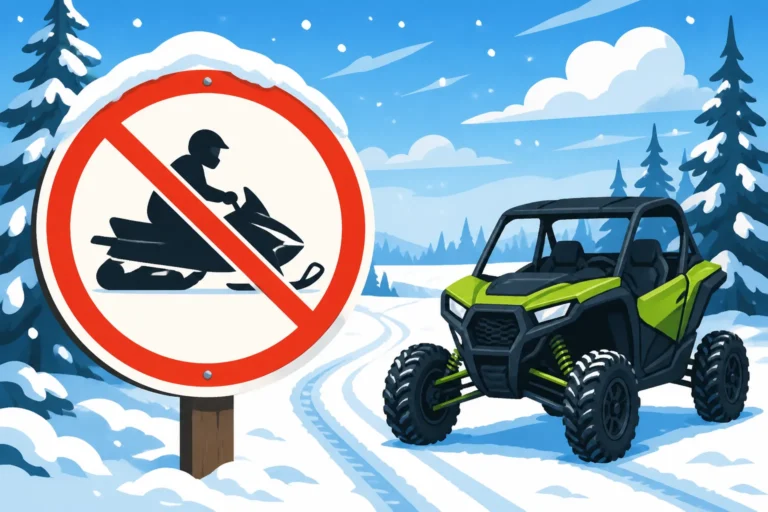
The same principle applies to barriers and closures. Do not move a sign, ride around a gate, or assume that a closed section is safe because another track is visible nearby. A closure may reflect a damaged route, land-access conditions, fire risk, or another issue that is not obvious from the trailhead.
A helpful rider is not necessarily the one who rides the farthest. It is the person who leaves the trail in a condition that the next group can use, reports concerns calmly, and does not turn a temporary obstacle into a wider detour. For practical etiquette that applies across local networks, read Saskatchewan Trail Etiquette Locals Expect.
How to plan a Little Bear Lake ride
Check access and conditions before loading
A route that was open on your last visit may not be suitable today. Weather, seasonal conditions, maintenance work, or land-management decisions can affect access. Before towing to the area, look for recent notices from the relevant park office, land manager, or local riding club. If no recent update is available, contact the organization responsible for the area rather than relying on an old post or a map label.
Plan for more than the ride itself. Confirm where you can unload and park, whether your chosen route is intended for your machine, and whether any local rules apply. If the trail network connects with roads or other managed land, do not assume the rules remain the same across the entire route. Check each section that you expect to use.
Mapping tools can help with orientation, but they cannot confirm that a trail is open or that you have permission to ride it. Some riders use onX Offroad to review routes and keep a map handy, while still checking local notices and signs for current access information. Treat the app as a planning aid, not as the final authority on closures, boundaries, or permitted use. For more on finding and preparing trail maps, see Saskatchewan ATV Trail Map Downloads.
Choose a route that suits your group and machine
Before setting out, agree on a realistic plan. A newer rider, a youth rider, or someone on a smaller machine may need more time and frequent stops. A larger group also moves at a different pace from a pair of experienced riders. Keep the route manageable, identify a point where the group can turn back, and make sure everyone knows what to do if they become separated.
Machine suitability matters as well. A trail that is passable on a compact quad may feel different on a long, heavy side-by-side. Consider turning space, ground clearance, tire condition, and the experience of the driver. Do not use speed to compensate for uncertainty, and do not follow another machine through a section unless you can see that it is safe for your own vehicle.
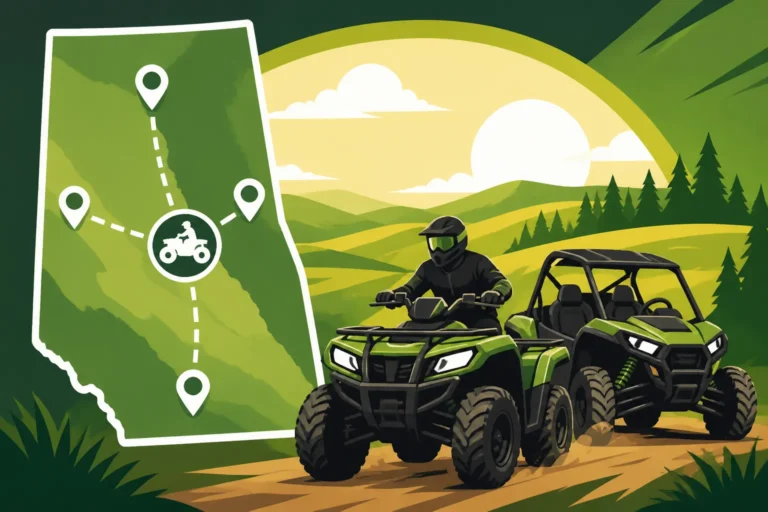
Use a map to understand the general shape of your planned ride, but keep checking signs and trail conditions as you go. onX Offroad may help riders review mapped routes before departure, but a digital line should never persuade you to cross a barrier or take an unmarked shortcut. Save a plan that includes a conservative turnaround option, and tell someone who is not riding with you where you expect to be.
| Planning question | Why it matters | Practical response |
|---|---|---|
| Is the route currently open? | Access and conditions can change | Check recent local notices and signs |
| Is the trail suitable for my machine? | Width, turns, and surface vary | Choose a route that fits the machine and driver |
| Does everyone know the plan? | Groups can spread out or become separated | Agree on stops, pace, and a turnaround point |
| Can we navigate without cell service? | Coverage may be limited in rural areas | Carry a map and do not rely only on a phone |
| What will we do if conditions worsen? | Mud, rain, or damage may make a route unsuitable | Turn back rather than making a new route |
For broader advice on route difficulty and planning, Saskatchewan Trail Difficulty Ratings can help you think through what a route may demand of your group.
Riding responsibly on maintained trails
Keep your machine on the established route
Staying on the trail is one of the simplest ways to support maintenance. A detour around a puddle may seem harmless, but repeated detours can widen the route and damage the surrounding ground. If the trail is too soft or blocked, stop and make a safe decision rather than creating a bypass.
Give other riders room. Slow down near people on foot, at junctions, and where visibility is limited. If you come across a group working on the trail, follow their directions and wait until they signal that it is safe to continue. Their work area may include tools, equipment, or a section that is not stable under a machine.
Take your garbage with you, and avoid leaving damaged parts or other items at the trailhead. Respect private property, posted closures, and any restrictions that apply to the land. For a wider explanation of access and permission on public land, see Saskatchewan Crown Land Riding Explained and Saskatchewan Crown Land Access Rules.
Prepare for changing conditions and limited connectivity
A pleasant start at the trailhead does not guarantee an easy day. Rain can change the surface, a route can become harder to follow, and a small mechanical issue can become stressful when the group is far from its vehicles. Bring basic tools and supplies suited to your machine, along with water, weather-appropriate clothing, and a first-aid kit.
Do not count on mobile data or cell service for navigation. If you use onX Offroad or another mapping app, consider preparing your map before you leave an area with reliable service. Carry a paper map as a backup, and make sure someone in the group can interpret it. Your battery, screen, or device may fail at the moment you most need it.
Before departing, check that everyone has a way to contact the rest of the group and knows the meeting point if riders become separated. Keep the plan simple enough that people can remember it. The goal is not to make every ride feel like an expedition; it is to avoid turning a minor delay into a difficult situation. Additional preparation ideas are covered in Saskatchewan Trail Conditions Before You Haul and Saskatchewan Group Ride Planning.
Supporting the club and reporting trail issues
Give useful, specific feedback
If you find a fallen tree, damaged sign, or unsafe section, record what you saw and where you saw it. A nearby junction, trail marker, or recognizable landmark is more useful than a vague note such as “the north trail is blocked.” If it is safe, take a photo from a place that does not put you or others in danger.
Send the information to the organization that manages or maintains that route. Avoid assuming the club has authority over every trail or road in the area. If the issue concerns a park, road, or land-access closure, the responsible office may need to hear about it as well. Keep your message factual: describe the condition, the approximate location, and when you encountered it.
Do not attempt repairs that require tools, vehicles, or permission unless you are part of an authorized work party. Moving a marker or clearing a route without coordination could create confusion or affect a sensitive area. When in doubt, report the issue and let the people responsible decide how to address it.
Volunteer in a way that fits your time
People often imagine trail work as a full-day commitment, but clubs may need different kinds of help. Some riders can join organized work days; others may be better suited to sharing accurate trail updates, helping with an event, or following the club’s communication channels. Ask what support is useful before bringing tools or beginning work.
If you do join a maintenance day, follow the organizer’s instructions and stay within the assigned task. Trail work can involve equipment, uneven ground, and changing conditions. Wear suitable clothing, bring what the organizer asks you to bring, and make sure your machine is used only where permitted.
Even without volunteering, your riding habits contribute to the network’s future. Respecting closures, staying on marked routes, and reporting problems responsibly all reduce avoidable pressure on the people maintaining the trails. Before your next visit, check current local information and build a plan that leaves room to turn back if conditions call for it.
Disclaimer
This article is for general informational purposes only and does not constitute professional advice. Laws, prices and regulations vary by location and change over time. Consult a qualified professional for guidance on your specific situation.