Saskatchewan Trail Etiquette Locals Expect
A ride can go sideways before anyone gets stuck: one rider roosts a muddy trail, another blocks a narrow pass, and locals are left repairing the mess. Good Saskatchewan ATV and UTV etiquette is about more than being polite. It protects shared routes, wildlife, land access, and the welcome riders receive next time.
Respect the trail and the people sharing it
Stay on the marked route
It can be tempting to skirt a puddle, climb around a rut, or take a shortcut that looks harmless. But repeated detours widen trails and can damage vegetation, soft ground, or the edge of a wetland. Stay on the established route, even when the slower line looks less convenient.
That matters especially where trails cross public land or connect with routes managed by a club. Trail access can depend on agreements, posted signs, and seasonal conditions, so a route shown on a map is not automatically permission to ride everywhere around it. Read signs at the trailhead and follow closures. For background on access arrangements, see [Saskatchewan Club Trails on Crown Land](Saskatchewan Club Trails on Crown Land).
When planning, treat a digital map as a navigation aid rather than the final authority on access. onX Offroad can help you review a route before leaving, but confirm the latest trail status and local rules through the relevant park, club, or land manager. Download or save what you need before heading into an area with weak cell service.
Give other trail users room
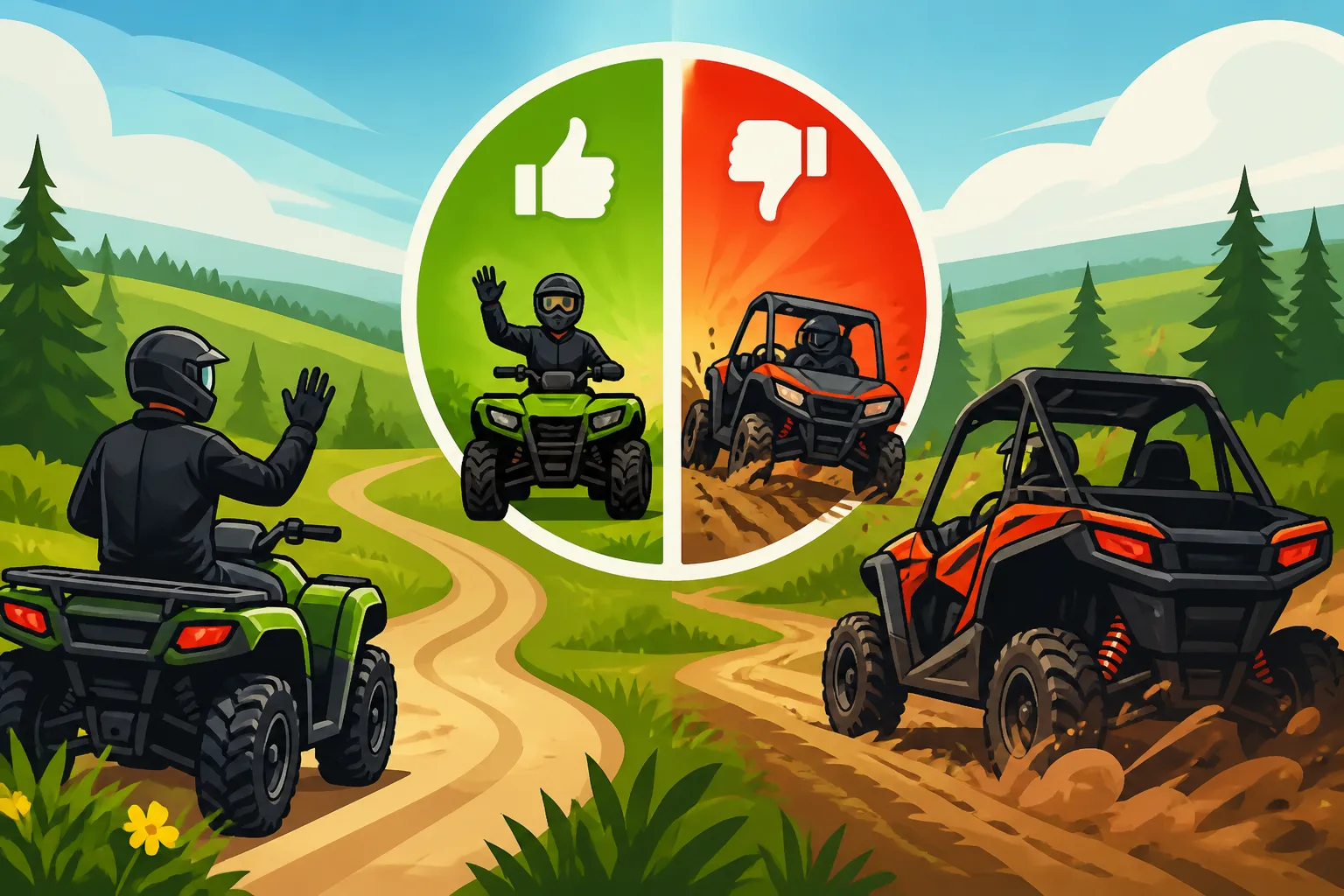
ATV and UTV riders may meet hikers, cyclists, horseback riders, work vehicles, or another group of machines on a tight trail. Slow down early, give people space, and make your intentions clear. On a narrow section, the courteous choice is often to stop somewhere stable and let the other user pass rather than squeezing by at speed.
Dust, noise, and the feeling of a large machine bearing down can make an encounter stressful for someone on foot or horseback. Ease off the throttle well before you reach them. If you meet horses, stop at a safe distance, keep the engine quiet if possible, and follow the handler’s directions. Don’t assume that a wave means “go ahead” if the person or animal still seems unsettled.
Use the same care when you come across another riding group. Leave enough room for everyone to pass safely, avoid crowding a stopped machine, and don’t tear past a group that has pulled over to check a map or make a repair. The goal is to leave people feeling that sharing the trail was easy, not intimidating.
Keep the noise, speed, and dust down
A fast approach can make an otherwise ordinary meeting feel unsafe. Reduce speed around blind corners, trailheads, campsites, cabins, and places where people may step onto the route. On loose or dry surfaces, backing off the throttle also helps limit the dust and gravel thrown toward other users.
Noise carries a long way in quiet bush and lake country. A loud group can disturb people who are camping or staying nearby even when no one is visible from the trail. Keep conversations and music at a reasonable level, avoid unnecessary revving, and don’t use a clearing as a place to race or show off.
Local bylaw and land-use requirements may set rules that go beyond courtesy, including where riding is allowed and how a route may be used. Check the local requirements before setting out, particularly if a trail connects to a road or passes near a community. The guide [Saskatchewan Municipalities With ATV Bylaws](Saskatchewan Municipalities With ATV Bylaws) is a useful starting point for understanding why local rules can differ.
| Trail situation | Courteous response | Why it helps |
|---|---|---|
| Meeting a hiker or cyclist | Slow down early and pass with generous space | Makes the encounter feel predictable and safe |
| Meeting a horse | Stop at a safe distance and follow the handler’s directions | Reduces the chance of startling the animal |
| Coming to a muddy or rutted section | Stay on the established route | Prevents trail widening and avoidable damage |
| Riding near homes or campsites | Keep speed and noise down | Shows consideration for people nearby |
| Seeing a closure or warning sign | Turn around and choose an open route | Protects access and respects land management |
| Approaching a blind corner | Reduce speed and stay alert | Leaves room to react to an unexpected user |
Protect the land and the people who maintain it
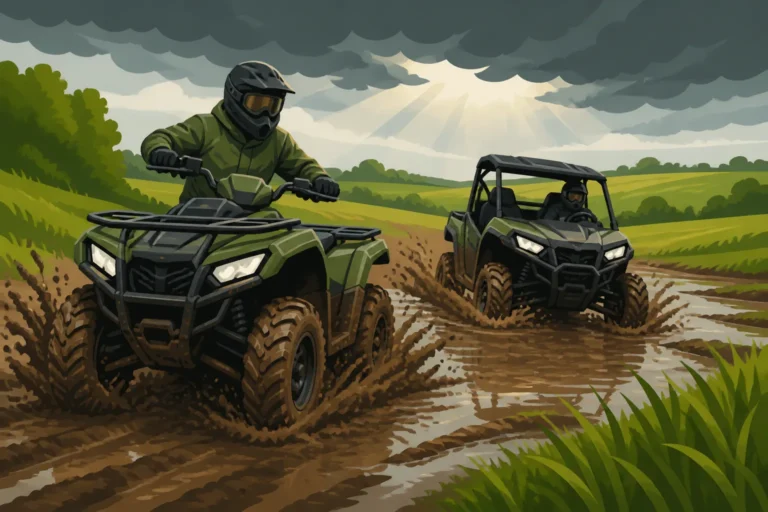
Don’t make a muddy trail worse
A route that looks rideable from the seat can be much softer than it appears. Muskeg, saturated soil, and waterlogged ground can give way under repeated passes. If a section is clearly too wet, don’t widen it by creating a new track around the side. Turn back, wait for better conditions, or choose a route that is open and suitable.
This is not just about keeping your own machine clean. Deep ruts can hold water, damage the trail surface, and make conditions harder for the next rider. Spinning tires to get through can worsen the problem, particularly when several machines follow the same line. For more on the challenge of soft northern terrain, see [Saskatchewan Muskeg and Machines](Saskatchewan Muskeg and Machines).
After rain or snowmelt, pay attention to how the ground responds beneath your tires. If the trail is breaking apart or your machine is sinking, that is a good reason to stop rather than push farther. Conditions can vary from one section to the next, so a route that was firm near the trailhead may become much softer deeper in the bush.
Treat closures and trail work as part of riding
A temporary closure can be frustrating when you have hauled your machine a long way. Still, riding around a barrier or finding an informal bypass can create damage and make future access harder to maintain. Respect the closure and look for an official alternative rather than assuming the restriction is unnecessary.
Storms can bring down trees, wash out sections, or leave hazards that are not obvious from a distance. Check conditions before travelling and be ready to change plans if you arrive to find a route closed or unsafe. [Saskatchewan Trail Closures After a Storm](Saskatchewan Trail Closures After a Storm) and [Saskatchewan Trail Conditions Before You Haul](Saskatchewan Trail Conditions Before You Haul) can help you think through those pre-trip checks.
A club volunteer clearing a fallen branch or repairing a sign is doing work that benefits everyone. Give work crews room, follow their instructions, and don’t ride through an active work area just because the machine can fit. If you notice a damaged sign, a blocked route, or a hazard, report it to the appropriate club, park office, or land manager when practical. Many trails stay usable because riders and volunteers take small problems seriously.
Pack out everything you bring
Wrappers, cans, broken straps, and disposable wipes can be easy to overlook when you’re tired or packing up in a hurry. Bring a bag for rubbish and check your machine, trailer, and staging area before leaving. If you see litter that is safe to pick up, taking it with you is a simple way to leave the place better than you found it.
Avoid leaving food scraps or other waste behind. Even biodegradable material can attract wildlife to places where people and machines gather. Don’t dump fluids, wash mud into a waterway, or leave damaged parts where another rider could hit them. A clean trailhead is a sign that visitors understand the area is shared, not disposable.
If your ride includes a designated park trail, follow the site’s cleaning and entry instructions. Washing a machine where required can help reduce the spread of invasive species, but the right place to do it depends on the facility. Check [Saskatchewan Machines Washed Before a Park Ride](Saskatchewan Machines Washed Before a Park Ride) before assuming a nearby launch or campground has a suitable wash area.
Ride considerately in a group
Set expectations before the machines start
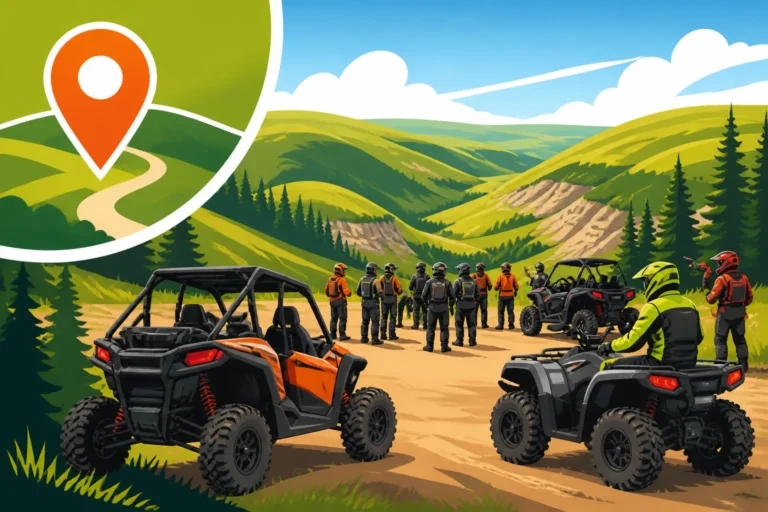
A group ride is easier when everyone knows the plan. Before leaving, agree on the route, meeting points, pace, and what the group will do if someone has a mechanical problem. Make sure riders understand that the group is staying on open routes and that no one should split off without telling the others.
The person leading should choose a pace that fits the least experienced rider, not the fastest machine. The last rider should know the route and have a way to contact the lead if the group stretches out. On a long or confusing route, stop at agreed points so riders can regroup without blocking a trail junction or gathering in a hazardous spot.
If you are organizing a larger outing, consider how the group may affect other trail users. A long line of machines can make a narrow trail feel closed to everyone else. Keep the group compact without tailgating, pull over in a safe place when others need to pass, and avoid occupying the trailhead longer than necessary. [Saskatchewan Group Ride Planning](Saskatchewan Group Ride Planning) offers more ideas for making a shared ride manageable.
Use clear signals and avoid crowding
A simple, consistent signal can help riders behind you know that someone is approaching or that the group is stopping. Agree on signals before setting off, and pass them back through the line. Don’t rely on a rider at the front to communicate everything if machines are spread out or visibility is limited.
Leave room between machines so each rider has time to react to dust, loose gravel, a sudden stop, or an obstacle. Following too closely can also make a less confident rider feel pressured into going faster than is comfortable. If someone needs to stop, move the group to a safe pullout where possible rather than creating a cluster on a narrow section.
When a rider gets stuck or has a breakdown, keep the rest of the group clear of the trail. Avoid crowding around a recovery attempt, and don’t rev or spin tires near people. Choose a safe approach, communicate before moving machines, and make sure someone is watching for other trail users.
Plan for changing conditions
A good ride plan includes a way to turn back. Weather, daylight, fire restrictions, trail conditions, or a mechanical issue can change what is sensible once you are out there. Build in time to adjust rather than treating the planned distance as a target that must be completed.
Before hauling, check for current notices and closures for the area you intend to ride. If you use onX Offroad to review routes or save navigation information, pair it with official local updates; a mapped line does not necessarily confirm that a trail is open today. Keep a paper map or another backup for remote areas where a phone may lose service.
The season can also affect what makes a considerate ride. Soft spring ground, summer fire risk, fall hunting activity, and winter weather can each call for different planning. [Saskatchewan Riding Season Month by Month](Saskatchewan Riding Season Month by Month) can help you think through seasonal changes, while [Saskatchewan Wildlife on the Trail](Saskatchewan Wildlife on the Trail) is a useful reminder to give animals space and avoid turning an encounter into a chase.
Be a responsible guest wherever you ride
Ask before crossing private or occupied land
A track that appears on a map or looks like a well-used route is not proof that you have permission to cross it. If a route reaches private land, a lease, or an occupied area, confirm access before riding through. Respect gates, signs, and requests from landowners or people managing the land.
If you need to ask for permission, be specific about where you want to ride, when you plan to go, and how many machines are in the group. Keep your word about the route and timing. If the answer is no, accept it without arguing; one respectful conversation can protect a relationship, while ignoring a refusal can jeopardize access for other riders.
For public land, the same thoughtful approach applies: check who manages the area and whether any restrictions apply. Rules may vary by location and change with conditions. A route being visible in a mapping app, including onX Offroad, is not a substitute for posted directions or permission from the person responsible for access.
Leave a good impression at the trailhead
Trail etiquette starts before you unload. Park without blocking access, keep ramps and equipment out of the way, and leave enough space for others to manoeuvre trailers. If the area is busy, get ready efficiently and move your vehicle once your machine is off the trailer so another rider can use the space.
Take a moment to read trailhead signs and share useful information without presenting guesses as facts. If someone asks about a route you have not ridden, say so. If you know a trail is closed because you saw a posted notice, explain where you saw it and direct them to the responsible office or club for confirmation.
Locals notice whether visitors treat the area like a community or just a playground. A friendly greeting, a patient pass, and a clean parking area may seem small, but they shape how residents feel about riders. Respectful behaviour helps make it easier for clubs and local communities to keep welcoming responsible ATV and UTV use.
Give wildlife a quiet, wide berth
Seeing deer, moose, or other wildlife is part of riding in Saskatchewan, but getting close for a better look can disturb animals and create a dangerous situation. Slow down, give them room to move away, and never follow or surround them. If an animal is near the trail, wait rather than forcing it toward a road, water, or another machine.
Be especially patient when animals are with their young or appear stressed. Keep dogs controlled, avoid loud revving, and don’t stop the group in a way that blocks the animal’s escape route. A quick photo is not worth causing a dangerous encounter for the animal or riders.
Carry out the same calm approach after an unexpected encounter: tell the group what you saw, give the animal time to leave, and continue only when the route is clear. Thoughtful wildlife etiquette makes the ride safer and helps preserve the quiet, natural character that draws people to Saskatchewan’s riding areas.
Disclaimer
This article is for general informational purposes only and does not constitute professional advice. Laws, prices and regulations vary by location and change over time. Consult a qualified professional for guidance on your specific situation.