Your Legal Duty to Check for Combustible Debris
Saskatchewan ATV combustible-debris checks: inspect for hot spots during rides, clear buildup safely, and verify current fire restrictions before heading out.
Your sticker stops at the state line.
Non-resident permits, what they cost and how long they last, and which states honor each other’s — or, increasingly, none at all.
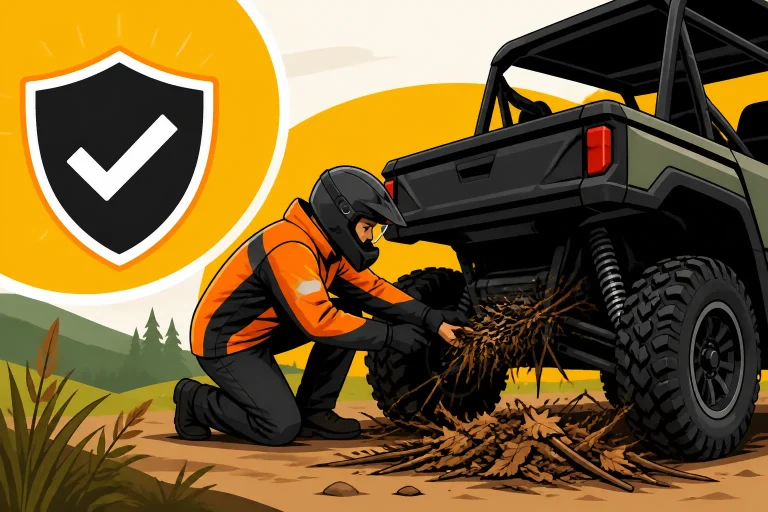
Saskatchewan ATV combustible-debris checks: inspect for hot spots during rides, clear buildup safely, and verify current fire restrictions before heading out.
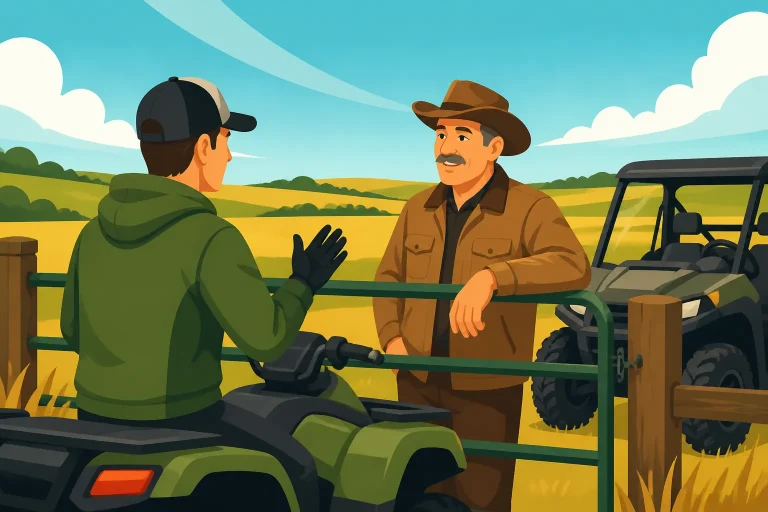
Crossing a Saskatchewan grazing lease by ATV or UTV means contacting the leaseholder first, agreeing on a route, and following access conditions.
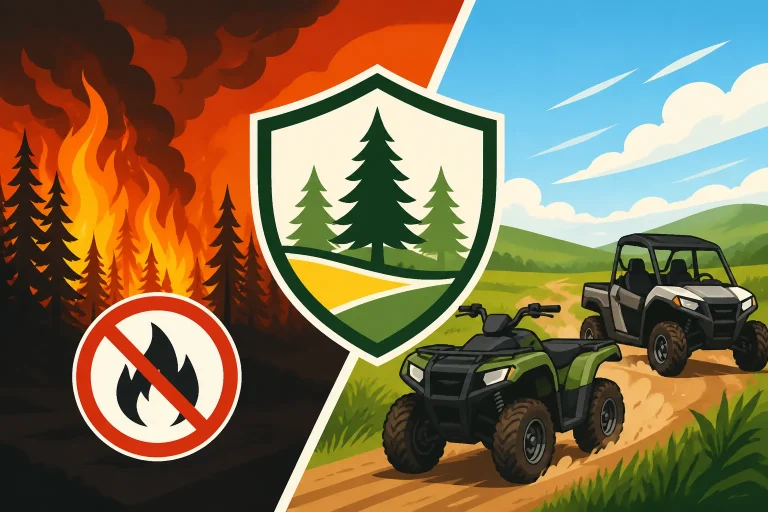
Saskatchewan’s ATV wildfire season runs April 1 to October 31, but riders must check local restrictions, prevent sparks, and follow closures.
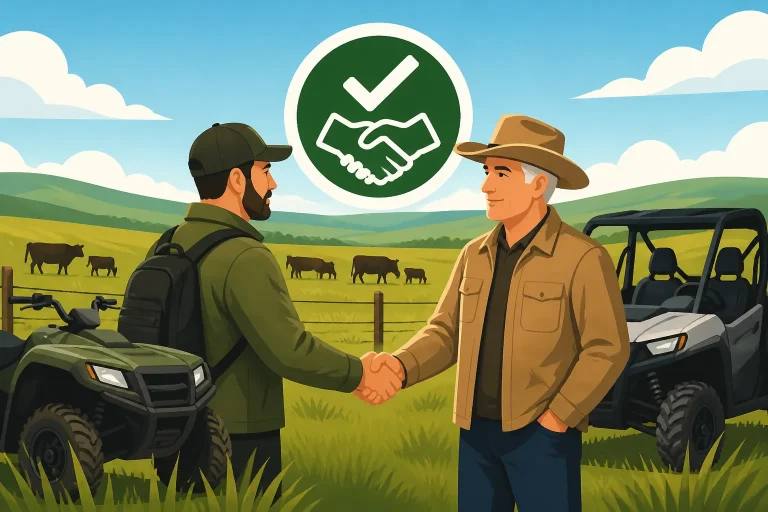
Getting consent from a Saskatchewan grazing lease holder means confirming who controls access, agreeing on a route and dates, and keeping permission documented.
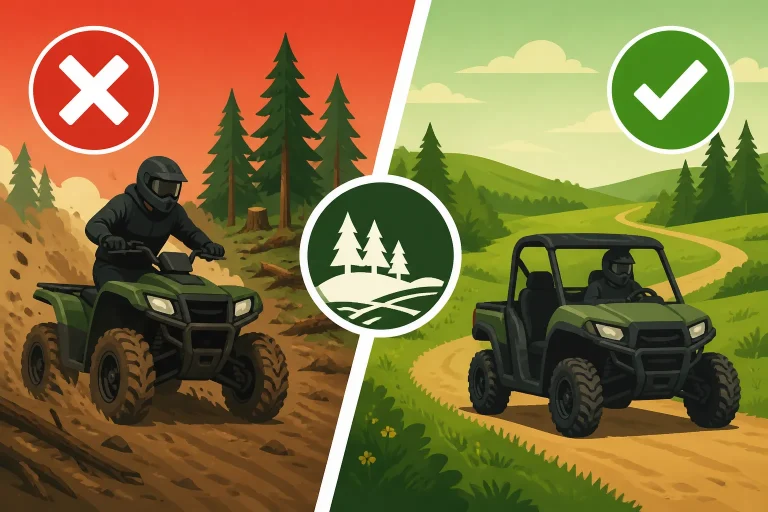
Occupied Crown land in Saskatchewan may require the holder’s permission. Confirm the route, conditions and closures before riding an ATV or UTV.
Visiting ATV and UTV riders in Saskatchewan should confirm $200,000 liability coverage, carry proof, and check park and local rules before riding.

Saskatchewan has no provincial ATV registration to reciprocate, but visitors still need to check local plates, park permits, insurance and land access rules.
Visitors riding an ATV or UTV in Saskatchewan can use a valid home-province driver’s licence, but local riding, insurance and permit rules still apply.
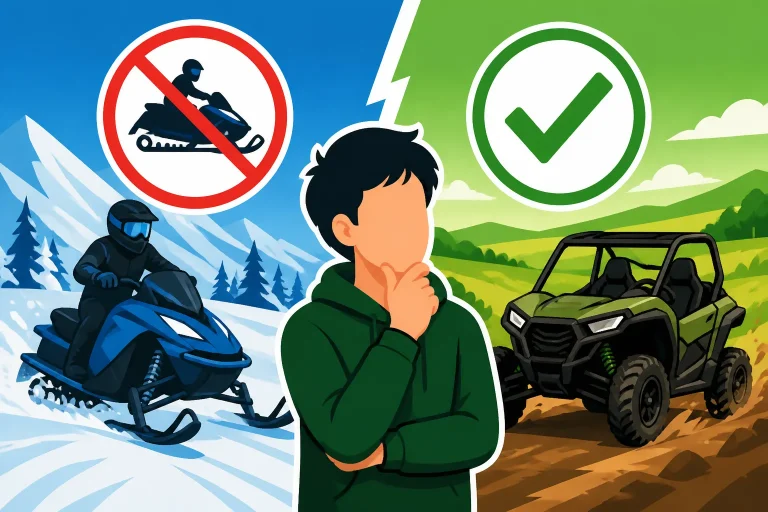
Saskatchewan’s 1989 birth-date rule applies to snowmobile training, not ATV or UTV riding; age, supervision, training and local access rules still matter.
Saskatchewan has no birth-date cutoff for adult ATV and UTV course requirements; riders still need to check age, access, insurance and local rules.