Getting a Seized Quad Released by the Board
Imagine the sinking feeling of watching a peace officer load your quad onto a tow truck. It’s a moment no rider wants to experience, often leaving you confused about what happens next, where your machine goes, and how on earth you get it back. This comprehensive guide will walk you through the process of getting your seized ATV or UTV released by the Saskatchewan Provincial Board of Review, offering a clear path when your off-road adventures take an unexpected turn.
Understanding Why Your Quad Was Seized
Having your ATV or UTV seized is incredibly frustrating, especially when you might not fully understand why it happened. Many riders are simply enjoying their day, perhaps thinking they're within the rules, only to have their machine impounded. It’s a stark reminder that ignorance of the law is no excuse, and the consequences can be significant. When a peace officer seizes your machine, it's not a casual decision; it's a direct application of the law, usually stemming from specific violations of [Saskatchewan's All Terrain Vehicles Act] or related regulations. The immediate loss of your recreational vehicle, which often represents a significant investment, can feel like a profound injustice.
Common Reasons for Seizure
There's a range of reasons why a peace officer might have the authority to seize your off-road vehicle. Often, it boils down to safety violations, improper operation, or a lack of required documentation. For instance, if you're found operating an ATV while prohibited from doing so, perhaps due to a previous infraction or an impaired driving conviction, your machine is very likely to be seized. Similarly, if your machine is involved in a serious accident, especially one involving injury or significant property damage, it can be impounded as part of the investigation. Another common scenario involves operating a quad in a prohibited area, such as certain Crown lands or protected ecological zones, where posted signs clearly forbid ATV use. If you're riding without the proper [Saskatchewan Insurance Requirements for Riders] or if there are questions about the vehicle's ownership, these can also trigger a seizure. It’s not just about what you’re doing, but sometimes about where you are, who you are, or what you don't have with you.
The Immediate Aftermath: What Happens at the Scene
When a peace officer decides to seize your ATV or UTV, the experience can be quite jarring. They will typically inform you of the reason for the seizure and may issue you a ticket or a summons, outlining the specific charges. It's crucial, though difficult in the moment, to remain calm and cooperate. The officer will arrange for your machine to be towed to an impound lot. You won't be able to retrieve it directly from the officer; once it's seized, it's out of their hands and into a system designed to ensure compliance and accountability. You might be given a document, sometimes called a "seizure notice" or an "impoundment notice," which contains vital information like the impound lot's location and contact details, the seizure date, and a reference number. This piece of paper is incredibly important because it's your first key to navigating the release process. Without it, you'll be starting from behind. Remember, the officer is also acting under specific rules, outlined in [Saskatchewan Seizure and Impoundment Rules], which dictate their authority and the steps they must follow.
The Role of the Saskatchewan Provincial Board of Review
After the initial shock of a seizure wears off, your next thought is likely, "How do I get my quad back?" This is where the Saskatchewan Provincial Board of Review comes into play. Many people don't even know this board exists until they're in a situation that requires its intervention. It’s not a court of law in the traditional sense, but an administrative body established specifically to handle cases like yours – reviewing the circumstances of seizures and determining if and how impounded vehicles should be returned. Ignoring the seizure notice or hoping the problem goes away will only make things worse, likely leading to accumulating storage fees and potentially the permanent loss of your machine.
What is the Board and Its Authority?
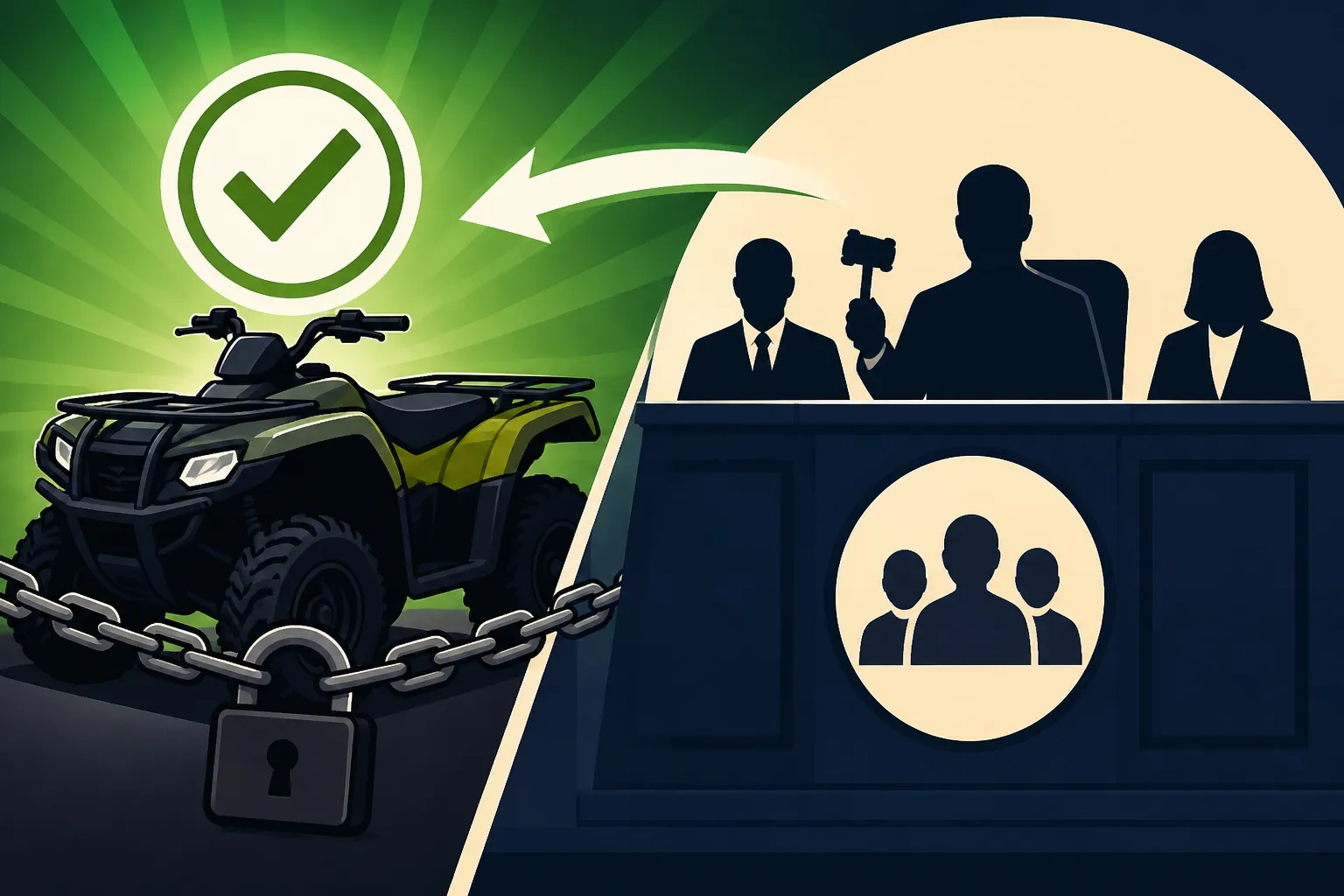
The Provincial Board of Review, often simply called "the Board," is an independent administrative body with specific powers granted under the Act. Its primary role is to provide a fair and impartial review process for individuals whose off-road vehicles have been seized. They are not there to re-adjudicate any tickets you might have received – those are handled by the courts. Instead, their focus is on the legality and appropriateness of the seizure itself, and whether the conditions for release have been met. The Board has the authority to order the release of a seized machine, but it can also impose conditions on that release, such as requiring proof of insurance, payment of fees, or even the successful completion of a safety course. This body acts as a crucial check and balance, ensuring that seizures are not arbitrary and that owners have a path to retrieve their property. Understanding Getting a Seized Quad Released by the Board means engaging directly with this authority.
When to Contact the Board
The moment you receive notification that your ATV or UTV has been seized, contacting the Board of Review should be high on your priority list. Delaying this action can be very costly. Every day your machine sits in an impound lot, storage fees accumulate, adding to the financial burden of the seizure. Furthermore, there are often deadlines for applying for a review or appealing a seizure, and missing these can jeopardize your chances of getting your quad back. Generally, you should contact the Board as soon as you have the seizure paperwork in hand. They can provide you with information regarding the application process, required forms, and timelines. Don't wait until the last minute; proactive engagement demonstrates your commitment to resolving the situation and can potentially mitigate some of the financial penalties associated with the impoundment.
Navigating the Release Application Process
Once you’ve gathered yourself and understand the Board's role, the next logical step is to formally apply for the release of your seized quad. This isn't a simple phone call; it's a structured administrative process that requires careful attention to detail. It's easy to feel overwhelmed, but breaking it down into manageable steps can make it feel less daunting. Think of it as building a case for why your machine should be returned to you, and just like any case, it needs solid evidence and adherence to procedure.
Gathering Your Documents and Proof of Ownership
The foundation of any successful release application is robust documentation. The Board needs to be convinced that you are the rightful owner of the machine and that you are capable of operating it responsibly and legally. The first and most critical document is proof of ownership. Since [Saskatchewan Does Not Register ATVs] at the provincial level, you won't have a traditional vehicle registration or title document like you would for a car. Instead, your proof of ownership will primarily be your original bill of sale. This document, whether from a dealer or a private seller, needs to clearly identify the ATV or UTV by its Vehicle Identification Number (VIN) or serial number, the date of purchase, the purchase price, and the names of both the buyer and seller. If you've made modifications or repairs, invoices for those can also strengthen your claim of ownership.
Additionally, you'll need to demonstrate compliance with other provincial requirements. This includes current proof of liability insurance. If you were operating the machine, you’ll also need to show a valid driver's license. If the seizure was due to an issue with a minor operating the machine, you might need to provide proof of their age, any safety course completion, or details about the designated supervisor.
Here's a list of documents you might need to gather:
| Document Type | Purpose | Importance |
|---|---|---|
| Bill of Sale | Primary proof of ownership (no provincial registration) | Critical |
| Insurance Card/Policy | Proof of required liability coverage | Critical |
| Driver's License | Valid license for the operator | Critical |
| Seizure Notice | Documentation provided by the peace officer | Critical |
| Repair/Accessory Invoices | Shows investment and continuous ownership | High |
| Safety Course Certificates | For youth operators or if required by conditions | Medium |
| Photo ID | To verify your identity | High |
| Lease Agreement (if applicable) | If you are operating a leased machine | High |
This table provides a general guide, but always check with the Board for their specific requirements. Companies like LawDepot can provide templates for proper bills of sale if you ever sold or purchased a quad privately and need to recreate documentation or ensure future transactions are robust. A well-prepared packet of documents will speak volumes to the Board about your seriousness in resolving the matter.
Submitting Your Application and What to Expect
Once your documents are in order, you'll need to formally submit an application to the Board of Review. This typically involves filling out a specific form provided by the Board. Ensure every field is completed accurately and legibly. Attach all your supporting documents clearly, perhaps making copies and keeping the originals safe. You might be asked to provide a brief written explanation of the circumstances surrounding the seizure from your perspective. This is your opportunity to calmly and factually present your side of the story, without emotion or blame.
After submission, there will be a waiting period. The Board needs time to review your application, potentially consult with the peace officer who initiated the seizure, and schedule a hearing if deemed necessary. You should receive communication from the Board acknowledging receipt of your application and informing you of the next steps. This could be a request for additional information, notification of a hearing date, or even a direct order for release if the matter is straightforward and the initial seizure was clearly in error. Be prepared for a formal process; it's designed to be thorough.
Understanding the Fees and Conditions for Release
It's important to be realistic: even if your quad is released, it's highly probable you will incur some costs. These typically include impound lot storage fees, towing charges, and potentially an administrative fee levied by the Board itself. These fees can quickly add up, especially if there's a delay in the application process. The Board may also impose specific conditions for the release of your machine. For example, they might require you to provide proof of adequate liability insurance, if that was a factor in the seizure. They might also stipulate that you, or a specific operator, complete an approved ATV safety course before the machine is allowed back on trails. In some cases, if the seizure was related to an outstanding fine, payment of that fine might be a prerequisite for release. It's not uncommon for the Board to issue a warning about future conduct or even impose a temporary suspension on your right to operate an ATV under certain conditions. Reviewing [Saskatchewan Release of a Seized Machine] will give you specific insight into how these conditions are handled.
Preparing for Your Board Hearing
Not all release applications require a full hearing, but if your case isn't straightforward or if the Board needs more information, you will be summoned to appear. This might sound intimidating, but a hearing is simply your opportunity to present your case directly to the Board members. It’s not about legal theatrics; it’s about clear, concise communication and supporting your claims with evidence. Approaching it with preparation and respect for the process will serve you well.
Presenting Your Case: Evidence and Arguments
When you attend a Board hearing, you'll be given the chance to explain what happened from your point of view. This is where all the documents you gathered earlier become critical. Have them organized and ready to present. If you have any witnesses who can corroborate your story, such as another rider who was with you at the time of the seizure, you might ask them to attend or provide a written statement. For example, if your quad was seized because a peace officer believed you were riding in a prohibited area, but you have maps or clear evidence that indicates otherwise, this is the time to present it. Perhaps you can demonstrate that the signage was unclear or that you were on private land with permission. When you're dealing with issues of ownership, a properly executed document, perhaps drafted using a reliable template from a service like LawDepot, can make all the difference. Remember, the Board is looking for facts and a rational explanation. Avoid emotional appeals and stick to the verifiable details.
What the Board Considers During a Hearing
The Board members are tasked with making a fair decision based on the information presented. They will consider several factors when determining whether to release your quad and under what conditions. Primarily, they will look at the specifics of the seizure: what section of the Act or regulations was violated? Was the seizure legally executed? They will also evaluate your credibility as an operator and owner. Have you had previous infractions? Do you demonstrate an understanding of the rules? They will weigh the evidence you present against any information provided by the peace officer. This includes reviewing your proof of ownership – [How to Prove You Own an ATV in Saskatchewan] is a key point here – and your insurance status. If a minor was involved, they'll assess compliance with [Saskatchewan Rules for a 12-Year-Old Rider] or similar age restrictions. Ultimately, their goal is to ensure public safety and adherence to the law, while also providing a reasonable avenue for owners to reclaim their property when appropriate.
Releasing Your Quad: Final Steps and Important Considerations
The good news: the Board has ordered the release of your quad! This is a huge relief, but the process isn't quite over. There are still a few crucial steps to take to get your machine back in your hands and, equally important, to prevent finding yourself in this stressful situation again. Don’t cut corners at this stage; a smooth retrieval is the final reward for your diligent efforts.
Paying Fees and Retrieving Your Machine
Once the Board issues an order for release, you'll typically receive a copy of this order. This document is your ticket to the impound lot. Before you head out, you'll need to pay all outstanding fees. This almost certainly includes the impound lot storage fees, towing charges, and any administrative fees stipulated by the Board. Make sure you have the exact amount or an accepted form of payment, as impound lots can be very strict about this. Some might only accept cash or debit. Once the fees are paid and you present your release order and identification, the impound lot staff will release your ATV or UTV. Do a quick but thorough inspection of your machine before you leave the lot. Check for any new damage that might have occurred during transport or storage. While unlikely, it's always best to document the condition before you drive off, just in case. Ensure you have a proper way to transport your quad home, as you might not be allowed to simply drive it out of the lot, especially if the original seizure involved road operation violations.
Preventing Future Seizures: Rider Responsibility
Getting your quad back is a victory, but it's also a powerful lesson. The best way to avoid this whole ordeal again is to be an informed and responsible rider. Start by thoroughly familiarizing yourself with [Saskatchewan ATV Road Rules Explained] and all local bylaws that apply to the areas where you ride. Many seizures happen because riders operate in areas where ATVs are prohibited, or because they fail to meet basic equipment standards. For example, always ensure your machine has the required lights if you plan on riding after dark, as outlined in [Saskatchewan Lighting Requirements on a Machine]. Make sure your insurance is current and that you carry proof of it with you, as officers will ask for it during [Saskatchewan Equipment Checks by Officers]. Carry proof of ownership, like a copy of your bill of sale, in a waterproof bag on your machine. Be mindful of age restrictions and supervisor requirements, particularly if youth riders are involved. Ultimately, responsible riding means respecting the land, other users, and the laws that govern ATV operation in Saskatchewan. It saves you money, hassle, and keeps you enjoying the trails.
Disclaimer
This article is for general informational purposes only and does not constitute professional advice. Laws, prices and regulations vary by location and change over time. Consult a qualified professional for guidance on your specific situation.