Why No Province-Wide Quad Plate Is Issued
One of the most common head-scratchers for new and even seasoned riders in Saskatchewan is figuring out why there's no provincial registration or plate for their ATV, quad, or side-by-side. It can feel like you're missing a crucial piece of the puzzle, especially when friends in other provinces wave their registration papers or you see snowmobilers with their annual decals. This guide will walk you through the precise reasons behind Saskatchewan's unique approach to off-road vehicles, what the province does require, and how you legally prove ownership without a registration document.
The Persistent Question: Why No Provincial ATV Registration in Saskatchewan?
It's a question that echoes across many campfire chats and dealership showrooms: "Why can't I get a provincial plate for my quad?" The simple, often frustrating, answer is that Saskatchewan, unlike many other provinces, has never established a provincial registry for All-Terrain Vehicles (ATVs). This isn't an oversight or a temporary measure; it's been the legislative reality for decades, deeply rooted in how the province views and regulates these machines. Many riders find this confusing, especially when comparing it to how other vehicles are handled, or even how snowmobiles are treated right here in Saskatchewan.
A Historical Look at the All Terrain Vehicles Act
The foundational document governing ATVs in Saskatchewan is [Saskatchewan's All Terrain Vehicles Act], which came into force quite some time ago. When this Act was initially drafted and implemented, its primary focus was not on tracking ownership or collecting registration fees for a centralized provincial database. Instead, the legislative intent was, and largely remains, to regulate the operation of ATVs to ensure safety, prevent misuse, and establish clear rules for where and how these machines can be ridden.
Think about it this way: the Act is more concerned with who can ride an ATV, what safety gear they need to wear, and where they can operate it (like maintaining certain distances from highways or observing age restrictions) than it is with issuing a piece of paper that says "this quad belongs to so-and-so" from a provincial office. This operational focus means that while there are plenty of rules to follow when you're out on the trails or the ditches, none of them involve registering your machine with the provincial government. This is a fundamental difference that sets Saskatchewan apart and directly answers [Why Saskatchewan Never Built a Quad Registry]. The province simply doesn't have the legal framework or the administrative body set up to handle a province-wide ATV registry.
Contrasting ATVs with Snowmobile Registration
The confusion surrounding ATV registration often intensifies when riders consider snowmobiles. In Saskatchewan, if you own a snowmobile, you absolutely do need to register it with the Saskatchewan Government Insurance (SGI), and you'll receive a provincial decal to display on your machine. This stark difference between two types of recreational off-road vehicles leads many to assume that ATVs should follow the same rules, or that there's some secret form they're missing.
However, [Saskatchewan Registers Snowmobiles, Not ATVs]. The legislative acts governing these two types of machines are entirely separate and were developed with different objectives and histories. Snowmobile registration often bundles in mandatory liability insurance coverage, making it a comprehensive system for tracking machines and ensuring public safety on designated trails and crown lands. For ATVs, on the other hand, the province has chosen a different path, focusing on individual rider responsibilities and privately held insurance. It's a key distinction that can be hard to reconcile, but it's crucial to understand: just because one type of machine has a provincial plate doesn't mean the other does. So, when you're looking for that provincial quad sticker, remember [Saskatchewan Has No ATV Plate or Decal] because the laws are simply not designed that way. [Snowmobiles Must Be Registered Even Though Quads Are Not], which really highlights this legislative divergence.
What Does the Province Regulate Instead of Registration?
While the province doesn't care about giving your ATV a registration number, that doesn't mean it's a free-for-all. Far from it! Saskatchewan has robust regulations in place concerning how ATVs are operated, who can ride them, and what safety precautions must be taken. These rules are designed to protect riders and others, ensuring a baseline of responsible operation across the province. Instead of tracking the machine itself, the Act focuses on the actions of the operator and the condition of the equipment.
Operator Requirements and Safety Gear
The provincial Act places significant emphasis on the individual operating the ATV. For instance, there are strict age requirements for operators. Generally, riders must be at least 16 years old to operate an ATV without direct supervision, and even younger riders have specific rules about supervision and training. These aren't just suggestions; they are enforceable laws designed to ensure that those in control of powerful machines have a certain level of maturity and skill.
Beyond age, the Act mandates specific safety gear. Helmets are not optional; they are a legal requirement for all ATV operators and passengers. This isn't just any helmet, either – it must meet approved safety standards and be properly fastened. Eye protection, such as goggles or a face shield, is also mandatory. These rules underscore the provincial government's focus on personal safety rather than vehicle tracking. When an officer pulls you over on a grid road, they're not asking for your ATV registration; they're checking for your driver's license (which you need to carry), your helmet, and your eye protection.
Mandatory Insurance for All Riders
Even though your ATV won't have a provincial plate, you must have insurance. This is a non-negotiable provincial requirement for anyone operating an ATV in Saskatchewan. The law stipulates a minimum amount of third-party liability insurance. This insurance is critical because it protects you financially if you're involved in an accident that causes injury or property damage to someone else. Without this coverage, you could be personally liable for significant costs.
Many riders opt to purchase standalone ATV insurance policies from private brokers. This coverage is separate from any vehicle insurance you might have for your car or truck. It's vital to have proof of this insurance with you whenever you're operating your ATV, as a peace officer can request it. This emphasis on insurance is another clear example of the province regulating the activity of ATV riding rather than the ownership of the machine through a registry. It ensures that even in the absence of a provincial plate, there's a safety net in place for potential accidents.
Rules of the Road and Crown Land Access
The All Terrain Vehicles Act also lays out clear guidelines for where and how ATVs can be operated. For example, there are specific rules for riding in ditches adjacent to provincial highways, including speed limits and requirements to stay a certain distance from the traveled portion of the road. Crossing highways also has precise protocols, often requiring riders to come to a complete stop and cross by the shortest route.
When it comes to accessing Crown land, riders need to be aware of any specific regulations or administrator orders that might be in place. While many areas of Crown land are accessible, some may have seasonal closures due to fire risk or environmental protection, or be restricted entirely. These rules vary and can change, so it's always wise to check local conditions and bylaws. These operational rules, like mandatory insurance and safety gear, are the province's way of managing ATV use across Saskatchewan in lieu of a direct registration system.
Establishing Ownership: The Critical Role of Your Bill of Sale
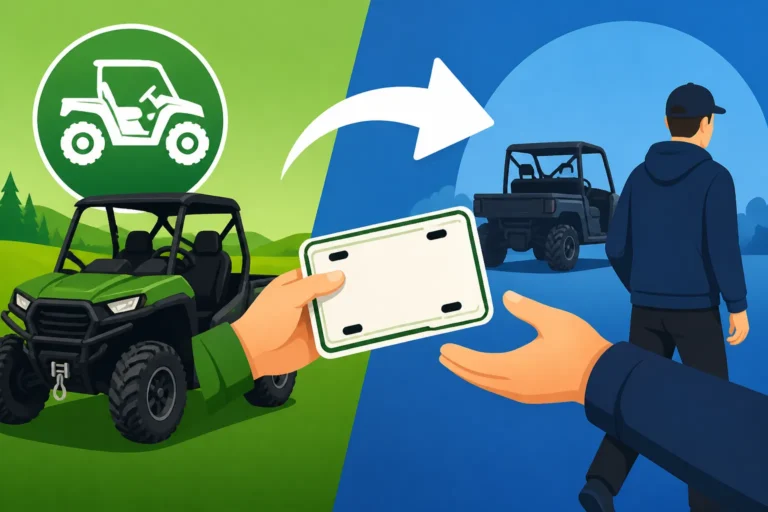
Since there's no provincial registry to issue a formal title or registration certificate for your ATV, the question of proving ownership becomes paramount. How do you show that the quad you're riding is actually yours, especially if you're buying it, selling it, or dealing with a potential theft? The answer lies squarely with the humble but incredibly important bill of sale. In Saskatchewan, [Your Bill of Sale Stands In for a Registration] and is the cornerstone of ATV ownership.
Essential Elements of a Valid Bill of Sale
A well-drafted bill of sale isn't just a casual receipt; it's a critical legal document that transfers ownership from one party to another. Because there's no official provincial title, this document is your primary proof of ownership. It needs to be comprehensive and contain specific information to be truly effective. A basic handwritten note might suffice for a friendly transaction, but for any serious purchase or sale, you'll want something more robust.
A strong bill of sale should include:
- Full Names and Addresses of both the buyer and the seller.
- The Date of Sale.
- A Detailed Description of the ATV: This includes the make, model, year, colour, and most importantly, the Vehicle Identification Number (VIN) or serial number. Double-checking this number against the machine is crucial.
- The Purchase Price.
- A Statement of "As Is, Where Is" condition, unless specific warranties are being offered.
- Signatures of both the buyer and the seller.
Tools like LawDepot can be incredibly useful for generating a proper bill of sale. They provide templates that ensure all the necessary legal language and details are included, giving both parties peace of mind. Without a provincial registry, [Saskatchewan Bills of Sale Do the Work] of formally transferring legal ownership. This makes a comprehensive bill of sale, potentially generated with the help of services like LawDepot, invaluable.
Proving Ownership for Sales, Financing, and Theft
Having a solid bill of sale is essential in several key scenarios. If you ever decide to sell your ATV, the buyer will undoubtedly want to see a clear chain of ownership, and that starts with your bill of sale. Similarly, if you're trying to finance a used ATV through a bank or credit union, they'll often require proof of ownership, and a formal bill of sale is what they'll look for.
Perhaps most critically, in the unfortunate event that your ATV is stolen, your bill of sale will be instrumental in reporting the theft to the police and in making an insurance claim. Without a provincial registration number, the VIN and the clear record of ownership provided by your bill of sale become the primary identifiers for your machine. This is how [How to Prove You Own an ATV in Saskatchewan] is actually done. Keeping a copy of your bill of sale in a safe place is as important as any registration document would be in another province. When buying or selling, make sure [What Your Bill of Sale Needs to Cover] is exhaustive, perhaps even using a template from a reputable source like LawDepot to cover all your bases.
| Scenario | Provincial Registry (ATVs) | Bill of Sale Role |
|---|---|---|
| Proof of Ownership | No official document | Primary legal document |
| Buying/Selling | Not required | Transfers ownership, essential for both parties |
| Financing | Not applicable | Often required by lenders as proof of ownership |
| Theft Reporting | No official record | Provides VIN and ownership details to authorities and insurers |
| Out-of-Province Travel | Not applicable | May be requested to prove legal ownership (e.g., at border) |
| Dispute Resolution | Not applicable | Crucial evidence in legal disputes over ownership |
Local Solutions: Understanding Municipal ATV Plate Schemes
Just when you think you've got it all figured out – no provincial plate, bill of sale is king – you might hear about certain towns or rural municipalities (RMs) that do require a local permit or plate for ATVs. This is where the landscape can get a little more complex and contribute to the ongoing confusion for riders. These local requirements are not provincial mandates; they are bylaws enacted by individual municipalities to manage ATV use within their specific boundaries.
When and Where Municipal Plates Are Required
Some communities, particularly popular recreational areas with lakes, campgrounds, or extensive trail systems, have taken it upon themselves to implement their own local ATV permitting or plating systems. These bylaws are usually put in place for a few key reasons: to manage traffic, fund local trail maintenance, track machines within their jurisdiction (for safety or noise control), or simply to generate revenue.
For example, communities like the District of Lakeland and the Village of Candle Lake have established their own bylaws that require ATVs to have a local permit or plate for operation on specific municipal roads, trails, or in designated areas within their boundaries. If you plan to ride your ATV in one of these specific areas, you must adhere to their local rules. Failure to do so can result in fines under the municipal bylaw. This means that while [Saskatchewan Does Not Register ATVs] provincially, you might find yourself needing a local permit. These local schemes are a prime example of how [Municipal Plates Fill the Gap the Province Left]. Always check with the specific municipality you plan to visit to understand their local bylaws before you unload your quad.
The Benefits and Limitations of Local Plate Programs
These municipal plate schemes, while sometimes adding a layer of complexity for riders, often serve important local purposes. For the municipalities themselves, the fees collected from these permits can go directly back into maintaining local trail networks, signage, or other infrastructure that benefits ATV riders. They can also help local law enforcement identify machines operating within their community, which can be useful for addressing concerns like noise, speeding, or unauthorized access.
However, a major limitation is that these municipal plates or permits are typically only valid within the boundaries of the issuing municipality. A plate from Candle Lake, for instance, generally won't be recognized as valid proof of permission to ride in another RM that has its own distinct bylaw. There's no reciprocity between these local programs, meaning you could theoretically need different permits for different communities if your riding habits take you across multiple jurisdictions. This creates a patchwork of rules rather than a uniform provincial system. It highlights why [Saskatchewan Municipal Plate Schemes] are a localized effort, not a substitute for a non-existent provincial system. It’s always best to carry your bill of sale, perhaps a copy you obtained from a LawDepot template, as universal proof of ownership, even if you’re also displaying a local permit.
Disclaimer
This article is for general informational purposes only and does not constitute professional advice. Laws, prices and regulations vary by location and change over time. Consult a qualified professional for guidance on your specific situation.