Saskatchewan Has No ATV Plate or Decal
It's a common frustration for folks new to Saskatchewan, or even long-time residents just getting into the ATV lifestyle: you head to a government office, ready to get your quad registered, maybe pick up a plate or a decal, only to be met with a blank stare. The truth is, unlike many other provinces where you'd expect a provincial plate or registration for your all-terrain vehicle, Saskatchewan simply doesn't have one. This guide is here to walk you through exactly what that means for you as an owner, how to navigate the system, and what crucial paperwork you do need to keep your riding legal and your investment secure.
The Unique Landscape of ATV Registration in Saskatchewan
When you're used to the way things work with cars, trucks, or even snowmobiles in Saskatchewan, the situation with ATVs can feel baffling. You expect a government office, a form to fill out, a fee, and then a piece of paper or a sticker to prove your machine is legit. But with ATVs, it's a completely different ball game, and understanding this fundamental difference is key to being a responsible and well-prepared rider in the province.
Dispelling the Myth of a Provincial ATV Plate
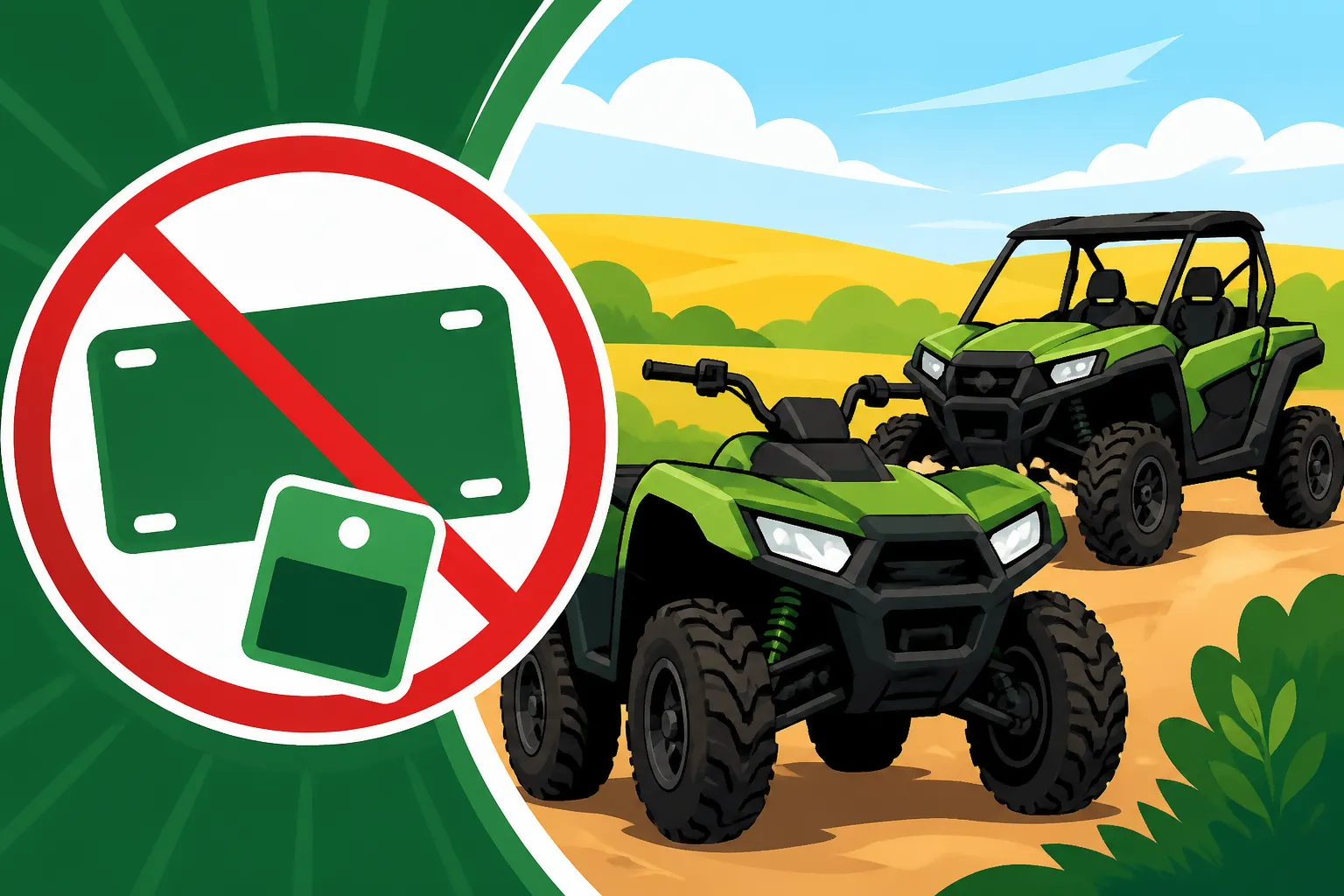
Let's get this out of the way right upfront: Saskatchewan does not issue a provincial plate or decal for ATVs. Period. I know, it sounds wild, especially if you’ve lived in or ridden in other parts of Canada where this is standard practice. You might have seen friends in Alberta or Manitoba proudly displaying their ATV registration tags, or maybe you've moved here from a province that requires them. It’s natural to assume Saskatchewan operates under a similar system, where a provincial registry tracks ownership and issues identifying markers. But that's simply not the case here. When you go looking for an ATV plate at a Saskatchewan Government Insurance (SGI) office or a Service Saskatchewan centre, you won't find one, because [Saskatchewan Does Not Register ATVs] provincially. This isn't an oversight; it's a deliberate choice in how the province manages off-road vehicles.
Many riders, especially those who come from provinces with robust ATV registration systems, find this confusing and sometimes even concerning. They worry about proving ownership, how law enforcement identifies vehicles, or how stolen machines are tracked. This lack of a central provincial database means that the responsibility for documenting ownership and ensuring legal operation falls more heavily on the individual owner, using methods that might seem a little old-fashioned compared to the modern digital registries we’ve come to expect for other vehicles. It often leads to a lot of head-scratching and questions at the counter, or even among rider groups debating "where to get a plate."
Understanding the All Terrain Vehicles Act
While there's no provincial registration for your ATV, that doesn't mean it's a free-for-all on the trails and ditches. Saskatchewan has specific legislation in place that governs the operation of all-terrain vehicles: [Saskatchewan's All Terrain Vehicles Act]. This Act, first introduced way back in 1988, focuses on how and where you can operate your ATV, rather than creating a system to register your ownership of it. Think of it less like the rules for owning a car (which focus heavily on registration and licensing) and more like the rules for using a bicycle or a piece of farm equipment—it's about safe and responsible conduct in public spaces.
The Act lays out crucial requirements concerning rider age, helmet use, insurance, and where you can actually ride. It covers everything from what constitutes an ATV in the eyes of the law to the rules for crossing a highway or riding on ditches. For example, it mandates that you must carry proof of insurance, and it sets age limits for riders, along with supervisor requirements for younger operators. It's a comprehensive set of rules designed to ensure safety and minimize conflict, but conspicuously absent are any provisions for a provincial registration plate or a central registry for the machines themselves. This focus on operation, rather than registration, is a core element of Saskatchewan's approach to ATVs.
Snowmobiles vs. ATVs: A Key Distinction
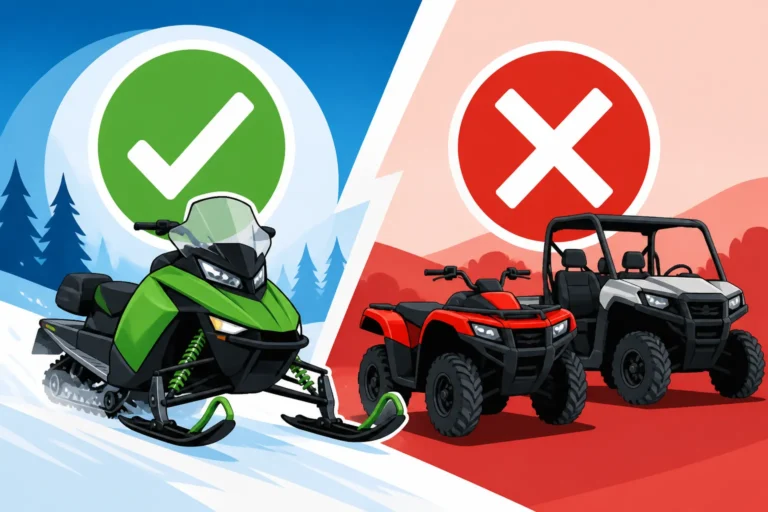
One of the most common sources of confusion for riders is the difference in how snowmobiles and ATVs are treated under Saskatchewan law. You see snowmobiles with plates, so why not ATVs? It's a perfectly logical question, but the provincial government has drawn a clear line between the two. The answer lies in separate legislation and historical precedents. [Saskatchewan Registers Snowmobiles, Not ATVs]. Snowmobiles fall under the Snowmobile Act, which mandates provincial registration, requires an annual registration fee, and even bundles a certain level of liability insurance with that registration.
This distinction means that when you buy a snowmobile, you go through a process much more akin to registering a car. You get a plate, and your ownership is recorded in a provincial database. This system provides a clear mechanism for identification, tracking, and ensuring baseline insurance coverage for snowmobiles. For ATVs, however, no such provincial system exists. This divergence can be perplexing, leading some to incorrectly assume that their ATV, like their snowmobile, needs a provincial plate. It’s a key difference to grasp because it directly impacts what paperwork you need (or don't need) and what responsibilities fall on you as an owner for each type of recreational vehicle.
What "No Plate or Decal" Really Means for Owners
So, if there's no provincial plate or decal, what does that practically mean for you when you buy, own, or sell an ATV in Saskatchewan? It means that certain processes that are straightforward for registered vehicles become more reliant on private documentation and careful record-keeping. This shift requires owners to be more diligent in how they manage their ATV's "identity."
No Central Provincial Registry for ATVs
The absence of a provincial plate directly correlates with the lack of a central provincial registry for ATVs. Unlike cars, trucks, or even snowmobiles, there isn't a government database in Saskatchewan that records who owns which ATV by its Vehicle Identification Number (VIN). This might sound alarming, and for many, it is. When you buy a used car, a quick search of the VIN can tell you its history, including previous owners, liens, and if it's been reported stolen. For ATVs in Saskatchewan, that provincial-level VIN search simply doesn't exist for ownership.
This has significant implications. For sellers, it means you can't just "sign over" a registration document. For buyers, it means you can't rely on a government record to verify the seller's ownership or check for encumbrances. The system is built on trust and the integrity of private transactions. This can make the buying and selling process feel a bit more informal, but it also places a greater emphasis on the one document that does stand in for official registration: the bill of sale. Without a central database, it's up to you to keep impeccable records, because the province won't have them.
Proving Ownership Without a Government Record
If there's no central registry, how on earth do you prove you own your ATV? This is where the bill of sale becomes an absolutely critical document. In Saskatchewan, your bill of sale isn't just a receipt; it's your primary [Saskatchewan Proof of Ownership Without a Registry]. It’s the closest thing you’ll have to a title document. This legal document details the transaction, identifying the buyer, the seller, and the specific machine being transferred, including its make, model, year, and crucially, its unique Vehicle Identification Number (VIN).
Beyond the bill of sale, other documents can help establish a chain of ownership, especially for machines that have changed hands multiple times. Things like previous bills of sale (if you received them), financing agreements, and even insurance policies all contribute to building a paper trail that demonstrates your legitimate claim to the ATV. It's a bit like tracing the lineage of a family heirloom; each transaction needs a clear document. Losing these documents can create significant headaches down the line, whether you're trying to sell the machine, make an insurance claim, or, worst-case scenario, recover it if it's stolen. This is why meticulously preserving these records is paramount.
Implications for Theft and Recovery
The lack of a provincial ATV registry certainly complicates matters when an ATV is stolen. When a registered vehicle is stolen, law enforcement can quickly enter the plate and VIN into a national database, flagging it as stolen and making it easier to identify if it's stopped or recovered anywhere in Canada. With no provincial plate or registration for ATVs in Saskatchewan, this immediate, system-wide identification isn't possible in the same way. The police rely heavily on the VIN and detailed descriptions provided by the owner.
While police can record your ATV's VIN as stolen, the absence of a visible plate means it's much harder to spot if it's being openly operated or transported. This puts an even greater onus on ATV owners to take proactive steps to prevent theft, such as using robust locking mechanisms, securing machines in locked sheds, and even etching their own identifying marks in less visible places. Filing a detailed police report with the VIN and any unique features is absolutely crucial. For insurance purposes, while an insurance company will process a claim for a stolen ATV, having solid proof of ownership (your bill of sale) and a police report with the VIN is non-negotiable. It's a tough reality, and it's why every owner should know what to do in case of theft. For more details on what happens in such a scenario, you can look into [Saskatchewan Stolen Machine Reports].
Navigating Local Bylaws and Municipal Plates
Just because the province doesn't issue a plate for your ATV doesn't mean you'll never see one. Some clever municipalities across Saskatchewan have taken matters into their own hands, creating local plate or permit schemes to address specific needs within their communities. This creates a patchwork system where what's allowed and required can vary significantly from one town or rural municipality to another.
Where Municipalities Step In
Recognizing the desire for ATVs to be used on certain municipal roads, or to generate revenue for trail maintenance, some local governments have implemented their own ATV permit or plate systems. These aren't provincial registrations; rather, they are local bylaws that require an ATV to display a specific municipal plate or decal if it's going to be operated on certain public lands or roads within that municipality's jurisdiction. A great example of this is the District of Lakeland near Emma Lake, or the Village of Candle Lake. These communities see a lot of recreational ATV use, and they’ve found a way to manage it locally.
These local schemes often come with specific rules: designated streets where ATVs are permitted, speed limits, and, of course, the requirement to purchase and display their unique plate. The revenue generated from these permits often goes back into the community, funding things like local trail development, signage, or enforcement. It's a pragmatic solution born out of local needs, filling a gap that the provincial government chose not to address. If you're planning to ride in an organized or community-specific area, it’s always wise to check their specific bylaws beforehand. For more on how these local rules work, check out [Saskatchewan Rural Municipality Rules].
What a Municipal Plate Does and Doesn't Do
It's vital to understand the scope of a municipal plate or permit. While it looks like a registration plate, and it is an official permit within that specific local area, it is absolutely not a provincial registration. If you buy a plate in, say, Candle Lake, that plate only grants you privileges to ride within Candle Lake's specified areas and according to their bylaws. It doesn't allow you to ride on municipal roads in a different town that doesn't have its own bylaw, nor does it override provincial laws.
Think of it like a local fishing license or a park pass – it's valid for a particular place and purpose, but it doesn't give you universal permission across the province. Many riders get confused, thinking a municipal plate means their ATV is now "registered" in the broader sense. This misconception can lead to unintended infractions if they venture outside the issuing municipality's boundaries and assume their plate is universally recognized. Always remember, its authority is local, not provincial.
Costs and Renewal for Local Permits
Just like any other permit, these municipal plates or decals come with a fee, and they typically have an expiry date, requiring annual renewal. The costs can vary from one municipality to another. For instance, you might find a village charging a modest amount for an annual permit, while a larger resort village with extensive designated trails might charge a bit more to cover maintenance costs. These fees are set by the individual municipal councils and are separate from any provincial taxes you paid when you purchased your ATV.
The renewal process is usually straightforward, involving a visit to the municipal office or, in some cases, an online application. It's crucial to keep track of the expiry date, as riding with an expired municipal plate in an area that requires one can lead to fines. These costs should be factored into your annual ATV budget if you plan to frequently ride in areas with such schemes. It's another layer of responsibility for ATV owners in Saskatchewan, requiring them to stay informed about local regulations in their preferred riding areas.
Essential Paperwork for ATV Ownership and Transactions
Since there's no provincial registration for ATVs, your personal documentation becomes incredibly important. This paperwork serves as your official record of ownership and is vital for everything from purchasing a new machine to selling an old one, or even proving your case to an insurance company. Don't underestimate the power of a well-kept paper trail!
The All-Important Bill of Sale
In Saskatchewan, the bill of sale is the undisputed champion of ATV ownership proof. It’s the foundational document that establishes a legal transfer of ownership from one party to another. A robust bill of sale should contain several key pieces of information to be legally sound and genuinely useful. This includes the full legal names and contact information of both the buyer and the seller, the date of the transaction, and the agreed-upon sale price. Critically, it must also provide a detailed description of the ATV itself: make, model, year, colour, and, most importantly, the Vehicle Identification Number (VIN). The VIN is your ATV's unique fingerprint, distinguishing it from every other machine.
Both parties should sign and date the document, and it's a good practice to have a witness, though not always legally required. A handwritten note on a scrap of paper might feel informal, but as long as it contains these essential details, it can hold legal weight. However, using a professionally drafted template ensures all necessary information is captured and understood. Platforms like LawDepot offer easy-to-use templates for bills of sale, helping to ensure you don't miss any critical details that could save you a headache later. This document is your proof of [How to Prove You Own an ATV in Saskatchewan] and should be safeguarded diligently.
Handled by a Dealer vs. Private Sale
The process of acquiring an ATV and the associated paperwork can differ quite a bit depending on whether you're buying from a licensed dealer or a private seller. When you purchase a new or used ATV from a dealer, they typically handle a lot of the administrative heavy lifting. They'll ensure the bill of sale is professionally prepared, collect the applicable provincial sales tax (PST) and Goods and Services Tax (GST) on your behalf, and provide you with a comprehensive invoice. Dealers are generally well-versed in the requirements and will ensure your initial paperwork is in order, often using standardized forms that capture all necessary details.
However, buying from a private seller puts the onus entirely on you, the buyer, and the seller. In a private sale, the seller will provide the bill of sale, and it's your responsibility to ensure it's accurate and complete. While PST is generally not collected on used goods in private sales under a certain value threshold, you still need that definitive proof of purchase. This is where using a template from a service like LawDepot can be incredibly helpful for both parties, as it guides you through all the necessary fields, minimizing errors and omissions. Always be meticulous in a private transaction, as there's no dealer to backstop the paperwork. [Saskatchewan Bills of Sale Do the Work] in lieu of official registration documents, so make sure they’re done right.
What to Do If You Lose Your Bill of Sale
It happens to the best of us: paperwork gets misplaced, files get corrupted, or a house move results in lost documents. Losing your ATV's bill of sale can be a real problem, as it's your primary proof of ownership. Your first step should be to contact the person or dealership you purchased the ATV from and request a copy. Many reputable dealerships keep digital records of sales for years and can usually provide a duplicate. If you bought privately, reaching out to the seller might yield a copy, especially if they are also diligent record-keepers.
If getting a copy isn't possible, you might need to explore other avenues to establish ownership. This could involve gathering any other supporting documents you might have, such as previous insurance policies, financing agreements, or repair invoices that list the ATV's VIN and your name. In some extreme cases, particularly if you need to formally declare ownership for legal purposes (e.g., in the event of a dispute or for estate purposes), you might need to swear a statutory declaration of ownership before a notary public or commissioner for oaths. This document attests to your ownership based on your sworn statement and any available supporting evidence. It's a more complex route, but it can be a last resort to create a formal record of your claim to the machine.
Insurance and Financial Considerations Without a Registry
Even though your ATV won't have a provincial plate, that doesn't mean you can skip out on other legal and financial obligations. Insurance is a non-negotiable, and how you finance and pay taxes on your machine still follows provincial and federal guidelines. The absence of a registration merely changes the type of paperwork you'll deal with.
Mandatory Insurance for Operation
This is a critical point that often catches new riders off guard: even though your ATV doesn't need a provincial plate, it absolutely must have valid liability insurance to be legally operated anywhere in Saskatchewan, with very few exceptions for private land. The [Saskatchewan All Terrain Vehicles Act] explicitly states this requirement. It's not optional; it's a legal mandate. This insurance protects you financially in case you're involved in an accident that causes injury or property damage to others. While the specific minimum coverage can vary, carrying adequate liability insurance is crucial to avoid significant personal financial risk in the event of a collision or other incident.
Unlike snowmobiles, where a basic level of liability insurance is bundled with the provincial registration, you are responsible for separately securing your ATV insurance through a private insurer or broker. This means you'll need to shop around for a policy that meets the provincial minimums and provides you with the coverage you need. You should also consider additional coverages like collision, comprehensive, and theft, especially given the difficulties in tracking unregistered machines. Always carry proof of your insurance with you when you ride, as a peace officer can request to see it at any time. For more information, read up on [Saskatchewan Insurance Requirements for Riders].
Securing a Loan for an Unregistered Machine
Financing an ATV in Saskatchewan without a provincial registration can sometimes present unique challenges, but it's certainly not impossible. Lenders, whether a bank, credit union, or dealership financing arm, are primarily concerned with securing their investment. Since there's no central provincial registry to register a lien against the ATV directly (like there would be for a car), lenders rely heavily on the integrity of the bill of sale and may use other methods to secure the loan. They will meticulously record the VIN on your loan agreement, and they might register a lien against you as the borrower, rather than directly against the machine in a public registry.
When seeking financing, ensure you have a clear, comprehensive bill of sale, especially if it's a used machine from a private seller. This document proves the legitimate transfer of ownership and helps the lender verify the asset. Dealers often have established relationships with financial institutions that are accustomed to financing ATVs, so starting there can sometimes simplify the process. Credit unions are also a popular choice for personal loans or secured loans for recreational vehicles. While the mechanism for securing the loan might differ from a registered vehicle, it's still very much a standard process for lenders in Saskatchewan.
Taxes on ATV Purchases in Saskatchewan
When you purchase an ATV in Saskatchewan, whether new or used, you will be subject to provincial and federal sales taxes. This is true even if the machine isn't provincially registered. For most purchases, you'll pay both the Provincial Sales Tax (PST) and the Goods and Services Tax (GST). The PST is a provincial tax applied to most goods and services, and ATVs are explicitly included under the relevant provincial bulletins. The GST is a federal tax that applies across Canada. Together, these taxes add a significant percentage to the purchase price of your ATV.
When you buy from a dealer, they are obligated to collect both PST and GST from you at the point of sale and remit it to the respective governments. If you're buying a new ATV, you will always pay both taxes. If you're buying a used ATV from a private seller, the situation is a bit more nuanced. Generally, PST is not applied to used goods sold privately, with some exceptions and thresholds. However, GST is typically not applied to used goods in private sales either. It's important to clarify the tax implications based on whether you're buying new from a dealer or used from a private party to avoid any surprises. Always ask for a clear breakdown of taxes on your bill of sale, especially from a dealer. You can find more details on [Saskatchewan PST at Purchase] and [Saskatchewan GST at Purchase].
| Transaction Type | PST (Provincial Sales Tax) | GST (Federal Sales Tax) | Proof of Ownership |
|---|---|---|---|
| New from Dealer | Yes, collected by dealer | Yes, collected by dealer | Dealer Bill of Sale |
| Used from Dealer | Yes, collected by dealer | Yes, collected by dealer | Dealer Bill of Sale |
| Used Private Sale | Generally No (with exceptions) | Generally No | Private Bill of Sale |
Common Misconceptions and Rider FAQs
The lack of a provincial ATV plate in Saskatchewan generates a lot of questions and sometimes leads to confusion among riders, both new and experienced. It's easy to jump to conclusions or misinterpret what you see others doing. Let's tackle some of the most common misunderstandings head-on.
"But I saw a quad with a plate!"
This is perhaps the most frequent point of confusion. You're riding along a grid road, or maybe you're at a popular riding spot, and you see an ATV with a plate clearly displayed. You think, "Aha! They do have plates!" But what you're likely seeing is one of a few possibilities. Firstly, it could be a municipal plate, as we discussed earlier. Communities like Candle Lake or the District of Lakeland issue their own local permits that look very much like traditional vehicle plates. These are strictly for use within those specific municipal boundaries and are not provincial registrations.
Secondly, it could be a snowmobile plate. Snowmobiles are provincially registered in Saskatchewan, and their plates are quite distinct. Sometimes, for transport or convenience, people might have both an ATV and a snowmobile, and one could be mistaken for the other, or a snowmobile plate could be associated with an ATV if not properly identified. Lastly, you might be seeing an ATV that is registered in a different province or state, and its owner is simply visiting Saskatchewan. Those plates are, of course, valid for their home jurisdiction but still don't change Saskatchewan's non-registration policy. So, if you see a plate, remember it's probably one of these scenarios, not a provincial ATV registration.
Why No Provincial Registry Was Created
It’s a question many ask: [Why Saskatchewan Never Built a Quad Registry]. There isn't one single, official reason plastered on a government website, but the prevailing understanding involves a blend of historical context, legislative priorities, and resource allocation. When the All Terrain Vehicles Act was developed, the focus was primarily on regulating the operation of ATVs to ensure safety and manage environmental impact, rather than establishing a complex ownership registry similar to that for cars or snowmobiles. At the time, ATVs might have been viewed more akin to recreational toys or farm equipment, rather than road-going vehicles requiring formal registration.
Creating and maintaining a comprehensive provincial registry for hundreds of thousands of ATVs, complete with a title system and transfer mechanisms, would be a significant undertaking. It would require substantial administrative resources, ongoing database management, and a dedicated team for processing. Given the existing legislative framework that emphasizes operational rules, the provincial government may have simply decided that the benefits of such a registry did not outweigh the considerable costs and complexity involved. Instead, they placed the responsibility for proof of ownership squarely on the individual through the bill of sale.
What to Carry When Riding
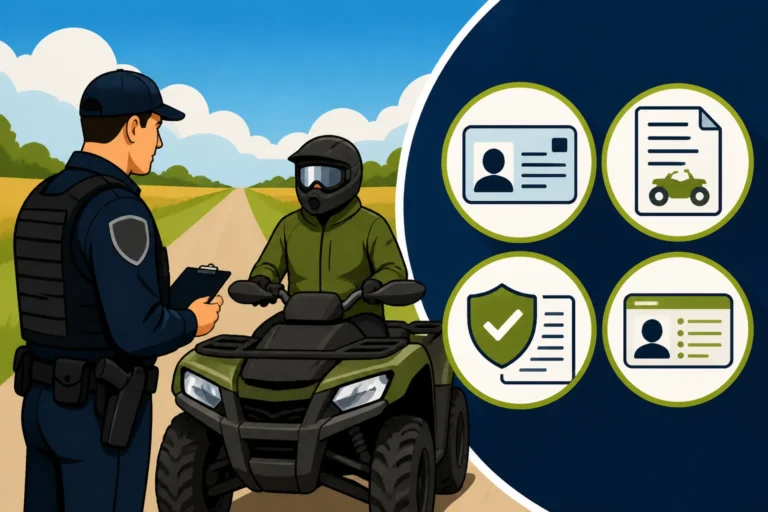
Even without a provincial plate, there are still essential documents you should carry with you whenever you're operating your ATV off your own private property in Saskatchewan. A peace officer or park ranger has the authority to request these at any time, and not having them can lead to fines or other penalties. The most crucial documents are:
- Your valid driver's licence: The [Saskatchewan All Terrain Vehicles Act] requires all ATV operators to hold a valid driver's licence, with specific exceptions for youth under supervision. This is your primary form of personal identification and proof of your legal ability to operate a motor vehicle.
- Proof of liability insurance: As discussed, liability insurance is mandatory. Your insurance provider will issue you a card or document that serves as proof of coverage. Keep this with you, ideally in a waterproof holder, on your machine or person.
- Proof of ownership: While not always explicitly demanded on every roadside check, having your bill of sale (or a copy of it) handy is always a good idea. In situations where ownership is questioned, or if your machine is involved in an incident, this document is your ultimate proof.
Keeping these documents organized and easily accessible, perhaps in a small, waterproof pouch attached to your ATV or stored securely on your person, is a smart habit for any Saskatchewan rider. It demonstrates responsibility and can prevent a lot of hassle during a routine check. You should also be prepared to show [Proof of Insurance Is What Saskatchewan Officers Ask For].
Protecting Your Investment in the Absence of Registration
The lack of a provincial ATV registry means you need to be extra vigilant in protecting your investment. Your actions as an owner, from the detail in your paperwork to your physical security measures, play an even more significant role in safeguarding your machine.
The Power of a Detailed Bill of Sale
We've touched on this repeatedly, but it bears repeating with emphasis: a detailed bill of sale is your absolute best friend as an ATV owner in Saskatchewan. When there's no official provincial title or registration to transfer, the bill of sale is the record of legal ownership. For this document to be truly powerful, it needs to be comprehensive. Ensure it includes:
- Full legal names and addresses of both buyer and seller.
- Date of sale and purchase price.
- Detailed ATV description: Make, model, year, colour, and engine size.
- The complete Vehicle Identification Number (VIN): Double-check this against the machine itself, ideally taking a photo of the VIN plate.
- Signatures of both buyer and seller.
- Statements of condition: While not strictly required for ownership, including a phrase like "sold as-is, where-is" can protect the seller, and knowing the condition can protect the buyer.
When dealing with private sales, don't settle for a casual handshake and a scribbled note. A well-crafted bill of sale protects both parties. Consider using a template from a reputable source like LawDepot, which guides you through all the necessary fields, ensuring no critical information is overlooked. This meticulousness might seem like overkill, but it can save you immense grief if a dispute arises, if your machine is stolen, or if you need to prove ownership for an insurance claim.
Securing Your Machine Against Theft
Given the difficulties in tracking unregistered machines, physical security and proactive measures are paramount to protecting your ATV from theft. Unlike registered vehicles that are often recovered because of their plates, ATVs can be harder to trace if they disappear. Start with robust physical security. Always lock your ATV, even if it's stored on your own property. Use heavy-duty chains, disc locks, or wheel locks. If possible, store your ATV in a locked shed or garage. Consider ground anchors if your shed isn't fully secure.
Beyond physical locks, consider additional security measures. GPS trackers can be installed discreetly and can significantly increase the chances of recovery if your machine is stolen. Mark your VIN in multiple, less obvious places on the machine, and keep a record of these locations. Take clear photographs of your ATV from multiple angles, noting any unique features or modifications. In the unfortunate event of a theft, having detailed photos, the VIN, and all your ownership paperwork will be critical for filing a police report and an insurance claim. For further insights, review [Saskatchewan Stolen Machine Reports].
Record-Keeping Best Practices
In a province where your ATV isn't centrally registered, your personal record-keeping becomes your ultimate safeguard. Treat your ATV's paperwork as you would the title for your house or the registration for your car – it's that important. Here are some best practices:
- Make copies: Always make at least two copies of your bill of sale and any other crucial ownership documents.
- Digital backups: Scan all your documents and save them to a secure cloud storage service (like Google Drive, Dropbox, or OneDrive) and/or an external hard drive. This protects against physical loss due to fire, flood, or misplacement.
- Keep originals secure: Store the original physical documents in a safe place, such as a fireproof safe or a secure filing cabinet at home.
- Compile a "machine file": Create a dedicated file for your ATV that includes your bill of sale, insurance policies, maintenance records, service receipts, and any modification invoices. These records not only prove ownership but can also increase the resale value of your machine by demonstrating consistent care.
- VIN photos: Take clear, well-lit photos of your ATV's VIN from the machine itself, ensuring the numbers are legible. Store these with your other digital backups.
By being meticulous with your records, you create an undeniable trail of ownership and care for your ATV. This diligence is your best defense against potential disputes, theft, or insurance claim complexities in Saskatchewan's unique registration landscape. You can learn more about the importance of these records by looking into [Saskatchewan Serial Number Records].
Disclaimer
This article is for general informational purposes only and does not constitute professional advice. Laws, prices and regulations vary by location and change over time. Consult a qualified professional for guidance on your specific situation.