White With Black Lettering
Riding an ATV or UTV in Saskatchewan brings a unique blend of freedom and responsibility, especially when you start thinking about where you can and can't take your machine. Many riders find themselves utterly confused by the seemingly contradictory rules around road use, leading to uncertainty and, sometimes, hefty fines. This comprehensive guide will untangle the provincial and municipal regulations governing ATV and UTV operation on public roads and highways in Saskatchewan, helping you understand where you can legally ride and what precautions you need to take to stay safe and compliant.
Understanding Saskatchewan's Foundational Road Rules for ATVs
Let's cut right to the chase: Saskatchewan's approach to ATVs on public roads isn't about making them "street legal" in the way you might think for a car or truck. The province operates under a core principle that generally prohibits off-road vehicles from regulated highways, with specific, narrow exceptions. Navigating these rules requires a clear understanding of the Act that governs these machines.
The General Prohibition: Why Roads Are Tricky
The primary piece of legislation, [Saskatchewan's All Terrain Vehicles Act], establishes a fundamental rule: ATVs are generally not permitted on "highways" in Saskatchewan. Now, when the Act talks about "highway," it’s important to understand that it refers to more than just the major divided thoroughfares like the Trans-Canada Highway. The definition is broad, encompassing most public roads, streets, avenues, and thoroughfares to which the public has access. This blanket prohibition is designed to keep off-road vehicles, with their different handling characteristics and safety features, separate from the primary flow of vehicular traffic, which travels at much higher speeds and requires different operational standards.
This often comes as a shock to new riders or those visiting from other provinces, where rules might be a bit more relaxed. The provincial government's stance prioritizes the safety of all road users. ATVs and UTVs, while incredibly capable off-road, aren't built with the same crash structures, turning radii, or braking systems as on-road vehicles. Trying to blend these two worlds without clear guidelines would create significant hazards. So, when you're looking at a paved road or even a well-maintained gravel road that's part of the public road network, your default assumption should always be that ATV use is prohibited unless a specific exception or local bylaw explicitly permits it. This initial understanding is crucial for any rider hoping to avoid a ticket and stay safe. The complexities of these rules are part of why we need a guide like [Saskatchewan ATV Road Rules Explained].
Driver's Licence and Age Requirements
One of the most foundational requirements for operating an ATV or UTV anywhere in Saskatchewan, even in areas where riding is permitted, is having the appropriate driver's licence. You might think, "It's off-road, why do I need a licence?" But the Act is very clear: any person operating an ATV must hold at least a valid Class 5 Saskatchewan driver's licence or an equivalent licence from another jurisdiction. This isn't just a suggestion; it's a legal mandate that ensures operators have a basic understanding of road rules and responsible vehicle operation.
Furthermore, age is a significant factor. [Saskatchewan Bans Riders Under 16] from operating an ATV or UTV, with very specific exceptions. Generally, a rider must be 16 years of age or older to operate an ATV without direct supervision. However, there's a crucial exception for younger riders: an individual who is at least 12 years old can operate an ATV if they are accompanied by and under the direct supervision of a person who is at least 18 years of age and holds a valid Class 5 driver's licence for at least 365 days. This supervisor must be immediately accessible and able to take control if necessary, and they are legally responsible for the actions of the younger rider. This rule also has an alternative: a certified ATV safety course can sometimes replace the supervisor requirement for riders 12 and over. It's not just about age; it's about demonstrated capability and responsible oversight. So, if you're planning a family ride, make sure everyone meets these strict requirements. Without meeting these conditions, a child rider is operating illegally, and the adult responsible could face serious penalties. The details of this are further explained in topics like [Saskatchewan Requires a Driver's Licence].
Essential Safety Gear: Helmets and Eye Protection
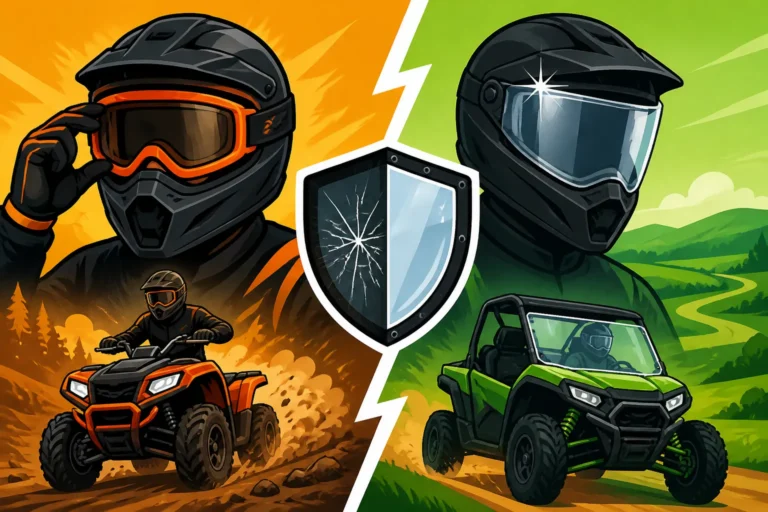
Safety gear isn't just a suggestion when you're on an ATV or UTV in Saskatchewan; it's the law. The province has very clear mandates regarding helmets and eye protection, which are paramount for rider safety, especially when you're operating near or on any kind of public access route. Every operator and passenger on an ATV or UTV must wear an approved helmet, and this isn't just any helmet. It must be a helmet that meets recognized safety standards, such as those set by the Department of Transportation (DOT) in the United States, Snell Memorial Foundation, or CSA (Canadian Standards Association). The helmet must be properly fitted and securely fastened to be effective.
Beyond the helmet, eye protection is also a non-negotiable requirement. This means wearing goggles or a face shield that is shatterproof and provides adequate protection from dust, debris, and impacts. Even if your helmet has an integrated visor, it must still meet the shatterproof standard. These rules are in place because even a small stone or branch can cause severe eye injury, compromising your ability to safely control the machine. It's particularly important to note considerations for tinted eyewear at night; dark tints are generally prohibited after sunset because they reduce visibility. Understanding these rules is vital not just for avoiding tickets, but for preventing serious injury. For all the specifics, refer to [Saskatchewan Helmet and Eye Protection Rules].
Navigating Specific Road Scenarios and Exemptions
While the general rule is "no ATVs on roads," Saskatchewan does provide specific, limited circumstances where operation on or near public roads is permitted. These aren't loopholes; they are carefully defined exemptions designed to allow for necessary travel or access where no practical alternative exists. Understanding these nuances is key to staying within the law.
Riding Ditches and the Two-Metre Rule
One of the most common exceptions to the "no roads" rule involves riding in the ditch adjacent to a highway. In Saskatchewan, an ATV may be operated in the ditch or on the shoulder of a highway, provided it is being used for specific purposes such as accessing a field, land, or a place of business. However, there's a crucial condition: the operator must maintain a distance of at least two metres from the travelled portion of the highway. This "two-metre rule" is designed to create a safety buffer between the ATV and fast-moving vehicle traffic on the main road.
This rule is a double-edged sword. While it allows for necessary travel, it also carries a significant responsibility. Riders must constantly be aware of their distance from the pavement, the condition of the ditch, and potential hazards like culverts, fences, or hidden obstacles. It's not a free-for-all; it's a specific allowance with strict parameters. Failing to maintain the two-metre distance can result in a ticket, as it creates an unsafe situation for both the ATV operator and other motorists. Furthermore, not all ditches are created equal; some may be too steep, overgrown, or hazardous for safe ATV operation. Always assess the conditions carefully. For more in-depth information, you can check out [Saskatchewan Ditch Riding and the 2-Metre Rule].
Crossing Highways: The Rules of Engagement
While riding alongside a highway is restricted, there are often times when an ATV operator needs to cross a highway to get from one section of land to another. The Act recognizes this necessity but imposes extremely strict rules to ensure safety during such maneuvers. You cannot simply zip across when you see a gap in traffic. The rules dictate that an ATV operator must:
- Come to a complete stop: Before attempting any crossing, you must bring your machine to a full and complete stop.
- Dismount all passengers: Any passengers on the ATV must dismount and walk across the highway separately from the machine. This rule exists because if the ATV were to stall or become stuck, passengers could be in grave danger. [Saskatchewan Crossings Require Passengers to Dismount] clarifies this critical point.
- Cross at a right angle: The crossing must be made at the most direct and shortest route possible, essentially at a 90-degree angle to the flow of traffic. This minimizes the time spent on the travelled portion of the road.
- Yield to all traffic: You must ensure the crossing can be completed safely without impeding or endangering any approaching traffic. If there's any doubt, you must wait.
These rules are non-negotiable. Highway crossings are inherently dangerous for ATVs, and adherence to these steps is critical. Impatience or a momentary lapse in judgment can have catastrophic consequences. Always treat a highway crossing with the utmost caution and seriousness.
Grid Roads and Municipal Bylaws: A Local Patchwork
This is where the idea of "street legal" gets particularly muddy in Saskatchewan. While the province sets the overarching Act, individual municipalities—including rural municipalities (RMs), villages, towns, and cities—have the authority to create their own bylaws regarding ATV use on roads within their jurisdiction. This creates a patchwork of rules across the province, leading to significant confusion.
Some rural municipalities, recognizing the practical necessity of ATVs for agriculture, accessing recreational properties, or simply moving between parcels of land, have passed bylaws that permit ATV use on specific grid roads, secondary roads, or even certain streets within their communities. These bylaws often come with their own set of conditions, such as lower speed limits, specific hours of operation, or even requirements for a municipal permit or plate. For instance, some communities might have a system where you pay a small fee and get a local permit, which helps fund trail maintenance or local enforcement. [Which Municipalities Run Their Own Plate Scheme] is a great resource to explore this further.
On the flip side, many urban municipalities and some RMs have bylaws that strictly prohibit ATV use on any public road within their boundaries, citing concerns about noise, safety, and enforcement. This means that a road that's perfectly legal to ride on in one RM might be strictly off-limits just across the municipal boundary. It's a classic example of hyper-local governance affecting your ride. Before you ever consider riding an ATV on a grid road or town street, you absolutely must check the local municipal bylaws. What an officer can ask to see on a grid road will definitely include any municipal permits if required. Ignorance of a local bylaw is rarely accepted as an excuse. This intricate system is why understanding [Saskatchewan Municipal Bylaws on Roads] is so crucial.
Operating an ATV Safely After Dark and with Passengers
Riding an ATV isn't a 9-to-5 activity for many, and often, we want to share the experience with others. However, operating after dark or with passengers introduces additional layers of safety and regulatory requirements that every rider must understand and adhere to. These rules are in place to mitigate the increased risks associated with reduced visibility and altered machine dynamics.
Lighting Requirements for Night Travel
When the sun goes down, the rules for ATV operation don't just disappear; they become more stringent, particularly concerning visibility. If you plan to operate your ATV or UTV at any time from half an hour after sunset to half an hour before sunrise, or at any other time when visibility is poor, your machine must be equipped with proper lighting. This isn't optional; it's a legal safety requirement designed to ensure you can see where you're going and, more importantly, that others can see you.
Specifically, your ATV or UTV must have:
- One or more headlamps: These must cast a white light to the front of the machine, bright enough to illuminate the path ahead.
- One or more tail lamps: These must cast a red light to the rear, ensuring you're visible from behind.
- Reflectors: Depending on the machine, additional reflectors might be required to enhance side visibility.
These lights must be in good working order and clearly visible. Faulty lights not only make you a hazard but can also lead to a ticket. This is especially true if you are operating on a ditch adjacent to a highway, where your visibility to passing motorists is critical. Many aftermarket accessories, like those from SuperATV, can help ensure your machine meets these lighting standards, but always confirm they are compliant with provincial regulations. Neglecting these requirements puts you and others at severe risk in low-light conditions. For the full details on what's required, consult [Saskatchewan Lighting Rules at Night].
Passenger Rules and Machine Design
Want to share the adventure? That's great, but the rules around carrying passengers on an ATV or UTV in Saskatchewan are very specific and focused on machine design. You cannot simply strap a friend onto the back of any quad and head out. The law dictates that a passenger may only be carried on an ATV or UTV if the machine is specifically designed by the manufacturer to carry more than one person. These are commonly known as "two-up" ATVs or multi-passenger UTVs (side-by-sides).
The reason for this rule is simple: safety. A single-rider ATV is designed for one person, and its balance, suspension, and seating capacity are all engineered with that in mind. Adding a passenger to a single-rider machine dramatically alters its center of gravity, making it unstable, harder to steer, and increasing the risk of rollovers or loss of control, especially on uneven terrain or at speed. These machines typically have a longer seat, passenger footrests, and often handholds for the passenger. Attempting to carry a passenger on a machine not designed for it is illegal and incredibly dangerous. Always check your machine's manufacturer specifications and be sure it is rated for multiple occupants before inviting someone along. Understanding [Saskatchewan Passengers Only on Designed Machines] is crucial for anyone considering a shared ride.
Speed Limits and Safe Operations
Even in areas where ATV operation on a road or ditch is permitted, you can't just open up the throttle and go as fast as you please. Saskatchewan has a provincial speed limit for ATVs operating in designated areas, which is 80 km/h. This limit applies when you are on a highway ditch, a permitted municipal road, or any other area where the Act allows for operation. However, the 80 km/h limit is a maximum, not a recommendation. It's always your responsibility to operate your machine at a speed that is reasonable and prudent for the current conditions.
Consider the environment: Are you on a rough gravel grid road, a dusty trail, or a well-maintained shoulder? What's the visibility like? Are there other vehicles, pedestrians, or wildlife nearby? The presence of other vehicles, especially when riding in a ditch, demands extreme caution and often a much lower speed. Similarly, navigating turns, hills, or unexpected obstacles requires reducing your speed significantly. Factors like weather, lighting, and your own skill level should always dictate your actual speed. Always err on the side of caution. Even if a local bylaw allows you on a certain road, it might impose an even lower speed limit, so again, local knowledge is paramount. Always remember, [Saskatchewan's 80 km/h Speed Limit] is the ceiling, not the floor.
Enforcement, Penalties, and What Officers Look For
Ignorance of the law is no excuse, and peace officers in Saskatchewan are well-versed in the provisions of The All Terrain Vehicles Act. Operating an ATV or UTV on public roads or in ditches without adhering to the regulations can lead to significant consequences, from fines to machine impoundment. Understanding what officers are looking for and the potential penalties is critical for every rider.
What a Peace Officer Can Ask to See
If you're stopped by a peace officer while operating an ATV or UTV in Saskatchewan, they have the authority to ask for specific documentation and perform equipment checks. It's essential to be cooperative and have your papers readily available. What they will typically ask for includes:
- Your Driver's Licence: As discussed, you need a valid Class 5 or equivalent licence to operate an ATV. This is non-negotiable.
- Proof of Insurance: [Saskatchewan Insurance Requirements for Riders] are mandatory. You must carry a minimum of $200,000 in third-party liability insurance. This isn't just for accidents, but also for general liability if your machine causes damage or injury. The officer will want to see physical proof of this insurance.
- Proof of Ownership: While Saskatchewan doesn't have a provincial registration system for ATVs, officers can still ask for proof of ownership. This typically means a bill of sale or other documentation showing you legitimately own the machine. This is crucial if there's any suspicion of theft or if the machine is involved in an incident. Check out [How to Prove You Own an ATV in Saskatchewan] for more details.
- Compliance with Equipment Requirements: Officers will check for functional headlamps, tail lamps, and reflectors during dusk or night operation. They might also check for a spark arrestor on the exhaust system, which is a key safety requirement, especially during fire season, to prevent wildfires. Quality aftermarket parts, like those offered by SuperATV, often come with spark arrestors, but it's your responsibility to ensure it's installed and in good working order.
Being prepared with these documents and ensuring your machine is compliant can make a roadside stop much smoother. An officer's request for [Proof Shown to a Peace Officer] is not a fishing expedition; it's part of their duty to ensure public safety.
Fines and Penalties for Non-Compliance
The All Terrain Vehicles Act carries clear penalties for various infractions. These aren't minor inconveniences; they can be substantial and act as a strong deterrent. The maximum fine for most offences under the Act is capped at $1,000. However, the exact fine for a specific infraction will depend on the nature of the offence and the discretion of the officer or the court.
Common infractions that can lead to fines include:
- Operating without a valid driver's licence.
- Operating without the required minimum liability insurance.
- Allowing an underage or unqualified person to operate an ATV.
- Failing to wear an approved helmet or eye protection.
- Operating on a prohibited highway.
- Failing to maintain the two-metre distance in a ditch.
- Improperly crossing a highway (e.g., with a passenger, not stopping).
- Operating without required lighting at night.
- Carrying a passenger on a single-rider machine.
In addition to fines, more serious offences, such as operating while disqualified (e.g., your driver's licence is suspended), can lead to even harsher penalties, potentially including vehicle seizure and impoundment, as well as jail time. The courts can also order an operator to pay additional court costs. It's not just about the immediate fine; these infractions can also impact your driving record and insurance rates. Don't underestimate the legal consequences; for further information, see [Saskatchewan Fines Capped at $1,000].
Owner Liability and Accident Reporting
As an ATV owner, you carry a significant responsibility that extends beyond just your own actions. Under the Act, if you permit another person to operate your ATV, you can be held jointly liable for any violations of the Act committed by that operator, as well as for any damages or injuries that result from their operation. This means if you lend your quad to a friend who then gets a ticket for riding without a helmet or causes an accident, you could be on the hook for the fines and any civil damages. This principle of owner liability is a critical safeguard, encouraging owners to ensure anyone using their machine is qualified and aware of the rules. [Saskatchewan Owner Liability Rules] provides a more detailed look into this.
Furthermore, reporting accidents is a legal duty. If an ATV accident results in injury to any person, or damage to property exceeding a certain value, the operator (or owner, if the operator is unable) has a legal obligation to report the incident to a peace officer as soon as reasonably possible. This isn't just about insurance claims; it's about public safety and accountability. Failing to report an accident can lead to additional charges. Always exchange information, ensure any injured parties receive care, and contact authorities. Being prepared for any eventuality is part of responsible ATV ownership. For more on this, you can refer to [Saskatchewan Accident Reporting Duties].
Practical Considerations for Street-Legal Accessories and Modifications
The aftermarket for ATV and UTV accessories is huge, with many companies offering "street legal kits" that promise to transform your off-road machine into something suitable for pavement. However, in Saskatchewan, these kits require a nuanced understanding of how they interact with the province's specific laws.
The Reality of "Street Legal" Kits in Saskatchewan
Many riders, eager to expand their riding opportunities, look into aftermarket "street legal" kits that typically include turn signals, mirrors, horns, and sometimes even windshields. Companies like SuperATV offer a wide range of such accessories designed to make off-road vehicles compliant with various state and provincial road laws. However, it's crucial to understand that installing these accessories does not automatically make your ATV or UTV "street legal" in Saskatchewan for general highway use.
As we've established, the foundational provincial law generally prohibits ATVs from highways. These kits can certainly enhance safety and make your machine more visible, which is beneficial in any riding scenario. They are particularly useful if you live in a municipality that does have a bylaw permitting ATV use on certain roads, as these bylaws often require specific equipment like turn signals or a horn. Without a specific municipal bylaw permitting road use, adding all the bells and whistles of a "street legal" kit will not override the provincial prohibition against operating on most public roads. It's about the law, not just the equipment. You can have the most road-ready quad on the planet, but if the local or provincial law says "no," then the answer is still no.
Essential Accessories for Road Use (Even if Limited)
Even if a full "street legal" conversion isn't going to get you onto every highway in Saskatchewan, certain accessories are incredibly valuable, and sometimes mandatory, for the limited road use that is permitted. These accessories focus on improving visibility, communication, and control, making your machine safer for everyone around it.
Consider these essential additions:
- Mirrors: Side mirrors are crucial for seeing traffic behind you, especially when riding in a ditch or preparing to cross a road. While not always mandated by provincial law for off-road use, they are often a requirement under municipal bylaws that permit road riding.
- Turn Signals: If you're on a road where ATV use is permitted, turn signals are vital for communicating your intentions to other drivers. Many aftermarket kits, including those from SuperATV, provide robust, easy-to-install signal systems.
- Horn: A horn is a basic safety device for alerting others to your presence, whether it's another vehicle, a pedestrian, or even wildlife.
- Enhanced Lighting: Beyond the minimum head and tail lights, auxiliary lights or brighter bulbs can significantly improve your visibility, especially important for the [Saskatchewan Lighting Requirements on a Machine].
- Reflectors: Additional reflective tape or stick-on reflectors can make your machine more conspicuous from all angles, particularly in low light.
These items contribute to safer operation in areas where you are permitted to ride, and they show a commitment to responsible riding, which can go a long way.
Understanding Local Bylaws for Accessory Compliance
The final piece of the puzzle regarding "street legal" accessories comes back to local bylaws. If you intend to operate your ATV on municipal roads that permit it, you absolutely must read the specific bylaw for that municipality. These bylaws will often detail what equipment is required beyond the provincial minimums. For example, a village bylaw might state that ATVs operating on their streets must have turn signals, a horn, and a specific municipal permit plate. The specific requirements for signs prohibiting ATVs might even specify White With Black Lettering.
Without adhering to these local rules, even with a comprehensive aftermarket kit, you could still be in violation. It's not enough to have the gear; you need to have the right gear for the right place. This means that before you purchase and install an expensive "street legal" kit, you should first confirm where you intend to ride and what those specific local regulations demand. A quick call to the municipal office or a review of their public bylaws can save you a lot of time, money, and potential headaches. This emphasizes why [Saskatchewan Rural Municipalities and Plates] and their unique rules are so important.
Key Takeaways and Navigating the Rules
Riding ATVs and UTVs in Saskatchewan offers incredible opportunities for recreation and utility, but navigating the rules, particularly those related to roads, requires diligence and a proactive approach. There's no single "street legal" switch; instead, it's a mosaic of provincial regulations and localized municipal bylaws.
The Importance of Local Research
The most critical takeaway for any ATV or UTV rider in Saskatchewan contemplating road use is the absolute necessity of local research. The province's general prohibition on highways is clear, but the exceptions and allowances are almost exclusively tied to specific circumstances or, more commonly, individual municipal bylaws. What's legal in one rural municipality might be strictly prohibited in the next.
Before you load up your machine and head out, especially to a new area:
- Contact the Municipality: Call the local rural municipality office, village, or town office to inquire about their specific ATV bylaws. Ask about permitted roads, speed limits, hours of operation, and any required local permits or plates.
- Check Official Websites: Many municipalities post their bylaws online. Look for sections pertaining to "All Terrain Vehicles" or "Off-Road Vehicles."
- Consult Local Rider Groups: Local ATV clubs or online forums can often provide practical insights into local riding rules, although always cross-reference information with official sources.
Relying on assumptions or what you heard from a friend can lead to fines, impoundment, or even accidents. Your due diligence is your best defense against inadvertently breaking the law.
Prioritizing Safety Over Convenience
Even in areas where ATV or UTV road use is permitted, it's crucial to remember that these machines are inherently off-road vehicles. They handle differently than cars, have less protection in a collision, and are often less visible to other motorists. The temptation to take the shortest route on a paved road for convenience should always be weighed against the inherent safety risks.
- Defensive Riding: Assume other drivers don't see you. Wear bright clothing, use your signals diligently, and maintain ample space from other vehicles.
- Condition Awareness: Roads, even gravel ones, can have unexpected potholes, loose gravel, or hidden driveways. Adjust your speed and attention accordingly.
- Equipment Maintenance: Ensure all your safety equipment – helmet, eye protection, lights, brakes, tires – is in top working order. If you've invested in accessories from a reputable brand like SuperATV, make sure they're installed correctly and maintained.
- Know Your Limits: Don't push your machine or your own riding skills beyond safe boundaries, especially on unfamiliar roads or in challenging conditions.
While the regulations can feel complex, they are fundamentally designed to protect riders and the public. By understanding and respecting these rules, and by prioritizing safety in all your operations, you can ensure your ATV and UTV adventures in Saskatchewan remain enjoyable and free from unnecessary legal troubles.
| Rule Category | Provincial General Rule | Common Municipal Bylaw Variation | Enforcement/Safety Note |
|---|---|---|---|
| Road Operation | Generally Prohibited on Highways (broad definition). | May permit on specific grid roads/village streets. | Always check local bylaws; provincial prohibition is default. |
| Ditch Riding | Permitted, but must stay 2 meters from travelled portion. | Some bylaws may further restrict or prohibit. | Maintain distance; be aware of hazards; visibility is key. |
| Highway Crossing | Must stop, dismount passengers, cross at shortest route. | No municipal variation; provincial rule applies strictly. | Extreme caution required; yield to all traffic. |
| Driver's Licence | Class 5 (or equivalent) required. | No municipal variation. | Non-negotiable; always carry valid licence. |
| Age Requirement | 16+ (or 12+ with 365-day licensed supervisor/safety course). | No municipal variation. | Strict rules for youth; supervisor is legally liable. |
| Helmet/Eye Prot. | Mandatory approved helmet and shatterproof eye protection. | No municipal variation. | Essential safety gear; no exceptions. |
| Lighting (Night) | Headlamp, tail lamp, reflectors required. | Some bylaws may specify additional lighting. | Crucial for visibility; check functionality before dark. |
| Passengers | Only on manufacturer-designed multi-passenger machines. | No municipal variation. | Single-rider machines are dangerous with passengers. |
| Speed Limit | 80 km/h maximum (where permitted). | Municipalities may set lower limits on local roads. | Always ride at a speed appropriate for conditions. |
| Proof of Ins. | Minimum $200,000 liability insurance required. | No municipal variation. | Carry proof; officer can request it. |
| Ownership Proof | Bill of sale or other documentation. | No municipal variation. | Important for theft recovery and disputes. |
Disclaimer
This article is for general informational purposes only and does not constitute professional advice. Laws, prices and regulations vary by location and change over time. Consult a qualified professional for guidance on your specific situation.