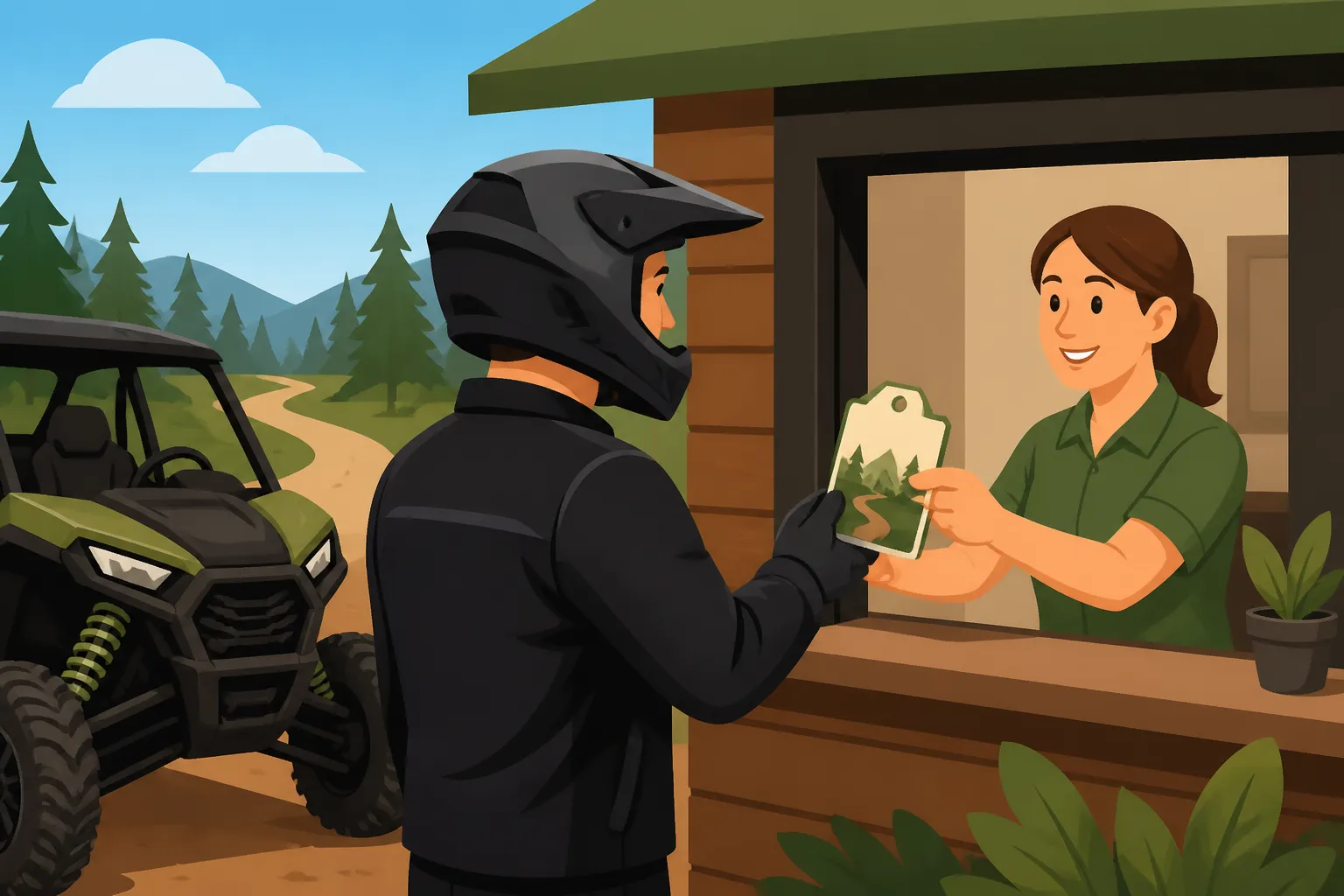
Picking Up a Trail Permit at the Campground Office
Picking up a trail permit at a Saskatchewan campground office can sound like a quick stop, but the permit may depend on completing an information session or signing a use form first. Requirements and pickup arrangements differ by park. Here’s how to prepare, what to ask at the office, and what to check before you ride.
Confirm the permit and pickup process before you travel
A park trail permit is not the same as provincial ATV registration, a municipal plate, or insurance. Saskatchewan does not issue provincial ATV registration, but some parks have their own requirements for riding designated trails. A permit for a park does not automatically give you permission to ride elsewhere or use every road and trail within the park.
Start by confirming that the park you plan to visit has designated ATV trails and requires a permit. Requirements can differ from one park to another, and a campground office may not be the place that issues permits at every location. Check the park’s current information or contact the park office before leaving home. Ask where permits are issued, when that office is open, and whether you need to complete anything before you arrive.
At parks where permits are available, the process may involve an information session and a signed use form before you receive the permit. Don’t assume you can arrive late in the day, pick up a permit immediately, and ride without delay. An office might be closed, or a required session may be scheduled separately. How to Get a Saskatchewan Park Trail Permit explains the general process, while The Info Session That Comes Before Your Permit covers why that step matters.
Permits at Moose Mountain and Great Blue Heron are described as free, but free does not mean automatic. Confirm the current steps with the park before your visit. For details specific to each location, see Saskatchewan Free Permits at Moose Mountain and Saskatchewan Free Permits at Great Blue Heron.
When you call or check park information, ask these questions:
- Is an ATV trail permit required for the trails I plan to ride?
- Is the permit issued at the campground office, a park office, or another location?
- Do I need to attend an information session before pickup?
- Is there a form to complete or sign?
- What proof of insurance should I bring?
- Does the permit need to be displayed on the machine?
- Are there office hours, seasonal restrictions, or other requirements I should know about?
Keep the answer specific to your destination. A permit process at one park is not a reliable guide to the process at another.
What to bring to the campground office
Prepare for pickup as if the office may ask you to show that you and your machine meet the park’s requirements. The exact checklist can vary, so confirm it in advance. Bringing the following can save a second trip:
- Information about the machine. Have its make, model, and identifying details available. If you are bringing more than one machine, ask whether each needs its own permit or separate paperwork.
- Proof of insurance. Park staff may require evidence of liability insurance. Keep proof accessible on your phone or in paper form, and check that it applies to the machine you intend to ride. Park requirements are separate from the general insurance rules that apply to ATV operation. See Saskatchewan Insurance Proof on the Trail for more on carrying proof.
- Any required form or acknowledgement. If the park directs you to complete a form in advance, bring it. If signing happens at an office, allow time to read and finish it before unloading or setting off. The steps may include signing a use form at a district office; Signing the Use Form at a District Office provides more context.
- Contact details for the person responsible for the machine. If you are picking up permits for a group, check whether the person collecting them needs information or documents for each rider and machine.
- A way to keep paperwork safe. A waterproof pouch or a sealed bag helps protect documents from rain, mud, and spilled drinks during the ride. Keep originals or digital copies easy to retrieve if a park employee or officer asks to see them.
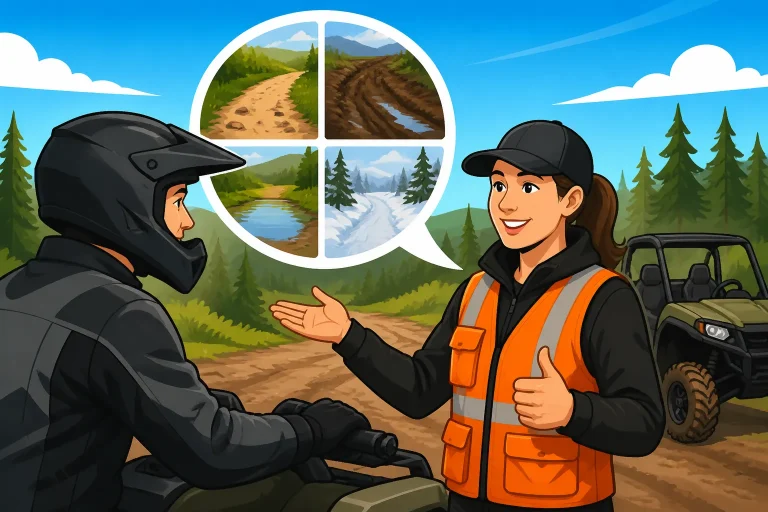
If an information session is required, plan around it rather than treating it as a formality to squeeze in between unloading and riding. Use it to confirm where trail riding is permitted, what restrictions apply, and how to report a closure or incident. The park may also explain conditions that are easy to miss when you arrive, such as trails closed to machines or roads that serve a different purpose.
Do not assume a campground reservation includes a trail permit. They are separate matters: having a place to stay does not necessarily authorize ATV use on designated trails. Likewise, a permit does not necessarily cover another rider’s machine or a different park. Ask the office to clarify exactly what the permit applies to before you leave the counter.
At pickup: check the permit and its conditions
When you receive the permit, take a moment to confirm the details rather than heading straight out. Check that it is for the correct park and machine, and ask whether the permit is valid for the dates of your visit or subject to other limits. If you are riding with a group, make sure the permit arrangements cover each machine as required.
Ask staff how the permit must be displayed. Some permits may need to be visible on the machine, while other instructions may specify a different arrangement. Do not guess based on what another rider has done. The park’s directions take priority. For more on this step, see Displaying a Permit Where an Officer Can See It.
Before leaving the office, also ask where the designated trails begin and whether any routes are currently closed. A park permit is not permission to ride on hiking trails, through campgrounds, or on other areas where machines are prohibited. The general rule is to use only trails and routes the park allows for machines. Saskatchewan Parks With Designated Trails Only explains why it is important to distinguish designated routes from other park areas.
A few practical checks can prevent misunderstandings later:
- Keep any permit paperwork and insurance proof together.
- Photograph the permit and relevant documents as a backup, but do not rely on a photo if the park says the physical permit must be displayed.
- Make sure every rider in your group understands which trails are permitted.
- Ask how to get updates if the trail network changes during your stay.
- Save the park office’s contact details in case you need to confirm a closure or report a problem.
If the information at the counter seems different from what you read earlier, ask the staff member to clarify before riding. Conditions may vary by park, by trail, or by the time of year. A quick question is easier to resolve at the office than after you have entered a restricted area.
Before you unload and ride
A permit is only one part of preparing for a park ride. Confirm that your planned route is open, that your machine is allowed on it, and that your group meets the park’s rider and equipment requirements. Conditions can change, so a permit issued earlier does not necessarily mean every trail is open when you arrive.
Check the requirements for the specific park you are visiting. Moose Mountain and Great Blue Heron have their own permit information; don’t assume their procedures or trail rules are interchangeable. The park-specific pages Saskatchewan Permit Rules at Moose Mountain and Saskatchewan Permit Rules at Great Blue Heron can help you identify what to verify.
If you are arriving outside normal office hours, call ahead rather than counting on the campground office being open. Ask whether permits can be picked up elsewhere or whether you must wait until the office opens. If your plans include riding the same day, confirm the timing of any required information session as well.
Finally, keep the permit’s limits in mind. It does not replace insurance, permission to access private land, or compliance with riding rules. It also does not grant permission to ride on trails or roads that the park has closed to machines. If you are unsure whether a route is included, check with park staff before taking it.
A smooth pickup is mostly about arriving prepared: confirm the right office, leave time for any required session, bring insurance proof and requested information, and ask how the permit should be displayed. That small amount of planning helps keep the visit focused on riding the trails you are actually allowed to use.
Disclaimer
This article is for general informational purposes only and does not constitute professional advice. Laws, prices and regulations vary by location and change over time. Consult a qualified professional for guidance on your specific situation.