Getting Consent From a Grazing Lease Holder
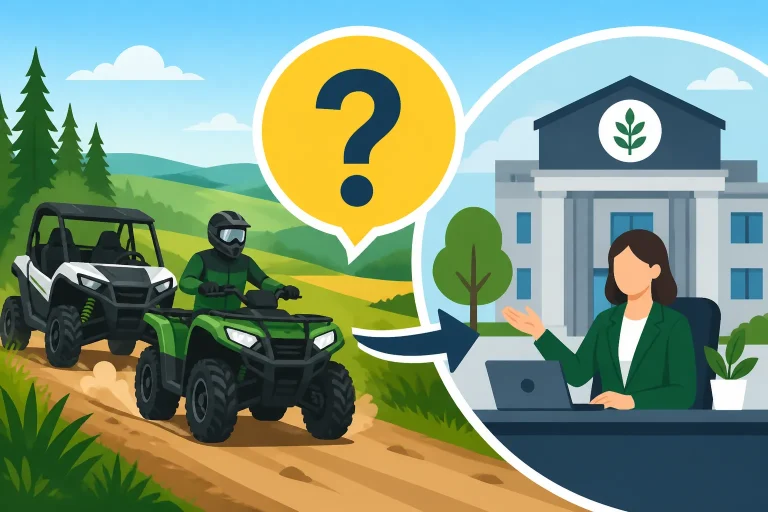
A grazing lease can look like open Crown land on a map, but that does not mean you can ride across it without checking first. If your ATV route crosses leased pasture, the practical first step is to identify the lease holder and ask for permission. Here’s how to make that request clear, keep the agreed access narrow, and avoid problems with livestock, gates, or adjoining land.
Why a grazing lease needs a separate permission check
A grazing lease is Crown land that has been leased for grazing. The land’s public ownership does not automatically give riders unrestricted access. A lease holder may be responsible for managing livestock and the land, and access rules can depend on the place, the activity, and any current restrictions.
For a rider, the safest approach is to treat crossing or riding on a grazing lease as something that requires the lease holder’s consent unless an official source confirms otherwise. Don’t assume that a route is open because it appears on a map, a friend used it before, or there is an existing track across the pasture. Permission should come from the person or entity with authority over the lease, not simply from someone who happens to live nearby.
This permission check is distinct from other rules. Consent from a lease holder does not necessarily authorize riding on adjoining private land, a road, a provincial park, or another managed area. Nor does it override a closure, a posted restriction, or a rule that applies to the particular machine or activity. For a broader overview, see Saskatchewan Grazing Lease Access Rules and Saskatchewan Crown Land Riding Permission.
It helps to distinguish three questions before you unload:
- Who controls access to the land you want to cross? Identify the grazing lease and the lease holder rather than relying on a general map label.
- What kind of access are you requesting? A short crossing, a day ride, a group trip, and repeated use are different requests.
- Are there other restrictions? Check for closures, signs, road rules, and neighbouring land boundaries as well as the lease holder’s answer.
A “yes” to one question does not settle the others. For example, a lease holder may agree to a crossing along a particular track, while a nearby road remains closed to ATV traffic under a municipal bylaw. Likewise, permission for one parcel does not extend automatically across the next pasture. Before planning a route, review Saskatchewan Crown Land Access Rules and check whether any other landowner’s consent is needed.
The point is not to make a simple ride complicated. It is to avoid treating leased pasture as public riding land by default. A brief call or message before the trip can prevent a dispute and give the lease holder a chance to flag livestock, gates, seasonal conditions, or a route that should be avoided.
How to find the right lease holder and make a useful request
The hardest part can be identifying whom to ask. A map may show Crown land or a grazing area without giving you a current contact. Don’t assume that the nearest farm or ranch owns or manages the lease. If you are unsure, use an official provincial land-information or inquiry channel to confirm the lease details and the appropriate contact. If your route covers several parcels, identify each one separately; one lease holder cannot grant access across a different lease or private parcel.
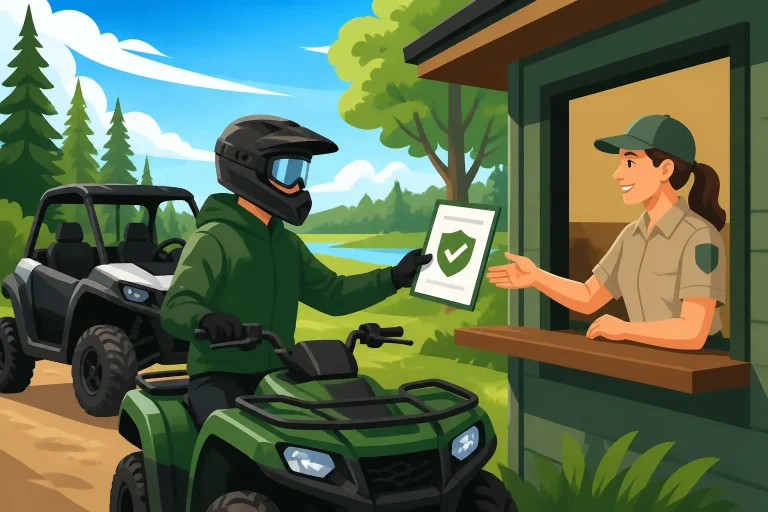
When you make contact, give enough detail for the person to make a real decision. “Can I ride out there?” leaves too much unclear. Explain where you want to go, what you want to do, and when. A simple map screenshot can help, but mark the specific entry point and proposed route rather than sending a large area with no clear path.
Include details such as:
- The date and approximate time of the ride
- The number of machines and riders
- Whether you are asking to cross the lease or ride within it
- The proposed route and entry and exit points
- Whether you are travelling alone or with a group
- Whether you expect to stop, camp, hunt, or retrieve anything
- A phone number where you can be reached on the day
Be candid about the purpose. A request to cross a pasture on the way to another destination is not the same as asking to spend the day exploring it. If the plan changes, ask again rather than assuming the original permission covers the new activity.
| What to clarify | Why it matters |
|---|---|
| Exact parcel or route | Permission for one lease or track may not cover adjacent land |
| Date and time window | Livestock movements and conditions can change |
| Number and type of machines | A group or larger machines may create different concerns |
| Crossing or recreational riding | The lease holder can agree to a specific kind of access |
| Gates and fences | Riders need clear instructions to prevent livestock from escaping |
| Weather or ground conditions | Wet or soft ground may make a route unsuitable |
| Contact plan | A phone number helps if you meet a locked gate or changed condition |
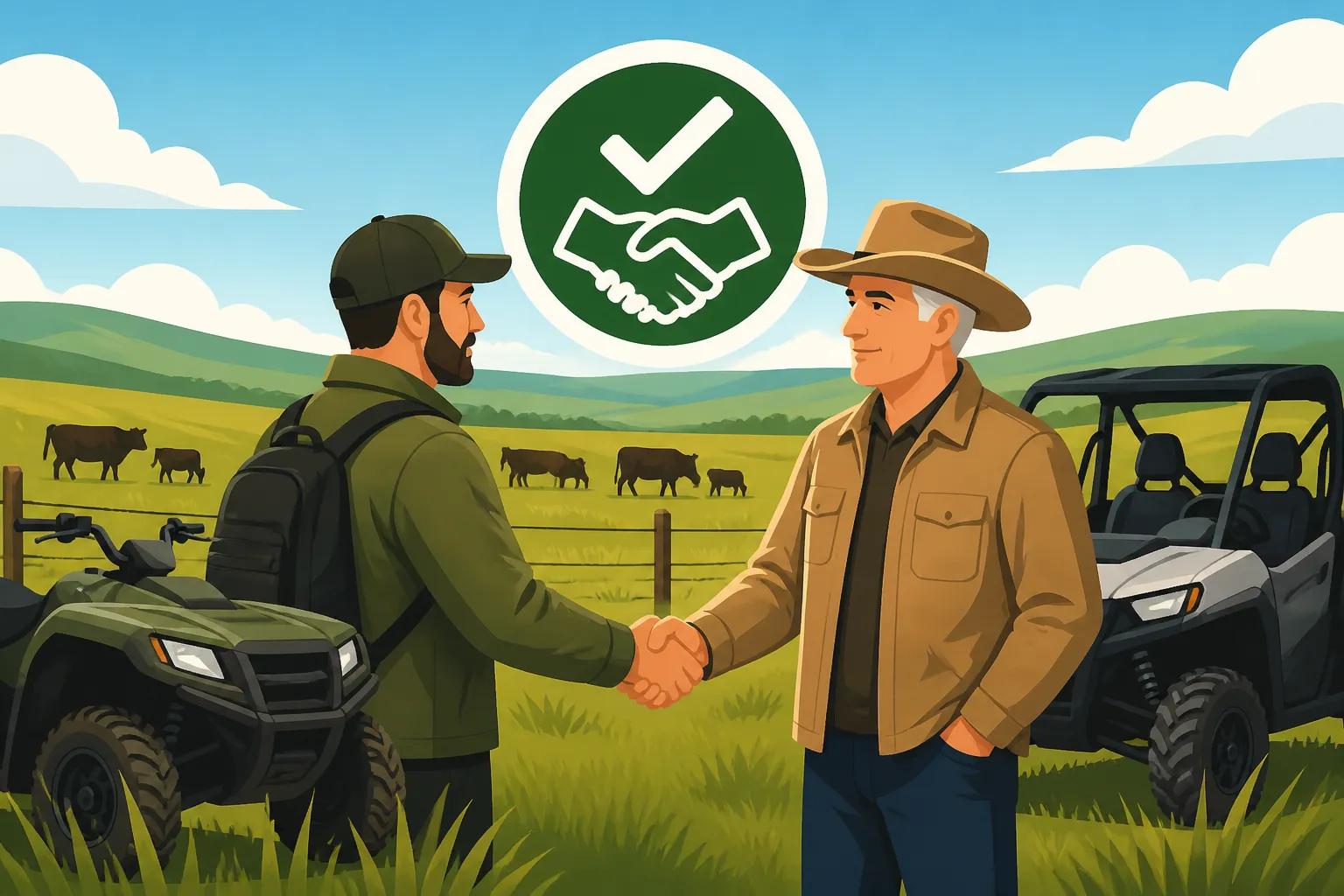
A respectful request should make it easy for the lease holder to say yes, set conditions, or decline. Avoid presenting your planned ride as a right or treating a lack of response as approval. If there is no answer, postpone that part of the route or choose an alternative where access is clear.
If a lease holder says no, accept the answer and do not try to get around it by entering from another side. If the answer is conditional, repeat the conditions back so there is no misunderstanding. You can ask whether there is another route or time that would work, but the decision is theirs. For related guidance on getting consent before entering land, see Saskatchewan Private Land Permission.
What to agree on before you ride
Permission works best when it is specific. A short written confirmation by text or email can help both sides remember what was agreed. It does not need to be elaborate, but it should identify the land, the activity, the date or time period, and any conditions. Keep a copy accessible during the ride, especially if the person who granted permission will not be there.
A useful confirmation might cover:
- Route: Where to enter, where to travel, and where to leave
- Timing: The approved day or period, including any limits on time of day
- Machines and riders: How many are expected and whether the permission applies to all of them
- Livestock: Areas to avoid, and what to do if animals are on or near the route
- Gates: Whether a gate should remain closed, be opened and closed, or not be used
- Ground conditions: Any instruction to stay off a soft, muddy, or damaged area
- Changes: Who to contact if the route, group size, or timing changes
A spoken agreement may be enough for the lease holder’s purposes, but written details are easier to refer to if plans are misunderstood. A text message or email is often practical. Keep the original message rather than relying only on a memory of the conversation.
Don’t interpret permission more broadly than it was given. If the lease holder approves a direct crossing, that does not necessarily allow loops around the pasture or repeated visits. If the consent is for one machine, ask before bringing several. If permission is limited to a particular date, get a new answer before returning another weekend.
Also clarify what the lease holder expects if you encounter a problem. For example, ask whom to call if a gate is locked, a fence is down, livestock block the route, or conditions have changed. Don’t force a gate or cut across a different field to get around an obstacle. If the agreed route is blocked, stop and contact the lease holder or turn back.
Written permission is not a substitute for checking the actual route on the day. A lease holder may change access plans because of livestock work, weather, maintenance, or other circumstances. Check for current messages and signs before riding. If the route has changed, follow the updated instruction rather than the earlier plan.
Riding responsibly and keeping the agreement intact
A permission request is only the start. Your conduct on the lease affects the land, livestock, and the lease holder’s willingness to allow future access. Stay on the agreed route, ride at a controlled speed, and give animals room. Do not chase or deliberately approach livestock, and avoid sudden noise or movement near a herd. If cattle are on the route, don’t push through them; stop at a safe distance and contact the lease holder for direction.
Treat gates and fences as working infrastructure. Follow the instructions you were given, and leave each gate exactly as required. A gate that is left open can let livestock out; one that is closed incorrectly can interfere with the lease holder’s operation. If a gate or fence is damaged when you arrive, report it rather than trying to make an unapproved repair. If you cause damage, tell the lease holder promptly and discuss what should happen next.
The same care applies to the ground. Avoid widening a track, spinning tires, creating ruts, or riding through wet areas that can be damaged. Do not leave litter, disturb equipment, or stop in a place that blocks access for the lease holder or farm traffic. If the approved route becomes muddy or unsafe, turn around instead of making a new path.
Before leaving home, make sure the whole route is covered by permission. A ride may pass over more than one grazing lease, and it may also cross private property or a road with its own restrictions. Ask the relevant lease holder for each leased section and the landowner for private land. Do not treat a nearby trail, fence line, or well-used track as proof of public access. Reaching a Rancher Before You Cross Their Lease and Reading Posted Land Signs Before You Unload offer useful reminders for those checks.
Keep any permission details with you, along with the contact number for the lease holder. You may need to confirm the route if plans change or an officer or land manager asks what access was arranged. Permission does not replace other responsibilities, such as carrying required insurance or following applicable operating rules. Check Saskatchewan ATV Insurance Requirements and Saskatchewan ATV Road Rules Explained for those separate obligations.
If you are organizing a group ride, take responsibility for making sure every participant understands the limits. Tell riders the approved route, the gate instructions, the livestock precautions, and what to do if the group becomes separated. Don’t assume that one person’s permission covers an unmentioned convoy, a support vehicle, or a second visit. Ask the lease holder before changing the size or nature of the group.
A useful pre-ride checklist is:
- Confirm the exact lease and the correct lease holder.
- Request permission for the specific route, date, group, and activity.
- Get any conditions in a written message and keep it available.
- Check for signs, closures, road restrictions, and other land permissions.
- Follow the agreed route, protect livestock and property, and leave gates as instructed.
- Stop and contact the lease holder if access conditions have changed.
Clear consent is a practical way to respect the person managing the lease and reduce the chance of an unwanted encounter. If you cannot confirm access, don’t ride the lease. Choose a route where permission and access are clear, then revisit the request when the right contact is available.
Disclaimer
This article is for general informational purposes only and does not constitute professional advice. Laws, prices and regulations vary by location and change over time. Consult a qualified professional for guidance on your specific situation.