Saskatchewan ATV Road Rules Explained
There's a lot of confusion out there among Saskatchewan ATV and UTV riders when it comes to hitting the roads. We all know these machines are built for the trail, but sometimes you just need to cross a highway, navigate a ditch, or even get down a grid road to reach your favourite riding spot. This guide will cut through the misinformation and explain the actual rules governing ATV and UTV operation on public roads in our province, helping you ride legally and safely.
The Core Principle: ATVs Are Not Road Legal (Mostly)
Let's get one thing clear right off the bat: in Saskatchewan, your ATV or UTV is generally not considered a "road legal" vehicle in the same way your car or truck is. This isn't just a suggestion; it's the fundamental principle laid out in [Saskatchewan's All Terrain Vehicles Act]. This piece of legislation dictates where and how you can operate these powerful machines, aiming to keep both riders and the general public safe.
Understanding the All Terrain Vehicles Act
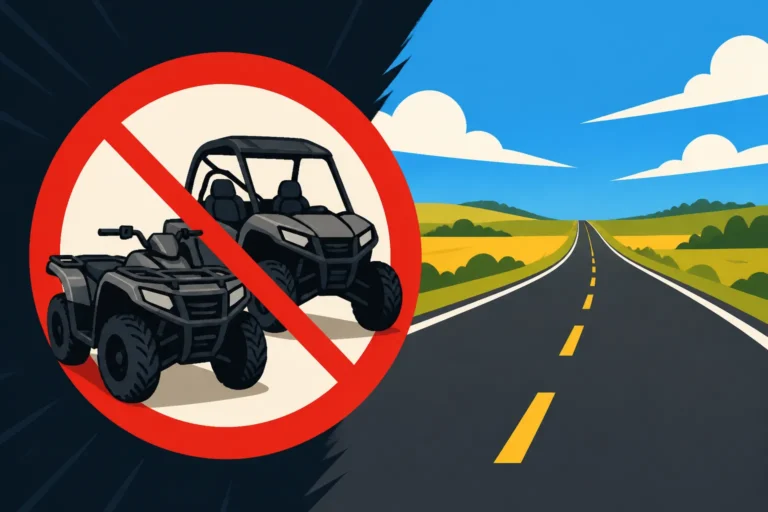
The provincial Act, first established in 1988, clearly defines what constitutes an all-terrain vehicle and, more importantly, outlines the very specific conditions under which it can be operated. It views ATVs and UTVs primarily as off-road recreational or utility vehicles. This means that, by default, they are prohibited from operating on highways, streets, and certain public lands. The whole intent of the legislation is to regulate their use in a way that minimizes conflict with traditional road traffic and protects natural environments.
However, the Act also carves out crucial exceptions that many riders rely on to access their properties, trails, or even just cross a field. These exceptions aren't a free pass, though. They come with strict conditions regarding where you can ride, the time of day, your speed, and the safety equipment you must have. Ignoring these conditions can quickly turn a quick trip down the ditch into a costly ticket, not to mention a dangerous situation for everyone involved. For instance, while you might be able to ride along certain roads to access farmland, that doesn't mean you can just cruise through town on your quad.
Understanding these nuances is absolutely critical for any rider in Saskatchewan. It's not about prohibiting fun, but about ensuring that when these powerful machines interact with public infrastructure, it's done responsibly. Unlike snowmobiles, which have a provincial registration system, [Saskatchewan Does Not Register ATVs] provincially, which sometimes adds to the confusion about their legal status on roads.
Why the Confusion Persists
Riders often find themselves scratching their heads because the rules aren't always intuitively obvious, and they can vary. One minute you're legally riding a municipal ditch to get to your hunting grounds, and the next you're in a different RM where that very same action is prohibited by a local bylaw. This patchwork of provincial regulations, municipal bylaws, and common practices creates a minefield of potential misunderstandings. There's no single "ATV road" sign that clearly marks where you can and cannot go across the entire province.
Adding to the confusion is the simple convenience factor. Sometimes, the quickest, or seemingly only, way to get from point A to point B with your ATV is to use a road or a ditch. Whether you're moving between fields on a farm, accessing a remote cabin, or just trying to reach a trailhead without having to load your machine onto a trailer for a five-minute drive, the temptation to "just ride it down the road" is strong. It's easy to assume that if you're not bothering anyone, it must be okay.
Then there's the age-old problem of word-of-mouth. Riders talk to other riders, and sometimes, well-meaning but inaccurate advice gets passed around like wildfire. You might hear from a buddy that "everyone rides the ditch here" or "it's fine as long as you have insurance." While these statements might have a kernel of truth in specific contexts, they often miss the critical details and caveats that could land you in trouble. It’s why going straight to the source, like the provincial Act and local bylaws, is always the safest bet to truly understand [Can You Ride an ATV on the Road in Saskatchewan?].
Driver Requirements and Age Restrictions
Just like with any other vehicle, operating an ATV or UTV on public roads or regulated areas in Saskatchewan isn't a free-for-all. There are specific requirements for who can drive, and strict age limits, particularly when it comes to younger riders. It's not enough to simply own the machine; you have to be legally qualified to operate it.
Who Can Legally Operate an ATV
In Saskatchewan, if you're going to operate an ATV or UTV anywhere that the [Saskatchewan's All Terrain Vehicles Act] applies, you generally need to possess a valid driver's licence. This isn't just for riding on paved roads; it applies to ditches, grid roads, and other areas where the Act regulates use. This ensures that operators have a basic understanding of traffic laws and responsible vehicle operation. It's a fundamental safety measure, recognizing the power and potential hazards of these machines. [Saskatchewan Requires a Driver's Licence] is a non-negotiable for most adult riders.
However, it's important to remember that having a driver's licence doesn't automatically grant you the right to ride your ATV on any road. It's merely one of the prerequisites. You still need to adhere to all the other regulations concerning location, speed, and safety gear. Think of it as having the basic qualification, but still needing to follow the specific rules of the game for ATVs. This distinction can sometimes trip up riders who assume their car licence makes them fully compliant for all scenarios.
For operators who are not yet adults, the rules become even more stringent, focusing heavily on supervision and training to ensure their safety and the safety of others. The province recognizes that younger riders may not have the judgment or experience to handle these powerful machines unsupervised, especially in environments where they might encounter other vehicles or pedestrians.
The 365-Day Supervisor Rule for Youth
This is where many families and younger riders need to pay very close attention. In Saskatchewan, a person under the age of 16 generally cannot operate an ATV or UTV. [Saskatchewan Bans Riders Under 16] unless specific conditions are met. The main exception, found under [Saskatchewan's Exception for Riders 12 and Over], allows youth aged 12 and older to operate an ATV, but only if they are under the direct supervision of an adult who has held a valid driver's licence for at least 365 days.
This "365-day supervisor" rule is a critical safeguard. It means the adult supervising the youth must not only be present but also be a seasoned driver themselves, theoretically more capable of spotting hazards and intervening if necessary. The supervisor is treated as the operator in the eyes of the law, meaning they can be held responsible for the youth's actions or any infractions. This rule effectively means that if your child is between 12 and 16, they can't just hop on their quad and ride alone, even on private land if they plan to eventually access regulated areas.
An alternative to constant direct supervision for youth 12 and over is completing an approved ATV safety course. While [Saskatchewan Has No Adult Safety Course Rule], for youth, completing such a course can grant an exemption from the constant supervision requirement in certain contexts. This allows them a degree of independent riding once they've proven their competence through certified training. It's a smart investment in safety and can offer more flexibility for families living in rural areas.
Essential Safety Gear and Equipment
When you're out on your ATV or UTV in Saskatchewan, particularly if you're venturing anywhere near a public road, certain safety gear and machine equipment aren't just good ideas—they're legal requirements. These rules are in place to minimize the risk of serious injury in the event of an accident and to ensure you're visible to others.
Mandatory Helmets and Eye Protection
Head injuries are a major concern in ATV accidents, which is why [Saskatchewan Helmet and Eye Protection Rules] are so strict. Any operator, and any passenger, on an ATV or UTV must wear an approved helmet. This isn't just any old hard hat; it needs to be a helmet specifically designed for use with motorized vehicles, meeting recognized safety standards such as those from the Department of Transportation (DOT) or Snell Memorial Foundation. The helmet must be properly fastened with the chin strap. [Why Your Helmet Must Be Built for ATV Use] is because these helmets are engineered to withstand the specific impacts and conditions associated with off-road riding, offering far more protection than, say, a bicycle helmet.
In addition to a helmet, riders are also required to wear appropriate eye protection. This can be goggles or a face shield that is part of the helmet. The purpose here is twofold: to protect your eyes from debris like dust, mud, and branches, and to ensure your vision isn't obscured, which is critical for safe operation. Imagine hitting a patch of gravel on a grid road and having dust obscure your vision – that's a recipe for disaster. While tinted visors are fine during the day, remember that [Saskatchewan Tinted Eyewear at Night] is prohibited, as it can dangerously reduce visibility in low light conditions.
It's tempting to forgo these items for a "quick" ride, but the consequences of doing so can be severe, not just in terms of potential injury, but also legal penalties. Peace officers are vigilant about enforcing helmet and eye protection laws, particularly on roads or designated trails where visibility and interaction with other users are higher. Always make sure your gear is on, fitted correctly, and in good condition before you start your engine.
Proper Lighting for Visibility
Visibility is paramount, especially when operating your ATV or UTV near other vehicles or after dusk. That's why [Saskatchewan Lighting Rules at Night] are explicitly laid out in the Act. Your machine must be equipped with at least one headlight and one taillight, both of which must be operational and clearly visible. The headlight must emit a white light and be strong enough to illuminate objects at a sufficient distance, while the taillight must emit a red light visible from the rear. These aren't optional accessories; they're safety essentials.
Beyond just having the lights, it's crucial to ensure they are clean and unobstructed. Mud-splattered lights are effectively useless, drastically reducing your visibility to others and your ability to see what's ahead. It's good practice to do a quick check of your lights before any ride, especially if you anticipate being out near sundown or in dusty conditions. Manufacturers like SuperATV offer a range of high-quality lighting upgrades, including brighter LED headlights and auxiliary lights, which can significantly enhance your visibility and safety on those twilight rides or when crossing busier areas.
For UTVs, the rules typically align with those for ATVs, ensuring they also have adequate forward and rear lighting. If you're using your machine for utility purposes, such as on a farm, and occasionally need to cross a public road in low light, proper lighting becomes even more critical. Think about a farmer moving between fields after a long day – ensuring their UTV's lights are functioning optimally is not just about compliance, but about preventing a serious accident with a passing vehicle.
Insurance and Documentation You Need
Navigating the roads, ditches, and other public areas in Saskatchewan on your ATV or UTV requires more than just knowing the traffic rules; it also means being prepared with the right paperwork. Just because [Saskatchewan Does Not Register ATVs] provincially doesn't mean you're off the hook for all documentation.
The Mandatory Liability Insurance
This is perhaps one of the most critical requirements for any ATV or UTV rider in Saskatchewan: you absolutely must have liability insurance. [Saskatchewan's Minimum Insurance Requirement] states that every operator must carry at least $200,000 in third-party liability coverage. This insurance protects you financially if you're involved in an accident that causes injury to another person or damage to someone else's property. Without it, you could be personally responsible for devastating costs, which is a risk no rider should take.
It's common for ATV insurance to be bundled with a homeowner's policy, but this isn't always the case, and coverage limits can vary. Some riders prefer to obtain a standalone ATV insurance policy, which often provides more comprehensive coverage and clearer terms for off-road use. Regardless of how you get it, you must be able to prove you have this insurance if a peace officer requests it. [Proof of Insurance Is What Saskatchewan Officers Ask For] during routine checks, especially if you're operating on public property. Keep a copy of your insurance card or certificate on your machine, or even a clear photo on your phone, to avoid any headaches.
Think of it this way: even if you're the safest rider in the world, accidents can happen. A momentary lapse, an unexpected obstacle, or another driver's mistake could lead to a collision. Having adequate liability insurance means that if you accidentally cause damage to a fence while ditch riding, or worse, injure a pedestrian, you won't be facing financial ruin. This peace of mind is invaluable, making the cost of insurance a necessary and wise investment for any responsible rider.
Proof of Ownership and Other Papers
While there's no provincial registration for ATVs and UTVs in Saskatchewan, proving ownership is still incredibly important, especially if you've recently purchased your machine or are operating it off your own property. The primary document for this is your bill of sale. [Your Bill of Sale Stands In for a Registration] in Saskatchewan, clearly showing who bought the machine from whom, the date of purchase, and the machine's Vehicle Identification Number (VIN) or serial number.
When you're out riding, particularly on public land or areas where interaction with law enforcement is possible, it's a good idea to have some form of proof of ownership with you. This doesn't mean carrying the original bill of sale – a copy will suffice. In situations like a theft, or if an officer has reason to believe the machine might be stolen, having this documentation readily available can prevent a lot of complications. [Saskatchewan Proof of Ownership Without a Registry] emphasizes the importance of this simple document.
Summary of Key ATV Road Rule Requirements in Saskatchewan
| Requirement | General Rule | Specifics/Exceptions | Key Considerations |
|---|---|---|---|
| Driver's Licence | Required for most operators. | Class 5 or equivalent. | [Do You Need a Licence for an ATV in Saskatchewan?] |
| Age | 16 years minimum (general). | 12-15 years old with 365-day licensed adult supervisor OR safety course. | [Saskatchewan ATV Age Requirements], [Saskatchewan Rules for a 12-Year-Old Rider] |
| Helmet | Mandatory for all operators and passengers. | Approved DOT/Snell standard, properly fastened. | [Saskatchewan ATV Helmet Law], [Why Your Helmet Must Be Built for ATV Use] |
| Eye Protection | Mandatory for all operators and passengers. | Goggles or face shield. No tinted eyewear after sunset. | [Saskatchewan Eye Protection Requirements], [Saskatchewan Tinted Eyewear at Night] |
| Lights | One white headlight, one red taillight. | Operational, visible. Required from ½ hour before sunset to ½ hour after sunrise. | [Saskatchewan Lighting Rules at Night] |
| Insurance | Minimum $200,000 third-party liability. | Must be able to provide proof on demand. | [Saskatchewan ATV Insurance Requirements], [Saskatchewan's Minimum Insurance Requirement] |
| Road Use | Generally prohibited on highways/streets. | Exceptions for crossings, ditches, grid roads, specific bylaws. Must follow conditions. | [Saskatchewan ATV Road Rules Explained], [Can You Ride an ATV on the Road in Saskatchewan?] |
| Proof of Ownership | Bill of sale is primary document. | Carry a copy or clear photo. | [How to Prove You Own an ATV in Saskatchewan] |
Having these documents in order and accessible demonstrates you're a responsible operator. It can save you time and hassle if you're ever stopped by law enforcement or need to sort out a claim. Keep them organized, perhaps in a waterproof bag stored securely on your machine, alongside your emergency kit. [Carrying Papers on a Grid Road] is a habit worth cultivating.
Navigating Saskatchewan's Roads and Ditches
While ATVs and UTVs are primarily designed for off-road adventures, Saskatchewan's unique landscape and regulations mean that sometimes, a bit of road or ditch riding is necessary to get where you're going. However, these movements are tightly regulated and come with specific conditions that riders must understand and follow.
Ditch Riding: The 2-Metre Rule
Ditch riding is a common practice in rural Saskatchewan, often seen as a convenient way to get from one point to another without using a trailer. The provincial Act allows for ditch riding, but it comes with a crucial stipulation: you must stay at least two metres away from the travelled portion of the highway. [Saskatchewan Ditch Riding and the 2-Metre Rule] is not a suggestion; it's law. This distance is intended to create a safety buffer between your machine and high-speed road traffic, reducing the risk of collisions.
It’s easy to misjudge this distance, especially on unfamiliar roads or in areas with deep snow. Always err on the side of caution. If the ditch is too narrow, too steep, or too obstructed to safely maintain that 2-metre distance, you should not be riding it. Furthermore, riding the ditch after dark comes with additional visibility requirements for your machine, as outlined in [Saskatchewan Night Travel Direction Rules]. Imagine a semi-truck flying by at highway speeds; that two-metre buffer provides a critical margin for error.
Keep in mind that while the provincial Act permits ditch riding under these conditions, individual [Saskatchewan Municipal Bylaws on Roads] can override or further restrict this. A rural municipality might have a bylaw that prohibits ATV use in specific ditches within its boundaries, even if the provincial Act would otherwise allow it. Always check local bylaws for the area you plan to ride to avoid unexpected tickets.
Highway Crossings and Specific Maneuvers
Crossing a public highway is one of the most hazardous maneuvers an ATV or UTV operator can perform, and it's understandably subject to very strict rules. The Act permits highway crossings, but they must be done safely and efficiently. First and foremost, you must come to a complete stop before entering the travelled portion of the highway. This isn't a rolling stop; it's a full stop to allow you to properly assess traffic. [Coming to a Full Stop Before You Cross] is non-negotiable.
Once stopped, you must cross the highway by the shortest and most direct route possible, at a 90-degree angle to the flow of traffic. The goal is to minimize your time spent in the roadway. Furthermore, [Saskatchewan Crossings Require Passengers to Dismount] before the crossing. This means any passenger on your ATV or UTV must get off the machine, walk across the highway, and wait on the other side before you complete the crossing. This is a vital safety measure to reduce the number of people exposed to potential danger during the crossing.
Finally, after crossing, you must immediately return to the ditch or off-road area. You cannot ride along the travelled portion of the highway for any distance, even if it feels like a short hop. There are very few exceptions to this, such as riding the edge of a highway to reach a bridge or culvert where a safe ditch crossing isn't possible, but even then, it's for the shortest distance practicable. Always prioritize safety over convenience when performing any highway crossing.
Riding on Grid Roads and Municipal Streets
Grid roads, often gravel and less travelled than highways, present a different set of rules for ATV and UTV operators. Generally, the provincial Act permits the operation of ATVs on grid roads (also referred to as secondary highways or municipal roads) under specific conditions. However, the critical factor here is often [Saskatchewan Municipal Bylaws on Roads]. Many rural municipalities have their own bylaws that dictate whether ATVs can be operated on their grid roads, and if so, under what specific circumstances.
Some municipalities have embraced ATV use on certain grid roads, recognizing their importance for local residents and recreational users. These bylaws might specify speed limits lower than the provincial 80 km/h maximum, or designate certain roads as off-limits. Other municipalities may prohibit ATVs entirely from their road network. This is why [Saskatchewan Bylaw Lookups Before You Ride] is so important. A quick call to the local RM office or a check of their website can save you a significant fine and prevent public complaints.
When riding on any municipal street or grid road where it is permitted, you are expected to operate your machine safely and responsibly. This means adhering to speed limits—the provincial maximum is [Saskatchewan's 80 km/h Speed Limit] where permitted, but local bylaws or road conditions might necessitate a much lower speed—and giving way to other traffic. Always remember that you are sharing these routes with cars, trucks, and farm equipment, which often cannot stop or maneuver as quickly as an ATV.
Municipal Bylaws: The Local Wildcard
Riding an ATV or UTV in Saskatchewan isn't just about understanding the provincial Act; it's also about navigating a complex web of local regulations. [Saskatchewan Municipalities With ATV Bylaws] have the power to create their own rules regarding ATV operation within their borders, and these can significantly impact where and how you can ride.
How Local Bylaws Impact Your Ride
The provincial All Terrain Vehicles Act sets the baseline for ATV operation, but it explicitly grants municipalities the authority to create more specific, and often more restrictive, bylaws. This means that even if the provincial Act allows you to ditch ride or cross a certain type of road, a local bylaw might say otherwise. For instance, a rural municipality might prohibit ATV use on all municipal roads and ditches within its boundaries due to concerns about safety, dust, or noise. Conversely, another municipality might have a bylaw that specifically permits ATV use on certain designated grid roads to allow access to recreational areas or for farm use.
These bylaws are often a response to local conditions, community concerns, and the specific needs of residents. What works for a densely populated resort village might not work for a sprawling agricultural RM. This local control means that a route you've legally ridden for years in one RM could become illegal the moment you cross into an adjacent one. It creates a challenge for riders, who might assume a universal set of rules applies across the province.
The impact of these bylaws can range from minor inconveniences, like having to re-route your ride, to significant penalties if you're caught breaking a local rule. Enforcement of municipal bylaws is typically handled by local bylaw officers or the RCMP, who are empowered to issue tickets and ensure compliance. Riders often express frustration with this variability, but understanding its existence is the first step toward staying compliant.
Researching Your Local Rules Before You Go
Given the varying nature of municipal bylaws, your best defence against an unexpected ticket or confrontation is proactive research. Before you plan a ride, especially if you're venturing into an unfamiliar area, make it a habit to check the local municipal regulations. This means contacting the Rural Municipality (RM) office, the town office, or checking their official websites for their specific ATV bylaws. Many municipalities have their bylaws published online, making them relatively accessible.
Don't rely solely on word-of-mouth or what "everyone else is doing." Just because you see other riders in a particular area doesn't automatically mean their actions are legal, or that they haven't simply been lucky. A quick phone call or email can clarify the rules for [Saskatchewan Rules for Riding a Town Street] or specific grid roads. Asking [Questions Worth Asking a Rural Municipality] about ATV access can save you a lot of grief.
For example, a recreational area like Candle Lake might have very specific bylaws governing ATV use within the village limits, on specific streets, or near residential areas, even while allowing ditch riding in less populated areas. Knowing these specifics beforehand allows you to plan your route accordingly, ensuring your ride is both enjoyable and legal. This commitment to checking local rules demonstrates responsible riding and helps foster a positive relationship between riders and local communities.
Penalties and Consequences of Non-Compliance
Operating an ATV or UTV in Saskatchewan without adhering to the provincial Act and relevant municipal bylaws can lead to a range of penalties, from fines to more severe legal consequences. These aren't just minor inconveniences; they're designed to deter unsafe operation and protect everyone on and around our roads.
Common Fines and Enforcement
If you're caught violating the [Saskatchewan's All Terrain Vehicles Act] or a municipal bylaw, you can expect to receive a ticket. The fines for infractions vary depending on the specific offence, but they can quickly add up. For instance, operating an ATV without the required liability insurance, failing to wear a helmet, or riding in a prohibited area are all common reasons for receiving a citation. [Saskatchewan Ticket Costs for Riders] can be substantial, and these fines often come with additional court costs or administrative fees.
Enforcement is carried out by peace officers, including the RCMP, provincial park officers, and municipal bylaw officers. They are empowered to stop operators, request proof of compliance (licence, insurance, etc.), and issue tickets. It's important to remember that ignorance of the law is generally not considered a valid defence. Officers are primarily concerned with safety and compliance, and they have the authority to act on observed infractions.
Repeated offences, or particularly egregious violations, can lead to more serious consequences beyond a simple fine. For example, operating an ATV while your driver's licence is suspended or disqualified can result in significant penalties, including further licence suspensions, larger fines, or even vehicle impoundment. These enforcement measures underscore the province's commitment to ensuring responsible ATV operation on public lands and near roadways.
Owner Liability and Serious Offences
The legal repercussions extend beyond just the operator; under certain circumstances, the owner of the ATV can also be held liable for an operator's infractions. This is particularly relevant when a minor or another person is operating a machine that belongs to someone else. [Saskatchewan Owner Liability Rules] mean that if you lend your ATV to someone who then breaks the law, you, as the owner, could face penalties. This rule places a significant responsibility on owners to ensure that anyone operating their machine is doing so legally and safely, with all the necessary equipment and qualifications.
More serious offences, such as impaired riding, carry penalties that align with those for impaired driving of other motor vehicles. [Saskatchewan Impaired Riding Penalties] are severe, including hefty fines, licence suspensions, and potential jail time. Operating an ATV under the influence of alcohol or drugs is incredibly dangerous, both for the operator and for anyone else in the vicinity, and it is treated with the utmost seriousness by law enforcement.
In the unfortunate event of an accident involving an ATV, especially one causing injury or significant property damage, failure to comply with the Act can have profound consequences. It can affect insurance claims, lead to civil lawsuits, and potentially result in criminal charges, depending on the circumstances. The maximum fine under the Act for various offences can be [Saskatchewan Fines Capped at $1,000], but the real cost can be far greater when you consider legal fees, damages, and long-term consequences. Understanding these potential liabilities is crucial for any responsible ATV or UTV owner in Saskatchewan.
Disclaimer
This article is for general informational purposes only and does not constitute professional advice. Laws, prices and regulations vary by location and change over time. Consult a qualified professional for guidance on your specific situation.