Saskatchewan Crown Land Riding Permission
A Crown land map can make a riding area look open, but that does not automatically mean you can ride there. Access may depend on who occupies or manages the land, whether a trail is designated, and whether a closure or other restriction applies. Here’s how to check permission before unloading your ATV or UTV, and what to do when the land status is unclear.
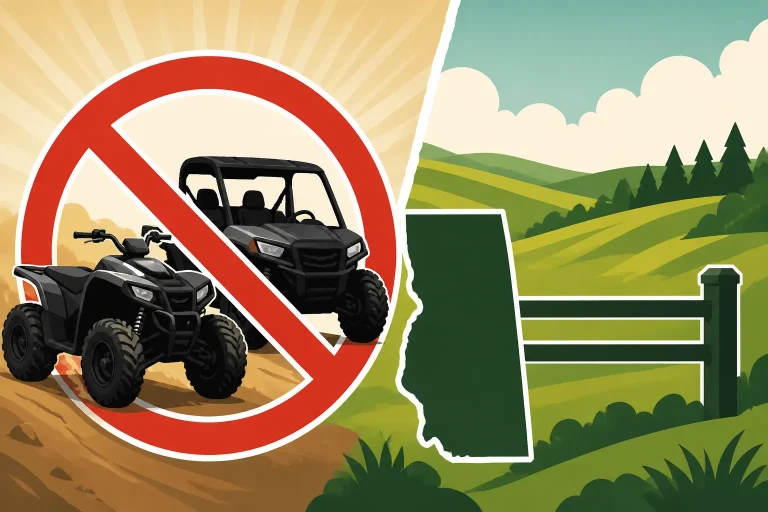
Crown land does not mean unrestricted riding
Crown land is public land, but that does not make every parcel an open ATV or UTV riding area. Land can be subject to a lease, permit, management plan, trail agreement, seasonal restriction, or closure. A road or trail crossing Crown land may also have different access conditions from the surrounding land.
Keep two questions separate:
- May you access this land? That can depend on its status and the permission of an occupant or land manager.
- May you ride an ATV or UTV there? That can depend on vehicle-use rules, trail designations, orders, and current restrictions.
Permission to enter is not automatically permission to ride wherever you choose. Likewise, a trail that appears on a map does not necessarily mean all nearby land is open to machines.
Check who occupies or manages the land
Some Crown land is occupied under a lease or other authorization. A leaseholder may be using the area for grazing, agriculture, resource work, or another approved purpose. Where land is occupied, do not assume that public ownership gives you the right to cross it or ride on it. Check whether you need the occupant’s consent and what conditions apply. The details of Saskatchewan Crown Land Occupant Permission matter when land is leased or otherwise occupied.
Grazing leases deserve particular care. A fence, gate, cattle, or working ranch operation can be a clear sign that your riding could interfere with land use, even if the property is Crown land. Get permission before entering a lease area when required, keep gates as you find them, avoid livestock, and respect any route or timing conditions. See Saskatchewan Grazing Lease Permission and [Saskatchewan Grazing Lease Access Rules] for more on that situation.
Not every Crown land parcel has the same occupant or access arrangement. If you cannot tell who is responsible, pause and check with the relevant land manager or government office rather than treating silence as permission.
A route is not proof that the whole area is open
A public road, grid road, established trail, or old cutline may cross land with different access conditions. A route shown on a map can help with planning, but it does not, by itself, confirm that motorized travel is allowed along it today. Do not assume you can leave the route and explore nearby Crown land.
The same caution applies to informal tracks. A tire-marked path may be private, part of a lease operation, closed, or simply not an authorized ATV trail. Check the route’s status and any signs at the site. Saskatchewan Crown Land Access Rules explains why it is important to verify access for the specific location rather than relying on a general assumption about Crown land.
How to find out whether permission is needed
Before travelling, identify the land you intend to use as precisely as possible. “Crown land north of town” is too broad to get a reliable answer. Find the parcel or trail, note the access point, and check whether the route crosses a lease, private land, a park, or another managed area.
Use maps as a starting point, not the final answer
Maps can help you locate trails and understand the surrounding area, but they may not show every current restriction, temporary closure, gate, or change in land use. Use the best official mapping and land information available for the area, then confirm important details with the responsible office or occupant.
When checking a route, look for:
- The exact trail or access road, not just the general riding area.
- Land boundaries and any signs of an occupied lease or other authorization.
- Posted closure notices, barriers, or restrictions on motorized use.
- Whether the route enters a provincial park, ecological reserve, or other area with separate rules.
- Seasonal limits, fire-related restrictions, and any current administrator orders.
A Crown land designation alone does not answer all of those questions. Saskatchewan Crown Land Riding Explained gives more context on why the land status and the proposed activity both matter.
Ask a useful, specific question
If permission is unclear, contact the office responsible for the land or the person who occupies it. Give them the location and route details, and ask directly whether ATV or UTV travel is allowed. A useful question is: “May I ride this machine on this route, on this date, and do I need to stay on a designated trail?”
Ask about practical conditions too:
- Is access allowed only on a particular trail or road?
- Are there dates or times when riding is not permitted?
- Are gates, livestock, or work activities expected?
- Is a separate permit or authorization needed?
- Does a wildfire closure or land-use order affect the route?
If permission is granted, keep a record of who gave it, what land or route it covers, and any conditions. Written confirmation is helpful when the arrangement is more than a simple, informal conversation. It cannot override a closure or legal restriction, but it can help you remember the agreed route and terms.
| What you find | What to do before riding |
|---|---|
| Crown land with no clear access information | Identify the parcel and confirm access with the responsible office |
| Land occupied under a lease or other authorization | Check whether the occupant’s permission is required; follow any conditions |
| A marked or mapped trail | Confirm it is open to ATVs or UTVs and check for current closures |
| A route crossing a park or protected area | Check that area’s separate machine-use rules |
| A gate, closure sign, or barrier | Do not bypass it; confirm whether access is restricted |
| Unclear land status or conflicting information | Do not ride until you have reliable confirmation |
Permission is only one part of the rules
Even when you have permission to enter land, you still need to follow the rules that apply to the machine and the route. That may include provincial operating requirements, local bylaws, posted restrictions, park rules, and fire-related limits. A land occupant’s consent cannot authorize conduct that is otherwise prohibited.
Follow current closures and orders
Crown land restrictions can change. A route that was open on a previous trip may be subject to a new closure, fire restriction, or other order. Check for current notices before leaving and again at the trailhead. Follow posted signs and barriers; do not assume that a familiar route remains open because you have ridden it before.
Specific Crown land prohibitions and orders can affect where machines may travel. Saskatchewan Crown Land Prohibition Regulations and Saskatchewan Administrator Orders on Crown Land are relevant when you are checking whether restrictions apply to a particular area. If a sign, map, and verbal information appear to conflict, stop and get clarification from the responsible authority before riding.
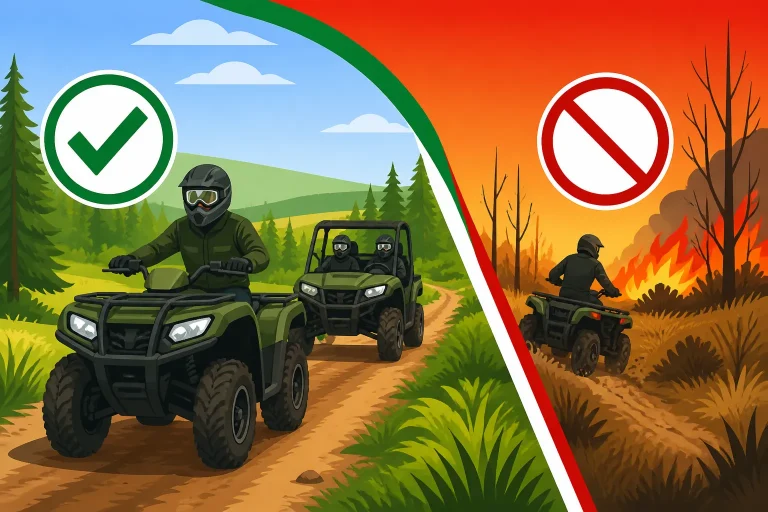
Fire conditions need a separate check. A land-access permission does not cancel fire-season requirements or an area closure. Read Saskatchewan Wildfire Season Rules for Riders before a trip, and check the current status of the riding area. If an official restriction closes access, wait until it is lifted.
Parks and designated trails may have their own conditions
Some Crown land is managed as part of a park or designated riding area. In those places, the rules may limit machines to specific trails or require a permit, acknowledgement, or other step. Being allowed onto the property does not necessarily authorize riding on hiking trails, roads, beaches, campgrounds, or other areas closed to machines.
Check the rules for the specific park or trail system rather than relying on general Crown land guidance. Saskatchewan Provincial Park Machine Rules can help you identify why park access needs its own check. Where permits or trail conditions apply, confirm the requirements with the park or trail manager before you unload.
Likewise, organized rides and commercial activities may need separate authorization. A casual individual ride and an organized event are not necessarily treated the same way. If you are arranging a group ride, filming, guiding, or another organized activity, ask the land manager whether additional approval is needed. Permits for an Organized Ride on Crown Land covers that distinction.
Permission does not replace safe, responsible riding
A landholder or leaseholder may set reasonable conditions for access, and the land itself may present hazards that are not obvious from a map. Stay on the route you were authorized to use, avoid damaging vegetation or roads, and do not interfere with livestock, equipment, or ongoing work. If conditions have changed since permission was granted, contact the occupant again.
When riding with others, make sure each rider understands where access is allowed. One person’s permission should not be treated as a general invitation for a group to roam beyond the agreed area. Keep the group together where practical, and stop if the route becomes uncertain or appears to enter land with different access conditions.
A practical permission check before you unload
Use this sequence when planning a Crown land ride:
- Pin down the route. Record the access point, intended trail, and any connecting roads. A vague destination makes it harder to check land status.
- Identify the land manager or occupant. Determine whether the area is occupied under a lease or other authorization, or managed under separate rules.
- Confirm machine access. Ask whether an ATV or UTV may use the specific route, and whether you must stay on a designated trail.
- Check for current restrictions. Look for signs, closures, fire-related limits, park rules, and orders that may affect the date of your ride.
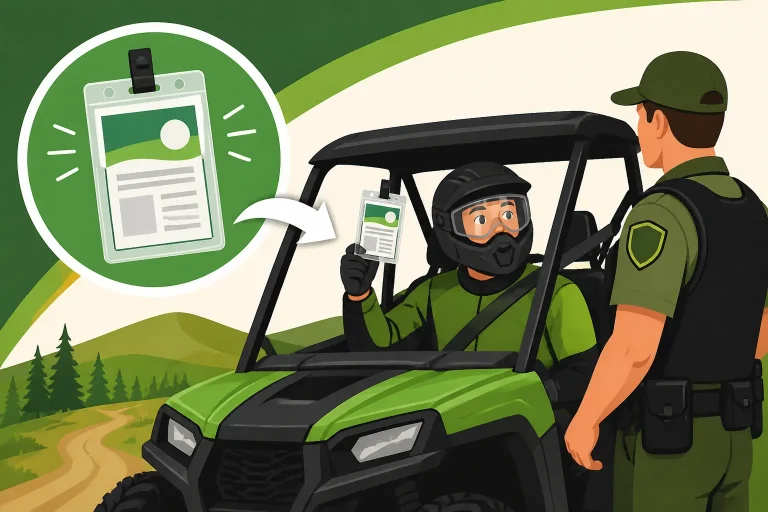
- Keep permission details. Note who granted access, the area covered, the date, and any conditions. Carrying a written message can make the terms easier to verify.
- Recheck at the trailhead. Conditions can change after you plan the trip. Respect a new sign or barrier and stop if the route is not clearly open.
- Turn around when access is uncertain. Do not cross a gate or continue onto a new parcel while trying to sort out permission on the trail.
This process is especially useful when a route crosses several land types. You may have permission for one section but not the next, or an open road may lead to a closed trail. Treat every change in route or land status as a reason to confirm access again.
If you cannot reach the occupant or responsible office, do not treat the lack of a response as consent. Choose a route with clearly confirmed access, or postpone the ride. That is a better outcome than damaging property, disturbing livestock, or being stopped in an area where motorized travel is restricted.
The simplest rule is to confirm permission for the actual route, not merely the general area. Check who occupies or manages the land, verify that ATV or UTV use is allowed, and look for current restrictions before riding. Crown land can offer excellent access where it is permitted, but the permission and route conditions are specific.
Disclaimer
This article is for general informational purposes only and does not constitute professional advice. Laws, prices and regulations vary by location and change over time. Consult a qualified professional for guidance on your specific situation.