The All Terrain Vehicles Act Runs 36 Sections
It can feel overwhelming trying to make sense of the laws governing ATV and UTV use here in Saskatchewan. With rules constantly evolving and often feeling like they're written in a language only lawyers understand, it's easy to get lost. This guide aims to pull back the curtain on "The All Terrain Vehicles Act," breaking down its 36 sections into clear, understandable language so you can ride confidently and safely.
Understanding the Foundation: The All Terrain Vehicles Act
When you swing a leg over your quad or climb into your side-by-side, you're not just heading out for a ride; you're also operating a powerful machine governed by specific laws. Here in Saskatchewan, the core legislation that dictates how, where, and by whom these machines can be operated is called "The All Terrain Vehicles Act." It's not just a collection of suggestions; it's the legal framework designed to ensure safety for riders, other road users, and the environment. Trying to navigate this world without understanding the foundational Act is like trying to drive a tractor without knowing how to shift gears – you'll eventually get stuck or, worse, cause a problem.
Why Legislation Matters for Riders
It's easy to think of laws as just an obstacle, something that restricts your freedom to enjoy the open trails or work your land. But in reality, legislation like The All Terrain Vehicles Act serves several critical purposes that ultimately protect you, your loved ones, and your investment. Firstly, it sets a baseline for safe operation. Without clear rules about age, helmets, and where you can ride, the risks of serious accidents would skyrocket, turning a fun hobby into a much more dangerous pursuit. These rules aren't there to spoil your fun; they're there to keep you alive and out of the emergency room.
Secondly, the Act clarifies liability. In the unfortunate event of an accident, these laws help determine who is responsible, which is crucial for insurance claims and legal proceedings. Imagine a scenario where a rider causes damage or injury, but there are no clear rules to determine negligence. It would be a legal free-for-all, leaving victims without recourse and responsible parties potentially facing unfair blame. The Act provides a framework, however imperfect, to sort out these complex situations. Finally, it helps to ensure the sustainability of our riding areas. By setting rules for Crown land access and environmental protection, the Act aims to preserve these spaces so future generations can continue to enjoy them. Understanding these provisions is vital for every rider, from the weekend warrior to the farmer using their quad for daily chores.
The Act's Structure and Scope
The All Terrain Vehicles Act is a relatively concise piece of legislation, running to 36 sections. While that might sound like a lot, it's actually quite comprehensive in its scope, covering everything from the most basic definitions to the penalties for serious infractions. Think of it like a roadmap: it starts by defining what an "all terrain vehicle" even is in the eyes of the law, which is crucial because not every off-road machine falls under its jurisdiction. From there, it moves into the nitty-gritty of who can operate these machines, what safety equipment is mandatory, and the rules of the road (or ditch, or trail).
The Act also lays out the powers of peace officers to enforce these rules, including the ability to seize machines and issue tickets. This is where many riders encounter the direct impact of the Act, often when they're pulled over for an infraction they didn't even realize they were committing. Finally, it delves into the consequences of breaking the rules, from fines to more severe penalties. It's a living document, too, with corresponding regulations that provide more specific details that the Act itself introduces. Understanding this structure helps you pinpoint the information relevant to your specific questions or concerns, making it less of a daunting legal text and more of a practical guide.
Key Definitions You Need to Know
One of the most common pitfalls for riders trying to understand Saskatchewan's ATV laws is getting tripped up by the specific definitions used in the Act. Legal language often differs from everyday conversation, and what you think a term means might not be what the law actually intends. These definitions are the foundation upon which all other rules are built, so misunderstanding them can lead to unintentional violations and potential fines. Taking the time to really grasp these core terms will save you a lot of headache down the road.
What the Act Considers an "All Terrain Vehicle"
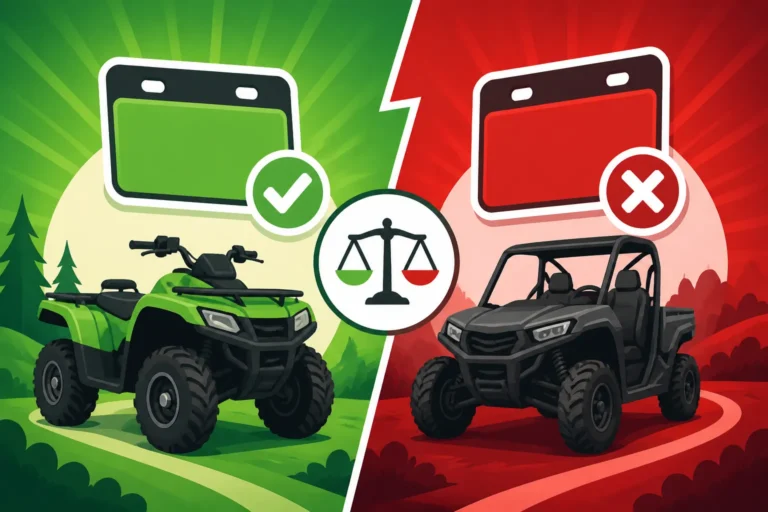
Before you can even begin to understand the rules, you need to know if your machine is actually covered by "The All Terrain Vehicles Act." This might sound obvious, but the legal definition of an "all terrain vehicle" is quite specific and doesn't just include every off-road machine with four wheels. According to the Act, an ATV is typically a motorized vehicle that's designed for use on rough terrain, has a seat designed to be straddled by the operator, and handlebars for steering. This generally covers your traditional quad or three-wheeler.
However, the definition also extends to other vehicles that might not immediately come to mind, like some types of side-by-sides, as long as they meet certain criteria and aren't explicitly excluded. It's important to remember that things like golf carts, agricultural implements, and even certain restricted-use motorcycles are often excluded from this definition, meaning they might fall under different legislation entirely, or have specific exemptions. For a deeper dive into these nuances, you might want to check out [Saskatchewan ATV Definitions Explained]. Knowing whether your machine is indeed an "all terrain vehicle" under the Act is the very first step to ensuring you're compliant with all the subsequent regulations.
Understanding "Highway," "Roadway," and "Travelled Portion"
These terms are absolutely critical for understanding where you can legally operate your ATV in Saskatchewan, and they are often a source of significant confusion for riders. In everyday language, we might use "road," "highway," and "roadway" interchangeably, but the Act makes very distinct differentiations that carry serious legal weight. The term "highway" in the Act is much broader than just the paved provincial highways; it includes virtually any public road, street, lane, or thoroughfare that the public has a right to use. This means your typical grid road or even a town street is considered a "highway."
Within the broader definition of "highway," you then have the "roadway," which refers specifically to the part of the highway designed or ordinarily used for vehicular travel. This is where cars, trucks, and other registered vehicles operate. Finally, there's the "travelled portion" of the roadway, which is exactly what it sounds like: the part that's actually being driven on. Why does this matter so much? Because the Act generally prohibits ATVs from operating on the "roadway" or "travelled portion" of a "highway," with very specific exceptions. This is why you often hear about the "two-metre rule" when riding in ditches – it's all about staying clear of the legally defined "travelled portion" and "roadway" to avoid a hefty fine. Misinterpreting these terms can easily lead to tickets or dangerous encounters with other traffic, so pay close attention to them.
Operational Rules and Rider Responsibilities
Riding an ATV isn't just about having fun; it's about adhering to a set of responsibilities that ensure your safety and the safety of everyone around you. The All Terrain Vehicles Act is very clear on these operational rules, covering everything from who can operate a machine to what gear they must wear and where they can actually take their quad. Ignoring these rules isn't just risking a ticket; it's risking injury or worse.
Age, Supervision, and Training Requirements
One of the most frequently asked questions, and a common area for misconceptions, revolves around who can actually ride an ATV in Saskatchewan. The Act sets clear age limits, generally requiring operators to be at least 16 years old. However, there are crucial exceptions for younger riders. For instance, a rider aged 12 years or older can operate an ATV if they are directly supervised by an adult who is at least 18 years old and has held a valid driver's licence for at least 365 days. This isn't just about having an adult nearby; the Act treats the supervisor as the operator, holding them responsible for the youth's actions. This is a big deal!
Furthermore, the Act provides an alternative to the 365-day supervisor rule: if a rider aged 12 or older has successfully completed an approved ATV safety course, they can operate a machine without the same level of direct supervision from someone holding a licence for a full year. This is a fantastic option for families who want to ensure their kids are not only compliant with the law but also equipped with the skills and knowledge to ride safely. Understanding these nuances is critical for both parents and young riders to ensure they meet the legal requirements and stay safe. For more specifics on these rules, check out [Saskatchewan ATV Age Requirements] and [Saskatchewan's 365-Day Supervisor Rule].
Helmet, Eye Protection, and Equipment Standards
Safety equipment isn't optional; it's a legal requirement under The All Terrain Vehicles Act, and for good reason. A proper helmet can literally be the difference between life and death in an accident, and eye protection prevents serious injuries from flying debris. The Act mandates that every person operating or riding as a passenger on an ATV must wear a helmet that meets specific safety standards. This isn't just any helmet; it needs to be designed for motor vehicle use and properly fastened. You can usually find a compliance label inside the helmet indicating it meets standards like DOT, Snell, or ECE.
Beyond helmets, eye protection is also compulsory. This means goggles or a shatter-resistant face shield that provides adequate protection from the elements and potential impacts. This rule even extends to those machines with windshields; if the windshield doesn't offer full, wrap-around protection, individual eye protection is still required. In addition to personal safety gear, the Act also sets out requirements for the machine itself, such as adequate lighting for night operation, a working muffler to control noise, and spark arrestors to prevent wildfires. Neglecting these equipment standards not only puts you at risk but can also lead to fines during an encounter with law enforcement. To dive deeper into these requirements, take a look at [Saskatchewan Helmet and Eye Protection Rules].
Where You Can and Can't Ride
This is perhaps the most contentious and misunderstood aspect of ATV riding in Saskatchewan, and it's where most riders run into trouble. The Act is quite restrictive about where ATVs can be operated, primarily to keep them separate from heavier, faster-moving highway traffic. Generally, ATVs are prohibited from operating on the "roadway" or "travelled portion" of a "highway." This means no cruising down the middle of a grid road or a paved street.
However, the Act does allow for ditch riding under specific conditions. You can generally ride in the ditch of a highway, but you must stay at least two metres from the travelled portion. This "two-metre rule" is constantly enforced, and it's easy to accidentally drift closer to the road than allowed. When crossing a highway, you must do so by the shortest, most direct route, and everyone on the machine (including the driver) must dismount and walk the machine across. No zooming across! These rules are designed for your safety and the safety of others, even if they feel inconvenient. Furthermore, Crown land access for ATVs is regulated, often requiring permits or being completely prohibited in certain areas, especially during wildfire season. Private land, on the other hand, is usually permissible with the landowner's explicit permission. It's always best to get this permission in writing to avoid any misunderstandings or accusations of trespassing. For detailed insights into these rules, check out [Saskatchewan Ditch Riding and the 2-Metre Rule], [Saskatchewan Rules for Crossing a Highway], [Saskatchewan Private Land Exemptions], and [Saskatchewan Crown Land Access Rules].
Enforcement, Offences, and Penalties
No one likes to think about getting a ticket or having their machine seized, but understanding the enforcement provisions of The All Terrain Vehicles Act is crucial for every rider. Peace officers in Saskatchewan have specific powers to ensure compliance, and the penalties for violating the Act can range from hefty fines to the impoundment of your beloved quad. Being aware of what officers can do and what constitutes an offense can help you avoid unpleasant encounters and significant financial burdens.
Peace Officer Powers and Machine Seizure
Under The All Terrain Vehicles Act, peace officers – which includes RCMP, municipal police, and conservation officers – are empowered to enforce the provisions of the Act. They have the authority to stop an ATV operator and request proof of compliance with various rules, such as age, supervision, insurance, and equipment standards. If an officer has reasonable grounds to believe that the Act has been violated, they can issue a ticket. More seriously, in certain circumstances, a peace officer has the power to seize and impound an ATV.
This power isn't taken lightly and is typically reserved for serious infractions, such as operating an ATV while disqualified from driving, operating an unregistered snowmobile (though not an ATV, as ATVs aren't registered provincially), or operating in a manner that poses a significant public safety risk. For example, if you're found operating an ATV while impaired or allowing an underage, unsupervised rider to dangerously operate a machine, seizure is a very real possibility. Once seized, getting your machine back can be a complicated and costly process, often involving storage fees and administrative charges. Understanding [When a Peace Officer Can Seize Your Quad] is crucial knowledge for every rider.
Common Offences and Associated Fines
The Act outlines a range of offences, each carrying a potential fine. While the exact amounts can change, the Act sets maximum penalties, ensuring consistency across the province. Some of the most common offences that riders get ticketed for include:
- Operating without a helmet or proper eye protection: This is a basic safety requirement that officers check for routinely.
- Operating an ATV while underage or unsupervised: Especially for those 12-15 year olds without proper adult oversight or an approved safety course certificate.
- Riding on the travelled portion of a highway: As discussed, this is a major no-go outside very specific exemptions.
- Failing to observe the two-metre rule in the ditch: Drifting too close to traffic is an easy ticket.
- Operating without valid liability insurance: This is mandatory for all ATVs operating off private land.
- Failure to stop for a peace officer: This is a serious offence that can lead to significant penalties.
The Act specifies that a person who contravenes any provision of the Act or its regulations is guilty of an offence and liable to a fine. While most tickets will fall within a standard range, serious or repeat offences can result in fines capped at $1,000, and sometimes even a period of imprisonment in default of payment. It pays to know the rules to avoid these financial hits. For more on the maximum penalties, refer to [Saskatchewan Fines Capped at $1,000].
Owner Liability and Accident Reporting
The All Terrain Vehicles Act places significant responsibility on the owner of a machine, even if they aren't the one operating it at the time of an incident. This is a concept known as "owner liability," and it means that if someone else is riding your ATV and causes an accident or an offence, you, as the owner, could be held responsible. This reverse onus means the owner has to prove they weren't negligent in allowing the operator to use the machine. This is why it's incredibly important to know who is riding your machine and to ensure they are competent, insured, and aware of the rules. If you lend your quad to a friend or family member, you are essentially lending them your legal responsibility. For more on this, check out [Saskatchewan Owner Liability Rules].
In the unfortunate event of an accident, the Act also outlines specific reporting duties. If an ATV accident results in injury, death, or significant property damage (to an extent where the machine cannot be driven safely), the operator has a legal duty to immediately report it to a peace officer. Leaving the scene of an accident without reporting it can lead to very severe penalties. Even if the damage is minor, it's always wise to exchange information with any other parties involved. Understanding these duties ensures that you fulfill your legal obligations and helps protect you in potential insurance claims or legal proceedings. To learn more about what to do after a collision, see [Saskatchewan Accident Reporting Duties].
Registration, Ownership, and the Absence of a Provincial Registry
One of the most persistent and confusing aspects of ATV laws in Saskatchewan is the topic of registration and ownership. Unlike cars, trucks, or even snowmobiles, ATVs in Saskatchewan are not required to be registered with the provincial government. This unique situation often leads to questions from new riders, those moving to the province, or anyone involved in buying or selling a used quad. It's a point of differentiation that truly sets Saskatchewan apart from many other jurisdictions.
Why There's No Provincial ATV Registration
It's a common misconception that all vehicles need to be registered with the province, just like our cars and trucks. However, the All Terrain Vehicles Act does not establish a provincial registry for ATVs. This means you won't find a provincial office where you can go to get a license plate, a decal, or an official "title" for your quad. Many riders, especially those from other provinces or who are used to snowmobile registration, find this incredibly baffling. You might even ask a local dealer about registering your new machine, only to be met with a polite explanation that it simply doesn't exist at the provincial level.
Historically, the province has focused its efforts on regulating the safe operation of these machines rather than establishing a complex and costly registration system. While this approach has its pros and cons, it's a fundamental aspect of ATV ownership here. The lack of a provincial registry also means there are no provincial registration fees to worry about, which can be a small relief for riders. However, it does put more emphasis on other forms of documentation when it comes to proving ownership. To really understand this unique situation, you can explore [Saskatchewan Does Not Register ATVs] and [Why Saskatchewan Never Built a Quad Registry].
Proving Ownership Without a Provincial Title
Since there's no provincial registration or title document issued by the government for ATVs, proving ownership relies heavily on private paperwork. This means your bill of sale is your single most important document. When you buy or sell an ATV in Saskatchewan, whether from a dealer or a private seller, a comprehensive bill of sale is absolutely essential. This document serves as your proof of purchase and establishes your legal ownership of the machine. It should include crucial details like:
- The full names and contact information of both the buyer and seller.
- A clear description of the ATV, including make, model, year, and most importantly, the Vehicle Identification Number (VIN) or serial number.
- The purchase price and date of sale.
- A declaration that the seller is the rightful owner and the machine is free of liens or encumbrances.
Without a robust bill of sale, especially if you're buying privately, you can run into serious trouble if there's ever a dispute over ownership or if the machine turns out to be stolen. This is where tools like LawDepot can be incredibly helpful. Using a template from a reputable service like LawDepot ensures that all the necessary legal clauses are included, providing both buyer and seller with peace of mind. It formalizes the transaction in a way that hand-written notes sometimes miss, and for a document that effectively is your "title," you want it done right. A well-executed bill of sale is also what you'd provide to your insurance company or law enforcement if ever required. For more details on this, see [Saskatchewan Bills of Sale Do the Work] and [How to Prove You Own an ATV in Saskatchewan].
Municipal Plates as a Local Solution
While the province doesn't offer ATV registration, some individual municipalities and rural communities in Saskatchewan have stepped up to fill this gap by implementing their own local plate or permit schemes. These municipal plates are not provincial registrations; rather, they are local bylaws designed to help municipalities regulate ATV traffic within their own boundaries, raise funds for local trails, and sometimes aid in identifying machines for safety or theft prevention.
Communities like the District of Lakeland and the Village of Candle Lake are examples of places that issue their own ATV permits or plates. These local permits typically have an associated fee and specific rules about where and how you can ride within that particular municipality. For instance, a municipal plate might be required to use local trails or ride on designated streets within the community. It's important to understand that a plate from one municipality is generally not valid in another; they are hyper-local solutions. If you plan on riding in a specific rural area or town frequently, it's always a good idea to check with their local council or office to see if they have a municipal plate or permit requirement. This can prevent unexpected fines and ensure you're contributing to local riding infrastructure. Check out [Saskatchewan Municipal Plate Schemes] for more examples.
The Act's Interplay with Other Regulations
The All Terrain Vehicles Act isn't a standalone document operating in a vacuum. It exists within a broader legal landscape and interacts with other pieces of legislation and regulations that also influence ATV use in Saskatchewan. Understanding these connections is crucial for a truly comprehensive grasp of your responsibilities as a rider. It's like understanding how the engine works, but also how the transmission and brakes connect to make the whole machine operate smoothly.
Saskatchewan's All Terrain Vehicles Regulations
While The All Terrain Vehicles Act provides the overarching legal framework, much of the specific, detailed rules are found in the associated "All Terrain Vehicles Regulations." These regulations are essentially the "how-to" guide that elaborates on the principles laid out in the Act. Think of the Act as defining what needs to be regulated (e.g., age limits, helmet use), and the Regulations as detailing how those things are implemented (e.g., specific helmet standards, exact age thresholds, approved safety courses).
For example, the Act might state that appropriate lighting is required for night operation, but the Regulations would specify the exact candlepower, beam pattern, and mounting height of those lights. Similarly, while the Act mandates liability insurance, the Regulations could specify the minimum coverage amounts. These regulations are typically updated more frequently than the main Act, allowing the government to respond to changing technologies, safety concerns, or rider needs without having to amend the entire Act each time. It's always a good idea to consult both the Act and its Regulations for the most complete and current information. These regulations are numbered A-18.02 and are available through the provincial government's publications.
Federal and Other Provincial Rules
Beyond Saskatchewan's specific ATV legislation, riders should also be aware that other laws might apply to their activities. While ATVs are primarily regulated provincially, federal laws can come into play, especially concerning environmental protection or interprovincial transport. For instance, if you're riding on federal lands (like a national park, though many prohibit ATVs), you'd be subject to federal regulations governing those areas, which could be much stricter than provincial rules. Similarly, if you're importing an ATV from another country, you'll be dealing with federal customs and import regulations.
Furthermore, if you trailer your ATV to a neighbouring province like Alberta or Manitoba, you'll need to abide by their provincial ATV legislation while you're there. Each province has its own unique set of rules regarding registration, age limits, helmet laws, and permissible riding areas. What's perfectly legal in Saskatchewan might lead to a ticket in Manitoba, and vice versa. It's not uncommon for Saskatchewan riders to cross provincial borders for trail riding, so being informed about the laws of your destination is essential. Always do your homework before you haul your machine across any provincial or international line to ensure a smooth and legal riding experience.
| Section Area | General Focus | Key Sections (Illustrative) |
|---|---|---|
| Preliminary & Definitions | Scope of the Act, what an ATV is, key terms. | 1, 2 (Definitions) |
| Operation of ATVs | Who can ride, where, safety equipment, speed limits. | 3 (Operator Age), 4 (Supervision), 5 (Helmet), 6 (Eye Protection), 7 (Highway Rules), 8 (Speed) |
| General Provisions | Insurance requirements, lighting, mufflers. | 9 (Insurance), 10 (Lights), 11 (Muffler) |
| Accidents & Enforcement | Reporting duties, powers of peace officers. | 12 (Accident Reporting), 13 (Owner Liability), 14 (Stop for Officer), 15 (Seizure) |
| Offences & Penalties | What constitutes a violation, associated fines. | 16 (General Offences), 17 (Disqualified Operator), 18 (Fines) |
| Regulations | Power to make detailed rules. | 19 (Regulation Making Power) |
Disclaimer
This article is for general informational purposes only and does not constitute professional advice. Laws, prices and regulations vary by location and change over time. Consult a qualified professional for guidance on your specific situation.