Half an Hour After Sunset
Riding your ATV or UTV in Saskatchewan can be an incredible experience, but when the sun starts to dip below the horizon, things change pretty quickly. Many riders get caught off guard by the specific rules that kick in for nighttime operation, often leading to fines or, worse, dangerous situations. This guide is here to walk you through everything you need to know about operating your off-road machine after dark, ensuring you stay safe and on the right side of the law.
The Critical Importance of Lighting After Dark
When you're out on the trails or grid roads of Saskatchewan, especially away from the bright lights of a town or city, the darkness can be absolute. Understanding why proper lighting isn't just a suggestion but a critical safety measure is the first step toward responsible night riding. It’s not just about seeing; it’s about being seen.
Why Visibility is Paramount
Imagine you're out in the deep bush, the sun has set, and you're making your way back to camp. Without adequate lighting, you're essentially invisible to anyone else out there, whether they're another rider, a hunter, or even wildlife. Your machine's factory headlights might do an okay job illuminating what's directly in front of you, but they often fall short when it comes to peripheral vision or making you conspicuous from a distance. The vast, open spaces of Saskatchewan mean that while you might think you're alone, you could easily encounter another person or animal unexpectedly. This lack of visibility dramatically increases the risk of collisions, rollovers, or getting disoriented, turning a fun ride into a potential emergency.
The Unique Challenges of Night Riding on the Prairies
Riding after dark in Saskatchewan presents its own distinct set of challenges that go beyond just diminished light. On the prairies, the terrain can be deceptively flat, making distances hard to judge, but also hides sudden dips, ruts, or obstacles like rocks and fences that are nearly impossible to spot until you're right on them. In forested areas, the shadows deepen, and trails can become completely obscured. Dust kicked up by other machines, or even your own, can hang in the air, creating a blinding cloud when hit by your lights. Furthermore, wildlife, from deer to moose, are often most active during dawn and dusk, increasing the chances of an unexpected encounter on your path. [Saskatchewan Wildlife on the Trail] discusses some of these encounters. These aren't just minor inconveniences; they are significant hazards that demand superior lighting and heightened awareness.
Protecting Yourself and Others
Ultimately, the stringent lighting rules laid out in [Saskatchewan Lighting Rules at Night] are there for one overarching reason: to protect you, your passengers, and anyone else who might be sharing the trails or adjacent areas. A well-lit machine serves as a clear warning to others of your presence, reducing the likelihood of a head-on collision or being struck from behind. For you, the operator, proper lighting extends your field of vision, allowing you more time to react to unexpected obstacles or changes in terrain. It's a fundamental aspect of defensive riding at night, acting as a crucial preventative measure against accidents. Ignoring these rules isn't just breaking the law; it's actively jeopardizing lives.
Understanding Saskatchewan's Specific Timeframes
The law doesn't just say "ride at night with lights on." It specifies when those lights need to be on, and it's a detail many riders overlook. Knowing these precise timeframes is crucial to avoiding a ticket and, more importantly, ensuring your safety.
Defining "Half an Hour After Sunset" and "Half an Hour Before Sunrise"
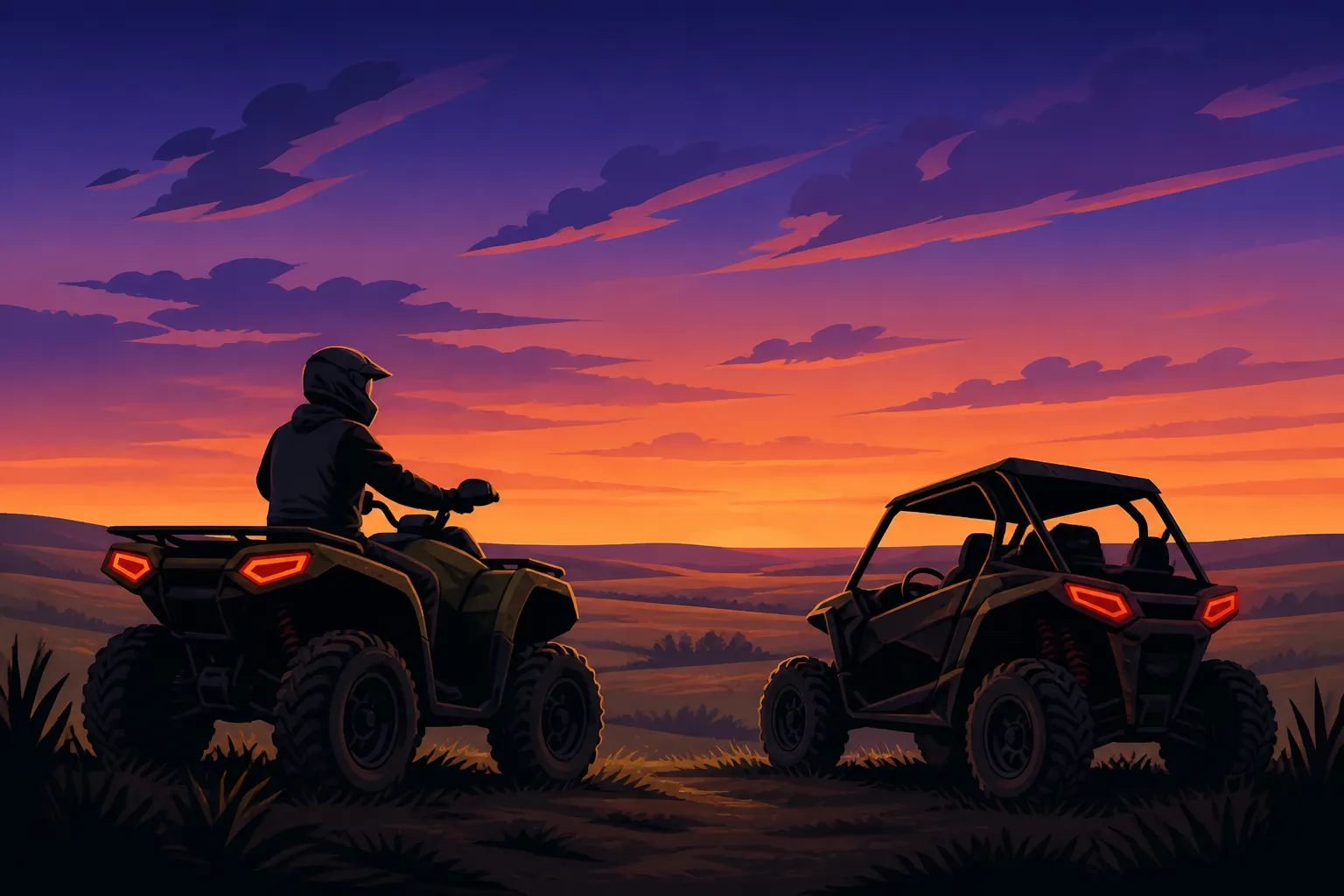
In Saskatchewan, the operation of ATVs and UTVs with proper lighting isn't just a vague "after dark" rule. The province's All Terrain Vehicles Act clearly stipulates that machines must display required lighting during the period [Half an Hour After Sunset] to half an hour before sunrise. This isn't tied to when you feel it's dark enough, but rather to an objective, measurable timeframe based on official sunset and sunrise times. This means that even if there's still a faint glow on the horizon, if it's past that 30-minute mark after sunset, your lights need to be on. The same applies in the morning; even if it feels quite dark, if it's less than 30 minutes before official sunrise, your lights are still required. It’s a hard and fast rule that leaves no room for personal interpretation.
Practical Implications for Riders
So, what does this actually mean for you when you're planning a ride? It means you can't just casually glance at the sky. If you're going to be out anywhere near dawn or dusk, you absolutely need to know the precise sunset and sunrise times for your specific location. These times vary significantly depending on the time of year and your exact latitude within Saskatchewan. A simple weather app or a quick online search for "sunset time [your town] Saskatchewan" will give you the information you need. Planning your rides to ensure you're either back at camp or have your lighting engaged before that legal window closes is paramount. It also means you should always assume you'll need your lights if there's any chance you'll be riding during these twilight hours, even if you only intend to be out for a short while. It’s always better to be prepared.
How to Calculate These Times Accurately
Calculating these times isn't difficult with today's technology. Most modern smartphones have built-in weather applications that provide local sunrise and sunset times. There are also numerous free online resources and dedicated apps that can give you precise astronomical data for any given location and date. For instance, if the official sunset time in Saskatoon on a particular day is 8:00 PM, then your lights must be on by 8:30 PM. Conversely, if sunrise is at 6:00 AM, your lights must remain on until 5:30 AM. Make it a habit to check these times before you head out, especially for longer rides or those planned for the early morning or late evening. Being meticulous about this small detail can save you a lot of grief and ensure compliance with [Saskatchewan's Act From 1988].
Mandatory Lighting Equipment for ATVs and UTVs
The law is clear about when your lights need to be on, but it's equally precise about what kind of lights need to be on. Simply having "some" light isn't enough; your machine needs to meet specific minimum requirements.
Front Lighting Requirements: Headlights
Every ATV and UTV operating in Saskatchewan during the prescribed nighttime hours (or during periods of insufficient light) must be equipped with at least one headlight. This headlight isn't just for decoration; it must be capable of illuminating objects at a reasonable distance, typically specified as 60 meters (approximately 200 feet) ahead of the machine. It needs to emit a white or amber light and be visible from the front. Furthermore, the headlight must be mounted in a position that effectively illuminates the path forward without excessively blinding oncoming operators. Often, factory-installed headlights meet these minimum standards, but if you've modified your machine or are running an older model, it's worth double-checking that your headlight is bright enough and properly aimed. Remember, it's about seeing what's coming, but also showing where you're going.
Rear Lighting Requirements: Taillights and Brake Lights
Just as crucial as seeing where you're going is being seen from behind. This is where your taillights and brake lights come into play. Your ATV or UTV must have at least one red taillight mounted at the rear, visible from a distance of at least 150 meters (roughly 500 feet). This constant red glow warns anyone approaching from the rear that there's a machine ahead. In addition to the taillight, a red brake light is also mandatory. This light, which usually illuminates brighter than the taillight, must activate when the brakes are applied. It's a critical safety feature for signaling your deceleration or stop to trailing riders or vehicles, preventing rear-end collisions. Both the taillight and brake light must be in good working order, clean, and unobstructed to ensure maximum visibility.
Additional Reflective Elements and Marker Lights
Beyond the active lights, many ATVs and UTVs come equipped with passive reflective elements. These could be small reflectors on the sides, front, or rear of the machine. While not a substitute for active lighting, these reflectors are designed to bounce back light from other sources, increasing your machine's visibility even if your own lights are off or malfunctioning. Some machines also feature marker lights or side-mounted lights, often amber, which help define the width of your machine, especially for wider UTVs, making them easier to judge from a distance. While not always explicitly mandated as primary lighting, these elements significantly enhance your profile in low-light conditions. Regularly inspect all reflective elements to ensure they are clean and intact, as dirt and damage can severely reduce their effectiveness.
Visibility and Safety Practices for Night Riding
Meeting the legal requirements for lighting is a good start, but truly safe night riding involves more than just flicking a switch. It requires a combination of personal preparation, environmental awareness, and smart use of additional equipment.
Operator and Passenger Visibility: Reflective Gear
It’s not enough for your machine to be lit up; you, as the operator, and any passengers, need to be visible too. Think about it: if you're thrown from your machine in the dark, you want to be easily spotted. This is where reflective clothing and gear become indispensable. Wearing a high-visibility vest, jacket, or helmet with reflective strips significantly increases your silhouette and makes you stand out against the dark background. Even small reflective patches on your boots or gloves can make a difference. The more light you reflect, the safer you'll be. This is particularly important when riding near roads or other areas where vehicles might be present, as their headlights will pick up your reflective gear much sooner. Remember, [Saskatchewan Helmet and Eye Protection Rules] are always in effect, but reflective elements on your helmet add an extra layer of protection after dark.
Safe Speed and Environmental Awareness
Riding at night fundamentally changes your perception of speed and distance. Even with excellent lighting, your effective visibility range is reduced compared to daylight hours. Therefore, a critical safety practice is to reduce your speed significantly. What might be a comfortable speed during the day can become dangerously fast when your reaction time is limited by what your headlights can illuminate. Stay extra vigilant for changes in terrain, unexpected obstacles, or wildlife. Pay close attention to sounds, as they might indicate something you can't yet see. Be aware of dust clouds, which can severely obscure your vision and make your lights less effective. It's about being extra cautious, scanning further ahead, and making conservative decisions. Remember, [Saskatchewan's 80 km/h Speed Limit] on grid roads is a maximum, not a target, and certainly not at night.
Using Aftermarket Lighting Wisely
While your factory lights meet the minimum legal requirements, many riders opt for aftermarket lighting to enhance their visibility and riding experience. Brands like SuperATV offer a wide array of auxiliary lights, LED light bars, spot lights, and flood lights designed to cut through the darkest nights. These can drastically improve your field of vision, illuminating wider areas and further down the trail. However, using aftermarket lights wisely is key. Be mindful of their intensity; a powerful light bar that's great for remote trail riding can be blinding to oncoming traffic if you're on a shared path or a municipal road where [Saskatchewan Municipal Bylaws on Roads] apply. Many modern light bars have adjustable settings or covers to mitigate this. Always aim auxiliary lights responsibly and dim them or turn them off when approaching other people to avoid creating a hazard. Think of them as tools to be used strategically, not just to be left on full blast all the time.
Navigating Specific Nighttime Riding Scenarios
The general rules for night riding are one thing, but how do they apply to specific places and situations you might encounter across Saskatchewan? Understanding these nuances can keep you compliant and safe.
Ditch Riding and Grid Roads After Dark
Ditch riding is a common practice in Saskatchewan, and the [Saskatchewan Ditch Riding and the 2-Metre Rule] is crucial here. However, riding a ditch or a grid road after dark adds another layer of complexity. While you might be operating off the main travelled portion, you are still in close proximity to traffic. Your lights, both front and rear, are essential to make yourself known to drivers of cars and trucks, who might not expect to see an ATV or UTV in the ditch. Furthermore, the [Saskatchewan Night Travel Direction Rules] specify that if you're riding after dark, you must travel in the same direction as the adjacent traffic. This is critical for safety, as it ensures your lights are facing oncoming headlights and your taillights are visible to vehicles approaching from behind, preventing unexpected encounters. The uneven terrain of ditches also becomes much harder to navigate in the dark, so reduced speed and extra caution are absolutely necessary.
Crossing Highways and Roads at Night
Crossing a highway or road in an ATV or UTV always requires extreme caution, but at night, the risks are amplified significantly. Drivers might have reduced visibility, and your machine's profile can be harder to judge. The law states that you must come to a complete stop, ensure the way is clear, and cross by the shortest, most direct route. At night, ensure your headlights are fully illuminating the crossing path and that your taillights are clearly visible to any approaching traffic before you initiate the crossing. Any passengers must dismount and walk across separately, as per [Saskatchewan Crossings Require Passengers to Dismount]. Using SuperATV's brighter aftermarket headlights can provide an extra measure of confidence, helping you spot hidden ditches or uneven terrain on the opposite side, but they are no substitute for careful observation and judgment. Always assume you are less visible than you think you are when performing a crossing at night.
Riding in a Municipality with Bylaws
While the provincial Act sets the baseline for ATV and UTV operation, many municipalities in Saskatchewan have their own bylaws that can further restrict or permit riding within their boundaries, especially concerning roads or public spaces. These municipal bylaws often become even more stringent after dark. For instance, a town might permit daytime ditch riding on certain streets but prohibit it entirely after sunset, or impose stricter speed limits. Some communities, like the District of Lakeland and Candle Lake, even have their own municipal plate schemes and specific rules for operating ATVs and UTVs on their streets. [Saskatchewan Municipal Plates Fill the Gap the Province Left] by regulating local riding. Before you plan any night riding within an organized hamlet, village, or town, it's critical to check their specific bylaws. What's legal on a rural grid road might be strictly prohibited on a town street, particularly when visibility is low. Ignorance of a local bylaw is no excuse, and municipal officers are just as capable of issuing tickets.
Fines and Consequences for Non-Compliance
Operating an ATV or UTV after dark without the legally required lighting isn't just a minor oversight; it's a serious violation of The All Terrain Vehicles Act, carrying real financial and safety consequences.
Penalties Under The All Terrain Vehicles Act
If a peace officer spots you operating your ATV or UTV after [Half an Hour After Sunset] without the appropriate lighting, you could face a significant fine. The All Terrain Vehicles Act allows for fines up to $1,000 for various infractions, and operating without proper lighting certainly falls under unsafe operation. [Saskatchewan Fines Capped at $1,000] gives you an idea of the upper limit, but even a standard ticket can put a serious dent in your wallet. Beyond the initial monetary penalty, there can be additional costs such as court fees if you choose to dispute the ticket. Repeated offenses or operating in a grossly negligent manner could lead to more severe penalties, including potential impoundment of your machine. It’s a costly lesson to learn, and one that is entirely avoidable by simply ensuring your lights are in working order and switched on.
Insurance Implications After a Nighttime Incident
Imagine the worst-case scenario: you're riding after dark without your lights on, and you're involved in an accident. This is where things can get really complicated with your insurance provider. While [Saskatchewan Insurance Requirements for Riders] mandates a minimum of $200,000 in third-party liability coverage, intentionally or negligently operating your machine in violation of the law can jeopardize your claim. Your insurer might argue that operating without required lighting constitutes gross negligence or a breach of policy conditions. This could lead to your claim being denied, leaving you personally responsible for all damages, injuries, and legal costs, which could easily amount to tens or even hundreds of thousands of dollars. The small savings of not replacing a burnt-out bulb or the momentary laziness of not turning on your lights pales in comparison to the financial ruin a denied insurance claim could bring.
Avoiding Charges: A Proactive Approach
The best way to avoid fines, insurance nightmares, and potential accidents is to be proactive. Make a habit of checking your lights before every ride, especially if there's any chance you'll be out after dark. Test your headlights, taillights, and brake lights regularly. Carry spare bulbs if your machine uses them, or at least have a plan for how you'd get back safely if a light fails mid-ride. Keep your lights and reflective elements clean, as mud and dust can severely diminish their effectiveness. Consider adding auxiliary lighting from reputable brands like SuperATV if you frequently ride at night, but always use them responsibly. Always be aware of the official sunset and sunrise times, and plan your rides accordingly. If you're unsure about local bylaws, take the time to inquire with the municipality before you head out. These simple, consistent steps will ensure you're always operating safely and legally, making your Saskatchewan ATV and UTV adventures enjoyable from dawn until dusk and beyond.
Here's a quick comparison of essential and enhanced lighting for night riding:
| Feature | Legal Requirement (Essential) | Enhanced Visibility (Recommended Add-ons) |
|---|---|---|
| Headlights | At least one white/amber headlight, visible 60m ahead. | LED light bar, auxiliary spot/flood lights (e.g., from SuperATV) |
| Taillights | At least one red taillight, visible 150m from rear. | Brighter LED taillight replacements, additional marker lights |
| Brake Lights | Red brake light, brighter than taillight, illuminates with brake. | LED brake light replacements, integrated turn signals (if permitted) |
| Reflectors | Passive reflectors on front/rear/sides. | More extensive reflective tape on machine, wheels, or accessories |
| Operator/Passenger Wear | No specific requirement, but advised for safety. | High-visibility vest, jacket, or helmet with reflective strips and materials |
| Directional Lighting | Not explicitly required by the Act. | Directional flood lights for turning, side-shooter LED pods |
Disclaimer
This article is for general informational purposes only and does not constitute professional advice. Laws, prices and regulations vary by location and change over time. Consult a qualified professional for guidance on your specific situation.