Can You Ride an ATV on the Road in Saskatchewan?
It's a common frustration for ATV and UTV owners across Saskatchewan: you've got your quad or side-by-side, you're ready for adventure, but then you hit a public road and wonder, "Can I even be here?" It's not always clear, and the rules can feel like a tangled bush trail. This guide will help you understand precisely when and where you can (and absolutely cannot) ride your ATV or UTV on the roads in our beautiful province.
The General Rule: No ATVs on Public Roads
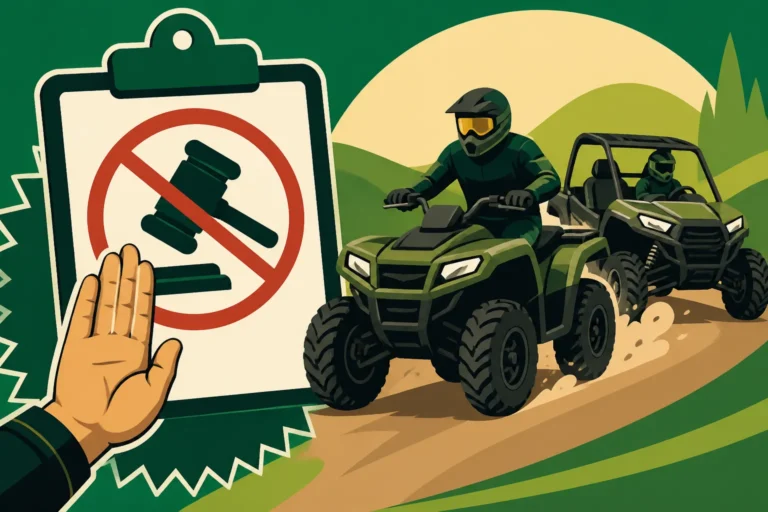
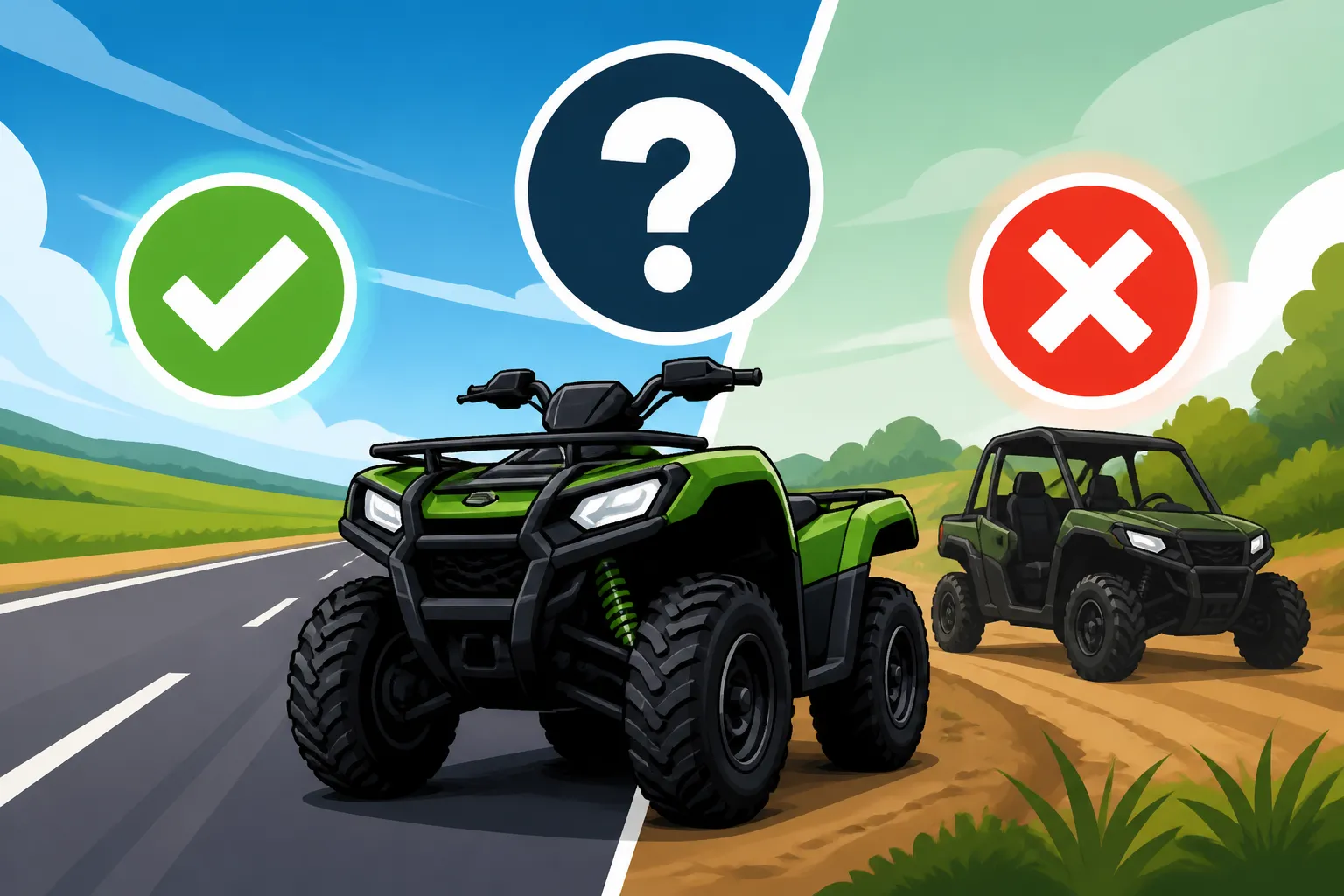
Let's cut right to the chase, because this is where many riders get confused or even run into trouble. Generally speaking, in Saskatchewan, you cannot just hop on your ATV or UTV and cruise down a paved highway, a busy city street, or even most gravel grid roads. The province's The All Terrain Vehicles Act Runs 36 Sections is pretty clear: ATVs are primarily intended for off-road use, and public roads are generally off-limits for safety reasons and to manage traffic flow.
This might feel a bit unfair, especially when you see utility vehicles in other provinces that are deemed "street legal." But here in Saskatchewan, our regulations are specifically designed to keep these machines where they belong – off the main thoroughfares. It’s not about singling out ATV riders; it’s about maintaining order and safety on roads shared with cars, trucks, and larger farm equipment. If you've ever tried to navigate a tight corner on a highway shoulder with traffic whizzing by, you understand the inherent dangers. Imagine trying to stop a fully loaded side-by-side with farm implements attached. The stakes are simply too high for casual road use.
Why the Strict Prohibition?
The main reason for this province-wide restriction boils down to safety and vehicle classification. ATVs and UTVs, by their very design, are not built to the same standards as on-road vehicles. They lack certain safety features, like full enclosures and crumple zones, and their handling characteristics are vastly different, especially at higher speeds or in traffic. Their tires are optimized for grip in dirt, mud, and snow, not for asphalt, which can affect braking and cornering on pavement.
Think about it: a four-wheel-drive pickup truck is engineered for highway speeds, sudden stops, and shared lanes. Your quad, even a powerful one with some aftermarket upgrades from a company like SuperATV, is built for agility over rough terrain. These are two completely different beasts. Mixing them freely on high-speed roads creates significant risks for everyone involved. [Saskatchewan ATV Road Rules Explained] delves deeper into these foundational principles.
The Problem of Visibility and Speed
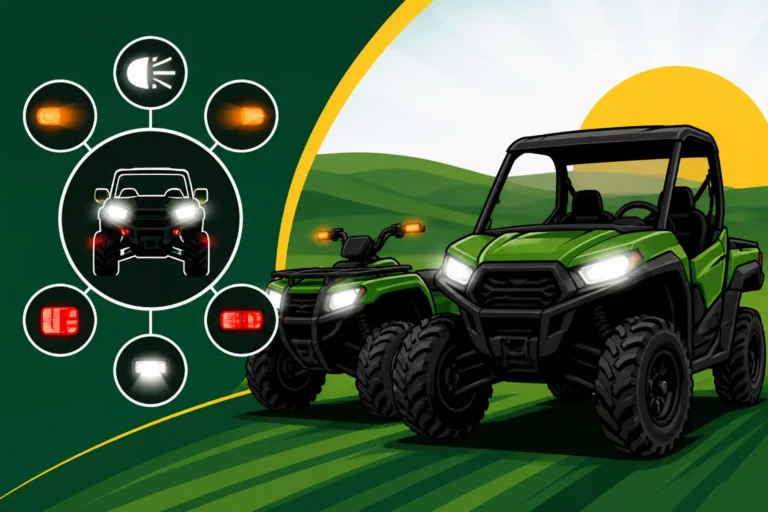
Another significant factor is visibility. While you might feel perfectly visible on your bright quad, ATVs and UTVs often have a smaller profile than cars, and their lighting systems, while adequate for trails, may not be as robust as those required for highway travel, especially at night or in adverse weather. Furthermore, the speed differential can be dangerous. Many ATVs are capable of high speeds, but maintaining those speeds safely on a road designed for 100 km/h traffic, while also contending with wind buffeting and road debris, is another matter entirely. This is why even on permitted sections, speed limits are strictly enforced.
It's a common frustration to have to trailer your machine just to get to a trail a few kilometers away, but this rule is in place to protect you and other motorists. It prevents situations where a rider might underestimate the speed of an approaching semi-truck or where a driver might misjudge the stopping distance of an ATV.
Navigating the Exceptions: Ditch Riding and Road Crossings
While the general rule is "no ATVs on public roads," Saskatchewan's legislation does provide specific, limited exceptions to allow riders to navigate certain areas or cross roads safely. These aren't loopholes to exploit, but rather carefully defined circumstances that require adherence to strict rules.
Riding in the Ditch: The Two-Metre Rule
This is perhaps the most common exception, especially for those who use their ATVs for work on farms or for accessing land. You are generally permitted to ride an ATV in the ditch alongside a public highway, but with a critical caveat: you must stay at least two metres from the travelled portion of the highway. This is often referred to as the [Saskatchewan Ditch Riding and the 2-Metre Rule].
This "two-metre rule" isn't arbitrary. It creates a safety buffer between your machine and fast-moving traffic. It acknowledges that ditches are often used by landowners, farmers, and even utility workers who rely on ATVs to get around. However, it’s not a license to ride freely. You still need to be aware of your surroundings, watch for culverts, fences, and other obstacles, and be prepared to yield to other traffic, especially when entering or exiting the ditch. And always remember, this applies only to the ditch; the paved or gravelled surface of the road itself remains off-limits.
There's also a time-of-day consideration. If you're riding in the ditch at night, your machine needs appropriate lighting to ensure you're visible to others. A simple headlight and taillight might be fine for the back forty, but for ditch riding, you need to ensure you're meeting provincial visibility standards to prevent accidents.
Crossing the Highway: Safety First
Sometimes, you simply need to get from one side of a public road to the other to access your land, a trail, or a friend's property. The Act allows for this, but under very strict conditions to minimize risk. When crossing a highway or road, you must:
- Stop before crossing: Come to a complete stop at the edge of the travelled portion.
- Yield to all traffic: Ensure the way is completely clear in both directions. You must not impede traffic flow.
- Cross by the shortest route: Do not drive along the highway; cross as directly as possible, perpendicular to the road. This reduces your time exposed to moving traffic.
- Passengers dismount: All passengers must dismount the ATV or UTV before crossing and walk across the highway separately. This is a critical safety measure that reduces the number of people at risk in case of an accident. [Saskatchewan Crossings Require Passengers to Dismount] is a rule that often surprises new riders but is absolutely essential.
- No crossing bridges or overpasses: Generally, ATVs are not permitted to cross on bridges or overpasses, unless specifically authorized or part of a designated trail system. These structures are often narrow, and the risk is simply too high.
These rules apply to any public road, from a quiet grid road to a busy provincial highway. The principle is always the same: minimize your exposure to other vehicles and ensure your actions don't create a hazard. You can find more details on this in [Saskatchewan Rules for Crossing a Highway].
Riding on Bridges and Weirs: A Specific Prohibition
While you can often ride a ditch to reach a crossing, bridges and weirs are generally treated differently. Due to their narrow nature and critical infrastructure status, ATVs are typically prohibited from riding on them. The Act sees these as extensions of the "travelled portion" of the highway, increasing the risk for both the rider and the structure itself. This is a common point of confusion for riders, as some older or less-maintained bridges might seem passable. However, [Saskatchewan Bridges and Weirs] specifies these areas are generally off-limits unless explicitly signed otherwise, which is rare.
| Activity | General Provincial Rule | Specific Conditions/Notes |
|---|---|---|
| Riding on paved highway | Prohibited | Limited exceptions by municipal bylaw only (very rare). |
| Riding on gravel grid road | Prohibited | Limited exceptions by municipal bylaw only (rare), or within 2 metres of travelled portion (ditch). |
| Riding in the ditch | Permitted | Must maintain 2-metre distance from travelled portion, yield to traffic. |
| Crossing a highway | Permitted | Must stop, yield, cross shortest route, passengers dismount. No bridges. |
| Riding on bridges/weirs | Prohibited | Unless specifically designated for ATV use (rare). |
| Riding after sunset | Permitted (with lights) | Adequate lighting required for visibility, especially if ditch riding or crossing. |
Local Bylaws and Special Permissions
While the province sets the overarching rules for ATVs, local municipalities and the provincial park system have the power to create their own specific bylaws and regulations that can either restrict or, in rare cases, permit limited ATV use on certain roads or property within their jurisdiction. This is where it gets a little complicated, as what's allowed in one village might be strictly forbidden in the next.
The Power of Municipalities
Rural Municipalities (RMs), towns, and villages in Saskatchewan can, and often do, implement their own bylaws concerning ATV operation. These bylaws might:
- Designate specific roads for ATV use: Some smaller communities, particularly in northern recreational areas, might have bylaws that allow ATVs on certain low-traffic streets to access trails, gas stations, or local businesses. These are typically signed very clearly.
- Prohibit ATVs entirely on all municipal roads: Other municipalities might have bylaws that completely ban ATVs from all municipal roads and ditches within their boundaries, regardless of the provincial two-metre rule.
- Set speed limits and operating hours: Even where riding is permitted, bylaws often set lower speed limits for ATVs than for cars, and may restrict operation to certain hours of the day.
This means that before you plan a trip involving road use, even if it's just a short hop, you need to check the specific bylaws of the municipality you'll be riding in. Ignorance of a bylaw is not an excuse, and a ticket can certainly put a damper on your weekend. For instance, some municipalities around popular lake country, like the District of Lakeland, have implemented their own plate schemes and very specific rules for local roads. This is a local solution to a provincial gap, as [Saskatchewan Has No ATV Plate or Decal] province-wide.
The key takeaway here is: always check local bylaws. Don't assume. A quick call to the municipal office or a check of their website before you haul your machine up north can save you a lot of hassle and potential fines.
Crown Land Access and Administrator Orders
Beyond municipal bylaws, the provincial government, through various ministries, can issue "Administrator Orders" that govern ATV use on Crown lands. These orders can close certain areas to ATVs, especially during high fire risk seasons or to protect sensitive ecological zones.
For instance, during particularly dry summers, you might see orders closing large tracts of Crown land to all off-road vehicle traffic due to wildfire risk. These orders are legally binding, and riding in a closed area can result in significant penalties. Always check the provincial government's website for current fire bans and Crown land access restrictions before you head out. These can change rapidly, so checking right before your trip is crucial. You can learn more about this in [Saskatchewan Crown Land Prohibition Regulations].
Provincial Parks and Designated Trails
Saskatchewan's Provincial Parks often have their own specific regulations regarding ATVs. Generally, ATVs are restricted to designated trails only within park boundaries. Many parks, like Moose Mountain Provincial Park, have dedicated ATV trails where you can ride, often requiring a free permit or acknowledgement of rules. However, you absolutely cannot ride your ATV on park roads, pathways, or off-trail areas.
If you plan to ride within a provincial park, always check the park's specific rules and obtain any necessary permits beforehand. Park staff are usually very helpful in explaining where you can and cannot ride. Remember, what might be allowed on an adjacent grazing lease or private land is often prohibited inside a provincial park boundary.
Understanding Your Responsibilities as a Rider
Even in the limited instances where road or ditch use is permitted, you, as the operator, carry significant responsibilities. These aren't just suggestions; they're legal requirements designed to keep you and everyone else safe. Failing to adhere to these rules can result in fines, vehicle seizure, and even liability in the event of an accident.
Licensing and Age Requirements
First and foremost, if you are operating an ATV on a public road, in a ditch, or crossing a highway, you must hold a valid driver's licence. This isn't just a suggestion; it's a non-negotiable legal requirement under [Saskatchewan Requires a Driver's Licence]. This means no learner's permits unless specifically accompanied by an approved supervisor under strict conditions, and no riding if your licence is suspended.
Age also plays a critical role. In Saskatchewan, the general rule is that riders must be 16 years of age or older to operate an ATV, with very specific exceptions for supervised youth on private land or under certain training scenarios. While there are rules for a [Saskatchewan's Exception for Riders 12 and Over], these exceptions usually pertain to off-road riding, not public road interactions. When on or near a public road, the 16+ rule applies unless a local bylaw specifically states otherwise for designated areas.
Insurance and Safety Gear
Just like any other vehicle on or near public roadways, your ATV needs to be insured. [Saskatchewan's Minimum Insurance Requirement] is typically liability coverage, which protects you if you cause damage or injury to others. Carrying proof of this insurance with you whenever you ride is a smart move, as a peace officer can ask for it.
Beyond insurance, personal safety gear is paramount. This includes:
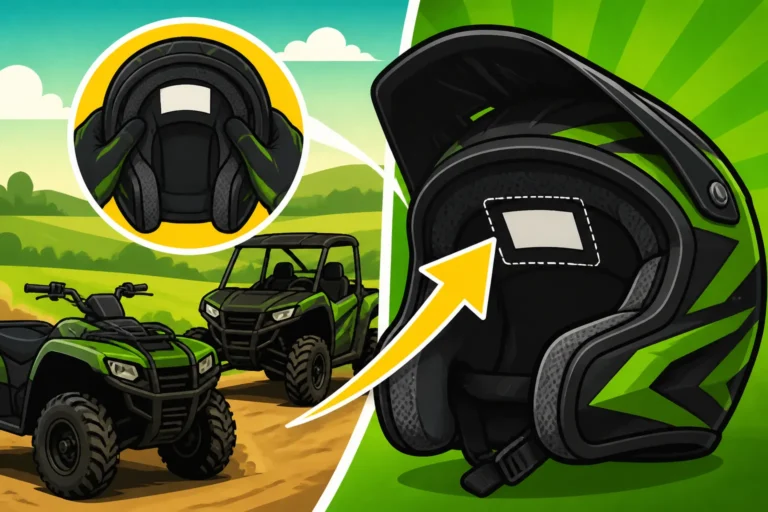
- Helmets: A properly fitted, approved helmet designed for ATV use is mandatory. [Saskatchewan Helmet and Eye Protection Rules] are very clear on this. It's the single most important piece of safety gear you can wear.
- Eye Protection: Goggles or a face shield that meets safety standards are also required to protect your eyes from debris, dust, and insects.
- Appropriate Footwear and Clothing: While not always explicitly mandated by law for private land use, wearing sturdy boots, long pants, and long sleeves is highly recommended for any riding, especially when operating near roads where visibility and protection from road debris are concerns. Consider looking at robust gear designed for serious off-roading from reputable brands. Even if your SuperATV winch isn't designed for on-road use, their protective gear is universal.
Understanding Operator Liability
In Saskatchewan, if you are the operator of an ATV involved in an accident, you are responsible for your actions. This means if you cause damage to property or injury to another person, you can be held liable. The Act even includes a "reverse onus" clause in some cases, meaning that if you're involved in an accident with an ATV, you might have to prove you weren't at fault. [Saskatchewan Owner Liability Rules] outlines these responsibilities clearly.
This is why adhering to all rules, carrying adequate insurance, and prioritizing safety gear isn't just about avoiding a ticket; it's about protecting yourself and your financial well-being. A small mistake on a gravel shoulder can have significant consequences.
Planning Your Ride: Be Prepared, Be Safe
So, you've got the lowdown on riding your ATV on Saskatchewan roads. It boils down to this: generally no, with highly specific and regulated exceptions for ditches, crossings, and rare local bylaws. The key to enjoying your machine safely and legally is to be informed and plan ahead.
Before every ride that might even brush up against a public road:
- Know Your Route: Understand where you're going and what types of roads or ditches you'll encounter.
- Check Local Bylaws: A quick search or call to the municipal office can prevent a costly surprise.
- Verify Crown Land Status: Especially during dry seasons, check for fire bans or administrator orders.
- Gear Up: Always wear your helmet, eye protection, and appropriate clothing.
- Carry Your Papers: Have your driver's licence and proof of insurance readily available.
By taking these steps, you can confidently navigate Saskatchewan's diverse landscape, enjoying the thrill of ATV riding while respecting the laws and ensuring everyone's safety. Happy trails, and ride smart!
Disclaimer
This article is for general informational purposes only and does not constitute professional advice. Laws, prices and regulations vary by location and change over time. Consult a qualified professional for guidance on your specific situation.