Saskatchewan Rules for Riding a Town Street
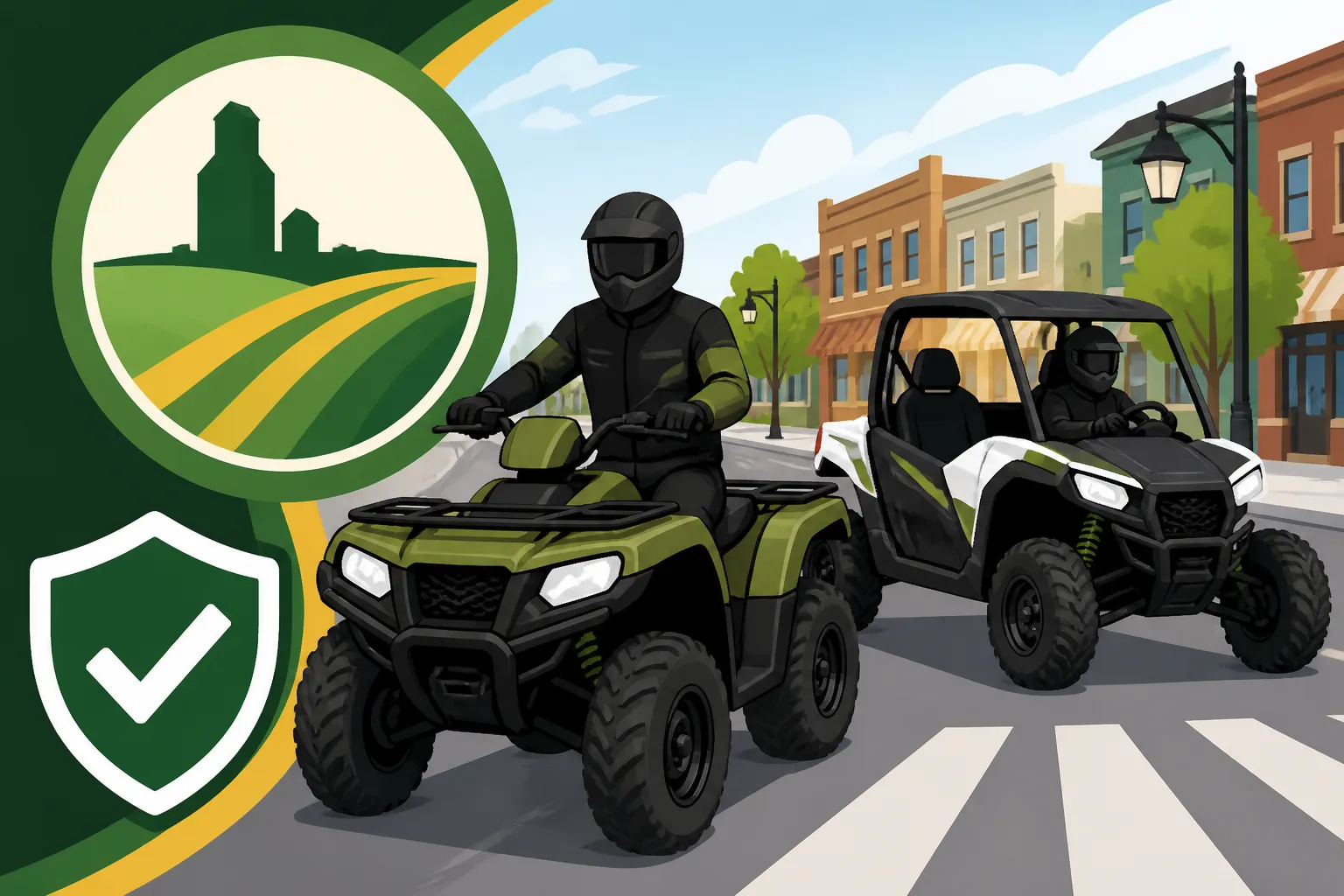
It's a common dilemma for quad and side-by-side owners across Saskatchewan: you've got your machine loaded up, ready for a ride, but need to cross a paved road, zip down a short stretch of grid road, or perhaps even head through a small town to get to your favourite trails. The question of whether you can legally ride your ATV or UTV on a town street in Saskatchewan is far from straightforward, causing confusion and frustration for many riders. This guide aims to clear up that murky water, explaining the provincial framework and, more importantly, the critical role local municipal bylaws play in determining where you can and cannot ride your off-road machine within city, town, or village limits.
The Tricky Truth About ATVs on Saskatchewan Town Streets
When you think about getting your ATV or UTV onto a town street, it's easy to assume there's one simple rule for the entire province. Unfortunately, Saskatchewan's approach to off-road vehicles on public roads, especially within organized municipalities, is anything but simple. This often leaves riders scratching their heads, wondering why their buddy in one village can legally ride to the gas station while they can't even cross the main street in their own community without risking a ticket.
Provincial Law vs. Local Control: The Great Divide
The provincial All Terrain Vehicles Act provides a foundational framework for ATV operation across Saskatchewan, but it intentionally leaves a lot of room for local control, particularly concerning town streets. This means that while the Act sets out general rules regarding age, licensing, helmets, and insurance, it doesn't give you a blanket permission slip to ride down Main Street in every community. In fact, for the most part, the Act views ATVs as off-highway vehicles, not designed or permitted for regular road use.
Here’s where the confusion often stems: many riders mistakenly believe that if the province doesn't explicitly ban something, it must be allowed. But with town streets, it's often the opposite. Municipalities, whether they're cities, towns, or villages, have the power to create their own bylaws that either permit or prohibit the use of ATVs on specific roads, ditches, or even within their entire corporate limits. This decentralization means that a rule that applies in one hamlet could be completely different in the next town over, making it incredibly challenging to know the rules without doing some local digging. It's a prime example of why you can't just assume; you have to check the local regulations.
Defining "Street Legal" (or its absence) in Saskatchewan
Many provinces and states have provisions to make ATVs "street legal" by adding specific modifications like turn signals, mirrors, and even different tires. In Saskatchewan, however, the concept of a provincially recognized "street legal" ATV or UTV, like you might see for a regular car or truck, simply doesn't exist. There's no provincial registration process for ATVs that would designate them as road-worthy, nor is there a province-wide plate or decal system for quads that would signify their legality for street use. This is a crucial distinction and a significant source of frustration for riders who want to responsibly use their machines for short distances on roads. For more on this, you might find [Why Saskatchewan Never Built a Quad Registry] helpful.
Even if you outfit your side-by-side with every accessory imaginable from a company like SuperATV – LED lights, a horn, a windshield – these modifications, while excellent for safety and functionality off-road, do not automatically grant you permission to ride on public streets under provincial law. Your machine remains an off-road vehicle in the eyes of the province. Any permission to use town streets will come solely from a local municipal bylaw, and even then, it will often come with strict conditions on speed, time of day, and the specific roads allowed. Without a municipal bylaw explicitly permitting it, riding your ATV on a town street is generally prohibited, regardless of how many road-safety features you've added.
Unpacking Municipal Bylaws: Your Local Roadmap to Riding
Given that provincial law offers little leeway for ATVs on town streets, understanding and navigating municipal bylaws becomes absolutely paramount. This is where your personal research and due diligence really come into play. Assuming all towns are the same is a quick way to find yourself with a hefty fine or worse.
How to Research Your Local Town's ATV Rules
The first and most important step before you even think about riding your ATV on a town street is to find out what your specific municipality's bylaws say. This isn't always as easy as it sounds, but it's a non-negotiable step. Your local municipality – whether it's a city, town, or village – is the authority here.
- Check the Municipal Website: Many communities are increasingly posting their bylaws online. Look for sections related to "bylaws," "traffic," "off-road vehicles," or "ATVs." Sometimes these are buried in general traffic bylaws.
- Call or Visit the Municipal Office: If you can't find anything online, or if the language in the bylaw is unclear, call or visit the municipal office directly. Ask specifically about [Saskatchewan Municipal Bylaws on Roads] and any regulations regarding ATVs or UTVs within their limits. They should be able to direct you to the relevant document or explain the rules. Be polite and clear about your intentions; they deal with these questions often.
- Ask Local Enforcement: Sometimes, local RCMP detachments or community peace officers might be able to provide guidance, especially if they regularly enforce these bylaws. However, always confirm with the municipal office, as they are the source of the bylaws.
It’s important to remember that bylaws can change, so even if you think you know the rules from a few years ago, it's worth a quick check, especially if you're in a new area or haven't ridden there in a while. A town might have just implemented [Saskatchewan Bylaws That Prohibit Riding] where they once allowed it, or vice versa.
Common Restrictions and Prohibitions You'll Face
Even in municipalities that do permit ATV use on town streets, these permissions are almost always accompanied by a long list of restrictions. This isn't like driving a car; you're often given very limited privileges.
Common restrictions include:
- Designated Roads Only: Many bylaws will specify which streets or portions of streets are open to ATVs. This often means main arteries are off-limits, or only specific low-traffic roads are allowed, often only for direct access to trails or services. You won't typically see free-rein riding through residential neighbourhoods.
- Time of Day Restrictions: Riding might only be permitted during daylight hours, or during specific windows to minimize noise disturbance to residents. [Saskatchewan Rules for Riding After Dark] are generally quite strict.
- Speed Limits: Expect speed limits to be significantly lower than for regular vehicles, often much lower than the posted limit for cars, such as 30 km/h or even less.
- Age and Licensing: Even if permitted locally, all provincial rules regarding age and licensing still apply. This means a driver's licence is required, and generally, riders must be 16 years or older, with exceptions for supervised youth. More details on this can be found under [Saskatchewan Requires a Driver's Licence] and [Saskatchewan Bans Riders Under 16].
- Purpose of Travel: Some bylaws limit ATV use to specific purposes, such as direct travel to a trail system, accessing a business for fuel or supplies, or agricultural purposes. Recreational cruising on town streets is almost universally frowned upon, even where some street access is permitted.
- Prohibited Areas: Expect areas like sidewalks, parks, school grounds, and even main commercial streets to be off-limits, even if other streets are open. [Saskatchewan Rules for Riding Near a School] are a particularly sensitive area.
For instance, the Village of Candle Lake, a popular recreational spot, allows ATV use on certain roads and requires a municipal permit. This is a great example of a community taking control to manage mixed-use recreation. However, don't assume Candle Lake's rules apply in, say, Lumsden or Foam Lake. Each community is distinct.
The World of Municipal Permits and Plates (and why they matter)
Since Saskatchewan doesn't have a provincial ATV registration or plate system, some municipalities have taken it upon themselves to create their own local permit or plate schemes to manage ATV access on their streets. These municipal plates serve as a local identifier and a way for the community to generate revenue for trail maintenance or local enforcement. [Saskatchewan Municipal Plate Schemes] provides more information on this.
If your chosen community has such a system, you must comply. This typically involves:
- Application Process: Filling out a form at the municipal office.
- Fee Payment: Paying an annual fee. These fees are typically quite modest but contribute to local infrastructure.
- Plate Display: Receiving a municipal plate or sticker and displaying it prominently on your machine as instructed.
- Adherence to Bylaws: Agreeing to abide by all local bylaws regarding ATV operation.
Comparison of Municipal vs. Provincial Status
| Feature | Provincial ATV Act (General) | Municipal Bylaw (Specific Town Street) |
|---|---|---|
| Registration/Plate | No provincial registration, plate, or decal for ATVs | Some municipalities require local permits/plates for street access |
| "Street Legal" Status | Not a recognized concept; ATVs are off-highway vehicles | Municipal bylaws might grant conditional street access, but not "street legal" status for all roads |
| Primary Use | Off-road, trails, private land, certain ditches | Limited to specific roads, often for access or specific purposes, if permitted |
| Authority | Sets baseline rules for operation, age, helmets, insurance | Dictates if and how ATVs can use local streets, often superseding general provincial prohibitions on roads |
| Enforcement | RCMP, Conservation Officers, Highway Patrol | Local Peace Officers, RCMP |
Always inquire about any required municipal permits or plates when researching a town's bylaws. Riding without a required municipal permit is a clear violation, even if you’re otherwise following all the rules. For more details on this, look for [Saskatchewan Municipal Plate Costs] or [Saskatchewan Candle Lake Permit Fees].
Beyond the Bylaw: General Operating Rules That Still Apply
Even if you find a municipality with an accommodating bylaw that allows you to ride your ATV on certain town streets, you are never exempt from the general provincial rules and safety requirements for operating an ATV. These fundamental rules are there to protect you, your passengers, and everyone else on the road or trail. They apply regardless of whether you’re deep in the bush, on a remote grid road, or, if permitted, on a town street.
Who Can Ride? Age, Licence, and Supervision Requirements
Saskatchewan has clear provincial rules about who can operate an ATV, and these rules do not magically disappear when you enter a town.
- Driver's Licence: You absolutely need a valid driver's licence to operate an ATV on any public road, including town streets (if permitted by bylaw). This isn't just a suggestion; it's a legal requirement. [Do You Need a Licence for an ATV in Saskatchewan?] covers this in detail.
- Age Restrictions: The general rule is that you must be 16 years or older to operate an ATV without direct supervision on public land or roads. There are exceptions for youth aged 12 to 15, but they must be supervised by someone 18 or older who has held a driver's licence for at least 365 days, or have completed an approved safety course. [Saskatchewan Rules for a 12-Year-Old Rider] provides more context here. So, if your town allows street riding, a 14-year-old on their own cannot simply take the quad for a spin to the corner store, even if they're usually competent off-road.
- Passenger Rules: Your ATV or UTV must be specifically designed by the manufacturer to carry a passenger for one to ride legally. If it's a single-rider machine, no passengers are allowed, period. This is a common rule riders overlook, and it's enforced on public roads and trails alike.
These requirements are often overlooked when riders focus solely on whether a street is "open" or "closed" to quads. Always ensure the operator meets these fundamental criteria.
Safety First: Helmets, Eyewear, and Other Safety Gear
Safety is paramount, and provincial law mandates certain equipment regardless of where you're riding. This is non-negotiable and applies just as much, if not more, when you're sharing space with other vehicles and pedestrians on a town street.
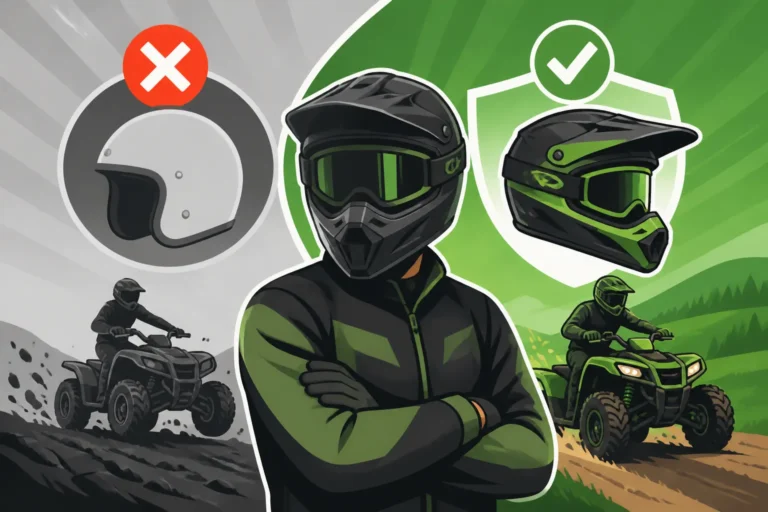
- Helmets: A properly fastened, approved helmet is required by law for all ATV operators and passengers. This isn't just good advice; it's the law. Your helmet needs to meet specific safety standards. [Saskatchewan Helmet and Eye Protection Rules] details these requirements. Don't cheap out on safety gear, especially if you're navigating more complex environments like town streets.
- Eye Protection: You must also have eye protection, such as goggles or a shatterproof face shield. This is crucial for protecting against debris, dust, and insects, especially at speed. Again, this is a legal requirement.
- Machine Readiness: Your ATV should be in good working order, with functional brakes, lights, and a spark arrestor. While SuperATV offers fantastic aftermarket parts for off-road performance, ensure any lighting or modifications are compliant with road use regulations (even if conditional) in the specific municipality. For night riding, even if permitted, proper lighting is absolutely essential.
Think of it this way: if you're allowed on a town street, you're expected to meet a higher standard of readiness and visibility than you might get away with on a private trail, because you're interacting with a much broader public.
The Non-Negotiable: Insurance and Proof of Ownership
Two other critical pieces of the puzzle that apply everywhere in Saskatchewan are insurance and proof of ownership. These are not tied to registration (since ATVs aren't provincially registered) but are essential for legal operation and your protection.
- Minimum Insurance: The All Terrain Vehicles Act requires all ATV operators to carry a minimum of liability insurance. This protects you in case you cause damage or injury to another person or their property. You must be able to provide proof of this insurance if requested by a peace officer. [Saskatchewan's Minimum Insurance Requirement] is set at a substantial amount, reflecting the potential for serious incidents. Don't skip this; a single accident could be financially devastating without it.
- Proof of Ownership: While there's no provincial registration or title for ATVs, you still need to be able to prove you own your machine. This is typically done through a bill of sale. Officers can and do ask for this, especially during routine checks or if there are questions about a machine's origin. Carrying [Your Bill of Sale Stands In for a Registration] is critical, especially since there's no plate to trace ownership quickly. Keep these documents, or copies, with you whenever you ride.
Being stopped by an officer on a town street and being unable to produce proof of insurance or ownership will only compound any issues related to being on a prohibited street. It's an easy way to escalate a warning into a ticket or even a seizure.
The Ramifications: What Happens When You Break Town Street Rules
Riding an ATV on a town street without the explicit permission of a municipal bylaw, or in violation of its conditions, isn't just a minor oversight. It carries real consequences, ranging from financial penalties to the loss of your machine, and can seriously sour the relationship between ATV riders and the communities they ride in.
Fines, Impoundment, and Other Legal Ramifications
The immediate and most obvious consequence of riding where you shouldn't is a ticket. Fines for violating the All Terrain Vehicles Act can be significant, with the maximum fine currently set at [Saskatchewan Fines Capped at $1,000] for a single offence, plus court costs. Local municipal bylaws often have their own fine schedules, which can also be substantial.
Beyond fines, peace officers have the authority to seize and impound ATVs that are being operated illegally. This could happen if you're riding in a prohibited area, operating without a valid licence or insurance, or if your machine is deemed a public nuisance or safety hazard. Getting a seized machine back is a costly and often lengthy process, involving impound fees, storage charges, and proof that the issue leading to the seizure has been resolved. This could mean paying your fines, getting proper insurance, or demonstrating that you now understand and will abide by the bylaws. It's a far greater headache than taking a few minutes to check the rules.
Insurance Headaches and Liability Nightmares
If you're involved in an accident while riding your ATV illegally on a town street – for instance, on a street where ATVs are prohibited by bylaw – you could face severe complications with your insurance. Many ATV insurance policies have clauses that void coverage if the machine is being operated illegally. This means that if you injure someone, damage property, or total your own machine, your insurance company might refuse to pay out.
- Personal Liability: Without insurance coverage, you would be personally responsible for all damages and medical costs, which could easily run into the tens or hundreds of thousands of dollars. This is a terrifying prospect for any rider.
- Damage to Your Machine: Your own collision or comprehensive coverage might also be voided, leaving you to pay for repairs or replacement of your ATV out of pocket.
It's a huge gamble to operate without clear legal permission. What seems like a quick shortcut through town could turn into a life-altering financial burden. Even if a local bylaw permits street riding, always double-check with your insurance provider to ensure your policy specifically covers road use under such conditions.
Building Community Trust (or losing it)
Finally, and perhaps just as importantly, is the impact on community relations. When riders ignore bylaws and blast through town on prohibited streets, it creates noise complaints, raises safety concerns among residents, and generally fosters a negative perception of ATV users. This can lead to further restrictions, stricter enforcement, and even public calls for complete bans on ATVs within municipal limits.
On the flip side, when riders are respectful, follow the rules, and seek to understand local regulations, they help build positive relationships. This can lead to more accommodating bylaws, better-maintained trails, and a general acceptance of off-road vehicle recreation. Many municipalities that permit some street use do so because local riders have worked with them to establish sensible rules. It's about being a good neighbour and a responsible recreationalist. For riders who value access and want to preserve riding opportunities, adhering to local bylaws on town streets is not just a legal requirement but a community responsibility.
Disclaimer
This article is for general informational purposes only and does not constitute professional advice. Laws, prices and regulations vary by location and change over time. Consult a qualified professional for guidance on your specific situation.