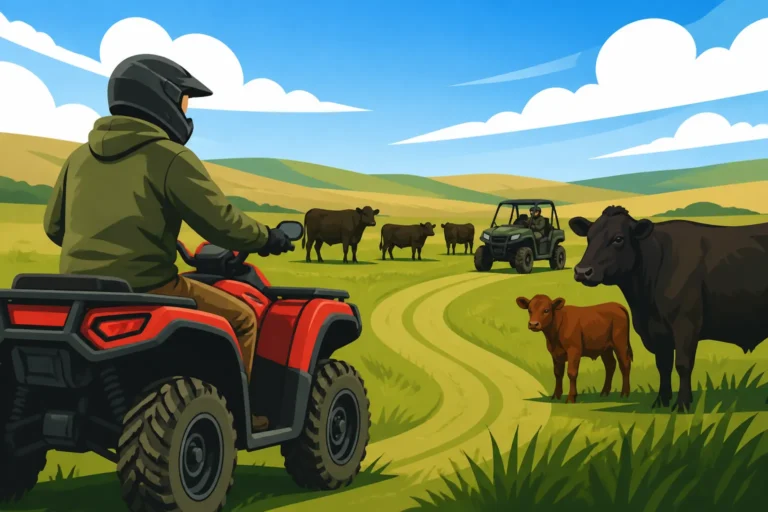
Saskatchewan Noise Complaints About Quads
The sound of an ATV or UTV can be music to the ears of a rider, a sign of adventure unfolding. But for those living nearby, or enjoying the peace and quiet of nature, that same rumble and whine can quickly turn into a source of real frustration and even lead to formal complaints. In Saskatchewan, where quads are a part of life for many, understanding the nuances of noise, its impact, and how to address concerns is crucial for fostering harmony between riders and residents. This guide will walk you through the common issues, current regulations, and practical solutions for managing ATV and UTV noise in our beautiful province.
Understanding the Rumble: Why ATV and UTV Noise Becomes a Complaint
When you fire up your quad or side-by-side, it's not just the engine that roars to life; a whole symphony of sounds follows. For riders, it's part of the experience, but for those not participating, it can be a significant disruption. Understanding the mechanical sources of this noise and how it affects others is the first step toward finding common ground.
The Mechanical Symphony: Sources of ATV and UTV Sound
ATVs and UTVs are powerful machines, and that power naturally comes with sound. The primary source, of course, is the engine itself. Internal combustion engines produce noise through the combustion process, the movement of pistons, and the rotation of various components. A well-maintained engine will purr, but a poorly tuned one might clatter or knock, adding to the racket.
Beyond the engine, the exhaust system plays a massive role. It's designed to direct exhaust gases away from the engine, but also to muffle the sound produced by those gases. Stock exhaust systems are engineered to meet certain noise standards (often for emissions or general public acceptance, even if not strict decibel limits for ATVs in Saskatchewan). However, many riders opt for aftermarket exhaust systems, sometimes for performance gains, other times purely for a louder, more aggressive sound. These can significantly amplify the noise level, turning a manageable hum into a disruptive roar. Think about a quiet Sunday afternoon: a stock exhaust might be noticeable, but a performance exhaust could easily carry for kilometres, disturbing not just your immediate neighbours but a wider area.
Then there are the secondary sounds: the whine of the transmission, the rattle of loose accessories, the hum of tires on various terrains, and even the "clunk" of the suspension working hard over bumps. While often less dominant than engine and exhaust noise, these contribute to the overall sound profile and can become irritating, especially when sustained. Imagine driving down a gravel grid road; the tires on loose aggregate can create a considerable amount of road noise, even if your engine is relatively quiet.
Decibels vs. Disruption: How Noise Is Perceived
Noise isn't just about a number on a decibel meter; it's also about how it's perceived. What might be a tolerable background hum in a busy industrial area becomes a glaring intrusion in a peaceful rural setting. Decibel (dB) is the unit used to measure sound intensity, and it's a logarithmic scale, meaning a small increase in decibels represents a large increase in sound power. For example, an increase of 10 dB means the sound is perceived as roughly twice as loud.
However, human perception is subjective. The pitch of the sound, its duration, its intermittency, and the time of day all influence how disruptive it feels. A sudden, short burst of loud noise might be startling but quickly forgotten, while a constant, droning hum, even at a lower decibel level, can be incredibly irritating over time. The "time of day" factor is huge; the same noise level that's ignored during afternoon chores might be infuriating when you're trying to enjoy a quiet evening on the deck or put kids to bed. A rider might think their quad isn't that loud, but if they're constantly running it early in the morning or late at night near homes, the mere presence of the noise becomes a complaint, regardless of its measured decibel level.
Consider how sound travels differently in various environments. In an open field, sound dissipates relatively quickly, but in areas with buildings, trees, or hills, sound can bounce and carry much further, sometimes amplifying in unexpected ways. A distant quad on a [Saskatchewan Riding on Family Land Falls Outside the Act] might seem quiet to the rider, but the sound can echo and travel surprisingly far, especially on a calm day.
The Ripple Effect: Impacts of ATV Noise on Communities
The impacts of excessive ATV and UTV noise extend far beyond a momentary annoyance. For communities, it can lead to a significant decrease in quality of life. Residents might feel their peace and quiet is constantly being invaded, leading to stress, frustration, and even anger. This is particularly true in rural residential areas or cottage country, where people move specifically for tranquility. When that tranquility is shattered by the constant roar of machines, it erodes the very reason they chose to live there.
Beyond human disturbance, there are environmental considerations. Excessive noise can stress wildlife, disrupting their natural behaviours like feeding, breeding, and migration patterns. Birds might abandon nests, and animals might avoid areas that become too noisy, pushing them into less suitable habitats. While the focus is often on residential areas, the impact on natural landscapes, especially near designated riding trails or popular scenic areas, is also a concern. This is why groups like Saskatchewan's ATV clubs often emphasize [Saskatchewan Trail Etiquette Locals Expect] which includes being mindful of noise.
Finally, persistent noise complaints can strain relationships within a community. It can create divisions between riders and non-riders, leading to resentment and conflict. Local councils and law enforcement often find themselves in the difficult position of mediating these disputes, trying to balance the recreational freedom of riders with the right to peace and quiet for residents. This is why proactive measures by riders to minimize their noise footprint can go a long way in maintaining positive community relations.
Navigating the Rules: Saskatchewan's Approach to ATV and UTV Noise
When it comes to ATV and UTV noise, Saskatchewan’s regulatory landscape can feel a bit like the prairies – vast and sometimes hard to define. Unlike some other provinces or vehicle types, there isn't a single, straightforward provincial decibel limit for off-road machines. Instead, the rules are often localized and open to interpretation.
Provincial Silence: What the All Terrain Vehicles Act Doesn't Say About Noise
It often surprises people, but if you delve into [Saskatchewan's All Terrain Vehicles Act], you won't find specific decibel limits or detailed regulations concerning ATV and UTV noise. The Act, which has been in place since 1988, primarily focuses on operational rules like age restrictions, helmet use, speed limits on ditches, and prohibited areas. It doesn't, for example, mandate a specific muffler type or a maximum decibel output for these machines.
This provincial silence on noise limits means that for the most part, the province hasn't taken a one-size-fits-all approach to how loud your quad can be. This can be both a blessing and a curse. For riders, it means less red tape at the provincial level. For residents dealing with noisy machines, it means there isn't a clear, provincial standard to point to when making a complaint. While the Act does cover things like operating a machine in a careless manner, which could include excessive noise in context, it's not a direct noise regulation. [Saskatchewan Fines Capped at $1,000] under the Act typically relate to these operational rules rather than specific noise violations.
Because of this gap, enforcement related to noise often falls to other avenues, primarily at the municipal level or through general nuisance laws. It means that what might be acceptable in one corner of Saskatchewan could be a serious issue in another, depending entirely on local rules.
Local Voices: How Municipal Bylaws Step In
Where the province is quiet, local municipalities often speak up. Villages, towns, rural municipalities (RMs), and cities across Saskatchewan have the power to create their own bylaws to address specific community concerns, and ATV noise is a common one. These bylaws can vary significantly from one locale to another.
A municipal bylaw might, for instance, prohibit the operation of ATVs on specific streets or within certain hours (e.g., no riding between 10 PM and 7 AM). Some might even set a general noise threshold that applies to all motor vehicles, including ATVs, within residential zones. Others might require that machines only use stock exhaust systems, effectively banning louder aftermarket alternatives within their boundaries. [Saskatchewan Municipalities With ATV Bylaws] are becoming more common as population centres expand and recreational riding grows.
For example, a small village known for its peaceful lakefront might have very strict noise bylaws, limiting riding hours and even dictating where ATVs can be operated at all. Conversely, a large rural municipality with vast tracts of agricultural land might have more lenient rules, focusing only on preventing disturbances in hamlets or subdivisions. It's truly a patchwork, which can be frustrating for riders who travel between different areas. Before you head out, especially if you're going to a new area, it's always a good idea to check local regulations. [Saskatchewan Bylaw Lookups Before You Ride] can help you understand the specific expectations of the community you plan to ride in. Ignoring these local rules, even if you’re unaware of them, can still lead to tickets and fines.
The Broad Brush: General Nuisance Bylaws and Quads
Even if a municipality doesn't have a specific "ATV noise bylaw," general nuisance bylaws often provide a framework for addressing excessive sound. These bylaws typically prohibit any noise that is deemed "unreasonable" or causes a disturbance to residents. The key here is the subjective nature of "unreasonable" – it's often determined by context, duration, intensity, and the time of day.
For example, if a quad is being operated with a loud aftermarket exhaust, revving excessively, or running repeatedly in a residential area for extended periods, a peace officer or bylaw enforcement officer might deem it a public nuisance, even without a specific decibel limit written into the bylaw. The complaint wouldn't be about the ATV itself, but about its operation creating an undue disturbance. This is where neighbourly conduct and common sense come into play.
Such bylaws are designed to maintain peace and order within a community and can apply to a wide range of activities, not just ATVs. They give local authorities a tool to intervene when noise levels become a legitimate problem for residents, offering a recourse even when specific ATV legislation is absent. If you find yourself on the receiving end of a general nuisance complaint, it's often a sign that your riding habits, regardless of their legality under the ATV Act, are impacting your community negatively.
From Complaint to Resolution: Steps for Riders and Residents
Dealing with ATV noise can be a source of tension. For residents, it's about reclaiming peace and quiet; for riders, it's about enjoying their hobby without constantly being at odds with their neighbours. Understanding the process—from making a complaint to how riders can be more considerate—is key to fostering a more harmonious environment.
When the Noise Is Too Much: Advice for Concerned Residents
If you're a resident experiencing ongoing ATV or UTV noise that's disruptive, it's natural to feel frustrated. However, approaching the situation calmly and systematically can lead to more effective resolution. Here's a suggested approach:
- Identify and Document: Before taking any formal steps, try to identify the source of the noise. Is it a neighbour? Someone visiting? Note down the dates, times, and duration of the noise. Describe the nature of the noise (e.g., constant droning, loud revving, early morning starts). If possible, without trespassing or putting yourself in an unsafe situation, gather any identifying details about the machine or operator. A journal of incidents can be incredibly helpful later on.
- Attempt Direct Communication (if safe): If you know the rider and feel comfortable approaching them, a polite, face-to-face conversation can sometimes resolve the issue. Many riders are unaware they're causing a disturbance. Explain how the noise affects you (e.g., "The quad noise early in the morning wakes my baby," or "The loud exhaust late at night echoes in my house"). Avoid accusatory language and focus on the impact. Be prepared for the possibility that the rider might be unreceptive or even defensive, in which case, do not push the issue.
- Contact Local Authorities: If direct communication isn't possible, or if it was attempted and failed, it's time to contact your local authorities. This usually means your municipal bylaw enforcement officer, or in some cases, the RCMP detachment that serves your area. Explain that you wish to make a noise complaint regarding ATV/UTV operation. Provide them with your documented information (dates, times, descriptions). Be clear about the specific bylaw you believe is being violated, if you know it (e.g., a specific ATV noise bylaw or a general nuisance bylaw).
- Follow Up: Once you've made a complaint, follow up periodically with the authorities to check on the status. It might take time for them to investigate, especially if the incidents are intermittent. Continue to document any new occurrences of the noise. The more detailed and consistent your information, the better equipped the authorities will be to act.
Remember, the goal is not to punish but to find a resolution that allows both residents and riders to enjoy their community.
Riding Responsibly: Preventing Complaints Before They Happen
For ATV and UTV riders, being a good neighbour and preventing noise complaints is largely about common sense and courtesy. It means being mindful that your recreational activity impacts others, and taking steps to minimize that impact.
- Maintain Stock Exhaust Systems: This is arguably the biggest factor. While aftermarket exhausts can offer performance boosts or a "cooler" sound, they are overwhelmingly the primary cause of noise complaints. Sticking with your machine's factory exhaust system is the single most effective way to keep noise levels down and avoid drawing unwanted attention. If you must upgrade, look for systems explicitly marketed as "quiet" or "low-db." While SuperATV offers many performance parts, if noise is a concern, riders should specifically look for their quieter muffler options or exhaust silencers.
- Be Aware of Time and Location: Avoid riding early in the morning or late at night, especially in or near residential areas. Weekends and holidays often see more outdoor activity, so be extra considerate during these times. If you're riding on private land, consider how the sound carries to neighbouring properties. If you're on a public trail, remember that others are also using the space, and excessive noise can diminish their experience. [Saskatchewan Riding Season Month by Month] shows when many people are out, increasing potential for conflict.
- Ride Smoothly, Avoid Excessive Revving: Aggressive riding, rapid acceleration, and constant engine revving not only create more noise but also come across as disrespectful. Smooth, controlled riding is generally quieter and often safer.
- Stay on Designated Trails/Areas: Riding off-trail can not only damage the environment but can also lead you into areas where your noise will be unexpected and unwelcome. Stick to [Saskatchewan Crown Land Riding Explained] or private land where you have permission, and be mindful of your proximity to homes. Many [Saskatchewan ATV Clubs Worth Joining] promote responsible riding and offer designated trails away from residential zones.
- Regular Maintenance: A well-maintained machine runs more smoothly and quietly. Loose components, worn bearings, or an untuned engine can all contribute to unnecessary noise.
By adopting these practices, riders can significantly reduce the likelihood of complaints, ensuring that their passion for ATVs and UTVs can be enjoyed by all.
The Enforcement Path: What Happens After a Report
Once a noise complaint is officially reported to the local authorities, an investigation process usually begins. This process will vary slightly depending on the municipality and the nature of the complaint, but generally follows these steps:
- Investigation: A bylaw enforcement officer or RCMP officer will investigate the complaint. This might involve visiting the location, observing the noise themselves, or speaking with neighbours and the alleged noisy operator. They'll assess if there's a violation of a specific municipal bylaw (e.g., a noise ordinance, an ATV-specific rule, or a general nuisance bylaw) or, in some cases, if the operation of the machine violates general provisions of [Saskatchewan's All Terrain Vehicles Act], such as careless operation.
- Warning or Education: For a first-time or minor infraction, the officer might issue a warning, explain the relevant bylaw, and educate the operator on how to comply. This is often the preferred first step, aiming for voluntary compliance rather than immediate punitive action.
- Ticket or Fine: If the noise continues after a warning, or if the infraction is severe, the officer can issue a ticket or fine. The amount of the fine will depend on the specific municipal bylaw or provincial act being violated. [Saskatchewan Ticket Costs for Riders] can vary greatly depending on the type of offense, but municipal fines often serve as a deterrent for repeated infractions.
- Legal Action (Rare but Possible): In persistent, severe cases where fines are ignored or not effective, a municipality could pursue further legal action, although this is rare for noise complaints alone. This would be reserved for extreme situations of non-compliance.
It's important for both residents and riders to remember that the enforcement process is about ensuring community standards are upheld. Cooperation from both sides makes the process smoother and more effective in finding a resolution.
Quieter Adventures: Practical Solutions for Reducing ATV and UTV Noise
Nobody wants to be the source of complaints, and enjoying the great outdoors on a quad or side-by-side doesn't have to mean being a nuisance. There are many practical steps riders can take to significantly reduce their machine's noise output, ensuring their adventures are quieter and more respectful of their surroundings.
Equipping for Serenity: Exhaust Systems and Aftermarket Considerations
The exhaust system is, without a doubt, the single biggest factor in how loud your ATV or UTV is. What comes out of the factory is usually designed to meet certain noise standards, which tend to be more community-friendly.
- Stick with Stock Exhaust: If your machine still has its original exhaust system, keeping it is your best bet for noise control. Manufacturers invest considerable engineering into these systems to balance performance with acceptable sound levels. They're designed to effectively muffle engine noise without being overly restrictive.
- Aftermarket "Quiet Core" or Silencers: If you've already installed an aftermarket exhaust that's loud, don't despair! Many performance exhaust manufacturers offer "quiet cores," "spark arrestor inserts," or dedicated silencer kits that can be added to their systems. These are designed to reduce decibel levels without completely choking off performance. When looking for parts, even from brands like SuperATV, specifically seek out options that mention noise reduction or quiet operation. It's a small investment that can make a huge difference in community relations.
- Proper Maintenance of Exhaust: Over time, mufflers can degrade. Baffles inside can break, or rust can create holes, leading to increased noise. Regularly inspect your exhaust system for damage. If you notice a sudden increase in sound, it might be time for a repair or replacement of the muffler itself. Ensure all clamps and mounting bolts are tight to prevent rattling or leaks that contribute to overall noise.
- Spark Arrestors: While primarily a safety feature to prevent wildfires, a well-maintained spark arrestor (which is a legal requirement in many riding areas including some Crown lands in Saskatchewan, and a good idea everywhere) can also contribute to reducing noise slightly by adding another baffle in the exhaust path. [Saskatchewan Spark Arrestor Guidance] emphasizes their importance for safety, but their role in sound management shouldn't be overlooked.
By making smart choices about your exhaust system, you can dramatically cut down on the sound your machine produces, making your rides more enjoyable for everyone.
Mindful Operation: Riding Techniques to Minimize Sound
Beyond equipment, how you actually ride your ATV or UTV has a huge impact on its noise profile. Even a machine with a stock exhaust can be loud if operated carelessly.
- Gentle Throttle Control: The more aggressively you rev your engine, the louder it will be. Practice smooth, deliberate throttle control. Accelerate gradually rather than mashing the throttle, especially when starting from a stop or riding near residential areas. This reduces engine strain and, consequently, noise.
- Lower RPMs, Higher Gear: Where terrain and conditions allow, try to ride in a higher gear at lower RPMs. This keeps the engine from working as hard and reduces the exhaust note. Of course, always match your gear to the terrain for safety and proper machine function, but look for opportunities to lessen the engine's workload.
- Be Aware of Surroundings: Always be conscious of where you are riding. If you're passing homes, campgrounds, or popular hiking trails, slow down and minimize your noise. Recognize that sound carries differently depending on the landscape. Valleys, open fields, or areas with hard surfaces can amplify and project sound further. [Saskatchewan Trail Difficulty Ratings] can give you an idea of what to expect, but always adapt your riding style to the immediate environment and proximity to others.
- Respect Designated Quiet Hours: Many areas, particularly those with municipal bylaws, will have specific quiet hours. Even if there's no official bylaw, it's common courtesy to avoid noisy activities early in the morning or late at night. Plan your rides accordingly.
- Regular Machine Inspections: Beyond the exhaust, other parts of your machine can generate noise. Loose body panels, worn suspension components, rattling skid plates, or even a loose cargo box can add to the overall cacophony. A quick pre-ride inspection to tighten bolts and secure loose items can make a noticeable difference.
Adopting these mindful riding habits won't just make you a better neighbour; it can also make your rides smoother, safer, and more enjoyable.
Building Bridges: The Importance of Communication and Education
Ultimately, a lot of the friction around ATV and UTV noise comes down to a lack of understanding and communication between riders and non-riders. Bridging this gap through education and engagement can be incredibly effective.
- Rider Education and Safety Courses: Many ATV safety courses emphasize not just safe operation but also responsible riding etiquette. These courses often cover topics like respecting private property, staying on designated trails, and being mindful of noise. While [Saskatchewan Has No Adult Safety Course Rule] for operators, taking a course, especially for younger riders, instils these values early.
- Join or Support ATV Clubs: [Saskatchewan ATV Clubs Worth Joining] play a vital role in promoting responsible riding. Clubs often work with landowners and municipalities to develop and maintain designated trails, provide information on local regulations, and organize rides that prioritize safety and respect for the environment and community. By supporting these clubs, you're contributing to a more organized and considerate riding culture.
- Community Dialogues: If noise is a recurring issue in your area, consider encouraging or participating in community discussions. This could be through local council meetings or neighbourhood groups. Giving both riders and residents a platform to express their concerns and propose solutions can lead to constructive outcomes, such as identifying new riding areas, establishing clearer local guidelines, or even collaborative trail maintenance efforts.
- Informational Signage: In areas where ATVs are permitted, clear signage about local noise expectations or quiet hours can be very helpful. This educates visiting riders who may not be familiar with local bylaws and reminds local riders of their responsibilities.
By focusing on responsible equipment choices, mindful riding techniques, and fostering open communication, the ATV and UTV community in Saskatchewan can continue to enjoy their passion while ensuring the peace and quiet of the province is preserved for everyone.
Disclaimer
This article is for general informational purposes only and does not constitute professional advice. Laws, prices and regulations vary by location and change over time. Consult a qualified professional for guidance on your specific situation.