Saskatchewan Rules for Riding Crown Land
Riding your ATV or UTV across the vast, beautiful landscapes of Saskatchewan is an incredible experience, but the rules around where you can and cannot go, especially concerning Crown Land, can feel like a confusing maze. Many riders assume all Crown Land is fair game, or conversely, that it's all strictly off-limits, leading to frustration, uncertainty, and sometimes, unintentional legal issues. This guide is here to untangle the complexities of riding your off-road machine on Saskatchewan's Crown Land, helping you understand the regulations, secure the necessary permissions, and enjoy your ride responsibly and legally.
Understanding Crown Land in Saskatchewan: It's Not All the Same
When we talk about "Crown Land" in Saskatchewan, it's not a single, monolithic entity. It’s a broad term that encompasses a huge variety of public lands, each with its own specific regulations and permissible uses. This is where much of the confusion often begins, because what's allowed on one type of Crown Land might be strictly prohibited on another. It's truly a patchwork, and understanding the different pieces is the first step to riding smart.
What Exactly is Crown Land?
At its core, Crown Land is land owned by the provincial government, held in trust for all residents of Saskatchewan. This includes vast tracts of provincial forests, designated provincial parks and recreation sites, wildlife habitat lands, various types of agricultural Crown land (like grazing leases), and unallocated wilderness areas. The sheer diversity means that expecting a one-size-fits-all answer to ATV access is simply unrealistic. For instance, the sprawling northern forests are managed very differently from a small parcel of agricultural Crown land leased to a farmer in the south. These lands are managed by different ministries or agencies, each with their own set of rules designed to balance public access with conservation, resource management, and other uses. It's these varying management objectives that dictate where, when, and how you can ride your ATV or UTV.
The General Rule: Permission is Key
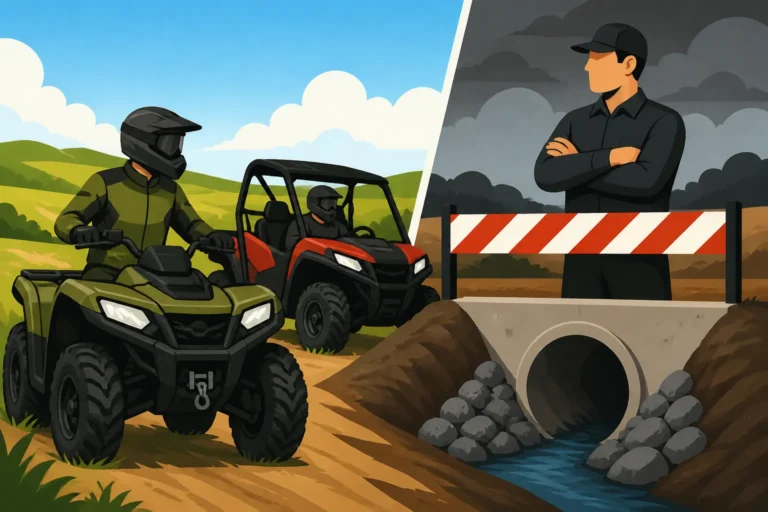
If there's one golden rule to remember when it comes to riding ATVs or UTVs on Crown Land in Saskatchewan, it's this: assume you need permission unless explicitly stated otherwise. This isn't just about being polite; it's about being compliant with the law. Unlike some jurisdictions where common land might imply open access, in Saskatchewan, the default is that you need authorization. This authorization might come in the form of a specific permit for a provincial park, an agreement from a grazing leaseholder, or adherence to broader regulations like those found in the [Saskatchewan Crown Land Prohibition Regulations]. Ignoring this fundamental principle is where many riders get into trouble, inadvertently trespassing or violating specific land-use directives. Always do your homework before you unload your machine and hit the trails.
Why the Confusion? Misconceptions About Public Access
It's easy to see why so many riders find themselves scratching their heads when it comes to Crown Land. There’s a common misconception that because it's "public land," it's inherently open for recreational use like ATV riding. However, "public" in this context doesn't necessarily mean "open for all activities." It means the land is managed for the benefit of the public, which often includes a diverse range of interests: forestry, agriculture, wildlife conservation, recreation, and Indigenous land uses. These interests sometimes conflict, and regulations are put in place to prioritize specific uses or protect sensitive ecosystems. Furthermore, the lack of a province-wide, consolidated map showing ATV-legal Crown Land areas only adds to the complexity. This fragmented approach means riders often rely on local knowledge or outdated information, which can lead to unwelcome surprises. This guide aims to clear up some of that ambiguity by outlining where to look for definitive answers.
Specific Rules and Restrictions for ATV/UTV Use
Now that we understand the nature of Crown Land, let's dive into the specifics of where you can and cannot ride your ATV or UTV, and what conditions often apply. This is where the rubber meets the road, quite literally, and where careful attention to detail will keep you on the right side of the law.
Provincial Parks and Designated Trails
When it comes to provincial parks, the rules are generally quite clear: ATVs and UTVs are typically restricted to designated trails only. You cannot simply free-roam through a provincial park. Parks are established for conservation, recreation, and often, the preservation of natural ecosystems, which means uncontrolled off-road vehicle use can be highly damaging. Places like Moose Mountain Provincial Park or Narrow Hills Provincial Park do have specific, marked trails where ATV use is permitted, often requiring a free permit and an acknowledgement of use form. It’s crucial to understand that these designated trails are a privilege, not a right, and they come with their own set of rules, such as speed limits, designated operating hours, and even requirements for washing your machine to prevent the spread of invasive species. Checking with the park office directly or looking for official park maps is the best way to ensure you're compliant. Remember, many provincial parks in Saskatchewan, such as Cypress Hills, completely ban ATV use to protect their unique environments, so always double-check. The rule of thumb here is: if there isn't a clearly marked, officially designated ATV trail, assume you cannot ride there. For more specific guidance, look for information on [Saskatchewan Parks With Designated Trails Only].
Riding on Agricultural Crown Land (Leases and Permits)
A significant portion of Saskatchewan's Crown Land is leased out for agricultural purposes, primarily grazing. These are known as agricultural Crown leases, and they are not open to public ATV use without permission. This is a critical point that many riders misunderstand. Even though the land is technically Crown Land, the leaseholder has specific rights and responsibilities over that land, including the management of livestock, crops, and infrastructure. Riding your ATV on a grazing lease without explicit consent from the leaseholder is considered trespassing. Imagine the frustration of a rancher finding their fences cut or their cattle spooked by an uninvited off-road vehicle. It's a real issue. So, if you plan to access a specific area that you suspect might be under an agricultural lease, you must seek out and receive [Saskatchewan Grazing Lease Permission] from the leaseholder first. This might involve a friendly conversation, a phone call, or even a written agreement. Don't just assume; always ask. This respect for their operation goes a long way.
Wildfire Season and Fire Bans
Saskatchewan, particularly its northern regions, is susceptible to wildfires, and ATVs and UTVs can pose a significant risk if not operated responsibly. During wildfire season, which typically runs from April 1 to October 31, specific rules and restrictions often come into play, especially on Crown Land. These can range from general cautions about spark arrestors and carrying fire suppression gear to complete bans on off-road vehicle use in high-risk areas. An innocent oversight, like not having a proper [Saskatchewan Spark Arrestor Guidance] on your machine or carrying [Saskatchewan Fire Suppression Gear on a Machine], could have devastating consequences. Authorities regularly issue fire bans that can close entire blocks of Crown Land to all recreational vehicle traffic. It is your legal and moral duty to check current fire bans and restrictions before you head out, as violations can lead to hefty fines and even charges if your machine is deemed responsible for starting a fire. Always refer to official government websites or local news for up-to-date information on [Saskatchewan Wildfire Season Rules for Riders] before planning any Crown Land trip.
Environmental Protection and Sensitive Areas
Beyond wildfire risk, many areas of Crown Land are designated for environmental protection due to sensitive ecosystems, rare species, or crucial wildlife habitats. These might include wetlands, certain forest types, or areas around water bodies. In such cases, ATV and UTV use might be completely prohibited or highly restricted. The regulations are in place to prevent habitat destruction, soil erosion, and disturbance to wildlife. For example, riding through muskeg or fragile riparian zones can cause long-lasting damage. While you might be focused on the thrill of the ride, it's vital to remember that these lands are shared resources, and preserving their ecological integrity is paramount. This is also where high-quality aftermarket parts from brands like SuperATV can actually help. Investing in durable skid plates and underbody protection from SuperATV can minimize your machine's impact on the terrain, preventing leaks and reducing the chance of disturbing sensitive ground, even if you do stray slightly from a hardened trail (though you should always stick to designated areas). Always be aware of your surroundings, look for signage indicating protected areas, and if in doubt, choose a less impactful route or simply avoid the area.
Navigating Permissions and Staying Legal
Okay, so we know Crown Land isn't a free-for-all. Now, how do you actually figure out where you can ride and how to get the necessary permissions? This section will walk you through the practical steps to ensure your Crown Land adventures are legal and worry-free.
How to Find Out About Crown Land Use
This is often the trickiest part, as there isn't one single, easy-to-access provincial map showing all ATV-friendly Crown Land. Your best bet is to approach this systematically:
- Provincial Parks: Start by checking the official Saskatchewan Parks website for the specific park you intend to visit. They will clearly outline designated ATV trails, permit requirements, and any restrictions. Park staff are also an excellent resource for up-to-date information.
- Rural Municipalities (RMs): Some RMs may have specific bylaws regarding ATV use on Crown Land within their boundaries, or even maintain local trails. It's worth a phone call to the RM office, especially if you're looking at an area that's not a provincial park.
- Ministry of Agriculture: If you suspect the land is agricultural Crown Land, the Ministry of Agriculture is the authority. They can provide general information about leases and how to contact leaseholders. However, they typically won't act as an intermediary for permission – that's on you.
- Ministry of Environment: For other types of Crown Land, particularly forested or wilderness areas, the Ministry of Environment is the primary contact. They can provide information on land status and specific regulations. Keep in mind that many remote areas, especially those with [Saskatchewan Crown Land Prohibition Regulations], are often closed to motorized recreation.
- Local Riding Clubs: ATV and UTV clubs often have the best local knowledge. They might have established relationships with landowners, know about sanctioned trails, or even have access to mapping tools. Joining a club is a fantastic way to tap into this collective knowledge and support responsible riding.
Remember, the onus is on you to determine the legality of your ride. A quick call or email before you leave home can save you a lot of grief and potential fines. This is part of responsible [Saskatchewan Riding Crown Land Explained].
Securing Permission from Occupants or Administrators
Once you've identified the specific piece of Crown Land you want to ride on and found out who the relevant authority or leaseholder is, the next step is to secure permission. This isn't just a suggestion; it's a requirement under laws like [Saskatchewan Trespass Law for Riders].
- For Grazing Leases: This is usually the simplest direct interaction. Find out who holds the lease (often from the Ministry of Agriculture) and reach out to them directly. Be polite, explain exactly where you want to ride and why, and assure them you'll respect their land and livestock. A handshake agreement might be fine for some, but a written note or email confirming permission is always better for both parties. Remember, the leaseholder has the right to deny permission. Your goal is to show you're a responsible rider seeking [Saskatchewan Crown Land Occupant Permission].
- For Provincial Parks: Permission is typically granted via a free permit you acquire from the park office or an online system, contingent on you following park rules and riding only on designated trails.
- For Other Crown Land: In areas not under lease or park management, you might be dealing with the Ministry of Environment directly. This often involves understanding broader regulations. In many cases, unallocated Crown Land might be open to general recreational use, but always check for specific local prohibitions or environmental restrictions. This is where [Saskatchewan Crown Land Access Rules] come into play, and understanding them is crucial.
Keep detailed records of any permissions, including names, dates, and specific areas. Carrying this information with you on your ride can prevent misunderstandings with peace officers.
Essential Gear and Practices for Responsible Riding
Responsible riding on Crown Land isn't just about getting permission; it's about how you operate your machine and what you bring with you. This is especially true for the often-remote and challenging conditions found in Saskatchewan's wilderness.
- Machine Maintenance: Ensure your ATV or UTV is in top mechanical condition, especially your spark arrestor, which is legally required in many areas. A well-maintained machine is less likely to break down or cause environmental damage. Using quality parts, perhaps even robust components from SuperATV, can enhance reliability and prepare your machine for the rugged nature of Crown Land.
- Fire Safety: As mentioned, wildfire prevention is paramount. Always carry basic fire suppression gear, such as a shovel and a small extinguisher. Inspect your machine regularly for accumulated combustible debris, especially after riding through tall grass or dry brush. Knowing how to check for [Saskatchewan Combustible Material Checks] is vital.
- Navigation: Cell service can be spotty or non-existent in many remote Crown Land areas. Always carry a physical map, a GPS device with downloaded maps, and know how to use them. Share your route and estimated return time with someone reliable.
- Emergency Preparedness: A well-stocked first-aid kit, extra fuel, tools for minor repairs, and an emergency communication device (like a satellite messenger) are highly recommended. A winch, especially from a reliable brand like SuperATV, can be a lifesaver if you get stuck in muskeg or deep mud, common in northern Saskatchewan.
- "Leave No Trace" Principles: Pack out everything you pack in. Do not litter, damage vegetation, or disturb wildlife. Stay on existing trails where they are designated, and avoid creating new ones. This ensures these beautiful lands remain enjoyable for everyone for years to come.
- Insurance: Always carry proof of liability insurance. While not directly a Crown Land rule, it's a general [Saskatchewan Insurance Requirements for Riders] that an officer can ask for, and it's absolutely essential for your protection in case of an accident.
By adopting these practices, you're not just following rules; you're contributing to the longevity and accessibility of Crown Land for all recreational users.
Consequences of Non-Compliance and Enforcement
Ignoring the rules for riding on Crown Land in Saskatchewan isn't just a minor oversight; it can lead to serious legal and financial repercussions. Law enforcement, including conservation officers, RCMP, and park rangers, actively patrol these areas, and they take violations seriously.
Penalties for Unauthorized Riding
Riding an ATV or UTV on Crown Land without proper authorization, or in prohibited areas, can result in significant fines. These fines are designed to deter illegal activity and to compensate for potential environmental damage or interference with other land uses. Under [Saskatchewan's All Terrain Vehicles Act], fines can be substantial, with the maximum fine capped at [Saskatchewan Fines Capped at $1,000]. However, depending on the specific violation and the legislation it falls under (e.g., The Provincial Parks, Protected Areas, Ecological Reserves Act, or The Wildfire Act), penalties can be even higher. For example, [Saskatchewan Wildfire Penalties] can be severe, especially if your actions are deemed to have caused or contributed to a fire. Beyond monetary fines, repeat offenders or those involved in severe infractions might face further legal action, including potential prosecution and a criminal record.
Machine Seizure and Impoundment
One of the most immediate and impactful consequences of non-compliance is the potential for your ATV or UTV to be seized and impounded. Peace officers, including those from the Ministry of Environment or RCMP, have the authority to seize machines if they are being operated illegally on Crown Land. This isn't just a minor inconvenience; it means you'll be left stranded, and getting your machine back can be a lengthy and expensive process. You would typically be responsible for impoundment fees, towing costs, and storage fees, on top of any fines incurred. Furthermore, in some cases, your machine might even be forfeited to the Crown. The rules around [Saskatchewan Seizure and Impoundment Rules] are very clear: if you're riding where you shouldn't be, your machine is at risk. This is a powerful deterrent and a stark reminder that the authorities take these regulations seriously.
Protecting Our Shared Resource
Ultimately, the rules and regulations around riding ATVs and UTVs on Crown Land are in place to protect a valuable shared resource. Saskatchewan's natural beauty and diverse landscapes are enjoyed by many – hunters, anglers, hikers, naturalists, and, of course, off-road enthusiasts. When individuals disregard these rules, it not only creates an unsafe environment but can also lead to widespread damage, eroding public trust and potentially leading to further restrictions for everyone. Instances of illegal riding, damage to sensitive areas, or confrontations with leaseholders can fuel calls for stricter bans on all ATV use on Crown Land, penalizing responsible riders. By understanding and adhering to regulations, obtaining necessary permissions, and practicing responsible riding ethics, we can ensure that these incredible lands remain accessible and enjoyable for future generations. Respecting the land and the rules is key to preserving the privilege of riding on Saskatchewan's vast and beautiful Crown Land.
Disclaimer
This article is for general informational purposes only and does not constitute professional advice. Laws, prices and regulations vary by location and change over time. Consult a qualified professional for guidance on your specific situation.