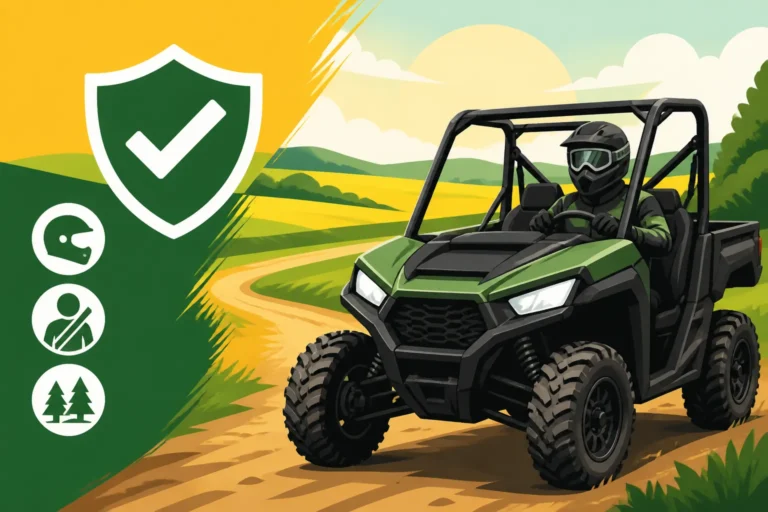
Passengers Are Legal Only on Machines Built for Them
It's a common scene in Saskatchewan: you're heading out for a ride, and a friend or family member wants to tag along. Maybe you're just cruising down a grid road to check fences, or perhaps you're venturing out to a favourite fishing spot. The thought might cross your mind, "Can I just hop them on the back of my quad?" This seemingly simple question often leads to confusion and, unfortunately, can put riders and passengers at risk, not to mention on the wrong side of the law. This guide will meticulously clarify Saskatchewan's specific rules regarding ATV and UTV passengers, focusing on what "designed for passengers" actually means and the serious implications of ignoring these regulations for everyone's safety and your peace of mind.
The Law on Carrying Passengers in Saskatchewan
Saskatchewan’s All Terrain Vehicles Act is pretty clear when it comes to who can ride where, but the nuances often get lost in casual conversation. Riders often assume that if there's room on the machine, or if they're just going a short distance, it's permissible. However, the law focuses less on "room" and more on the vehicle's inherent design. Understanding this distinction is crucial to staying safe and avoiding penalties. The intent of the law is fundamentally about preventing injury and ensuring that machines are operated within their design limits.
Understanding the "All Terrain Vehicles Act" and its Passenger Provisions
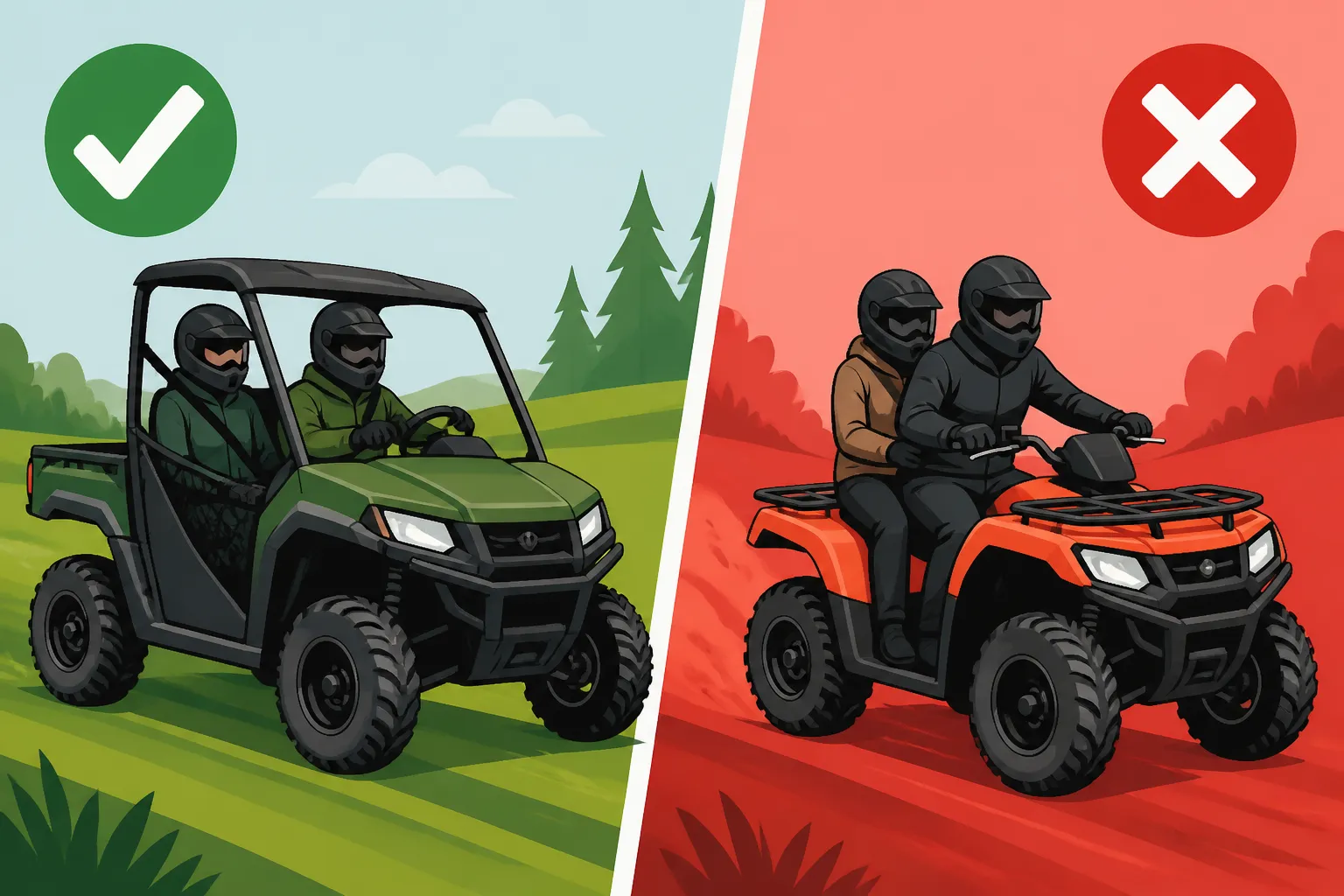
The core of the matter lies directly within [Saskatchewan's All Terrain Vehicles Act]. It states unequivocally that an ATV can only carry a passenger if it has been designed by the manufacturer to do so. This isn't just a suggestion; it's a legal requirement. For many riders, this can be a point of frustration, especially if they have a larger utility quad that feels like it could safely carry two people. You might have even seen people doing it for years without issue. However, "feeling safe" and "being legally designed for it" are two entirely different things. The Act is written with the safety of all terrain vehicle operation in mind, recognizing that these machines handle very differently with extra weight, especially if that weight is unsecured or positioned incorrectly.
Consider the dynamic changes that occur when an extra person is added to a machine designed for one. The centre of gravity shifts dramatically, affecting steering, braking, and stability, particularly on uneven terrain, during turns, or when navigating obstacles. A machine not designed for a passenger lacks the necessary structural reinforcements, additional seating, and handholds to ensure that a second person can remain secure and in control during various manoeuvres. This isn't just about comfort; it's about engineering and physics. The law attempts to circumvent the tragic consequences that can arise when these machines are pushed beyond their design limitations.
Penalties and Risks for Non-Compliance
Ignoring the passenger rules isn't just about a potential ticket; it carries significant risks. Firstly, there are the immediate legal consequences. If a peace officer spots you carrying an unauthorized passenger, you could face fines. These fines are designed to deter unsafe practices and reinforce the importance of adhering to the Act. Beyond the immediate financial hit, there are far more serious implications if an accident occurs.
Think about the scenario: you're riding with an unauthorized passenger, and you hit a hidden rut, causing a rollover. The injuries could be severe for both you and your passenger. Now, imagine trying to navigate the aftermath. Your insurance policy might have clauses that invalidate coverage if the vehicle was being operated outside of its manufacturer's specifications or in violation of provincial law. This could leave you personally liable for medical expenses, property damage, and other costs, which could be financially devastating. This is where [Saskatchewan Owner Liability Rules] come into sharp focus. The owner, often also the operator, can be held responsible for the actions and safety of their passengers. Moreover, proving your case to an insurance company when you've knowingly violated operating rules can be an uphill battle. It reinforces why understanding and adhering to [Saskatchewan Insurance Requirements for Riders] is not just a formality but a critical layer of protection.
What "Designed for Passengers" Truly Means
The phrase "designed for passengers" isn't open to interpretation by individual riders. It refers specifically to the manufacturer's intent and the physical attributes built into the machine from the factory floor. Many people confuse aftermarket additions with original design, leading to dangerous assumptions. Let's break down what truly qualifies a machine for carrying more than one person.
Manufacturer's Intent and Machine Design
When a manufacturer designs an ATV or UTV for more than one occupant, they incorporate specific features and structural reinforcements to accommodate that extra weight and ensure safety. For ATVs, this typically means a "two-up" or "touring" model. These models are noticeably longer than single-rider ATVs, providing an extended seat for the passenger. Crucially, they also include dedicated handholds for the passenger to grip and separate footrests, not just relying on the operator's footwells. The suspension system is also usually more robust or adjustable to handle the increased load.
On the other hand, most traditional sport or utility ATVs are designed solely for one operator. Adding an aftermarket seat pad or a storage box that looks like a seat doesn't change the fundamental design or the legal classification. It doesn't magically reinforce the frame or recalibrate the weight distribution. Even if you feel confident in your riding skills, the machine itself is not engineered to distribute the weight safely, nor does it provide adequate secure points for a passenger to brace themselves during dynamic riding conditions. The manufacturer's manual will clearly state the machine's passenger capacity, and this document is your ultimate authority.
Identifying a Machine Built for More Than One
So, how can you tell if your machine, or one you're considering buying, is actually designed for multiple riders? The easiest way is to consult the owner's manual and the manufacturer's specifications, often found on a decal or VIN plate on the machine itself. Look for terms like "2-up," "touring," or explicit mention of passenger capacity. For a quick visual check, here's what to look for:
| Feature | Single-Rider ATV | Multi-Rider (2-Up) ATV | Multi-Rider (UTV/Side-by-Side) |
|---|---|---|---|
| Seat Length | Short, designed for one operator | Extended, clearly accommodates two | Bench or bucket seats for 2+ occupants |
| Passenger Backrest | None or optional, purely cosmetic | Integrated or clearly designed attachment | Integrated in seat design |
| Passenger Handholds | None | Dedicated, secure grips for passenger | Roll cage/grab handles for each occupant |
| Passenger Footrests | None, operator uses footwells only | Separate, distinct footrests for passenger | Dedicated floorboards for each occupant |
| Suspension | Tuned for single operator | Heavier-duty or adjustable for two riders | Designed for multiple occupants and cargo |
| Manufacturer Rating | Explicitly states "1 Person Only" | Explicitly states "2 Persons" | States specific occupant capacity |
This table helps illustrate the significant differences. Notice how a true multi-rider machine has distinct features for the passenger's safety and comfort. This is not about squeezing someone onto a cargo rack; it's about a machine purpose-built for their presence. When we talk about [Saskatchewan ATV Definitions Explained], the distinction between machines designed for one versus two (or more) is paramount, and it’s typically based on these very design elements. While you might find a variety of aftermarket parts and accessories, including seating options from companies like SuperATV, remember that adding a seat by itself doesn't mean your machine is now legally "designed for passengers." The underlying structure and manufacturer's intent remain the defining factors.
Common Misconceptions and Real-World Scenarios
Despite the clear legal framework and safety implications, many riders still fall victim to common misconceptions about carrying passengers. These beliefs, often fueled by personal anecdotes or observations of others, can lead to dangerous situations and legal trouble. Let's tackle some of these pervasive myths and explore real-world scenarios.
The "Quick Trip" Fallacy
One of the most dangerous misconceptions is the idea that it's okay to carry an unauthorized passenger for a "quick trip" or "just down the road." Riders might think, "I'm only going a couple of kilometres to the fishing hole," or "It's just to the neighbour's farm, what could happen?" The reality is that accidents don't discriminate based on distance or speed. A short trip can become a catastrophe in an instant. A sudden dip in a gravel road, an unexpected obstacle, or even a minor swerve to avoid a pothole can cause an unsecured passenger to be ejected from the machine.
Imagine hitting an unseen rock while travelling at a moderate speed. A single-rider ATV, already challenged by an extra person perched on the back, could easily become unstable. The passenger, lacking proper handholds and footrests, might lose their grip and fall off, potentially suffering serious head injuries even with a helmet, or being run over by the machine or a trailer. The "quick trip" fallacy completely ignores the unpredictable nature of off-road riding and the severe consequences of even minor incidents when a machine is operated beyond its design limits with an unsecured individual. There's no legal loophole for "short distances" when it comes to passenger capacity.
Age Restrictions and Supervision for Riders and Passengers
While the primary focus of "designed for passengers" is on the machine itself, it's also important to touch on age considerations, especially when children are involved. Even if you do have a two-up ATV or a multi-seat UTV, simply having the space isn't the only factor. Saskatchewan has specific [Saskatchewan ATV Age Requirements] for operators, but what about child passengers? The Act implies that a passenger, regardless of age, must be able to safely and securely occupy the designated passenger space. This means being able to reach the footrests and hold onto the handholds without assistance.
For example, a very young child might struggle to maintain a secure position on a fast-moving machine, even one designed for passengers. This is where operator judgment becomes critical. While there might not be a specific minimum age for a passenger explicitly stated, the operator is ultimately responsible for the safe operation of the vehicle and the well-being of all occupants. This means ensuring your passenger, especially a child, is physically capable of riding safely, wearing appropriate gear, and understands how to hold on. The spirit of rules like [Saskatchewan Rules for a Child Passenger] extends beyond just the operator's age to the overall safety of carrying any minor. Ultimately, even with a purpose-built machine, if your passenger can't safely ride, they shouldn't be on board.
When a UTV Truly Accommodates More Riders
UTVs, or Side-by-Sides, are a different beast entirely when it comes to passenger capacity. Unlike most ATVs, many UTVs are explicitly designed from the ground up to carry multiple occupants, often two, three, four, or even six people. These machines come equipped with proper bucket seats or bench seating, seatbelts for every occupant, and integrated roll cages for protection. This is why you see families and work crews utilizing them extensively on farms, ranches, and recreational trails.
With a UTV, the "designed for passengers" aspect is usually obvious. The presence of multiple seats with corresponding seatbelts, dedicated footwells, and robust grab handles within a protective roll cage clearly indicates manufacturer intent. For riders looking to enhance their UTV's capabilities or comfort for multiple passengers, the aftermarket offers a wealth of options. Companies like SuperATV provide a range of accessories, from storage solutions to roof kits and wind protection, that complement a UTV's multi-passenger design, making rides more comfortable and practical. It's crucial, however, to ensure that any aftermarket accessories do not compromise the original safety features or the integrity of the machine's design for its stated passenger capacity. Always refer to your UTV's manual for its specific passenger limits and ensure all occupants are properly secured with seatbelts whenever the machine is in motion.
Ensuring Everyone's Safety on the Trail
While adhering to the legal requirements for passenger capacity is paramount, safety on the trail extends beyond simply having the right machine. It encompasses the gear worn by all occupants, the operator's judgment and practices, and an awareness of how external factors can influence the ride. True safety is a holistic approach, ensuring that every person on board is as protected as possible.
Essential Safety Gear for All Occupants
It cannot be stressed enough: everyone on an ATV or UTV, including passengers, must wear appropriate safety gear. This isn't optional; it's a critical layer of protection against the unpredictable nature of off-road riding. In Saskatchewan, there are specific [Saskatchewan Helmet and Eye Protection Rules] that apply to operators, and it's simply good practice (and often implied) that passengers adhere to the same standards.
At a minimum, every occupant needs a properly fitted helmet that meets recognized safety standards (like DOT or Snell). This is your first line of defence against head injuries, which are tragically common in ATV accidents. Beyond helmets, eye protection is crucial. Goggles or a shatterproof face shield protect against dust, debris, insects, and low-hanging branches. Sturdy, over-the-ankle boots protect feet and ankles from impacts and prevent them from slipping off footrests. Long pants and long-sleeved shirts, preferably made of durable material, guard against scrapes, cuts, and sun exposure. Gloves can improve grip and protect hands. Think of it this way: if the operator needs it, the passenger needs it just as much, if not more, as they have less control over the machine. Skimping on gear for a passenger is taking a direct gamble with their well-being.
Operator Responsibility and Safe Riding Practices
Even on a machine specifically designed for multiple passengers, the operator bears the ultimate responsibility for the safety of everyone on board. This includes making sound judgments about terrain, speed, and overall riding conditions. An extra passenger, even a securely seated one, significantly alters the machine's handling characteristics. It changes the centre of gravity, increases braking distances, and can make the machine feel less responsive to steering inputs.
A responsible operator will adjust their riding style accordingly. This means reducing speed, taking corners wider and slower, avoiding aggressive manoeuvres, and being extra cautious on uneven or slippery surfaces. Before even setting off, the operator should have a brief conversation with their passenger, explaining how to hold on, where to place their feet, and the importance of leaning with the machine's movements. Communication during the ride is also key. If the passenger feels uncomfortable or needs a break, they should be able to signal the operator easily. Remember, [Saskatchewan Owner Liability Rules] mean that as the operator, you are directly accountable for the safety of your passengers, and this responsibility demands careful, defensive riding.
Aftermarket Accessories and Safety
The world of aftermarket ATV and UTV accessories is vast and exciting, offering everything from winches and light bars to upgraded suspension components. Companies like SuperATV provide many high-quality products that can enhance your machine's performance, utility, and comfort. However, it's crucial to understand the distinction between accessories that enhance a machine's existing capabilities and those that purport to change its fundamental design for passenger use.
While you might find aftermarket seats or pads that fit onto a single-rider ATV, simply bolting one on does not transform it into a legally compliant, safe two-up machine. These additions do not alter the frame's strength, the suspension's load capacity, or provide the integrated handholds and footrests necessary for true passenger safety. Such modifications can create a false sense of security, encouraging riders to carry passengers where it's unsafe and illegal. Always ensure that any aftermarket parts are installed correctly and, more importantly, that they do not compromise the manufacturer's original safety features or the machine's intended use. When it comes to passenger transport, the original design intent is paramount, and no accessory can truly override that. Focus on accessories that genuinely improve safety within the machine's designated limits, rather than trying to circumvent those limits.
Disclaimer
This article is for general informational purposes only and does not constitute professional advice. Laws, prices and regulations vary by location and change over time. Consult a qualified professional for guidance on your specific situation.