Crossing a Highway by the Shortest Route
It can feel incredibly frustrating when you're out enjoying a ride on your ATV or UTV in Saskatchewan, only to find yourself needing to cross a highway to get to the next section of trail or access another piece of land. Highways are busy, fast-moving arteries, and navigating them on an off-road machine comes with its own set of rules and anxieties. This guide is here to walk you through one of the most critical of those rules: how to legally and safely cross a highway by the shortest route, and what that actually means for riders like us.
The "Shortest Route" Rule Explained for ATV Riders
When we talk about the "shortest route" for crossing a highway in Saskatchewan, it's not just a casual suggestion; it's a specific legal requirement under the All Terrain Vehicles Act. This rule is designed to minimize the time your ATV or UTV spends in active traffic lanes, which is crucial for your safety and the safety of other road users. Ignoring this rule can lead to dangerous situations and significant legal repercussions, so understanding its nuances is paramount before you ever put a tire on the pavement.
What "Shortest Route" Really Means in Practice
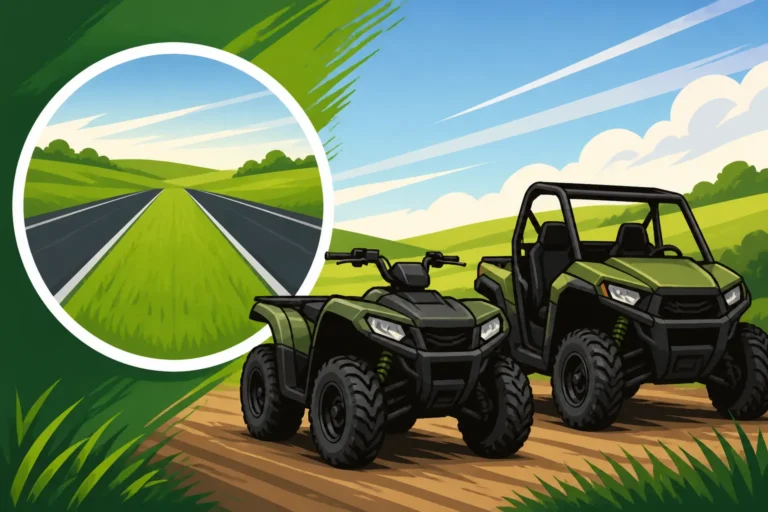
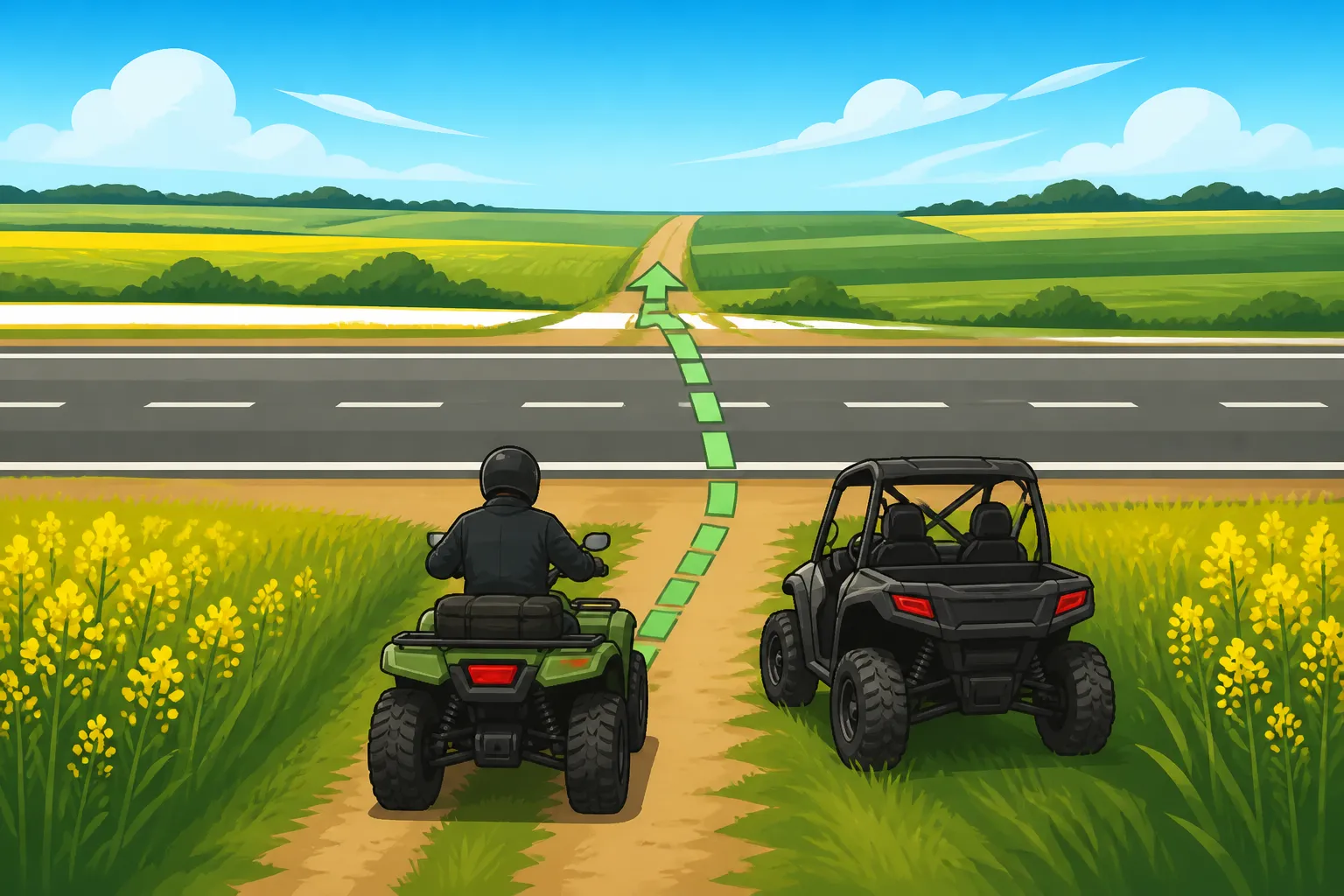
Many riders assume "shortest route" simply means making a straight line across the highway. While often that's the case, the core principle is about minimizing exposure to fast-moving traffic. Imagine you’re at a point where a trail meets a highway, and the next section of trail is directly opposite. In this scenario, yes, crossing as directly as possible, perpendicular to the flow of traffic, would be the shortest route. It means you're in the lanes for the absolute minimum amount of time, reducing the window for potential conflict with oncoming vehicles.
However, "shortest route" also implies the safest shortest route. If crossing dead straight puts you immediately over a blind hill or around a sharp bend where visibility is compromised, that's not truly the safest shortest route. It might mean moving a very short distance along the shoulder to a more visible crossing point, but the act of crossing the actual travel lanes should still be as direct and perpendicular as possible from that chosen point. The intent is to get across quickly, directly, and predictably, so motorists have the best chance to see you and react.
Why This Rule Exists: Safety and Legal Implications
The primary reason for the "shortest route" rule is, unequivocally, safety. ATVs and UTVs are not designed for road travel; they're slower, less visible, and handle differently than cars and trucks on paved surfaces. When you cross a highway, you're placing your machine and yourself in a high-risk environment. By mandating the "shortest route," the Act aims to reduce the duration of this exposure. It's about minimizing the time you are a hazard to yourself and others.
From a legal standpoint, adhering to this rule is not optional. If you're involved in an accident while crossing a highway and you haven't followed the "shortest route" principle, you could be found in violation of the Act, which carries fines and potential liability. This could impact your insurance claim or even lead to civil lawsuits. Peace officers are trained to recognize violations of the [Saskatchewan ATV Road Rules Explained], and an improper crossing is a clear infraction. It’s not just about avoiding a ticket; it’s about upholding your duty of care as an operator and protecting yourself.
Practical Steps for a Safe Crossing
Before you even think about entering the paved portion of a highway, stop completely and assess your surroundings. You need a clear, unobstructed view in both directions. Listen for approaching traffic, as engine noise can give you an early warning. Scan far down the road; remember that vehicles on highways travel at high speeds, covering ground much faster than you might anticipate.
Once you’ve identified a sufficient gap in traffic, engage your lowest gear and accelerate smoothly and consistently across the highway. Don't stop in the middle, and don't weave. Your path should be as straight and direct as possible. For those quick maneuvers, having a well-maintained machine is key; ensuring your throttle response is crisp and reliable can make all the difference. Some riders find that aftermarket accessories, like those from SuperATV, which enhance machine reliability and performance, give them an extra layer of confidence for these critical moments. Once you're safely on the other side, get completely off the travelled portion of the highway as quickly as possible.
Understanding Saskatchewan's Broader Crossing Regulations
Crossing a highway isn't just about the "shortest route"; it's part of a larger set of rules that govern ATV and UTV operation near and on public roads in Saskatchewan. These regulations are designed to provide a framework for predictable and safe interactions between off-road vehicles and conventional road traffic. It’s crucial to understand all components of these rules to ensure you’re operating legally and safely.
Stopping and Dismounting Requirements
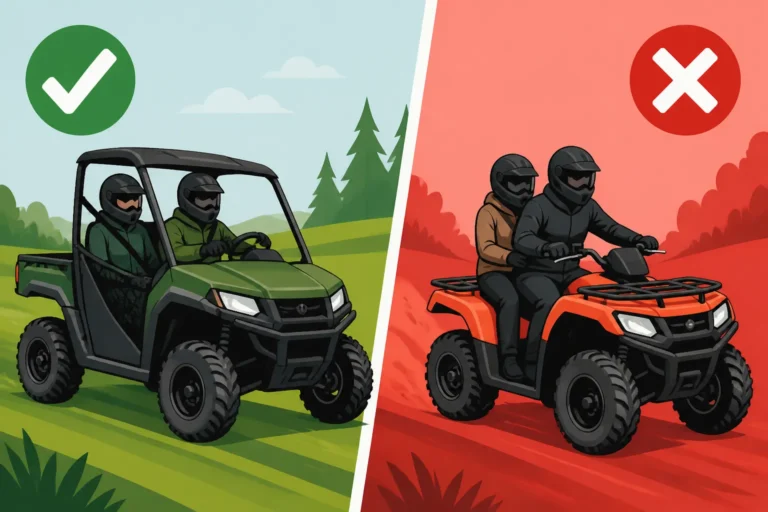
The "shortest route" rule is almost always paired with other critical requirements, specifically the need to come to a complete stop before crossing and, in many cases, for passengers to dismount. The [Saskatchewan Crossings Require Passengers to Dismount] rule is there to reduce risk. Having passengers dismount means there are fewer people exposed to potential harm during the crossing. It also means the operator can focus entirely on the challenging task of crossing, without worrying about a passenger’s balance or reactions.
When you approach a highway, you must bring your ATV or UTV to a full and complete stop at the edge of the travelled portion, ensuring you are off the pavement. This stop allows you to thoroughly check for traffic, estimate speeds, and pick the safest moment to proceed. Rushing this step or rolling slowly into the crossing is a recipe for disaster and a clear violation of the rules. Treat it like a stop sign, but with even greater vigilance due to the nature of your machine and the speed of highway traffic.
Visibility and Safety Gear for Crossings
Being seen is paramount when operating an ATV or UTV, especially when you're interacting with roads. Your machine is smaller than most vehicles, and its profile might not be immediately obvious to motorists, particularly at a distance or in challenging light conditions. This is why proper safety gear and machine visibility enhancements are so important. Always wear a brightly coloured helmet and clothing that contrasts with your surroundings. While not always mandated for all types of crossings, having a highly visible flag mounted on your machine, especially if you're riding in tall grass or brush leading up to the road, can give motorists a precious few extra seconds to spot you.
Consider adding extra lighting if your machine doesn't have sufficient visibility features, particularly if you find yourself needing to cross at dusk or dawn. Strong headlights and taillights, even during the day, can make a difference. Reflective tape on your machine, helmet, or clothing can also significantly increase your conspicuity. The more visible you are, the better your chances are of making a safe crossing without incident. [Saskatchewan Helmet and Eye Protection Rules] are also critical components of personal safety that should never be overlooked, especially when navigating roads.
Legal Consequences of Non-Compliance
Breaking the rules of highway crossings in Saskatchewan can have serious legal consequences. An improper crossing could result in fines, and if you are deemed to have operated negligently, you could face even more severe penalties. For example, if you don't stop, don't dismount a passenger, or fail to cross by the shortest, safest route, you could be ticketed. These fines are often significant, designed to deter risky behaviour.
Beyond the immediate financial penalties, there's the much greater risk of an accident. If an accident occurs and you are found to be in violation of the Act, your liability could be substantial. This means you could be held responsible for damages, injuries, or even fatalities, which could have life-altering financial and personal repercussions. Always err on the side of caution; a few extra seconds of vigilance and adherence to the rules are a small price to pay for your safety and legal protection. Remember, [Saskatchewan Fines Capped at $1,000] for many offences under the Act, but a major accident can incur costs far beyond that.
Navigating Different Highway Types and Scenarios
Not all highways are created equal, and the type of road you're crossing can influence the best way to execute a safe and legal crossing. Understanding these distinctions and knowing how to adapt your approach is key to being a responsible and safe rider in Saskatchewan.
Crossing Divided Highways vs. Undivided Roads
The distinction between divided and undivided highways is critical for ATV crossings. An undivided highway is typically a two-lane road (one lane in each direction) without a physical barrier separating traffic flows. Crossing these usually means you are exposed to traffic from both directions simultaneously for a short period. Your strategy here is about quickly and directly crossing both lanes when clear.
A divided highway, on the other hand, has a median or barrier separating opposing directions of traffic. This might be a grassy strip, a concrete barrier, or even a wide ditch. When crossing a divided highway, you effectively cross one direction of traffic, then pause safely in the median (if it's wide enough and safe to do so), and then cross the second direction of traffic. This allows you to focus on one traffic flow at a time, which can feel less daunting. However, if the median is very narrow or unsafe to stop in, you must treat it like an undivided highway and cross both sections in one swift, safe movement, ensuring both directions are clear. The [Saskatchewan Medians Under 50 Metres] rule specifies that you cannot ride on a median if it is too narrow.
Crossing Near Intersections or Curves
Crossing near intersections or curves presents additional challenges. Near an intersection, traffic patterns become more complex with turning vehicles, merging lanes, and potentially traffic lights. While it might seem like a more controlled environment, it can also mean more variables to contend with. If you must cross near an intersection, ensure you understand the traffic flow and signals, and still prioritize a direct path across.
Crossing near a curve or over a hill crest is particularly dangerous. Visibility is significantly reduced, meaning both you and approaching motorists have less time to react. Never attempt to cross a highway immediately after a blind curve or over a hill. If your desired crossing point is in such a location, it is far safer to travel a short distance along the shoulder (if permissible and safe, perhaps in an unpaved ditch) to a location with ample sightlines in both directions. Your safety depends on being seen, and being able to see.
What to Do If There's No Safe "Shortest Route"
There might be times when you simply cannot find a safe spot to cross. Perhaps traffic is too heavy, visibility is too poor, or there's no suitable shoulder to pull off onto. In these situations, your safety should always be your top priority. Do not force a crossing. It's better to turn back, find an alternate route, or simply wait for conditions to improve. This might mean detouring significantly to find an overpass, an underpass, or a quieter, less-travelled road.
Sometimes, reaching out to local authorities or consulting trail maps in advance can help identify designated crossing points or alternative routes. Riding areas like [Moose Mountain Provincial Park ATV Trails] often have specific designated access and crossing points that are safer and more clearly marked. If you’re unsure, it’s always best to delay your ride or change your plans rather than risking a dangerous highway crossing.
Equipment and Preparation for Highway Crossings
Making a safe highway crossing isn't just about knowing the rules; it's also about having a machine that's ready and a rider who is prepared. A moment of hesitation or a mechanical hiccup during a crossing can have serious consequences, so a bit of planning and maintenance goes a long way.
Machine Readiness for a Quick Cross
Your ATV or UTV needs to be in tip-top shape for any road interaction, especially a highway crossing. Here's what to check:
- Throttle Response: Ensure your throttle is smooth and responsive. You need immediate power to get across quickly. A sluggish throttle could leave you stranded in a traffic lane.
- Brakes: Your brakes should be in excellent working order. While you're accelerating to cross, you might need to stop suddenly if an unseen vehicle appears.
- Tires: Make sure your tires are properly inflated and in good condition. You want maximum traction on pavement for a swift, controlled acceleration. Knobby tires, while great for dirt, can feel a bit squirrely on asphalt, so be prepared for that sensation.
- Engine Performance: A well-tuned engine is essential. You don't want your machine sputtering or stalling in the middle of a busy highway. Regular maintenance, as discussed in [Saskatchewan Annual Maintenance Costs], helps ensure your machine is always ready.
Reliable parts, perhaps sourced from a reputable dealer or a brand like SuperATV known for durable components, can provide peace of mind for those critical moments when you demand immediate performance from your machine.
Rider Preparedness and Awareness
Beyond your machine, your mental state and awareness are perhaps the most crucial elements of a safe highway crossing.
- Stay Focused: Eliminate distractions. Put your phone away, don't engage in conversation just before a crossing, and clear your mind. Your entire focus needs to be on traffic and executing the crossing.
- Anticipate: Don't just react; anticipate. Try to predict what other drivers might do. Are they slowing down? Speeding up? What are the traffic patterns?
- Practice Patience: If you have to wait for an extended period for a safe gap, do so. Rushing indicates impatience, which is a significant factor in many accidents. Sometimes you might need to wait for several minutes for a truly safe window.
- Know Your Limits: Understand your machine's acceleration capabilities and your own reaction time. Don't attempt a crossing if you doubt your ability or your machine's performance.
Think of it like a high-stakes game of chess – you need to think several moves ahead and be fully present in the moment.
Essential Gear for Enhanced Visibility
Making yourself as visible as possible is not just good practice; it's a critical safety measure when near roadways.
| Item | Purpose | When it Helps Most |
|---|---|---|
| High-Visibility Flag | Increases machine profile, especially in tall grass | Approaching highway, crossing, off-road sections |
| Bright Clothing | Makes rider stand out against background | All times, especially in low light |
| Reflective Tape | Catches headlights, increases nighttime visibility | Dusk, dawn, night, cloudy days |
| Working Headlights | Essential for seeing and being seen | All times, especially in low light |
| Working Taillights | Alerts drivers behind you | All times, especially in low light |
| Clear Eye Protection | Ensures unobstructed view, protects eyes | All times |
Having a strong, securely mounted flag can often be the first thing a distant driver sees. Consider a robust flagpole and mount, perhaps one designed for off-road use, to ensure it stays put even on bumpy trails leading to the highway. Always ensure your [Saskatchewan Lighting Requirements on a Machine] are met, especially if you anticipate riding near roads when visibility is less than ideal. Every bit of visibility you can add to yourself and your machine significantly improves your chances of a safe interaction with highway traffic.
Disclaimer
This article is for general informational purposes only and does not constitute professional advice. Laws, prices and regulations vary by location and change over time. Consult a qualified professional for guidance on your specific situation.