Why the Owner Has to Disprove Negligence
It's a familiar scenario for many ATV owners in Saskatchewan: you've generously lent your quad to a friend, or perhaps your teenager is out riding on the family acreage, and then, you get that dreaded call. An incident has occurred, involving your machine, and suddenly, you're facing questions, and potentially, serious legal and financial repercussions. It's a frustrating, often bewildering situation, especially when you weren't even the one operating the ATV. This guide is designed to unpack a crucial aspect of Saskatchewan's ATV laws: why, under certain circumstances, you, as the owner, might find yourself having to actively disprove your own negligence, rather than the burden of proof resting solely on the shoulders of the person alleging fault.
Understanding Owner Liability Under Saskatchewan's All Terrain Vehicles Act
In Saskatchewan, owning an ATV comes with a unique set of responsibilities, particularly when your machine is involved in an incident. While we might assume that the person driving the ATV at the time of an accident is always the one solely responsible, the All Terrain Vehicles Act (also known as the ATV Act) introduces a concept that places a significant burden on the owner. This can feel inherently unfair, especially if you pride yourself on being a responsible owner who cares for your equipment and ensures riders are safe.
This isn't just a minor detail; it's a fundamental difference from how liability is often handled with other types of vehicles. Unlike a situation where a car owner might simply say, "I wasn't driving," and let the driver take full responsibility, the ATV Act creates a presumption of owner liability. This means if your ATV is involved in an incident causing damage or injury, the legal system might initially point to you, the owner, as responsible, and it's up to you to demonstrate otherwise. It’s a bit of a curveball that many folks don't anticipate until they're in the thick of it.
The Legal Framework and the "Reverse Onus"
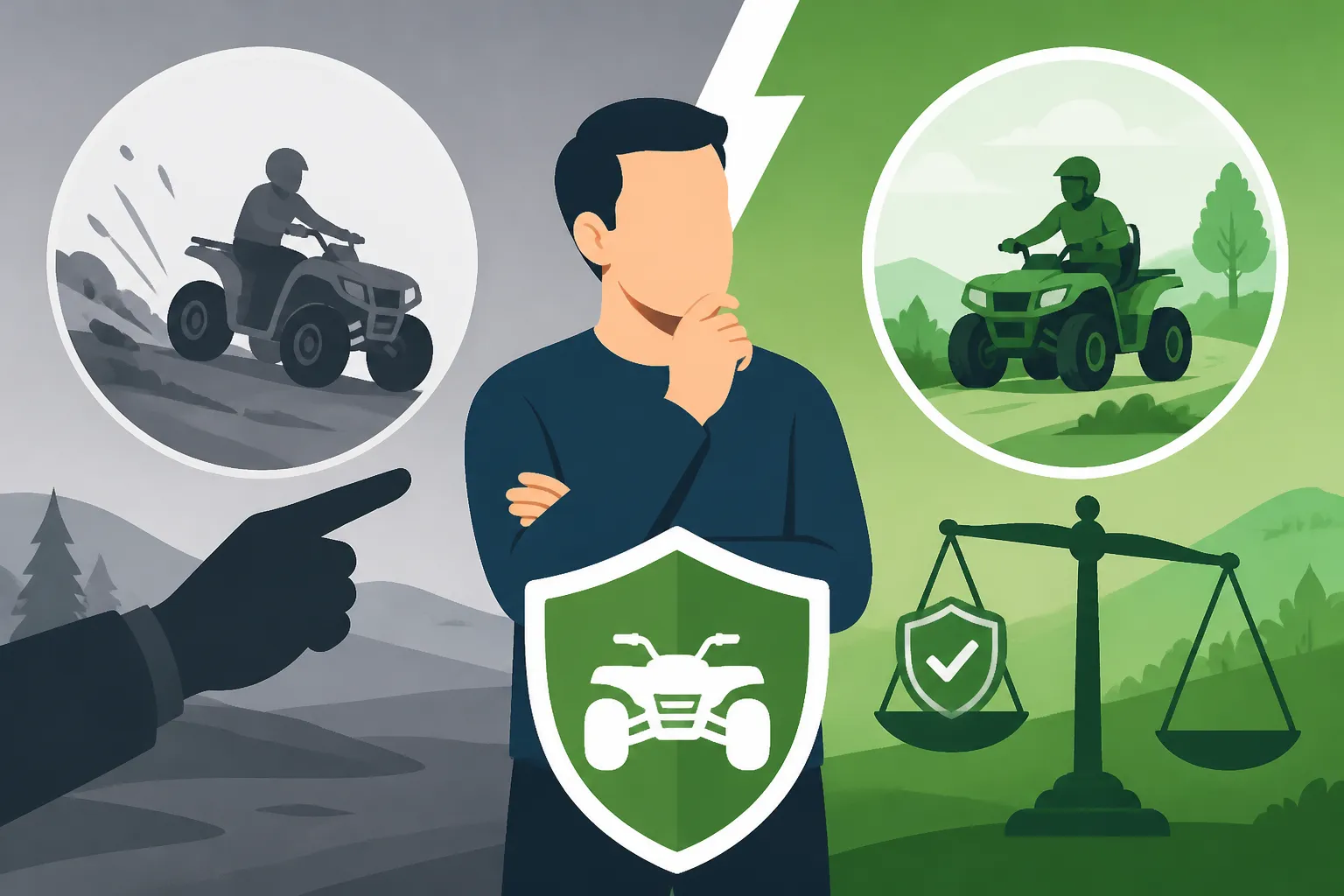
The core of this owner liability comes down to Section 24 of [Saskatchewan's All Terrain Vehicles Act]. This section basically states that if an ATV is involved in an incident that causes injury or damage, the owner of that ATV is presumed to be liable. Yes, you read that right – presumed liable. This legal principle is often referred to as a "reverse onus." In most legal cases, the person making a claim (the plaintiff) has to prove that the other party (the defendant) was negligent. However, under the ATV Act, the "onus" or burden of proof is "reversed." The owner is presumed to be at fault unless they can prove that they were not negligent and that the damage or injury did not arise from their own fault or improper conduct.
Imagine you've lent your quad to your cousin for a day of ditch riding, and they get into an accident with another machine. Even though your cousin was operating the ATV, you, as the owner, could be dragged into the legal proceedings with an initial presumption of fault. It's not enough to simply point the finger at the driver; you have to actively demonstrate your own innocence, which can be a much tougher hill to climb. This is why understanding the specific requirements for disproving negligence is so vital for every ATV owner in the province. It fundamentally shifts the responsibility onto your shoulders to show you did everything right.
When Owner Liability Kicks In
So, what kinds of situations trigger this owner liability clause? It's broader than you might think. Any incident involving your ATV that results in injury to a person or damage to property can potentially bring Section 24 into play. This includes scenarios like:
- Lending Your ATV: If you lend your quad to a friend, family member, or even an acquaintance, and they cause an accident, you could be held liable. The fact that you weren't operating the machine doesn't automatically absolve you.
- Youth Riders: If your child or another young person is operating your ATV and is involved in an incident, you as the owner (and likely supervisor) bear a significant burden. The Act has specific [Saskatchewan's 365-Day Supervisor Rule] requirements for young riders that, if not followed, could easily lead to a finding of owner negligence.
- Rental Fleets or Business Use: For businesses that rent out ATVs or use them for commercial purposes, the stakes are even higher. Ensuring proper maintenance, training, and documentation for every machine and every renter is paramount. [Saskatchewan Paperwork for a Rental Fleet] can be extensive to protect against this very scenario.
- Unsupervised Riding: Even if someone takes your ATV without your explicit permission, proving you were not negligent in its storage or security can be a challenge.
In each of these situations, the owner is essentially placed in the hot seat, requiring them to gather evidence and present a compelling case to demonstrate they were not at fault. This underscores the need for proactive measures and a clear understanding of your duties as an ATV owner in Saskatchewan.
What Does "Disprove Negligence" Really Mean?
When the law puts the onus on you to "disprove negligence," it's not asking you to simply say, "It wasn't my fault." It's asking for concrete evidence and a demonstration of due diligence, care, and responsibility on your part leading up to and including the time of the incident. This is a significant legal challenge, as you are essentially proving a negative – that you didn't do anything wrong.
Think of it like this: if someone tripped on your property, you'd have to prove you kept the area safe. Here, if your ATV causes damage, you have to prove you were a responsible owner who took all reasonable steps to prevent that damage. This burden can be incredibly stressful and time-consuming, requiring you to recall details and provide documentation that you might not normally think to keep. It's precisely why a proactive approach to ATV ownership is so critical here in Saskatchewan.
Proving Due Diligence and Care
To successfully disprove negligence, you need to show that you exercised a reasonable standard of care in relation to your ATV and its operation. This means more than just occasionally checking the oil. It involves a systematic approach to responsible ownership. Here are some key areas where you can demonstrate due diligence:
- Rider Qualification: Did you ensure the person operating your ATV was competent, sober, and legally allowed to ride? This includes checking if they possess a valid driver's license (if required for the riding area) and if they understood [Saskatchewan ATV Road Rules Explained] or any specific local bylaws. For youth riders, did you adhere to [Saskatchewan Rules for a 12-Year-Old Rider] and ensure a qualified supervisor was present?
- Machine Maintenance: Was your ATV in good working order? Regular maintenance, ensuring brakes, tires, lights, and steering were all functioning correctly, is essential. For example, using reliable, high-performance parts from a brand like SuperATV for critical components can be part of demonstrating that you've invested in the safety and reliability of your machine. Keeping records of service and repairs can be invaluable here.
- Safety Gear: Did you provide or require the rider to wear appropriate safety gear, such as an approved helmet and eye protection, as mandated by [Saskatchewan Helmet and Eye Protection Rules]? If a rider was injured while not wearing a helmet you provided, it would be difficult to disprove your negligence.
- Instructions and Warnings: Did you provide clear instructions to the rider regarding safe operation, speed limits, and any known hazards of the machine or the riding area? Documenting these discussions, even informally, can support your case.
By actively demonstrating that you took these steps, you are building a defense against the presumption of negligence. It's about showing that you didn't just hand over the keys; you handed over a well-maintained machine to a capable, informed rider, with appropriate safety precautions in place.
Documenting Your Steps
This might sound like a lot of paperwork for what's supposed to be a fun recreational activity, but documentation is your best friend when faced with a reverse onus. Memories fade, and oral agreements can be disputed, but written records provide tangible proof of your due diligence.
Consider these types of documentation:
- Written Lending Agreements: Even a simple, signed document outlining the terms of lending your ATV, including expectations for safe operation, designated riding areas, and required safety gear, can be extremely helpful.
- Maintenance Logs: A logbook detailing oil changes, brake inspections, tire replacements (perhaps noting you used durable SuperATV tires), and any repairs, along with dates and mileage, proves you kept the machine in good condition. Keep receipts for parts and services.
- Safety Instruction Records: If you've given formal safety instructions, perhaps even had the rider watch a safety video or review specific rules, make a note of it. For youth, records of safety courses (like those satisfying [Saskatchewan Youth Certification Options]) are crucial.
- Proof of Insurance: Always ensure you have adequate liability insurance for your ATV. This is not only a good practice but also a requirement in many scenarios. Keep your insurance policy and proof of coverage accessible, as [Saskatchewan Insurance Proof on the Trail] is something an officer might ask for.
- Photos and Videos: Before lending your ATV, taking dated photos or videos of its condition, the safety gear provided, and even the rider demonstrating their understanding of basic safety can serve as visual evidence of your care.
It might seem excessive, but in a legal battle where you have to disprove negligence, having a robust paper trail and photographic evidence can be the difference between successfully defending yourself and facing significant liability.
Practical Steps to Protect Yourself as an ATV Owner
As a Saskatchewan ATV owner, the unique "reverse onus" means you need to be proactive to safeguard yourself from potential liability. It's not about being distrustful, but about being realistic and responsible. Taking preventative measures can save you immense stress and financial burden down the road.
Insurance is Your First Line of Defense
Without a doubt, having robust liability insurance is the single most important step you can take to protect yourself. While [Saskatchewan Does Not Register ATVs] provincially and therefore doesn't have a province-wide mandatory registration-linked insurance scheme like snowmobiles do (check out [Saskatchewan Snowmobile Registration Compared]), having private liability coverage is still a crucial requirement for operating on many lands, including provincial parks and public roads where permitted.
Many owners mistakenly believe that because there's no provincial registration, there's no real need for insurance. This simply isn't true. [Saskatchewan's Minimum Insurance Requirement] for off-road vehicles is there for a reason. Imagine an incident where your ATV causes significant injury or property damage; without insurance, you could be personally on the hook for hundreds of thousands, or even millions, of dollars in legal fees and settlements. Speak to a broker who understands ATV liability; they can help you understand options like theft coverage for a quad kept in a farm shed or the specific implications of [Who Pays When a Borrower Crashes Your Saskatchewan Quad?]. A good policy will cover legal defense costs and any judgments against you, providing a critical safety net against the "reverse onus."
Clear Agreements and Supervision
When you allow someone else to operate your ATV, establish clear expectations. This is especially vital for family members and friends.
- For Friends and Borrowers: Draft a simple lending agreement. This doesn't have to be a complex legal document, but it should cover:
- Who is permitted to ride the ATV.
- Where they are permitted to ride (e.g., only on private land, specific trails).
- Confirmation that they understand and will abide by all [Saskatchewan ATV Age Requirements], helmet laws, and other operating rules.
- Acknowledgement that they will report any incidents immediately.
- Confirmation they have their own insurance or are covered by yours (clarify this with your insurer).
- For Youth Riders: If you have a child riding your ATV, your responsibilities are amplified. The Act is very clear about [Saskatchewan Rules for a 12-Year-Old Rider] and older, requiring adult supervision (specifically, a supervisor who has held a valid driver's license for at least 365 days). Ensure this supervisor is truly competent and actively engaged in supervising. Some youth may also be able to complete approved safety courses, which can provide an exception to the direct supervision rule in certain circumstances. This goes a long way in demonstrating you took all reasonable steps to ensure their safety and compliance with the law.
Pre-Ride Checks and Maintenance
Before any ride, whether it's by you or someone else, a thorough pre-ride check is non-negotiable. This isn't just about fun; it's about safety and liability.
ATV Pre-Ride Checklist Example
| Component | Check Point | How it Disproves Negligence |
|---|---|---|
| Tires | Pressure, tread depth, punctures, damage. | Ensures proper traction and handling, preventing blowouts or loss of control. |
| Brakes | Front and rear brake function, fluid levels, pad wear. | Confirms ability to stop safely, crucial for preventing collisions. |
| Steering | Free play, smooth operation, no binding or looseness. | Verifies responsive control, preventing sudden loss of direction. |
| Lights | Headlights, taillights, brake lights functioning. | Ensures visibility, especially in low light or for [Saskatchewan Night Travel Direction Rules]. |
| Fluids | Oil, coolant, fuel levels (no leaks). | Prevents engine damage or breakdown that could lead to an incident. |
| Throttle | Smooth operation, no sticking. | Ensures predictable acceleration and deceleration. |
| Frame/Suspension | No cracks, bends, loose fasteners, proper shock function. | Guarantees structural integrity and stable ride. |
| Safety Gear | Helmets, eye protection, appropriate clothing available and undamaged. | Confirms compliance with [Saskatchewan Helmet and Eye Protection Rules] and reduces injury severity. |
Regular, documented maintenance is equally important. Keep receipts for parts, especially for safety-critical components. For example, if you replace worn suspension components or upgrade to more robust A-arms from a brand like SuperATV, document it. This shows you're not cutting corners and actively investing in the safe operation of your machine. An ATV that is poorly maintained suggests negligence on the owner's part, making it much harder to argue your case if an incident occurs.
The Impact of Not Disproving Negligence
The "reverse onus" isn't just a legal curiosity; it has very real, very severe consequences if you, as the ATV owner, fail to disprove your negligence after an incident. This isn't just about a slap on the wrist; it can fundamentally alter your financial well-being and future.
The system is designed to hold owners accountable, and without clear evidence of your due diligence, the presumption of fault can stick, leaving you vulnerable to significant penalties. This is why all the preventative measures discussed earlier are not just good practice, but essential self-preservation. It's tough to face a situation where you weren't the one actively involved in an accident, but are still held responsible for the aftermath.
Financial and Legal Consequences
If a court determines that you, the owner, failed to disprove your negligence, the financial and legal ramifications can be staggering:
- Civil Lawsuits: This is often the biggest risk. You could be sued for damages related to personal injury, medical expenses, lost wages, pain and suffering, and property damage. These claims can easily escalate into hundreds of thousands, or even millions, of dollars. Without adequate insurance (or if your insurance denies coverage due to negligence on your part), you would be personally responsible for these costs, potentially leading to the loss of assets, garnishment of wages, or even bankruptcy. Understanding [Saskatchewan Owner Liability Rules] is paramount.
- Fines and Penalties: While civil lawsuits deal with compensation for damages, you could also face fines under the All Terrain Vehicles Act itself for various infractions related to how the ATV was operated, maintained, or supervised. While specific fine amounts are not stated here, they can be substantial, adding another layer of financial burden.
- Legal Fees: Even if you eventually succeed in defending yourself, the cost of legal representation can be astronomical. The process of gathering evidence, attending court, and paying for lawyers can quickly drain your savings. This is another area where good insurance helps, often covering legal defense costs.
The prospect of facing these consequences can be incredibly stressful, demonstrating why understanding and proactively addressing the "reverse onus" is so crucial for every ATV owner in Saskatchewan.
Reputation and Future Implications
Beyond the immediate financial and legal hit, failing to disprove negligence can have long-lasting effects on your reputation and future opportunities.
- Increased Insurance Premiums: If you are found liable for an ATV incident, your insurance premiums, for not just your ATV but potentially other vehicles as well, could skyrocket. Some insurers might even refuse to cover you altogether, making it difficult to find future coverage. This makes it harder and more expensive to enjoy your recreational activities.
- Difficulty Obtaining Loans or Credit: A significant civil judgment against you can negatively impact your credit rating, making it harder to secure loans for homes, vehicles, or even business ventures in the future. Lenders look for financial stability, and a judgment of negligence can signal a high-risk individual.
- Personal and Community Standing: While less tangible, a finding of negligence, especially in a serious incident, can affect your standing within your community and among your peers. People might be hesitant to lend you equipment or allow you to participate in group rides, for fear of association with someone deemed irresponsible.
- Impact on Business: For those who use ATVs for business, a finding of owner negligence can severely damage the business's reputation, leading to loss of clients, reduced revenue, and even potential closure.
In essence, the "reverse onus" isn't a minor administrative detail. It’s a powerful legal tool that places a heavy responsibility on ATV owners. By understanding its implications and taking proactive steps—like ensuring proper maintenance (perhaps with durable SuperATV components), clear agreements, and robust insurance—you can navigate the complexities of ATV ownership in Saskatchewan with greater peace of mind and protection.
Disclaimer
This article is for general informational purposes only and does not constitute professional advice. Laws, prices and regulations vary by location and change over time. Consult a qualified professional for guidance on your specific situation.