Proof Carried on the Machine
One of the biggest head-scratchers for ATV and UTV riders in Saskatchewan is figuring out what documents you actually need to carry when you head out on the trails, the ditches, or even just across the farm. With no provincial registration for quads, many riders mistakenly believe they don't need any paperwork, leading to frustrating encounters with peace officers or park staff. This guide aims to clear up that confusion, detailing precisely what proof you should have on your machine at all times to ensure your ride is smooth and worry-free.
Why Paperwork Matters Even Without Registration
It’s a common misconception that because Saskatchewan doesn't have a province-wide registration or license plate system for ATVs and UTVs, you can just hop on and go. While it's true that you won't be asked to show a provincial registration sticker or plate like snowmobilers are, that doesn't mean you're off the hook entirely. The All Terrain Vehicles Act still governs how and where you can ride, and it grants peace officers the authority to request certain documentation. Ignoring these requirements can turn a pleasant afternoon ride into a costly lesson, so understanding the nuances is crucial.
Beyond the Registration Myth
The absence of a provincial ATV registry often creates a sense of legal ambiguity. Riders hear "no registration" and interpret it as "no rules," or at least "no paperwork." This couldn't be further from the truth. While the province decided against establishing a universal quad registry (a fact that still leaves many scratching their heads), they certainly didn't abandon all oversight of off-road vehicle use. Instead, the focus shifted to other forms of accountability and safety. Think of it less as a free-for-all and more as a different kind of regulated environment where other proofs of compliance take center stage.
For instance, proving ownership becomes incredibly important when you don't have a provincial title or registration. Without that official government-issued document, a simple bill of sale is your primary evidence. This is especially critical if your machine is ever stolen, or if you need to [How to Prove You Own an ATV in Saskatchewan] to a buyer. A properly completed [Saskatchewan Bills of Sale Do the Work] acts as your primary legal tie to the machine, making it indispensable for proving your rights to the property.
Legal Requirements Beyond the Vehicle Itself
Even if your ATV doesn't need a plate, you as the operator still need to comply with specific laws. This includes having a valid driver's license and, perhaps most importantly, proof of liability insurance. The province requires a minimum amount of liability coverage to protect against property damage or injury you might cause while operating your ATV. An officer's primary concern isn't whether your quad is registered, but whether you, the rider, are authorized to operate a motor vehicle and whether you have the financial backing to cover potential incidents.
When a peace officer stops you, whether it's on a rural grid road or near a provincial park, their immediate priority is to ensure you're riding legally and safely. They're looking to confirm your identity, your eligibility to operate the machine, and that you meet the mandatory insurance requirements. If you can't produce these core documents, you're not only facing potential fines but also the risk of having your machine seized. It’s a reality check that often catches unsuspecting riders off guard, highlighting why understanding [What an Officer Can Ask to See on a Grid Road] is so important.
Essential Documents for Every Saskatchewan Rider
Okay, so we've established that no registration doesn't mean no paperwork. But what exactly should you have on you? This is where many riders get anxious, worrying about missing a critical piece of information. The good news is that the list of truly essential, province-wide documents isn't overwhelmingly long. Focusing on these core items will cover the vast majority of scenarios you might encounter while enjoying Saskatchewan's varied terrain.
Your Driver's Licence
This is non-negotiable. If you're operating an ATV or UTV in Saskatchewan, you need a valid driver's license. It’s no different than driving your car or truck. The All Terrain Vehicles Act is quite clear on this: the operator must hold a valid driver's licence. This isn't just about proving who you are; it's about proving you have the basic competency and legal authority to operate a motor vehicle. Whether you're a seasoned rider or just got your first quad, make sure your licence is current and with you.
There are specific age requirements for riders, and these tie directly into the licence requirement. Generally, operators must be at least 16 years old to ride independently and hold a valid licence. However, there are exceptions for younger riders (12-15 years old) if they are supervised by a licensed adult who has held their licence for at least 365 days, or if they’ve completed an approved safety course. Regardless of age or exception, the supervising adult's licence or the youth's certification documentation becomes part of the essential paperwork for that ride. Understanding [Do You Need a Licence for an ATV in Saskatchewan?] is paramount for all riders.
Proof of Insurance
Next up, and equally critical, is proof of insurance. Unlike car insurance, which is often bundled with registration, ATV insurance in Saskatchewan needs to be managed separately because of the lack of provincial registration. Every ATV and UTV operated in Saskatchewan must carry a minimum amount of third-party liability insurance, which is usually $200,000. This coverage protects you if you cause an accident resulting in injury or property damage to someone else. It's a fundamental aspect of responsible riding, ensuring that if something goes wrong, you're not facing crippling financial consequences.
Your insurance company will provide you with an insurance card or a pink slip that serves as official proof of your coverage. This is the document a peace officer or park warden will ask to see if they stop you. It's vital that this card is current and clearly shows the policy number, coverage dates, and details of the insured machine. While many riders carry liability insurance through their homeowner's policy or a specific off-road vehicle policy, it’s imperative to carry the physical (or easily accessible digital) proof. For details on what the province expects, you'll want to review [Saskatchewan Insurance Requirements for Riders] to make sure you're properly covered and have the right documents in hand.
Proof of Ownership
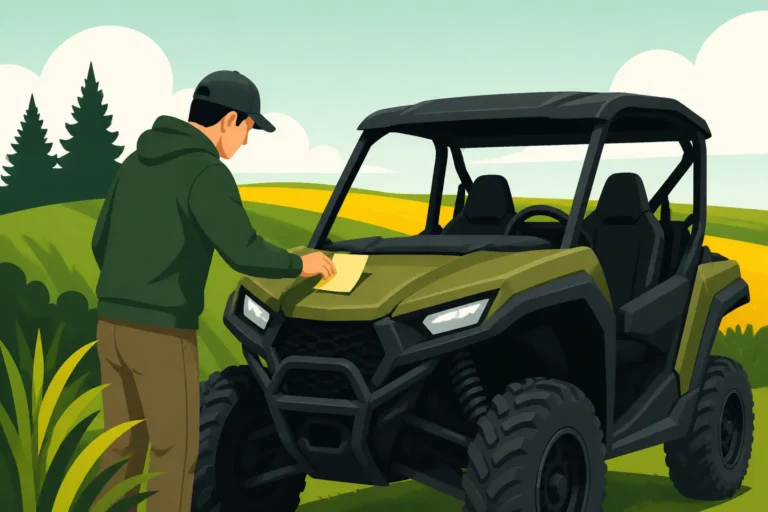
Since there's no provincial registration that typically serves as proof of ownership for ATVs, your bill of sale is the single most important document for demonstrating you own your machine. This isn't just about avoiding a ticket; it's crucial for legal protection. If your ATV is stolen, providing law enforcement with a detailed bill of sale can significantly aid in its recovery. It also prevents any confusion or dispute about ownership if you're trying to cross borders or sell your machine down the line.
A good bill of sale should include the date of sale, the full names and contact information of both the buyer and seller, a detailed description of the ATV (make, model, year, and crucially, the Vehicle Identification Number or VIN), the purchase price, and signatures from both parties. Even if you bought your machine new from a dealer, keep that original sales contract. If you're purchasing from a private seller, take the time to create a thorough, signed bill of sale. [Saskatchewan Proof of Ownership Without a Registry] emphasizes that this document is your primary legal link to your quad. If you've accessorized your machine with parts from a company like SuperATV, keeping their receipts for those items can also bolster your overall proof of investment, though the bill of sale for the machine itself remains paramount.
Youth Safety Certification (If Applicable)
For younger riders, specifically those between the ages of 12 and 15, additional documentation might be necessary. While a 12-year-old cannot legally operate an ATV independently, they can do so under specific conditions. One of these conditions is that they have successfully completed an approved ATV safety course. If this applies to a rider in your group, ensure they have their youth safety certification card or document with them. This proves they've received formal training and understand safe operating practices, satisfying one of the key requirements of the Act for underage operators.
The certificate should be from an organization recognized by the province's Administrator under the All Terrain Vehicles Act. This usually means a course from a reputable safety council. This document acts as an official endorsement of their readiness to operate the machine under supervision, and it’s a critical piece of the puzzle for families who ride together. Without it, or without proper supervision by an adult who has held a licence for 365 days, a young rider is technically operating illegally, which could lead to fines for the supervisor. Having this paperwork on hand, like the other essential documents, saves a lot of potential headaches. For more on what's accepted, you might look into [Saskatchewan Youth Certification Options].
Specific Scenarios Requiring Additional Proof
While the driver's licence, proof of insurance, and bill of sale cover most general riding situations, there are several specific scenarios in Saskatchewan where you’ll need to carry extra documentation. These often depend on where you're riding, who you are, or what you're doing. Being prepared for these situations means understanding the local rules and having the specific permits or permissions required for those particular circumstances.
Municipal Plates and Permits
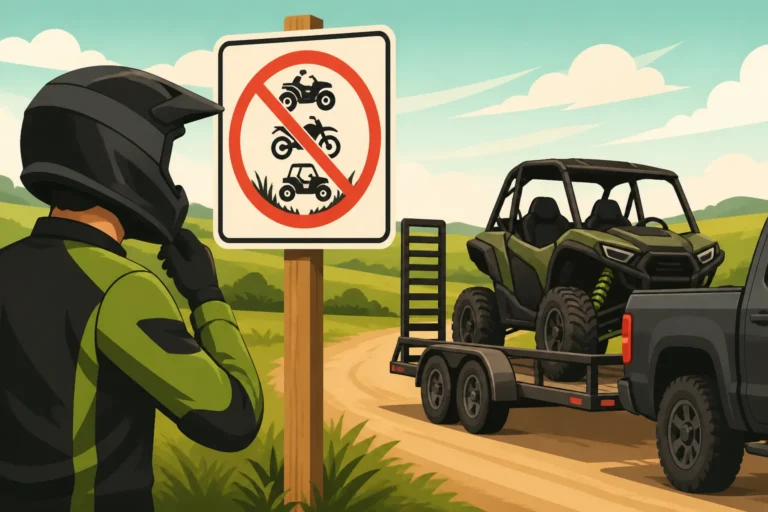
Some municipalities in Saskatchewan have taken it upon themselves to create their own local ATV registration or permitting schemes. These are typically smaller towns or rural municipalities, often in popular recreational areas, that have bylaws allowing ATVs on certain roads or ditches, but they require a local permit or plate for identification and to fund local trail maintenance. If you plan to ride within the boundaries of one of these municipalities, you absolutely need to check their specific bylaws and acquire the necessary municipal plate or permit.
For example, communities like Candle Lake or the District of Lakeland have their own systems. These municipal plates usually have an annual fee and an expiry date. They are distinct from a provincial registration (which, again, doesn't exist for ATVs), but they are legally binding within that specific municipal jurisdiction. Failing to display a required municipal plate or carry proof of permit could result in a local bylaw infraction. So, before you load up your quad for a trip to a new area, always do a quick search for "ATV bylaws" for that specific town or RM. [Saskatchewan Municipal Plate Schemes] provides a good overview, and you might find that [Candle Lake Charges $25 for an ATV Permit] is an expense you need to factor in.
Provincial Park Permits and Acknowledgment Forms
If your riding plans involve heading into a provincial park with designated ATV trails, you'll likely encounter another layer of documentation. While many Saskatchewan provincial parks don't require a special permit for ATVs in the same way they do for snowmobiles, some might require you to sign an "ATV Use Acknowledgment Form" or participate in a brief information session before you hit the trails. This form confirms that you understand and agree to abide by the park's specific rules and regulations for ATV use, which often include speed limits, designated trail use only, and rules regarding environmental protection.
Parks like Moose Mountain Provincial Park, for instance, have dedicated ATV trails and might have specific procedures for riders. These acknowledgements or free permits ensure you're aware of park-specific guidelines, such as washing your machine to prevent the spread of invasive species, or respecting wildlife corridors. It's not a "registration" but a form of informed consent for park access. Always check the specific provincial park's website or call their office before you visit. While [Saskatchewan Park Permits That Cost Nothing] in some areas, the obligation to complete paperwork might still be there, and it’s important to honour it.
Crown Land Access and Grazing Leases
Riding on Crown land in Saskatchewan is a privilege, not a right, and it often comes with specific access rules. While many areas are generally open to responsible ATV use, there can be closures due to wildfire risk, environmental sensitivity, or other administrative orders. Sometimes, Crown land is under a grazing lease, meaning it's managed by a rancher or farmer for livestock. In these cases, you often need permission from the leaseholder to cross or ride on their leased land, even though it's technically Crown land. This permission, ideally in writing, prevents potential trespass issues.
Similarly, if you're riding on private land that isn't your own, common courtesy and legal prudence dictate that you obtain permission from the landowner. While a handshake might suffice for a neighbour, for longer or more frequent access, a written note or a simple text message exchange can save a lot of grief. This is especially true if you're using your ATV for activities like hunting or accessing a remote cabin. [Getting Written Permission From a Farm Landowner] is a piece of advice that can prevent awkward encounters and potential legal disputes, keeping you on good terms with local residents.
Out-of-Province Riders
Visitors to Saskatchewan with their ATVs might have different questions about what to carry. The good news is that if you're visiting from another province or territory, Saskatchewan's All Terrain Vehicles Act generally allows you to operate your machine here using your home province's operator's licence and insurance coverage. There's no requirement to register your out-of-province ATV in Saskatchewan, nor do you need to obtain a Saskatchewan driver's licence specifically for ATV use.
However, you must still comply with all other Saskatchewan ATV laws, including age restrictions, helmet rules, and operational requirements. The crucial part is that you must carry proof of your valid driver's licence from your home jurisdiction and proof of valid third-party liability insurance from your home province. The minimum coverage amount should meet or exceed Saskatchewan's requirements ($200,000). Always have these documents readily available. If you're coming from Alberta, Manitoba, or Montana, understanding [Saskatchewan Rules for an Out-of-Province Machine] will help ensure a seamless visit.
Tips for Keeping Your Documents Safe and Accessible
You know what to carry, but how you carry it is just as important. The last thing you want is to be fumbling through wet pockets or a muddy backpack while a peace officer waits patiently. Having your documents organized, protected, and easily accessible not only shows you're prepared but also respects the officer's time. Plus, it protects your valuable paperwork from the elements.
Protect Against the Elements
Riding an ATV often means encountering dust, mud, water, and varying weather conditions. Your paper documents are extremely vulnerable to these elements. Invest in waterproof bags or pouches specifically designed for documents. Laminating copies of your essential papers (like your insurance card or youth certification) is another excellent way to ensure they remain legible. Keep your original driver's licence separate in a secure, waterproof wallet or pocket on your person, not just in a storage compartment on the quad where it might bounce out or get wet.
Consider using a small, hard-shell case or a durable, waterproof storage box that can be securely mounted to your ATV or UTV. Many manufacturers, including accessory brands like SuperATV, offer robust storage solutions that are perfect for keeping documents, first-aid kits, and other essentials dry and safe. The goal is to prevent your critical paperwork from becoming a soggy, illegible mess, which could cause just as much trouble as not having it at all.
Create a "Trail Kit" of Documents
Instead of scrambling every time you head out, assemble a dedicated "trail kit" for your documents. This could be a small, waterproof pouch containing:
- A clear, legible photocopy of your driver's licence (still carry your original on your person).
- Your original proof of insurance card.
- A copy of your bill of sale for the ATV.
- Any relevant municipal permits or park acknowledgment forms.
- Youth safety certification, if applicable.
- Written permission for private or leased Crown land, if needed.
Keep this kit in a consistent, easily accessible spot on your machine—perhaps in a glove box, a small storage compartment, or a tank bag. This way, you're always prepared, and you don't have to worry about forgetting something important each time you ride. It saves time and stress, allowing you to focus on the joy of the ride rather than the anxiety of potential stops.
Digital Copies as a Backup
While physical documents are generally preferred by law enforcement for immediate verification, having digital copies of your essential documents on your phone can serve as a valuable backup. Take clear photos or scan your driver's licence, insurance card, bill of sale, and any permits. Store them in a dedicated folder on your phone or in a cloud service that you can access even without cell service (if you’ve downloaded them).
However, remember that a digital copy is typically not sufficient on its own, especially for your driver's licence or official permits. Your phone battery could die, or you might be in an area with no signal. Treat digital copies as a helpful secondary resource rather than a primary solution. Always aim to have the required physical documents on hand, especially the ones that identify you and your insurance coverage.
| Document Type | Always Carry? | When Else Might You Need It? | Protection Tip |
|---|---|---|---|
| Driver's Licence | Yes | (N/A) | Keep original on your person, waterproof wallet |
| Proof of Insurance | Yes | Showing to a park officer | Laminated copy, waterproof pouch |
| Proof of Ownership | Yes | Selling the machine, theft recovery | Laminated copy or original in waterproof kit |
| Youth Safety Certification | If applicable | Youth riding with supervisor or safety course | Laminated copy, waterproof pouch |
| Municipal Permit/Plate | If applicable | Riding in specific towns/RMs (e.g., Candle Lake) | Display plate clearly, carry permit proof |
| Park Acknowledgment/Permit | If applicable | Riding in designated provincial parks | Waterproof pouch with trail kit |
| Private/Lease Land Consent | If applicable | Accessing non-public land | Waterproof pouch with trail kit |
| Out-of-Province Docs | If applicable | Visiting Saskatchewan from another jurisdiction | Keep originals on person, waterproof wallet |
This comprehensive approach to document management will ensure that you’re always in compliance, ready for any interaction with authorities, and ultimately, free to enjoy the vast and beautiful riding opportunities Saskatchewan has to offer. Don't let a small paperwork oversight spoil your adventure!
Disclaimer
This article is for general informational purposes only and does not constitute professional advice. Laws, prices and regulations vary by location and change over time. Consult a qualified professional for guidance on your specific situation.