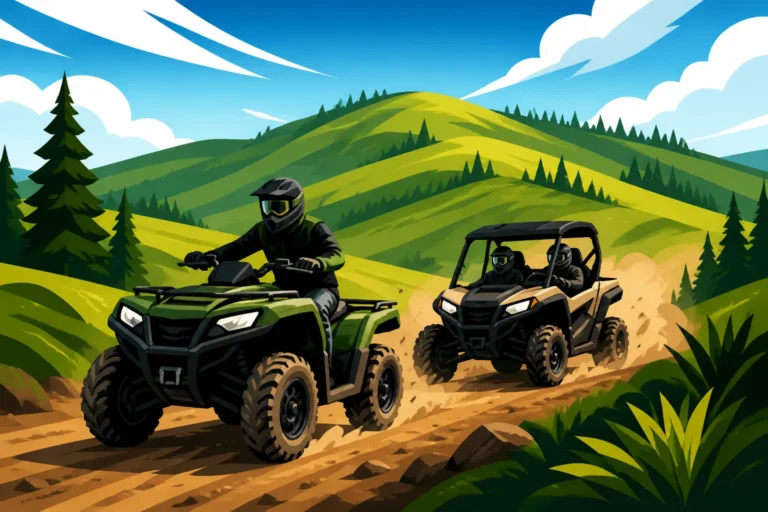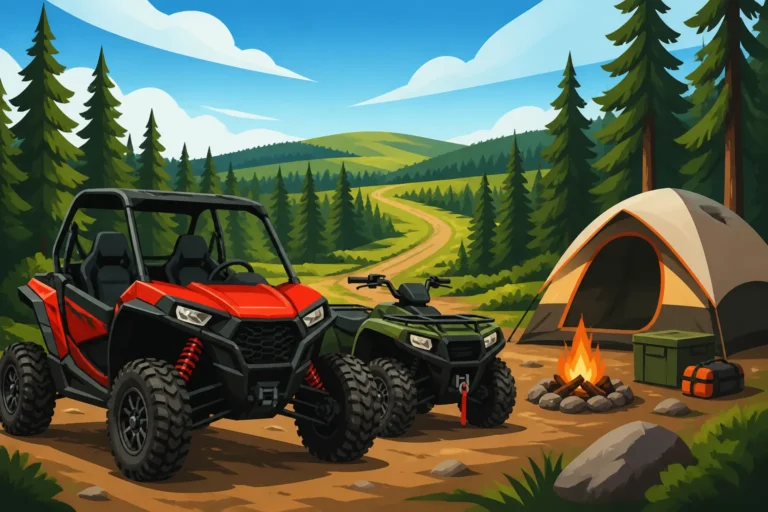
Saskatchewan Riding Near Kenosee Lake
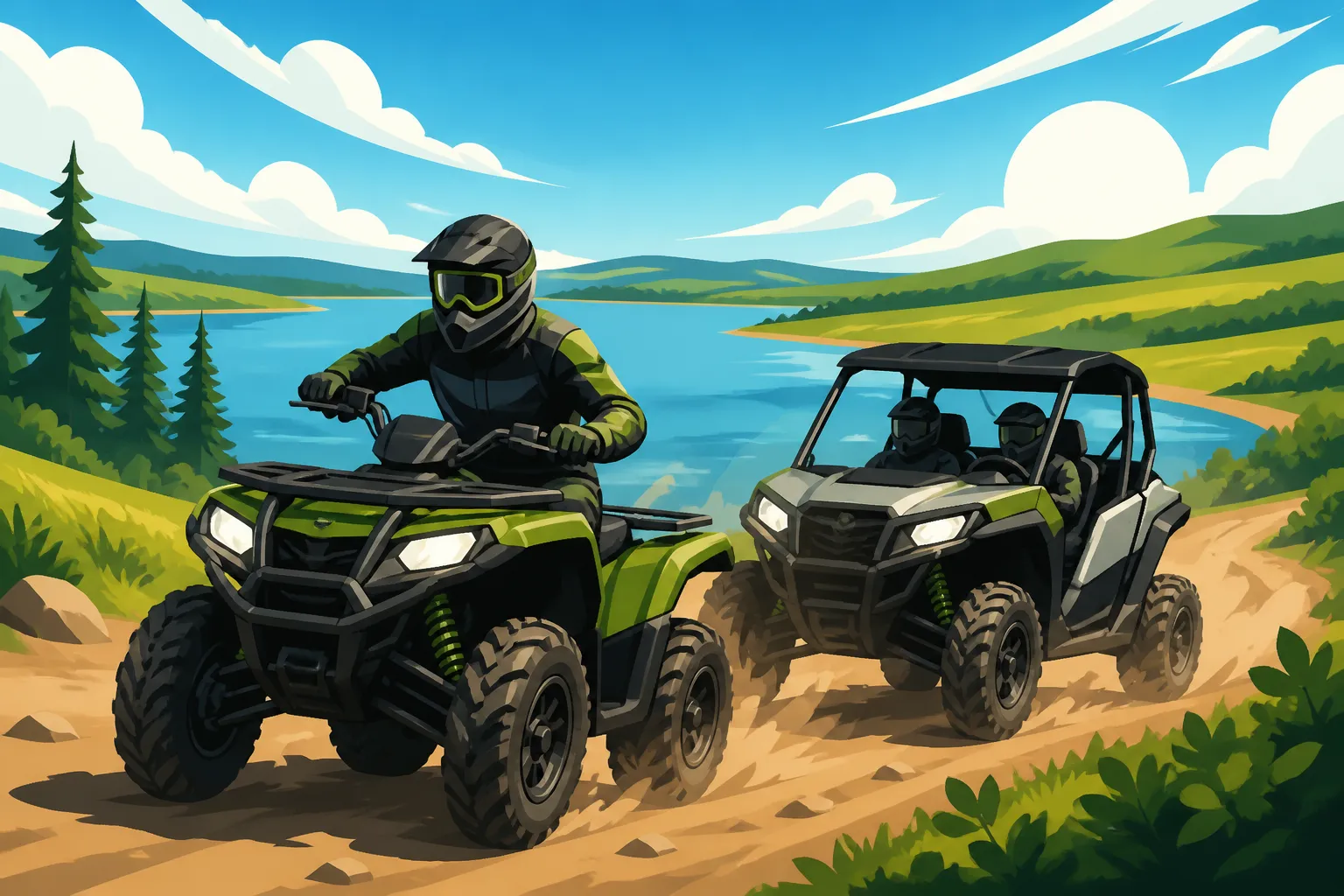
Kenosee Lake is a tempting destination for an ATV or side-by-side ride, but being close to a provincial park does not mean every nearby road, trail, or patch of bush is open to machines. This guide explains how to plan a responsible ride around Kenosee Lake, check access before unloading, and avoid confusing designated park trails with other land.
Understand Where You Can Ride Near Kenosee Lake
Separate the lake destination from the riding area
Kenosee Lake sits within Moose Mountain Provincial Park in southeastern Saskatchewan. It is a popular place to stay, swim, camp, and enjoy the outdoors, but those activities do not automatically make every park road or recreational area an ATV route. The key distinction is between being in the park and being on a route specifically open to off-road machines.
For riders, start with the park’s designated trail information rather than assuming that a visible track is legal to use. A path may be intended for hikers, maintenance vehicles, or another purpose. A road that looks wide enough for a UTV may still be closed to recreational riding. Pay attention to signs at the trailhead and to any access instructions provided by park staff.
Moose Mountain Provincial Park is one of Saskatchewan’s better-known places to investigate for an organized ATV outing. If you want an overview of the route network and park-specific considerations, begin with Moose Mountain Provincial Park ATV Trails and Moose Mountain's 47 Kilometres in Saskatchewan. Treat those as starting points for planning, then check the park’s current directions and posted notices before you travel.
Do not assume nearby land has the same access rules
The rules can change when you leave the park’s designated riding area. Land around a lake or resort community may include private property, municipal roads, agricultural land, grazing leases, and Crown land. Each can have different access rules. A gravel track on a map is not proof that an ATV is permitted there, and an open gate is not a substitute for permission.
This is particularly important if your group hopes to connect trails, ride from a cabin, or travel between a campground and another area. Confirm the status of each section of your route, not just the destination. Where private land is involved, get permission from the landowner before entering. For broader context on public-land access, [Saskatchewan Crown Land Riding Explained] is a useful companion topic, while [Saskatchewan Private Land Permission] covers the separate need to obtain permission for private land.
A practical rule is to plan around confirmed access, not around the route that looks most convenient on a phone. If the route crosses a boundary or leaves a marked trail, pause and verify that section. That small check can save your group from turning a relaxing ride into an uncomfortable conversation with a landowner or park officer.
Choose a Route That Fits Your Group and Machine
Match the ride to the people coming along
Before setting a route, talk through the basics with everyone in the group: riding experience, machine type, comfort with uneven ground, and how long people want to be out. A newer rider on a smaller ATV may prefer a straightforward outing with frequent regrouping. An experienced group on UTVs may be comfortable with a longer loop, but still needs to respect trail designations and closures.
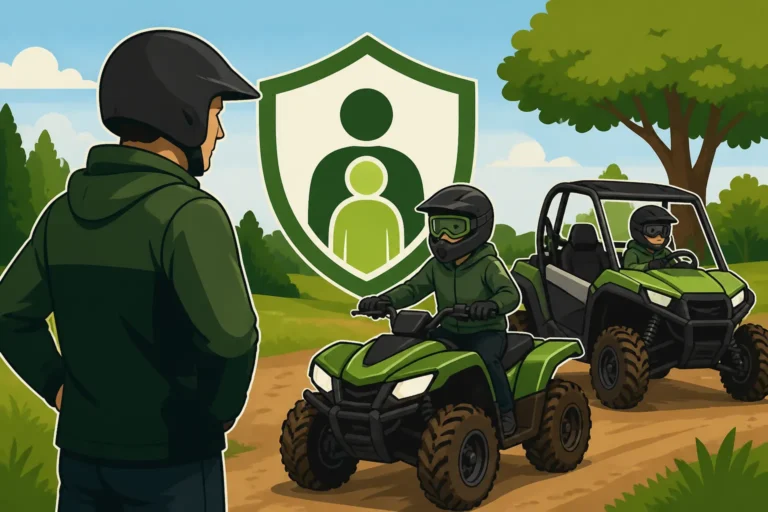
Do not let the most confident rider set the pace for everyone else. A group can feel fine at the staging area and then become stretched out once it reaches a narrow or unfamiliar section. Agree on a lead rider and a sweep rider, keep the group together, and choose a turnaround point before anyone feels pressured to continue. If someone is tired or uncomfortable, turning back is good judgment, not a failed ride.
Machine suitability matters, too. A UTV may fit some routes while being unsuitable for others because of width, turning room, or trail conditions. Check posted restrictions and route details for your specific vehicle. Do not assume that a trail open to ATVs is necessarily open to every side-by-side configuration.
Use maps as planning aids, not permission
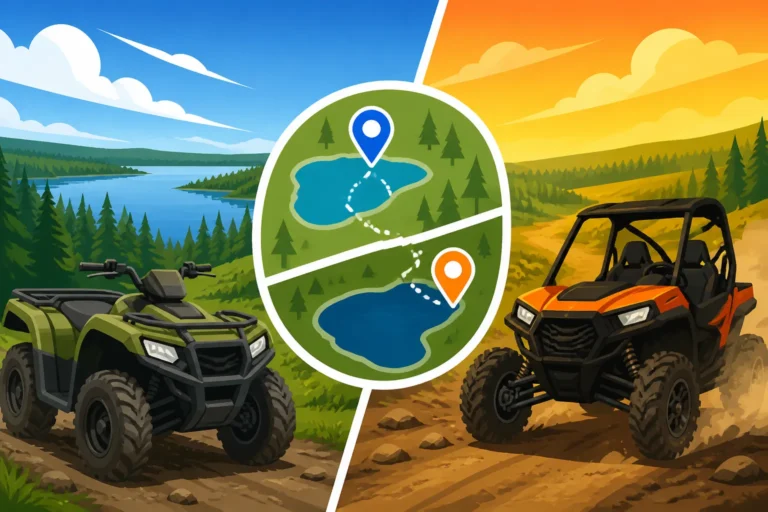
A digital map can help you understand the area, mark a meeting point, and keep track of your route. Tools such as onX Offroad can be helpful for reviewing mapped routes and preparing offline navigation before you leave a strong-service area. Still, a displayed line does not establish legal access. Check the route against official park information and signs on the ground.
Before leaving home, download any map layers you expect to use and save important locations, including the campground, trailhead, and a place to regroup. Then compare your planned route with current park information. If the two do not match, do not assume the app is right. Posted closures, temporary restrictions, and changes in access can be more important than a line on a screen.
It is also wise to carry a second way to navigate. Keep a paper map or a written route note in a protected place, and tell someone who is not riding where you plan to go and when you expect to return. A phone battery can run down faster than expected in cold weather, and mobile coverage may not be dependable throughout a ride. onX Offroad may help you keep a route visible offline, but it should sit alongside—not replace—local directions, signs, and common sense.
| Planning question | What to check before you ride |
|---|---|
| Is the route inside Moose Mountain Provincial Park? | Confirm that the specific route is designated for machine use |
| Does the route leave the park trail system? | Check access rules for each land section and obtain permission where required |
| Is the route suitable for your ATV or UTV? | Review vehicle restrictions, trail width, and posted conditions |
| Is a permit or acknowledgement required? | Confirm the current park process before arriving |
| Could weather or fire conditions affect access? | Check current notices and be prepared to change plans |
| Will you have reliable navigation? | Download maps, carry a backup, and save your meeting point |
For additional route-planning context, see Saskatchewan Parks With Designated Trails Only. The title captures an important planning habit: do not treat every road, open space, or trail-shaped line in a park as an invitation to ride.
Check Permits, Seasonal Access, and Local Notices
Confirm the park’s permit process before the trip
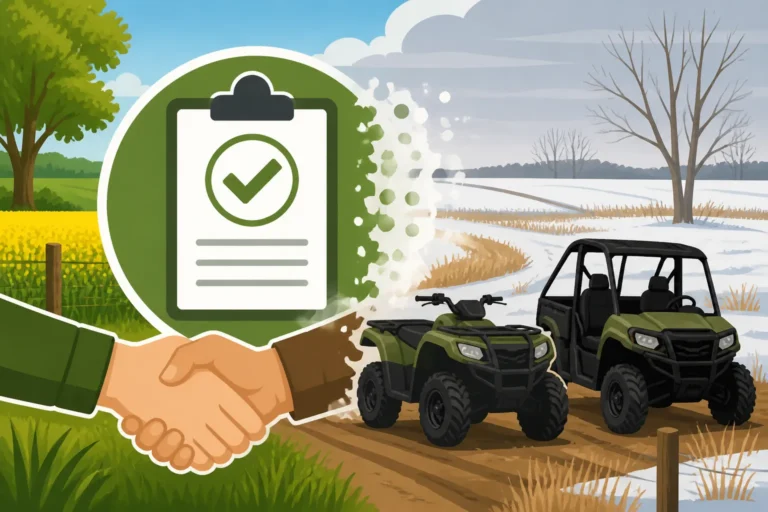
A park trail permit is not the same thing as provincial ATV registration, a municipal plate, or insurance. They serve different purposes, and one does not automatically replace another. Before riding at Moose Mountain, check what the park requires for trail use, including whether there is an information session, acknowledgement form, permit display instruction, or other step for riders.
Do this before you load the trailer if possible. A group that arrives late in the day may find it frustrating to discover that someone needs to visit an office, complete a form, or attend a briefing before heading out. Ask about the process, where to complete it, and what information each rider should bring. If several machines are travelling together, make sure the whole group understands the requirements rather than leaving one person to sort it out at the last minute.
The park’s procedure can differ from requirements elsewhere in Saskatchewan, so do not rely on what worked at another riding area. Review Moose Mountain's Trail Permit in Saskatchewan, [Saskatchewan Free Permits at Moose Mountain], and [Saskatchewan Park Trail Permits Are Free] for related information, then confirm the details with the park before setting out. A permit that has no purchase cost may still involve steps riders need to complete.
Treat dates and closures as part of route planning
A trail that is normally available may be affected by seasonal dates, maintenance, weather, fire risk, or a temporary closure. Plan to check the latest park notices close to your departure rather than relying on a saved screenshot from an earlier trip. This matters especially if you are travelling from Regina, Weyburn, or another community and have already booked a campsite or arranged a group weekend.
Ask specifically whether your intended route is open for the kind of machine you plan to bring. If you are riding a UTV, mention its size or configuration when asking about restrictions. If your group expects to ride in spring or after a period of heavy rain, ask about conditions that may make a route unsuitable even if it is not formally closed.
Build a backup plan that does not depend on finding a different trail on the fly. That could mean shortening the ride, returning to the campground, or choosing another activity at Kenosee Lake. Moose Mountain's Season Dates in Saskatchewan and Saskatchewan Trail Conditions Before You Haul are useful topics to review as part of that check. Use onX Offroad or another mapping tool to prepare your route, but refresh your plan against official notices before leaving.
Prepare for Trail Conditions and Ride Responsibly
Expect conditions to vary across the route
A route that feels easy in one section can become more demanding after rain, wind, or repeated use. Gravel, roots, ruts, puddles, and soft ground all affect traction and stopping distance. Riding fast into an unfamiliar bend or water-filled rut is a common way to turn a casual outing into a recovery job—or a damaged machine.
Set a pace that leaves room to react. Keep enough space between machines to avoid dust and to give each rider time to respond to a sudden stop. If visibility drops, slow down and regroup rather than trying to keep the same speed. In a mixed group, the lead rider should choose a pace that works for the least experienced person, and the sweep rider should make sure no one is left behind.
Avoid creating new tracks to get around mud or an obstacle. Going around a wet section can widen the trail, damage vegetation, or push riders into an area that is not open to machines. If the route ahead is unsafe or unclear, stop where it is safe to do so and decide together whether to turn back. A map can show where you are; it cannot tell you that the ground beneath your tires is stable.
Respect other park users and the place itself
A park trail is shared space. You may encounter pedestrians, cyclists, service vehicles, wildlife, or other riders around a blind corner. Slow down near people and keep noise and dust in mind, especially near recreation areas and places where visitors may not expect to meet a machine.
Stay on designated routes, pack out rubbish, and avoid disturbing wildlife or damaging plants. Give animals room to move away rather than driving toward them or following them for a closer look. If you encounter a gate or a sign indicating that access is restricted, do not move it, ride around it, or treat it as an optional suggestion.
Good trail habits also help keep access open. Courtesy toward other users, careful riding, and respect for closures all make it easier for riding areas to coexist with camping, hiking, and other park activities. [Saskatchewan Trail Etiquette Locals Expect] offers related guidance on the small choices that make a group ride more considerate. Before the trip, also review [Saskatchewan Wildfire Season Rules for Riders], since fire-related restrictions and responsible machine use are especially relevant when conditions are dry.
Build a Practical Kenosee Lake Riding Day
Before you leave home
Start with the route and access check, then work through the practical details. Confirm that your intended trail is open, determine the park’s permit process, and check whether your machine is allowed. Make sure every rider knows the meeting point and expected ride length. If someone is new to the area, share the route plan before the group leaves the staging area.
Inspect the machine while it is still easy to make repairs. Check tires, brakes, lights, fuel, and any equipment needed for the ride. Bring water, weather-appropriate layers, a basic first-aid kit, and a way to communicate if the group separates. Secure loose items so they cannot fall onto the trail or become entangled with a machine.
For navigation, save the route and relevant locations offline. onX Offroad can be one part of that preparation, but confirm that your route aligns with park information and the signs you see in person. Let a non-rider know where you are going and when you expect to return, particularly if your plan includes an area where phone service may be unreliable.
At the trailhead and on the way back
When you arrive, stop and read the trailhead signs before unloading or moving onto a route. Confirm that any required permit or form is complete and that everyone understands which route the group intends to follow. If there is a mismatch between your plan and posted information, choose the signed instructions over the plan saved on your device.
Once underway, regroup at sensible points rather than letting machines scatter across the route. If a rider needs a break, stop in a safe place that does not block the trail. Keep track of the group’s fuel and energy, and leave enough time to return without rushing. A shorter ride that ends comfortably is usually a better day than a longer one that leaves everyone hurrying back in low light or worsening conditions.
At the end, check that the machines and gear are accounted for, and make sure no rubbish or equipment has been left behind. If you noticed a confusing sign, damaged section, or unexpected closure, pass that information to park staff or the appropriate local contact. That is more useful—and safer—than leaving the trail and attempting an unofficial detour.
Kenosee Lake can make a memorable base for a southeastern Saskatchewan getaway, but the smoothest ATV or UTV day begins with confirming exactly where riding is allowed. Keep park trails distinct from surrounding land, check permits and closures, and use digital maps as planning tools rather than proof of access. If the route is unclear, ask before you ride.
Disclaimer
This article is for general informational purposes only and does not constitute professional advice. Laws, prices and regulations vary by location and change over time. Consult a qualified professional for guidance on your specific situation.