Why an Open Ditch Ride Burns You Fast
An open ditch can look like the easy way to cover ground: no tight trees, no steep climbs, and plenty of room to see ahead. But hours of sun, wind, dust, vibration and repetitive riding can wear you down surprisingly quickly. This guide explains why ditch rides feel so draining and how to plan a safer, more comfortable day in Saskatchewan.
Why ditch riding wears you down so quickly
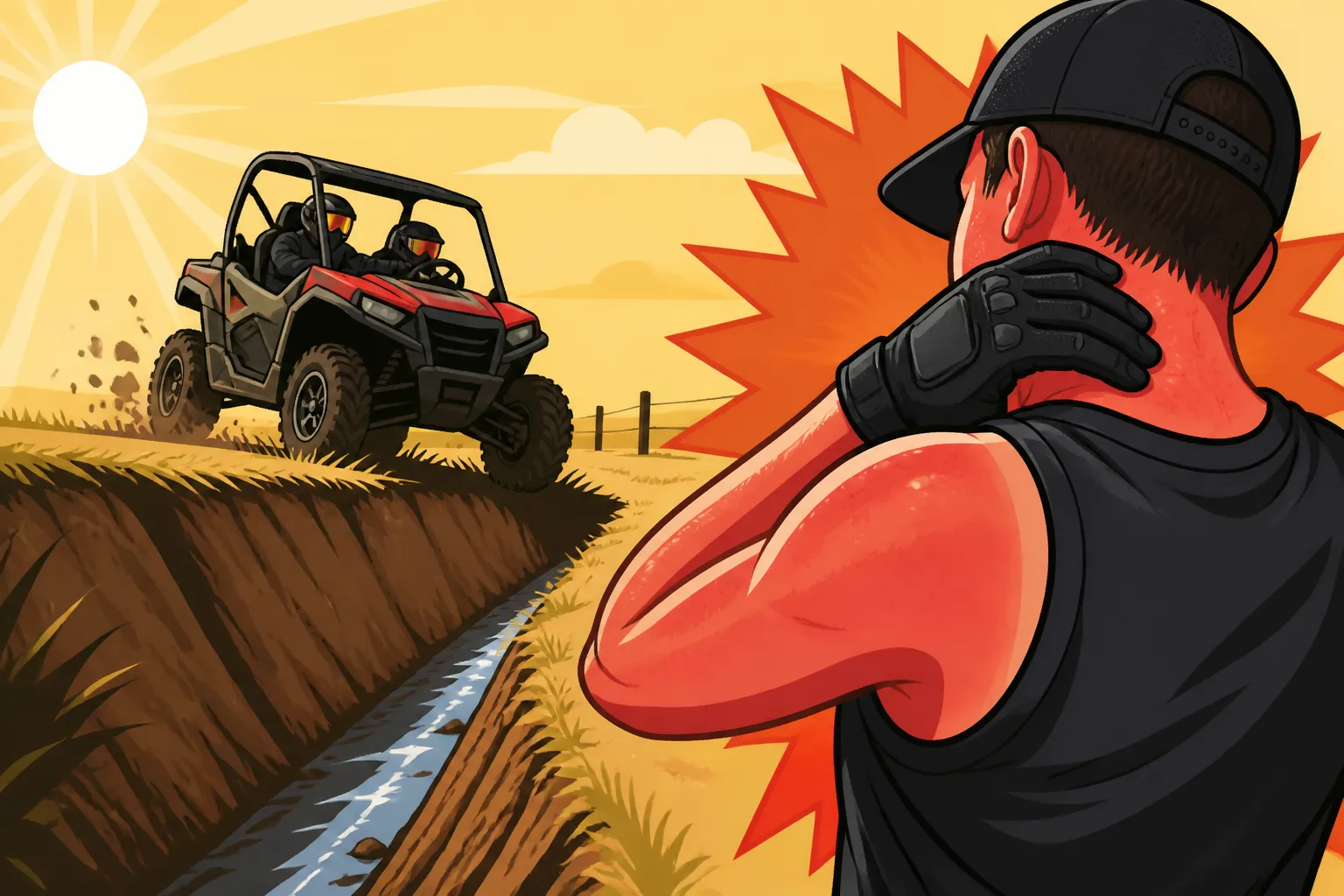
Open ground means long exposure to sun and wind
A ditch may offer little shade, especially across open prairie. Even when the air feels cool, sunlight can reach your face, neck, hands and legs for hours. Wind can make that exposure easy to underestimate: you may not feel as hot or notice how much you are sweating until you stop.
Wind also has a drying effect. It can leave your eyes irritated and your lips or skin feeling dry, while dust from a dry shoulder or field access can add another layer of discomfort. A lightweight shirt may feel comfortable at first, but exposed skin can still take a beating over a long ride. Sunscreen helps, but it works best as part of a broader plan that includes protective clothing, sunglasses or goggles, and regular breaks.
Conditions can change during the day. A cloudy morning may turn into a bright afternoon, or a breeze that felt refreshing at the trailhead may become tiring after hours of riding. Treat sun and wind as ongoing exposure, not just a concern for the hottest part of summer. Saskatchewan Riding in Summer offers related seasonal context, while How Much Bug Spray a June Ride Needs can help you think about another common comfort issue on warm rides.
Repeated bumps and vibration add up
An open ditch is not necessarily smooth or predictable. Ruts, washouts, grass tussocks, gravel, culverts and uneven ground can keep your body braced for impact. Your hands grip the bars, your shoulders stay engaged, and your legs absorb movement even when you are moving at a modest pace. That constant small effort can be more tiring than a short stretch of rough trail where you are alert for a few minutes and then get a break.
The ride can also become monotonous. With fewer trees or turns to break up the view, it is easy to keep going longer than you intended. Meanwhile, you are still scanning for changes in the ground, traffic, fences, driveways and other users. Mental concentration is part of the workload, even when the route seems straightforward.
If you begin to feel stiff or tense, take a short stop before discomfort turns into poor posture or sloppy control. Shake out your hands, relax your shoulders, drink some water and check that your helmet and gear still fit comfortably. A break is not wasted riding time if it helps you stay attentive for the next stretch.
Dust, noise and concentration drain energy
Dry ditches can kick up dust, especially when several machines travel together or when the surface has been disturbed by traffic. Dust can make it harder to see the ground ahead and may irritate your eyes and throat. Engine noise, wind noise and the effort of watching the route can also leave you feeling mentally tired.
That fatigue matters because tired riders may react more slowly or overlook hazards. The changing edge of a ditch, a driveway, a hidden culvert or a vehicle approaching on the road can demand quick attention. If visibility drops, increase your following distance and slow down. Do not assume that an open view means the route is hazard-free.
How to reduce heat, sun and fatigue on a ditch ride
Dress for several hours outside
Choose clothing for the conditions you expect, but plan for more exposure than a quick trip across town. Long sleeves and long pants can reduce direct sun exposure and help protect against dust and brush. Gloves provide coverage for your hands, and suitable eye protection can make a dusty or windy ride more comfortable. Avoid relying on bare skin simply because the first hour feels cool.
A helmet and protective gear should fit securely without making it difficult to move or see. If your gear becomes uncomfortable, stop somewhere safe and adjust it rather than riding distracted. Pack an extra layer if the forecast or time of day suggests conditions may shift. Prairie weather can feel different when you are moving than it did beside the truck at the staging area.
Use sunscreen on skin that remains exposed, and reapply according to the product directions, especially after sweating. Bring lip protection as well. These steps do not replace shade and clothing, but they can help prevent the ride from ending with painful, irritated skin.
Drink and eat before you feel depleted
It is easy to postpone drinking when you are focused on keeping up with a group or navigating an unfamiliar route. Make water accessible and take regular sips during planned stops. If you wait until you feel parched, you may already be behind on fluids. A small snack can also help maintain energy during a long outing, particularly if the ride runs past your usual meal time.
The right amount of food and water varies with the rider, weather, pace and length of the trip. Think about the route before leaving: a short loop near a vehicle is different from a longer ride between communities with few convenient places to stop. Carry enough for the plan you actually have, including a reasonable buffer if the group is delayed.
Watch for signs that you need to stop, cool down or end the ride. Headache, unusual weakness, dizziness, nausea, confusion or coordination problems should not be brushed off as ordinary tiredness. Get to a safe place, rest and seek appropriate help if symptoms are serious or do not improve. Do not pressure someone to continue just because the rest of the group feels fine.
Plan stops and a sensible pace
Before unloading, decide where the group will pause and how often. A simple schedule gives everyone permission to speak up before discomfort becomes a problem. Stops can be brief: drink, check on each other, loosen tense hands and look over the route ahead. Riders who are new, younger or less comfortable may need more frequent breaks.
Set a pace that leaves room to react to ruts, traffic and unexpected obstacles. Riding faster does not necessarily make a long ditch route feel shorter; it can increase physical strain and reduce the time available to notice hazards. Allow for the slowest rider in the group, and agree that anyone can call for a stop without having to justify it.
Use a map or navigation tool to understand where you are and where you can turn around. onX Offroad can help riders review mapped routes and orient themselves before a trip, but a digital map should not be treated as proof that a particular ditch is open or that riding is permitted there. Check local restrictions and land access separately. Saskatchewan Ditch Riding Between Towns is also useful context when planning a route that connects communities.
Route and riding choices that make a difference
Confirm that the route is legal and accessible
A ditch beside a road is not automatically an approved ATV route. Road access can depend on applicable provincial rules, municipal bylaws, signs, land access and the specific road or area. Before setting out, confirm what applies to the route rather than assuming that a route ridden by someone else is open to everyone. Saskatchewan Rules for Riding a Ditch explains the topic in more detail, and Staying 2 Metres Off the Travelled Portion covers an important road-safety distinction.
Pay attention to posted signs and local instructions, and avoid land where you do not have permission to ride. If the route crosses private land, ask the landowner rather than treating an open-looking entrance as consent. For municipal streets or roads, check the relevant rules before you go. Saskatchewan Bylaw Lookups Before You Ride can help frame that pre-ride check.
Navigation apps can support planning, but route lines and map layers do not settle questions about permission, current access or safety. onX Offroad may help you keep track of a planned route, while a separate check with the relevant municipality or landholder helps establish whether you may ride it. If the group is unsure about access, choose another route instead of discovering the answer after unloading.
Build a route with a way back
Long, straight stretches make it tempting to keep riding until someone is tired or a machine needs attention. Decide on a turnaround point before the group starts. A shorter out-and-back route can be a better day than an ambitious route that leaves everyone hot, dusty and too tired to ride carefully home.
Share the plan with the group, including where you expect to stop and what you will do if someone wants to turn around early. If riders have different experience levels, choose a route and pace that do not leave a less confident rider struggling to keep up. A regrouping point helps prevent gaps from opening between machines.
For navigation, save or mark the route before you leave service, and carry a backup plan if you depend on a phone. onX Offroad can be one part of that preparation, but keep your device charged and make sure someone in the group knows the intended route. For broader planning guidance, Saskatchewan Trail Etiquette Locals Expect is relevant to sharing riding areas respectfully.
Use a quick pre-ride check
A few minutes of preparation can prevent avoidable discomfort and help the group spot problems early. Check weather and access information, make sure each rider has water and suitable gear, and inspect machines before heading out. If you expect dry conditions, consider how dust may affect visibility and spacing. If the day is hot, shorten the route or add more stops rather than relying on everyone to push through.
Use this table as a practical planning prompt:
| What can wear you down | Why it matters on an open ditch | A useful response |
|---|---|---|
| Direct sun | Exposed skin and glare can become uncomfortable over time | Wear covering clothing, use sunscreen and take breaks |
| Wind and dust | Dry air and airborne grit can irritate skin and eyes | Use appropriate eye protection and keep more distance between machines |
| Repeated bumps | Bracing and vibration can tire hands, shoulders and legs | Slow down where needed and stop to stretch |
| Long, repetitive stretches | It is easy to lose track of time and fatigue | Set a turnaround point and planned regrouping stops |
| Heat and exertion | Riders may not notice discomfort until it affects concentration | Drink regularly and stop if someone feels unwell |
| Unclear access | A route that looks open may still have restrictions | Check bylaws, signs and permission before riding |
If fire conditions are part of your planning, check current restrictions before you go and keep the machine clear of combustible debris. Saskatchewan Wildfire Season Rules for Riders provides related information. For the practical side of a long route, Fuel Costs for a Full Day on the Ditches can help you think ahead about fuel needs rather than stretching a ride farther than your machine or group is prepared to manage.
When to stop or change the plan
Treat discomfort as useful information
A little stiffness after riding is common, but rising discomfort is a reason to pause and reassess. If someone is squinting, struggling to focus, unusually quiet, irritable or falling behind, check in rather than assuming they are simply taking it easy. Fatigue can show up in behaviour before someone clearly says they are exhausted.
Stop in a safe place, away from traffic and other hazards. Give riders time to drink, cool down and decide whether they are comfortable continuing. If someone feels unwell, do not leave them behind or urge them to keep pace. Adjust the route, turn around or arrange help as needed.
Do not let the schedule overrule safety
A route plan is a guide, not a promise to finish at all costs. Unexpected heat, dust, rough ground or a slower-than-expected pace can change the day. If the group is getting tired, choosing a nearer turnaround is often the better call. The same applies if access is unclear, visibility is poor or conditions have changed.
The point of a ditch ride is to enjoy the trip, not to arrive home completely spent. A route that leaves enough energy for the ride back, a sensible pace and frequent chances to check on one another will usually make for a better day than simply trying to cover the most distance.
Disclaimer
This article is for general informational purposes only and does not constitute professional advice. Laws, prices and regulations vary by location and change over time. Consult a qualified professional for guidance on your specific situation.