Buying From a Manitoba Seller in Saskatchewan
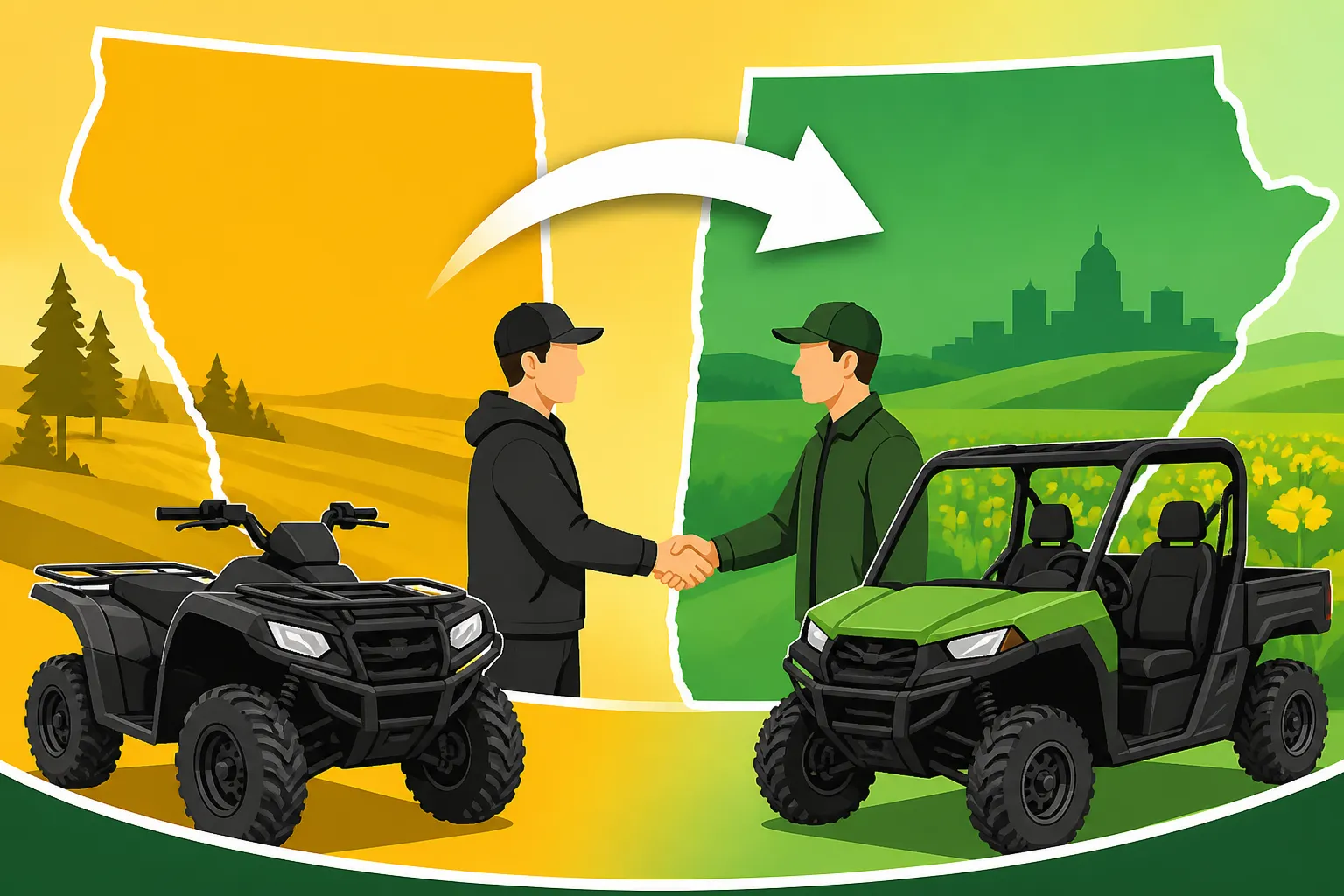
Buying an ATV or UTV from a seller in a different province, especially Manitoba when you live in Saskatchewan, can feel like navigating a maze of paperwork and regulations. Many riders get frustrated trying to figure out what forms they need, if their new machine needs to be registered, or how taxes work across provincial lines. This guide aims to clear up that confusion, providing a clear, step-by-step path to successfully purchasing an off-road vehicle from a Manitoba seller and bringing it home to Saskatchewan without a hitch.
Navigating the Interprovincial Purchase: Why Buying from Manitoba is Different
When you're looking to expand your off-road fleet, sometimes the perfect deal pops up just across the provincial border. Manitoba, with its vast landscapes and active riding community, often has a great selection of ATVs and UTVs for sale. However, the process of buying from a Manitoban and bringing that machine back to Saskatchewan isn't quite the same as buying locally, largely because of how each province handles off-road vehicle registration. You’ll want to be prepared for these differences so you don't run into any unexpected bumps along the trail.
Understanding Saskatchewan's Unique ATV Status
One of the biggest differences you'll encounter when dealing with an out-of-province seller, especially from Manitoba, is Saskatchewan's approach to ATV and UTV registration. Simply put, the province of Saskatchewan does not operate a central registry for ATVs and UTVs. This means there's no provincial system to title these machines in the same way you would a car or truck, and consequently, [Saskatchewan Does Not Register ATVs]. This often comes as a surprise to people moving here or buying from provinces that do have such systems. In practical terms, it means your machine won't get a provincial plate or decal from Saskatchewan Government Insurance (SGI) for general use, unlike snowmobiles, which do have a provincial registry.
For a buyer in Saskatchewan, this unique status means that proof of ownership relies heavily on other documents, primarily a robust bill of sale. When you purchase from a Manitoban, they might be accustomed to their province's registration system, so you'll need to clearly communicate Saskatchewan's stance. It's not about them getting you a "Saskatchewan registration" – because it doesn't exist – but rather about ensuring you have all the necessary documentation to prove you're the rightful owner once the transaction is complete and you've brought the machine across the border. This lack of a provincial registry can sometimes make buyers uneasy, but it's a fundamental part of how off-road vehicles are handled here.
What to Expect from a Manitoba Seller's Paperwork
A seller in Manitoba will likely be operating under their province's rules regarding off-road vehicles. In Manitoba, off-road vehicles (ORVs) are registered and plated by Manitoba Public Insurance (MPI). This means that a Manitoban seller should, in most cases, have a registration certificate for their ATV or UTV. This document is essentially their proof of ownership and typically includes details about the machine (make, model, VIN/serial number) and the registered owner's information. It's similar to the ownership papers you'd see for a car, just specific to an ORV.
When negotiating a purchase, always ask the seller to provide their Manitoba registration documents. This isn't just a formality; it's a critical step in verifying their legitimate ownership and the machine's identity. If a seller can't produce a current registration, or offers a story about why it's "lost" or "never registered," that should raise a red flag. While there can be legitimate reasons for missing paperwork, it's always best to proceed with caution. The key is to ensure that the seller is indeed the registered owner according to Manitoba's system. This document, along with a comprehensive bill of sale, forms the cornerstone of your ownership proof in Saskatchewan, even though [Saskatchewan Has No ATV Plate or Decal] to issue you in return. Without clear ownership documents from the originating province, you might find yourself in a tricky situation later on if there are any disputes or questions about the machine's history.
The Essential Paperwork for a Smooth Transaction
The backbone of any successful ATV or UTV purchase, especially across provincial lines, is rock-solid paperwork. Because Saskatchewan doesn't have a provincial registration system for these machines, the documents you receive from the seller are paramount. They become your primary, and often only, legal proof of ownership. Don't rush this part of the process; meticulous attention to detail here will save you immense headaches down the road.
The All-Important Bill of Sale
In Saskatchewan, a well-drafted bill of sale is your absolute best friend when purchasing an ATV or UTV, especially from out-of-province. Since there's no provincial title to transfer, this document becomes the legal instrument that transfers ownership from the seller to you. It's not just a casual receipt; it's a binding contract that details the transaction. A good bill of sale should include:
- Seller's Full Legal Name and Address: Make sure this matches their ID.
- Buyer's Full Legal Name and Address: Your information.
- Date of Sale: The exact date the transaction occurred.
- Detailed Machine Description: Make, model, year, colour, and most importantly, the Vehicle Identification Number (VIN) or serial number. Double-check this number against the machine itself.
- Purchase Price: The agreed-upon amount.
- Payment Method: How the money was exchanged.
- "As Is" Clause: Most private sales are "as is, where is," meaning you accept the machine in its current condition with no warranties.
- Seller's Declaration of Ownership: A statement from the seller confirming they are the legal owner and the machine is free of liens or encumbrances.
- Signatures: Both the buyer's and seller's signatures, ideally witnessed by a third party.
You can find templates for bills of sale online, and many riders use services like LawDepot to create comprehensive, legally sound documents. Don't hesitate to use a template that covers all these bases. Remember, [Saskatchewan Bills of Sale Do the Work] of proving ownership, so this isn't an area to cut corners. It's worth printing two copies, one for you and one for the seller, both signed.
Dealing with Manitoba Registration and Ownership Proof
While Saskatchewan may not register ATVs, Manitoba does. This means the seller should have a Manitoba Public Insurance (MPI) registration certificate. This document is crucial because it establishes the chain of ownership from the previous owner to the seller. When you purchase the ATV, the seller will typically remove their plate and registration from the machine, as that registration is specific to them in Manitoba. However, you should still obtain a copy of their cancelled or previous registration document, or at the very least, note down the details from it, especially the VIN.
This document, combined with your bill of sale, paints a clear picture of the machine's history. It shows that the person who sold it to you was indeed the registered owner in Manitoba. If the seller claims the machine was never registered, or they've lost all their paperwork, tread very carefully. While [Saskatchewan Paperwork Without a Receipt] can sometimes be managed, it significantly complicates proving ownership and could make it harder to trace the machine's history or address potential issues like theft. Always ask for whatever proof of Manitoba registration they have, even if it's expired or cancelled, as it's a vital piece of the puzzle for your own records.
Checking for Liens and Encumbrances
Before you hand over any cash, it is absolutely critical to check if there are any liens or financial encumbrances against the ATV or UTV. A lien means someone else (like a bank or finance company) has a legal claim on the machine until a debt is paid off. If you buy a machine with a lien, you could potentially become responsible for that debt, or worse, have the machine repossessed. This is a common pitfall in private sales, especially across provincial borders where you might not be familiar with the local system.
In Manitoba, you can perform a Personal Property Registry (PPR) search through the Manitoba Companies Office. For a small fee, you can search the VIN to see if any security interests or liens are registered against the machine. This is a non-negotiable step. Just because Saskatchewan doesn't register ATVs doesn't mean it doesn't recognize liens from other provinces. A lien registered in Manitoba will generally be recognized in Saskatchewan.
| Check Type | Purpose | Where to Check (Manitoba) | Importance |
|---|---|---|---|
| PPR Search | Identifies financial liens/debts against the machine | Manitoba Companies Office (online) | Critical: Prevents you from inheriting debt or having the machine seized. |
| Stolen Vehicle | Verifies the machine isn't reported stolen | CPIC (via police) or VIN check services | Critical: Protects you from buying stolen property. |
| MPI Registration | Confirms seller is registered owner, machine details | Ask seller for documents | High: Establishes legitimate chain of ownership, matches VIN. |
Additionally, it's always a good idea to perform a [Saskatchewan Stolen Machine Reports] check, even if there's no provincial registry. You can often do this by contacting your local police detachment or utilizing online VIN check services that cross-reference national databases. Buying a machine with a clean bill of health, both financially and legally, ensures you're starting your ownership journey on the right foot.
Bringing Your ATV Home: Taxes, Insurance, and Final Steps
Once you've secured the deal and have all your paperwork in order, the next logical steps involve getting your new-to-you ATV or UTV home to Saskatchewan and ensuring it's properly set up for use here. This means understanding provincial sales tax obligations and getting the right insurance coverage in place. Don't let these final administrative hurdles diminish the excitement of your new purchase!
Saskatchewan's Sales Tax Realities
This is where many interprovincial buyers get tripped up. When you purchase an ATV or UTV from a private seller, whether in Saskatchewan or Manitoba, you are generally subject to Saskatchewan Provincial Sales Tax (PST) and federal Goods and Services Tax (GST) if you are bringing the machine into Saskatchewan for use. Even though Saskatchewan doesn't have a provincial registration system for ATVs, the tax obligations still apply.
Here's the breakdown:
- Saskatchewan PST: The PST rate in Saskatchewan is a percentage of the purchase price. Unlike other vehicles that get PST collected by SGI at registration, for ATVs and UTVs purchased privately and brought into Saskatchewan, you are responsible for self-assessing and remitting the PST directly to the Saskatchewan Ministry of Finance. This means you need to calculate it and send it in. The exemption for used goods often doesn't apply to recreational vehicles like ATVs, so you should assume you'll owe PST. For the current percentage, it's always best to check the official Saskatchewan government website.
- Federal GST: The GST rate is also a percentage of the purchase price. This is typically remitted in the same way as PST when buying privately from out-of-province, directly to the Canada Revenue Agency (CRA) if it wasn't collected by the seller.
It's absolutely essential to budget for these taxes. Many buyers forget about them until after the purchase, leading to an unexpected expense. Keep detailed records of your purchase price and any taxes paid (or not paid) to the seller. For specific guidance on what you owe, you can consult the Ministry of Finance or a tax professional. Remember, [Saskatchewan PST at Purchase] and [Saskatchewan GST at Purchase] are real costs you need to account for, even if the machine isn't registered.
Getting Your New-to-You ATV Insured
Even though Saskatchewan doesn't require provincial registration for ATVs and UTVs, it does have mandatory insurance requirements for operating these machines. This is a critical point that new owners sometimes overlook. Under The All Terrain Vehicles Act, you must have a minimum amount of liability insurance to operate an ATV or UTV on public land, ditches, or Crown land. This isn't optional; it's the law.
You'll need to contact an insurance broker in Saskatchewan to obtain a standalone ATV insurance policy. This policy will provide the necessary liability coverage and can also offer options for collision, comprehensive, and theft coverage, protecting your investment. Be prepared to provide your bill of sale and the machine's VIN to your broker. They will be able to set you up with a policy that meets provincial requirements. Many riders are surprised to learn that their home or auto insurance policy might not automatically cover their ATV, especially for off-road use, so a dedicated policy is usually required. Ensuring you have valid [Saskatchewan Insurance Requirements for Riders] in place before you take your new machine out for a spin is paramount, not just for legal compliance but for your own financial protection in case of an accident.
What to Do Once You're Home in Saskatchewan
Once you've completed the sale, paid the taxes (or at least know you need to), and secured insurance, you're almost ready to ride! However, there are a few final steps and considerations for your new Saskatchewan machine.
First, keep all your paperwork in a safe place. This includes your bill of sale, the Manitoba registration documents, proof of tax remittance, and your insurance policy details. While you don't need to carry every single document on you while riding, having digital copies easily accessible on your phone is a good idea. For actual riding, a copy of your insurance card is typically what an officer might ask for.
Second, familiarize yourself with Saskatchewan's riding regulations. Even without registration, the province has clear rules about age limits, helmet use, operating on roadways, and restrictions on Crown land. For instance, [Saskatchewan Requires a Driver's Licence] for operators, with some exceptions for supervised youth. Knowing these rules will ensure you ride responsibly and avoid fines.
Third, consider a municipal plate if applicable. While there's no provincial plate, some towns and rural municipalities in Saskatchewan do have their own local ATV permit or plate systems. These are specific to that municipality and are usually required if you plan to ride within their boundaries, often to access local trails or ditch riding areas. If you live in or frequently visit an area with such a system (like Candle Lake or the District of Lakeland), you'll need to inquire with that specific municipality about their requirements and costs. This is an entirely separate system from provincial registration, and it's driven by local bylaws.
Avoiding Headaches: Tips for a Secure Purchase
Buying an ATV or UTV from an out-of-province private seller comes with inherent risks, but most can be mitigated with a bit of due diligence and common sense. By taking a few extra steps, you can significantly reduce your chances of encountering problems and ensure your buying experience is a positive one. This is especially true when buying an asset that isn't provincially registered in Saskatchewan, putting more onus on you, the buyer, to verify everything.
Verifying the Seller and the Machine
Before you even think about handing over cash, it's crucial to verify both the seller's identity and the authenticity of the machine. This is your first line of defense against potential fraud or misrepresentation.
- Seller's ID: Always ask to see the seller's government-issued photo ID (like a driver's license) and compare the name on it to the name on the Manitoba registration document. If they don't match, or if the seller offers a vague explanation, be very wary. A legitimate seller should have no issue proving their identity.
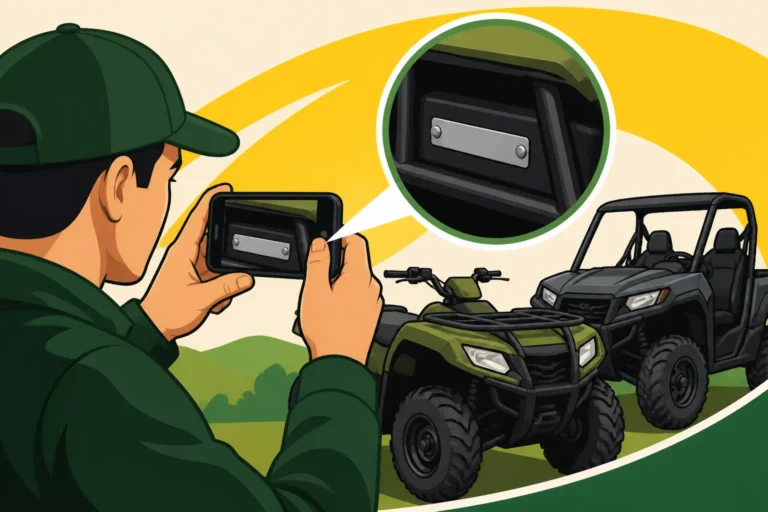
- VIN Verification: This is non-negotiable. Locate the Vehicle Identification Number (VIN) on the ATV or UTV itself. It's usually stamped into the frame. Compare this number exactly to what's listed on the Manitoba registration and what you'll put on your bill of sale. A mismatch is a huge red flag. Take a photo of the VIN on the machine. Performing a [Checking a Serial Number Twice Before You Pay] is a small effort for a huge peace of mind.
- Machine Inspection: Thoroughly inspect the ATV or UTV for any signs of damage, repair, or tampering, especially around the VIN area. Look for evidence of a salvage title or significant repairs that might not have been disclosed. If you're not mechanically inclined, consider bringing a trusted friend who is, or even paying a local mechanic in Manitoba to do a pre-purchase inspection. This can uncover hidden issues that could cost you big down the line.
- Asking Questions: Don't be afraid to ask a lot of questions about the machine's history, maintenance, and why the seller is parting with it. A transparent seller will be happy to answer your queries.
What to Do If Things Go Sideways
Even with the best intentions and most diligent checks, sometimes problems can arise. Knowing what steps to take can help you navigate these difficult situations.
- Disputes over Ownership: If you find yourself in a dispute over ownership after the fact, your comprehensive bill of sale is your primary legal defense. This is why getting every detail right and having it signed by both parties is so critical. Without a provincial registry in Saskatchewan, this document literally is your proof.
- Theft or Fraud: If you suspect you've been sold a stolen machine, or if the transaction turns out to be fraudulent, contact the police immediately. Provide them with all the documentation you have, including the bill of sale, copies of the Manitoba registration, and any communication with the seller. While [Saskatchewan Theft Recovery Without a Registry] can be more challenging, law enforcement still has resources to investigate.
- Mechanical Issues: If the machine develops significant mechanical problems shortly after purchase, and you bought it "as is," your options might be limited. This is why the pre-purchase inspection is so valuable. If you believe the seller actively misrepresented the machine's condition, you might have grounds for a small claims court action, but this can be a lengthy and costly process, especially across provincial borders.
- Financial Liens: If you discover a lien on the machine after purchase, contact the lienholder (e.g., the bank) directly. They can explain the situation and what steps are needed to clear the lien. You would then need to pursue the seller to pay off the debt or reclaim your money. This is why the PPR search is a non-negotiable pre-purchase step for [Financing an Unregistered Machine in Saskatchewan], as it protects you from inheriting someone else's debt.
By being proactive, asking the right questions, and securing all necessary documentation, you can confidently purchase an ATV or UTV from a Manitoba seller and enjoy the incredible riding opportunities waiting for you in Saskatchewan.
Disclaimer
This article is for general informational purposes only and does not constitute professional advice. Laws, prices and regulations vary by location and change over time. Consult a qualified professional for guidance on your specific situation.