Saskatchewan Registration Compared to Alberta
Many folks living on the Prairies get a bit confused when it comes to ATV and UTV registration, especially if they're used to the system in one province and suddenly find themselves dealing with another. It's a common source of frustration, jumping through hoops that don't even exist in your home province or, conversely, not realizing crucial requirements when venturing elsewhere. This guide will walk you through the distinct differences between how Saskatchewan and Alberta handle ATV and UTV registration, helping you understand what's expected whether you're buying, selling, or just riding across provincial lines.
The Distinct Approaches to ATV Registration: Saskatchewan vs. Alberta
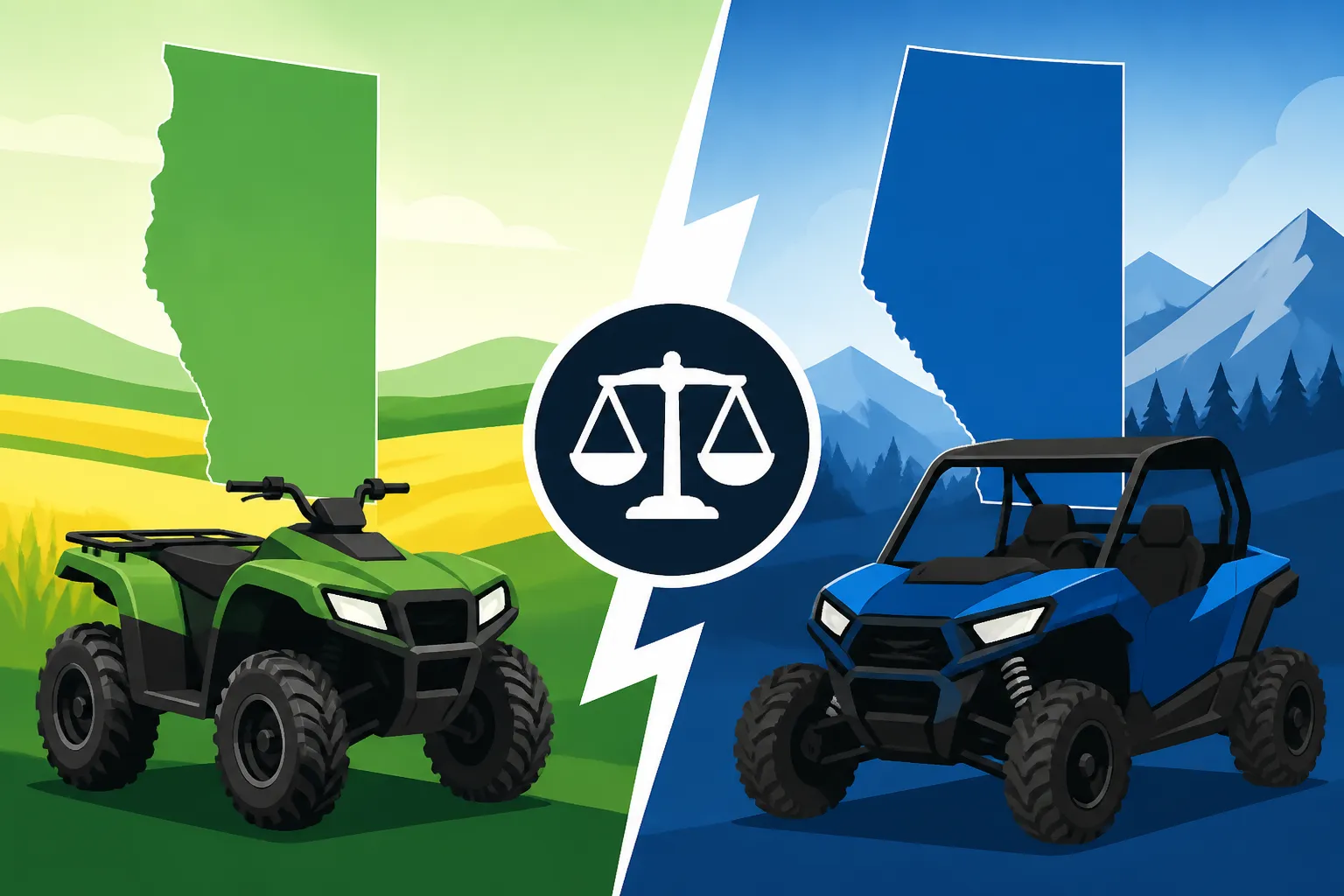
It's truly a tale of two provinces when it comes to regulating off-highway vehicles (OHVs) like ATVs and UTVs. What's perfectly normal in Alberta can be completely non-existent in Saskatchewan, and vice-versa. This fundamental difference often catches people off guard, leading to confusion about paperwork, proof of ownership, and even basic legal requirements. Understanding this core disparity is the first step to navigating the rules effectively.
Saskatchewan's Unique Hands-Off Provincial Approach
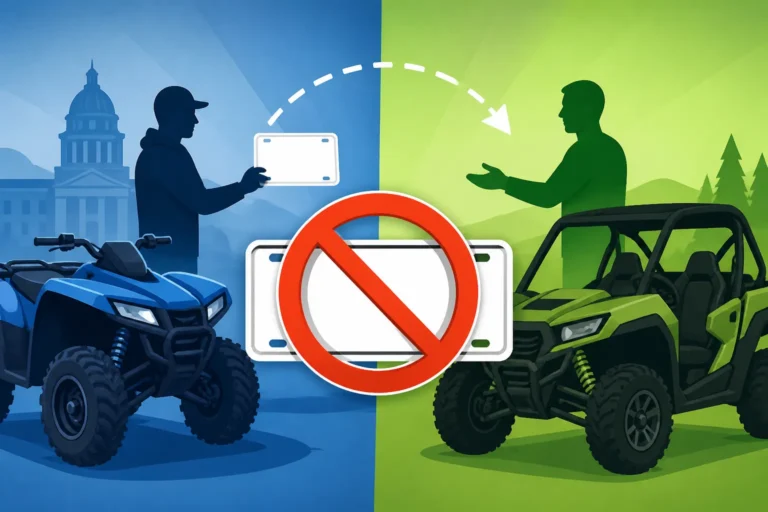
Let's get this straight right off the bat: Saskatchewan does not have a province-wide registration system for ATVs and UTVs. That's right, there's no provincial plate, no decal, and no central registry where you officially "register" your quad with the government. For many people moving from provinces with established systems, or even those just looking to confirm their understanding, this can feel incredibly strange and even a little unsettling. You might wonder, "How do I prove ownership?" or "What about stolen machines?" These are valid questions, and they highlight why Saskatchewan's approach can be a head-scratcher.
The rationale behind this often comes down to historical legislation and the specific needs perceived at the time the [Saskatchewan's All Terrain Vehicles Act] was created. Unlike snowmobiles, which do require provincial registration and display a plate, ATVs have always been treated differently. This means you won't be heading to a Saskatchewan Government Insurance (SGI) office to get a plate for your quad like you would for a car or even a snowmobile. [Saskatchewan Does Not Register ATVs], which is why you'll never see a provincial plate or decal on a quad here. Instead, ownership is primarily established through a proper bill of sale.
Alberta's Structured Provincial Registration System
Now, cross the border into Alberta, and you'll find a much more familiar system for most Canadians. In Alberta, off-highway vehicles, including ATVs and UTVs, must be registered with the provincial government. This means you'll need to go to a registry agent, present your proof of ownership, and in return, you'll receive a license plate and a registration certificate. This plate needs to be affixed to the rear of your machine, clearly visible.
This system provides a clear paper trail for ownership, aids in identifying stolen machines, and helps with law enforcement. It's designed to bring OHVs under a similar regulatory umbrella as other motor vehicles, albeit with some distinct differences in terms of where and how they can be operated. For an Albertan, the idea of owning an ATV without a plate or registration would be unthinkable, directly contrasting with the norm in Saskatchewan.
What Alberta Requires for ATV Registration
If you're an Alberta resident, or you're bringing an ATV into Alberta, you're going to need to understand their registration process. It's fairly straightforward, but there are specific steps and documents you'll need to have in order. Skipping these steps could lead to fines or other legal headaches down the road.
The Steps to Getting Your Alberta ATV Plate
First and foremost, you'll need to visit a local Alberta registry agent. These agents are the primary service providers for vehicle registration in the province. When you go, you'll need to bring a few key pieces of information and documentation:
- Proof of Ownership: This is usually your bill of sale, which clearly states you are the purchaser, includes the Vehicle Identification Number (VIN) of the ATV, the date of sale, and the seller's information. If it's a brand new machine, you'll have a New Vehicle Information Statement (NVIS). For machines imported from outside Canada, there might be additional customs documentation.
- Vehicle Information Number (VIN): The VIN is crucial. It uniquely identifies your ATV. The registry agent will use this to verify the vehicle's details. Make sure it's clearly legible on your bill of sale and matches the machine itself.
- Personal Identification: You'll need valid government-issued ID, such as your driver's license, to prove your identity and residency.
- Insurance: While you might not need to show proof of insurance at the registry for registration purposes (Alberta's minimum insurance is more about road use than off-road), having it for liability is absolutely critical for any riding. However, if you plan to ever operate on a public road or highway where permitted, you will need valid third-party liability insurance. It’s always best practice to have it.
Once you provide all the necessary documents and information, pay the applicable fees, the registry agent will issue you a license plate and a registration certificate. You'll then need to securely attach that plate to the rear of your ATV. Remember that this registration needs to be renewed annually.
Costs and Insurance Implications in Alberta
When you register your ATV in Alberta, you'll incur a registration fee, which covers the administrative costs and the issuance of your plate and certificate. The exact amount can vary, so it's always wise to check with an Alberta registry agent for current figures. Beyond the registration fee, there's also the ongoing cost of insurance.
In Alberta, while registration is mandatory, specific insurance requirements for solely off-road use can sometimes feel less explicit than for on-road vehicles. However, operating any vehicle without at least third-party liability insurance is an immense risk. Many riders opt for comprehensive policies that cover theft, damage, and liability, regardless of where they ride. If you plan to operate your ATV on any public land or designated trails, or if local bylaws permit limited road access, having robust insurance is not just smart, it's often a legal requirement. An Alberta registry agent can also provide guidance on these requirements.
What Saskatchewan Requires for ATV Ownership (Without Registration)
Since [Saskatchewan Has No ATV Plate or Decal], the process for proving ownership and ensuring legality on the trails is quite different from Alberta. It hinges on having proper documentation and understanding the distinct role that insurance and occasional municipal plates play.
The Power of the Bill of Sale
In Saskatchewan, your bill of sale is effectively your ATV's primary identification document. Because there's no central provincial registry, a well-drafted bill of sale is crucial for proving ownership, especially if you ever need to buy insurance, sell the machine, or deal with a theft. This document serves as the legal record of the transaction between buyer and seller. Without it, you could face significant hurdles.
A good bill of sale, like one you might create using a service like LawDepot, should include:
- Full names and addresses of both buyer and seller.
- Date of the sale.
- A clear description of the ATV/UTV, including make, model, year, colour, and most importantly, the Vehicle Identification Number (VIN).
- The purchase price.
- Signatures of both parties.
- Witness signatures (optional but highly recommended for added security).
Keeping this document safe and accessible is paramount. Think of it as your ATV's birth certificate and title all rolled into one. For further guidance on what details to include, you might refer to [What Your Bill of Sale Needs to Cover]. Without this, proving you legitimately own your quad can become a nightmare, particularly if you're trying to sell it or make an insurance claim.
Essential Insurance Requirements in Saskatchewan
Even though you don't register your ATV with the province in Saskatchewan, carrying adequate insurance is not only highly recommended but often legally required. [Saskatchewan's All Terrain Vehicles Act] mandates that any ATV operated on Crown land, public property, or property other than your own must be covered by at least $200,000 in third-party liability insurance. This is a crucial detail that many riders overlook, assuming that because there's no registration, there's no insurance mandate. That's a dangerous assumption.
If you're involved in an accident and don't have this minimum coverage, you could be personally liable for significant damages. It's not just about protecting yourself; it's about protecting others. Many insurance brokers in Saskatchewan offer specific ATV/UTV policies that bundle liability, collision, and even comprehensive coverage for theft and other perils. Always carry proof of insurance with you when you ride, as a peace officer or park warden can ask to see it. For a deeper dive, check out [Saskatchewan Insurance Requirements for Riders].
The Role of Municipal Plates
While there's no provincial ATV registration, some rural municipalities (RMs) and resort villages in Saskatchewan have opted to implement their own local permit or plate systems. These are specific to that municipality and are typically required if you want to operate your ATV on designated roads, trails, or ditches within their jurisdiction. Think of places like the District of Lakeland or Candle Lake, where vibrant recreational riding communities exist.
These municipal plates are entirely separate from any provincial system (because none exists for quads) and serve local regulatory and revenue-generating purposes, often funding local trail maintenance or enforcement. If you plan to ride in one of these specific areas, you must check their local bylaws and obtain the necessary permit or plate. [Saskatchewan Municipal Plate Schemes] provides more details on this localized approach. It’s important to remember that a municipal plate from Candle Lake, for example, has no legal standing in the District of Lakeland, or anywhere else beyond its specific issuing municipality.
Practical Implications for Riders and Buyers Across Provinces
The stark differences in ATV registration between Saskatchewan and Alberta lead to some very practical considerations, whether you're buying a machine, selling one, or just planning a riding trip across the provincial border. Understanding these scenarios can save you a lot of hassle and potential legal issues.
Buying an ATV in Alberta and Bringing it to Saskatchewan
If you purchase an ATV from an Alberta seller and intend to use it primarily in Saskatchewan, here's what you need to know:
- Alberta Registration: Ensure the seller has properly transferred ownership to you and that you get a solid bill of sale. If the machine was registered in Alberta, you won't be re-registering it in Saskatchewan. You might consider cancelling the Alberta registration if it's no longer needed there, but that's a decision for the seller or if you were the previous owner.
- Saskatchewan Ownership Proof: Your primary proof of ownership in Saskatchewan will be that bill of sale you received from the Alberta seller. Make sure it's comprehensive and includes all the necessary details, especially the VIN. Using a reliable template, perhaps from LawDepot, can ensure you don't miss any critical information.
- Insurance: Immediately arrange for Saskatchewan-compliant insurance. Even though there's no registration, you must have the minimum $200,000 third-party liability insurance for riding on most lands.
Essentially, you're transitioning from a registered system to a bill-of-sale-based system. The physical Alberta plate will become irrelevant in Saskatchewan, though you might keep it for sentimental reasons or if you ever move the machine back to Alberta. For more on this, check out [Buying From an Alberta Seller in Saskatchewan].
Buying an ATV in Saskatchewan and Taking it to Alberta
This is where things can get a bit more involved, as you're moving from a non-registered system to a mandatory one:
- Saskatchewan Proof of Ownership: When you buy from a Saskatchewan seller, your only real proof of ownership will be the bill of sale. Ensure it's detailed and accurate. As a buyer, you'll need this document to register the ATV in Alberta. Again, a good LawDepot bill of sale template can ensure all necessary fields are covered.
- Alberta Registration: Once you bring the ATV into Alberta, you'll need to take your bill of sale (and potentially the ATV itself for VIN verification, though often the bill of sale is sufficient if the VIN is clear) to an Alberta registry agent. You will then apply for a new Alberta registration and receive your Alberta license plate.
- Alberta Insurance: You'll also need to arrange for insurance that meets Alberta's requirements. This often happens simultaneously or shortly after registration.
It’s crucial not to skip the Alberta registration step. Operating an unregistered ATV in Alberta, even if it came from Saskatchewan where registration isn't required, can lead to tickets and other penalties.
Saskatchewan Rider Visiting Alberta
Planning a riding trip to Alberta? Be prepared for Alberta's rules:
- Alberta Registration Requirement: Even as a visitor, if you're operating your ATV in Alberta, it generally needs to be registered. This is one of the more common surprises for Saskatchewan riders. Your Saskatchewan bill of sale isn't enough; you'll need an Alberta plate. This might mean temporarily registering your machine in Alberta, which can be a hassle for a short visit, or ensuring you only ride on private land with permission where registration might be waived (though insurance will still be critical).
- Insurance: Your Saskatchewan insurance policy, provided it meets or exceeds Alberta's minimum liability requirements, should be valid. Always carry proof of insurance.
- Operation Rules: Familiarize yourself with Alberta's specific rules regarding helmet use, age restrictions, and where you can legally ride.
This can be a sticking point for many. [Saskatchewan Rules for a Visiting Alberta Rider] would be a helpful resource, if available. Given the potential complexities, some Saskatchewan riders opt to rent an ATV in Alberta for their trip to avoid the registration hassle.
Alberta Rider Visiting Saskatchewan
For Alberta riders coming to Saskatchewan, the process is usually a bit simpler, as you're coming from a more regulated system:
- Saskatchewan Provincial Registration (None): You won't need to do anything with your Alberta registration in Saskatchewan. Your Alberta plate and registration certificate are simply proof that your machine is legally recognized in your home province. Saskatchewan doesn't have a provincial system to transfer to.
- Insurance: Your Alberta insurance policy, assuming it provides at least the $200,000 third-party liability coverage, will typically be sufficient in Saskatchewan. Always carry proof of this insurance.
- Municipal Plates (If Applicable): If you plan to ride in a specific Saskatchewan rural municipality or resort village that requires a local permit or plate, you will need to obtain that specific local permit. Your Alberta registration does not exempt you from local Saskatchewan bylaws.
- Operation Rules: Make sure you understand Saskatchewan's ATV operating rules, particularly regarding age, helmet use, and where you can ride. Things like ditch riding laws and Crown land access can differ significantly.
Essentially, an Alberta rider brings their machine, already recognized as legitimate in Alberta, to a province that has no counter-registration system. It's more about understanding Saskatchewan's riding rules and local permits than anything to do with provincial registration.
The Paperwork Difference Table
To help clarify, here's a quick comparison of the main differences:
| Feature | Saskatchewan ATV/UTV | Alberta ATV/UTV |
|---|---|---|
| Provincial Registration | No | Yes, mandatory |
| Provincial Plate/Decal | No | Yes, mandatory |
| Primary Proof of Ownership | Bill of Sale (e.g., from LawDepot) | Registration Certificate & Bill of Sale |
| Mandatory Provincial Insurance | $200,000 liability (for riding off private land) | Recommended liability (often required for road use) |
| Municipal Plates | Some RMs/Resort Villages require local permits/plates | Not applicable; provincial plate covers province |
| Renewal | Not applicable (no provincial registration) | Annually |
| Visitors from Other Provinces | Must have home province's proof of ownership & insurance; local municipal permits may apply. | Must register machine in Alberta, even if visiting. |
Navigating these differences can feel like a maze, but armed with the right knowledge and proper documentation, you can enjoy riding safely and legally across the Prairies. Always remember that while a province might not require registration, possessing comprehensive insurance and a solid bill of sale is non-negotiable for responsible ATV ownership.
Disclaimer
This article is for general informational purposes only and does not constitute professional advice. Laws, prices and regulations vary by location and change over time. Consult a qualified professional for guidance on your specific situation.