Carrying Papers on a Grid Road
It’s a familiar scene: you're out enjoying the wide-open spaces of Saskatchewan on your ATV or UTV, cruising down a grid road, feeling the freedom that comes with off-road riding in our beautiful province. Then, you spot flashing lights in your rearview mirror. Your heart sinks a little, and your first thought is probably, "What papers do I even need to carry out here?" It’s a common point of confusion for many riders, especially since Saskatchewan has some unique rules for ATVs. This guide is here to clear up that mystery, giving you the definitive rundown on exactly what documents you should have on hand when a peace officer pulls you over on a grid road.
The Core Question: What Papers Do You Actually Need on Saskatchewan Grid Roads?
Let’s get right to it, because there’s a lot of misinformation floating around. Many riders assume they need some kind of provincial registration or plate for their ATV, just like a car or even a snowmobile. But the reality in Saskatchewan is quite different, and understanding this distinction is crucial to avoiding headaches.
Dispelling the Registration Myth
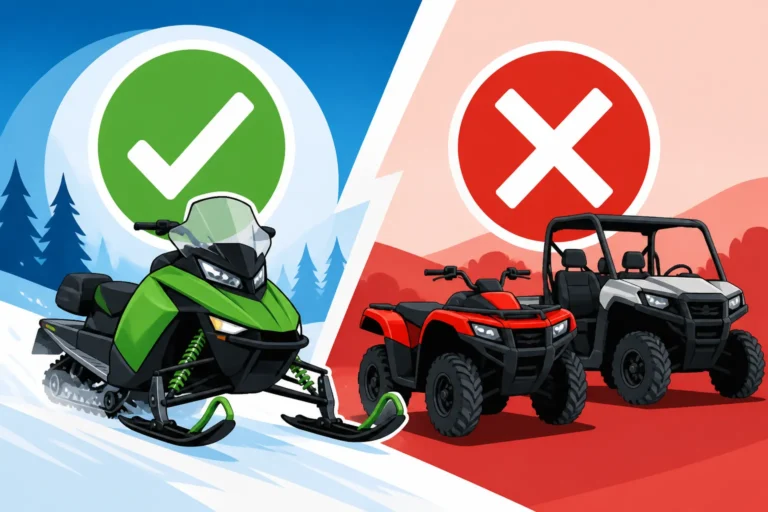
One of the biggest sources of confusion for ATV owners in Saskatchewan is the idea of "registration." Unlike cars, trucks, or even snowmobiles, the province of Saskatchewan simply does not have a provincial registration system for All-Terrain Vehicles. That's right – there’s no central database where your quad's VIN is tied to your name, and there’s no provincial plate or sticker to buy. It's easy to get this mixed up, especially when you consider that snowmobiles do require registration and display a plate. Riders often ask, [Why Saskatchewan Never Built a Quad Registry], and the answer lies in the specific legislation.
Because there's no provincial registration, there's also no provincial title for your ATV. This is a huge difference from vehicles in other provinces or states, where a title document is the ultimate proof of ownership. Without a registration system, the province also doesn’t issue any sort of "plate" or "decal" for ATVs that would confirm registration. This means when you’re riding our endless grid roads, you won't have a provincial license plate for your quad. Some smaller municipalities do have their own local plate schemes, but these are for specific areas, not province-wide. Don't let the lack of a provincial system make you think you don't need any paperwork, though.
The Absolutely Essential Documents
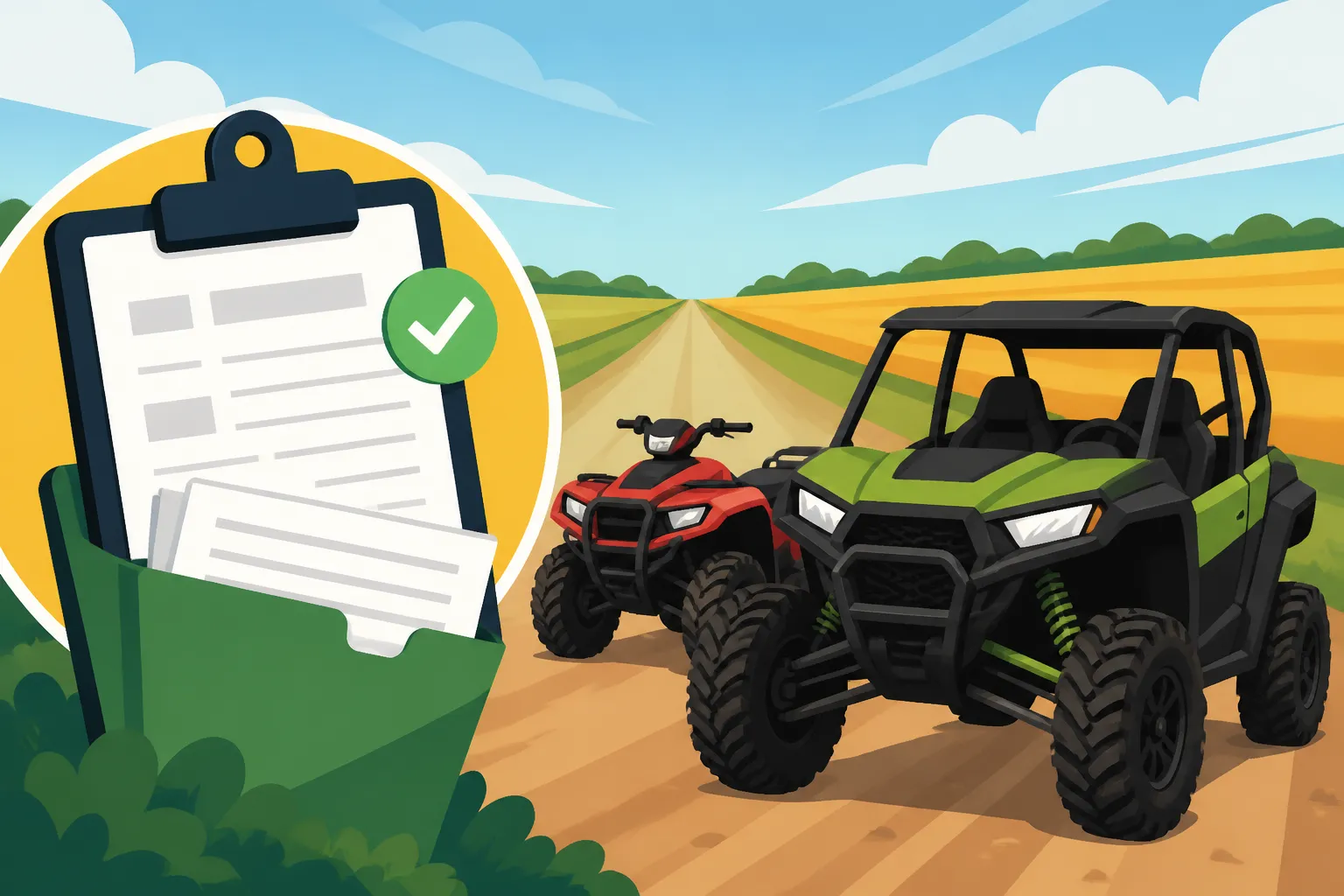
While you won't be pulling out a provincial registration or a title for your ATV, there are three absolutely critical documents you must carry with you when operating your ATV on a grid road or any public land where the All Terrain Vehicles Act applies. Failing to produce these can lead to fines or other penalties.
First and foremost, you need to have your driver’s licence. Yes, even for an ATV, a valid driver's licence is a non-negotiable requirement for anyone operating on public land, including those grid roads. This isn't just a suggestion; it's a legal obligation under the Act. Secondly, you need proof of insurance. Saskatchewan has a mandatory minimum liability insurance requirement for ATVs, and you must be able to show that you meet this. An insurance card, whether physical or digital, is what a peace officer will be looking for. Finally, and this is where it gets interesting given the lack of registration, you need proof of ownership. Since there's no title, your bill of sale is the cornerstone of proving you legally own the machine. This document acts as your de facto [Saskatchewan Proof of Ownership Without a Registry].
Why Each Document Matters to a Peace Officer
Imagine you’re stopped by a peace officer on a grid road near Humboldt or down by Weyburn. They’re not just stopping you to say hello. They have a duty to ensure that all operators are compliant with the law, and that starts with verifying who you are, if you're qualified to operate the machine, and if the machine itself is legitimately yours and properly insured. Your driver’s licence confirms you have the legal privilege to operate a motor vehicle, which extends to ATVs under provincial law. If you don't have it, it raises questions about your eligibility to be riding.
The proof of insurance is critical because it demonstrates that if you were involved in an accident, there's at least basic coverage to protect others. Riding uninsured leaves you and others incredibly vulnerable financially. Officers will certainly want to see this. Lastly, your proof of ownership, usually in the form of a bill of sale, is vital for several reasons. It helps verify that the machine isn't stolen, and that you are the rightful owner. In a province without ATV registration, this piece of paper is the primary record connecting you to your quad. An officer has a right to ask to see these documents to ensure the safety and legality of your operation.
Proving Ownership: Your Bill of Sale Is Your Best Friend
Since there’s no provincial registry or title for ATVs in Saskatchewan, your bill of sale isn't just a receipt; it's the most important document you possess to prove legal ownership of your machine. It’s what you rely on when you buy, when you sell, and especially when a peace officer asks to verify ownership.
What Makes a Valid Bill of Sale in Saskatchewan
A valid bill of sale isn't just a scrap of paper with a price written on it. To truly stand up as proof of ownership, especially in a legal or enforcement context, it needs to contain specific, clear, and accurate information. It should explicitly state the full legal names and addresses of both the buyer and the seller. The date of the sale is also crucial, establishing when ownership transferred. Most importantly, it must meticulously detail the ATV itself. This includes the make, model, year, and crucially, the Vehicle Identification Number (VIN) or serial number. The VIN is unique to your machine, acting as its fingerprint. The purchase price should also be clearly noted.
Think of it this way: if you’re ever asked to prove you own your quad, this document should leave no doubt. If you're buying a machine, whether from a dealer or a private seller, insist on a comprehensive bill of sale. For private sales, if you're not comfortable drafting one yourself, online legal document services like LawDepot offer templates for bills of sale that cover all the necessary bases. Using a structured template can save you a lot of grief down the road by ensuring all critical details are included. Without a clear [Saskatchewan Bills of Sale for a Quad], proving your ownership can become a real challenge.
When a Bill of Sale Isn't Handy (and What to Do)
Life happens, and sometimes, despite your best intentions, that physical bill of sale might be at home, tucked away in a filing cabinet. What if you’re miles down a grid road, enjoying the peace and quiet, and get stopped? While having the original paper document is always best, it's not always practical. Many riders now carry digital copies on their phones or other devices. While an officer might prefer a physical copy, a clear, legible digital image of your bill of sale, along with your driver's license and insurance, can often suffice to establish provisional proof of ownership.
If you don't have the original bill of sale and no digital copy, things get trickier. Other forms of documentation, such as a dealer's invoice (if you bought it new), a financing agreement from a bank or credit union that lists you as the borrower and the ATV as collateral, or even a sworn affidavit of ownership, might be considered. However, these are often less straightforward than a proper bill of sale. The key is accessibility; consider laminating a copy to keep in a waterproof compartment on your quad, or ensure you always have a digital backup. For creating a legally sound bill of sale, especially if you're a private seller, remember that services like LawDepot can provide a robust template.
The Role of Serial Numbers and VINs
The Vehicle Identification Number (VIN) or serial number on your ATV is more than just a sequence of characters; it's the unique identifier for your machine. When a peace officer checks your proof of ownership, they will almost certainly compare the VIN on your bill of sale to the actual VIN stamped on your ATV’s frame. This comparison is critical for confirming that the document refers to the machine you are operating.
This matching process is also incredibly important in cases of theft. Even without a provincial registration system, the VIN allows law enforcement to track stolen machines and, if recovered, return them to their rightful owners. Keeping accurate records of your VIN, ideally on your bill of sale, helps authorities in [Saskatchewan Theft Recovery Without a Registry]. It’s a vital piece of information that links you directly to your ATV, serving as a powerful deterrent against theft and aiding in recovery efforts. Always double-check the VIN when buying a machine and ensure it’s correctly recorded on all your ownership documents.
Insurance and Licensing: Non-Negotiables for Grid Road Riding
Beyond proving you own your quad, you absolutely must demonstrate that you are legally allowed to operate it and that it is adequately insured. These aren't optional extras; they are fundamental requirements under Saskatchewan law when you're riding on public land.
Driver's Licence Requirements for ATV Operators
This often surprises people, but yes, you need a valid driver's licence to operate an ATV on a public road in Saskatchewan, which includes grid roads. This isn't just for cars and trucks; the All Terrain Vehicles Act specifies this requirement. You must hold a valid driver's licence of at least a Class 5, and it needs to be carried with you. [Do You Need a Licence for an ATV in Saskatchewan?] is a question many people overlook until they're stopped.
There are specific age restrictions that tie into licensing. Generally, riders must be 16 years of age or older to operate an ATV on public land without direct supervision. However, there are exceptions for younger riders. For instance, a rider between 12 and 15 years of age can operate an ATV on public land if they are accompanied and supervised by a person who holds a valid driver's licence and has held one for at least 365 days. This is often referred to as the [Saskatchewan's 365-Day Supervisor Rule]. Ignoring these rules can lead to significant fines for both the underage operator and the owner or supervisor of the ATV.
Understanding Your ATV Insurance Obligation
Just like with your driver's licence, having proper insurance for your ATV is not a choice; it's a legal obligation when operating on public land. The All Terrain Vehicles Act mandates that all ATVs operating off private land must carry a minimum amount of liability insurance. This usually means at least $200,000 in third-party liability coverage. This coverage protects you financially if you cause an accident that results in injury to another person or damage to someone else's property.
When you're stopped by a peace officer, they will ask for proof of this insurance. This can be your physical insurance card provided by your insurer or, increasingly, a digital copy displayed on your phone. Make sure the proof clearly shows the policy holder's name, the ATV's details (VIN), the coverage dates, and the amount of liability coverage. Failing to produce valid proof of insurance can lead to hefty fines, and in some serious cases, even the impoundment of your ATV. While LawDepot is excellent for creating legal documents like bills of sale, you'll need to secure your ATV insurance directly from a reputable insurance broker or company.
How to Carry Your Documents Safely
Now that you know what to carry, how do you ensure these vital documents survive the rigors of ATV riding? Grid roads can be dusty, muddy, and sometimes even wet. Shoving your important papers into a pocket is a recipe for disaster.
Invest in a good quality, waterproof document holder or a small, hard-shell case that can be securely fastened to your ATV. Many quads have small, sealed compartments designed for storage, which are perfect for this. Alternatively, a heavy-duty Ziploc bag placed inside a waterproof backpack or fanny pack works well. For digital copies, ensure your phone is adequately protected from impact and moisture, and that it has enough battery life for your ride. It’s also wise to keep a separate, secure copy of your bill of sale and insurance at home, in case the on-board copies are lost or damaged. Remember, the goal is to have them readily accessible and in good condition when an officer asks for them.
What to Expect During a Stop on a Grid Road
Even when you've got all your ducks in a row and all your papers in order, being stopped by a peace officer can be a bit nerve-wracking. Knowing what to expect and how to respond can make the experience smoother and stress-free.
The Peace Officer's Authority and What They Can Ask
When a peace officer (which can include RCMP, municipal police, or conservation officers) stops you on a grid road while you're operating an ATV, they have the legal authority to ask for specific information and documents. They will typically request to see your driver's licence, your proof of ATV insurance, and proof of ownership (your bill of sale). They might also ask you to confirm your name and address.
Beyond documentation, an officer can also conduct a visual inspection of your ATV to ensure it meets basic safety requirements. This could include checking for proper lighting, a functioning exhaust with a spark arrestor, and that your tires are in good condition. They are also looking for any signs of impairment, so operating an ATV while under the influence of alcohol or drugs carries the same serious penalties as operating any other motor vehicle. They are simply ensuring that you are operating your machine safely and legally for the benefit of everyone on the road. Remember, [What an Officer Can Ask to See on a Grid Road] extends to confirming your compliance with various sections of the Act.
Common Mistakes Riders Make and How to Avoid Them
One of the most common mistakes riders make is not having their papers readily available. Fumbling through pockets or digging under seats while an officer waits isn't a good look. Have your documents organized in a single, accessible, waterproof location. Another mistake is arguing or being disrespectful to the officer. Even if you disagree with the reason for the stop, remaining calm and cooperative is always the best approach. You can address any disputes later through official channels.
Misunderstanding the law is another pitfall. Some riders genuinely believe they don’t need a driver's licence or insurance for an ATV, especially if they only ride on grid roads or what they perceive as "back roads." Educating yourself on the specifics of [Saskatchewan ATV Road Rules Explained] can prevent these misunderstandings. If a document is genuinely missing (e.g., you lost your insurance card), explain the situation clearly and offer to provide it as soon as possible. However, officers have discretion, and a missing document might still result in a ticket. For crucial ownership documents, using reliable templates from services like LawDepot can help ensure you have valid paperwork from the start, minimizing chances of error.
Your Rights and Responsibilities
When stopped, your primary responsibility is to comply with the officer's lawful requests. This includes providing your identification and documents. You have the right to remain silent, but you must provide identifying information if requested. You also have the right to understand why you have been stopped. If you believe your rights are being violated, remain calm and state your concerns clearly, but do not resist. Make a mental note of the officer's badge number and details of the stop.
It's your responsibility as an ATV operator to know and abide by the laws. This includes having the correct licence, adequate insurance, and solid proof of ownership. The consequences for non-compliance can range from monetary fines to more serious penalties like having your ATV seized and impounded. For instance, [Saskatchewan Seizure and Impoundment Rules] can come into play if you're found operating without a licence or insurance. Being prepared, cooperative, and knowledgeable about the regulations ensures a quick and respectful interaction with law enforcement, letting you get back to enjoying your ride on those beautiful Saskatchewan grid roads.
Here's a quick summary of the essential documents:
| Document Type | Purpose | Mandatory? | Where to Keep It | Notes |
|---|---|---|---|---|
| Driver's Licence | Proves you are legally qualified to operate. | Yes | On your person (wallet) | Must be valid Class 5 or higher. |
| Proof of Insurance | Confirms minimum liability coverage. | Yes | Waterproof compartment on ATV, or digital on phone | Physical card or clear digital image. |
| Bill of Sale | Primary proof of ATV ownership. | Yes | Waterproof compartment on ATV, or digital on phone | Should include buyer/seller info, VIN, date, price. LawDepot for templates. |
Disclaimer
This article is for general informational purposes only and does not constitute professional advice. Laws, prices and regulations vary by location and change over time. Consult a qualified professional for guidance on your specific situation.