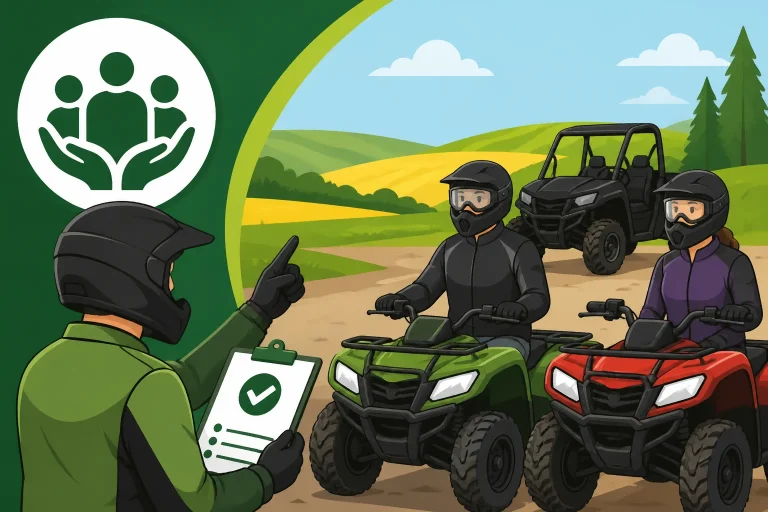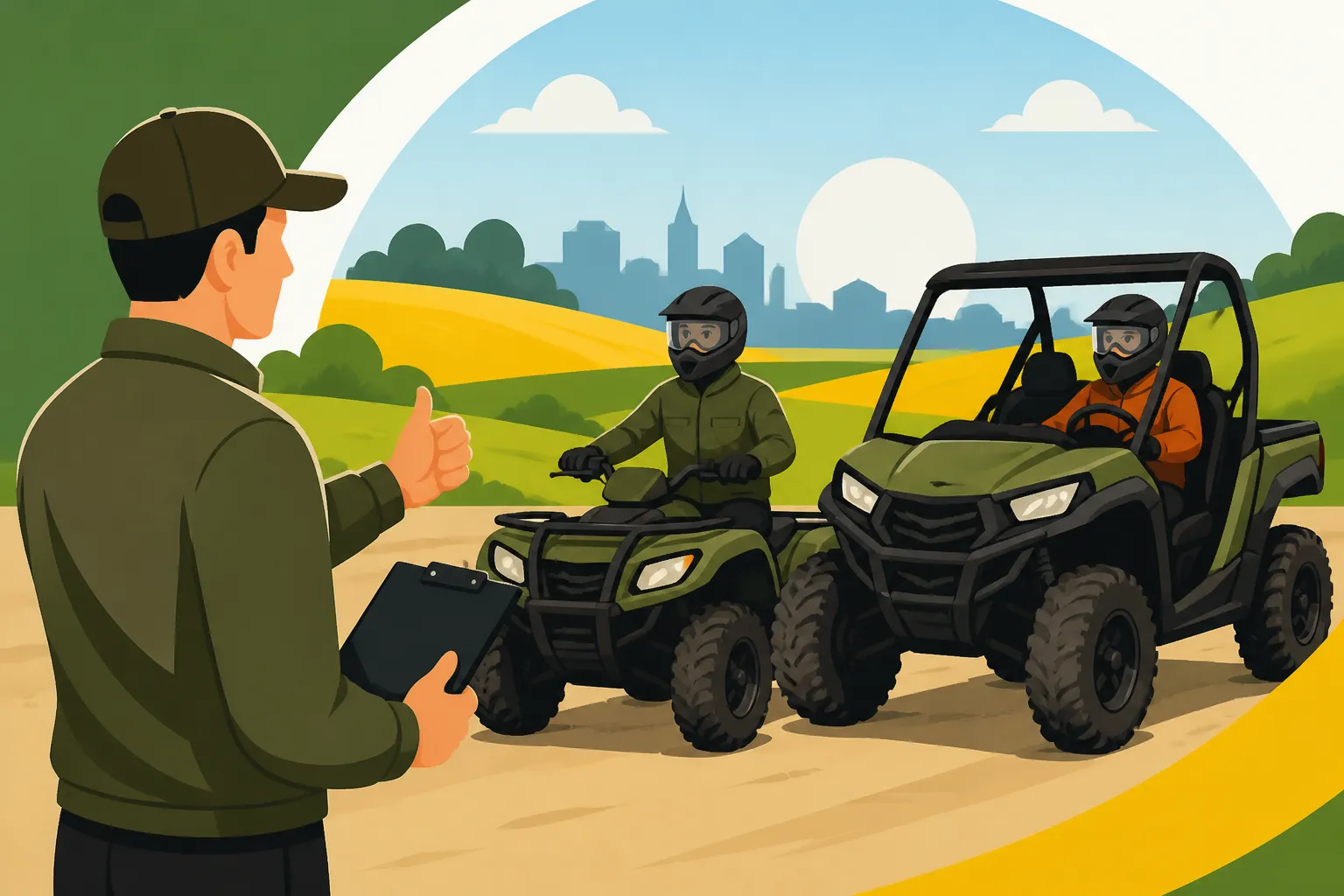
Finding an Instructor in Unity or Saskatoon
Finding an ATV safety instructor in Unity or Saskatoon can take more than a quick search: a nearby class may not meet the requirement you have in mind. The key is to confirm that the course is approved for your purpose, understand who must take it, and get clear answers about dates, location, and proof of completion before booking.
Start by identifying the course you need
People looking for an ATV instructor may have different goals. A parent might need an approved course for a young rider, while an adult might simply want practical skills training. Those are not automatically the same thing. Before you contact a provider, work out whether you need a course that satisfies a Saskatchewan legal requirement or optional training to build confidence and safer riding habits.
Saskatchewan’s age and supervision rules affect younger riders. Depending on the rider’s age and circumstances, an approved safety course may be relevant to whether they can ride under the applicable rules. Do not assume that any course advertised as “ATV training” counts. Ask the provider to confirm that the specific course and certificate are accepted for the purpose you need. For the rule details, see Saskatchewan ATV Age Requirements, Saskatchewan’s Exception for Riders 12 and Over, and How a Safety Course Replaces a Supervisor.
If you are arranging training for a child, confirm the eligibility requirements before paying or travelling. Ask whether the course has a minimum age, whether a parent or guardian must attend, what equipment the learner must bring, and whether the certificate applies to the young rider under Saskatchewan’s rules. A course may teach useful skills without replacing a supervision requirement, so get that distinction in writing if it matters to your plans.
Adults should also be clear about their purpose. The course requirement for a young rider does not mean every adult must take a safety course. An adult may still choose training to practise basic controls, understand safe operation, or prepare to ride with a group. If the course is voluntary, ask what the class covers and whether it is hands-on, classroom-based, or a combination.
A useful first question is: “Is this course approved for the Saskatchewan requirement that applies to my rider, or is it general ATV training?” If the person answering cannot tell you, ask who can confirm it. You can also review Which ATV Training Courses the Administrator Has Approved and Saskatchewan Youth Training Requirements before you commit.
Where to look in Unity or Saskatoon
For Saskatoon, begin with established organizations that provide or coordinate rider training. The Saskatchewan Safety Council and the Saskatchewan All Terrain Vehicle Association, commonly called SATVA, are sensible places to ask about current classes, instructor availability, and referrals. Their schedules and offerings can change, so contact them directly rather than relying on an old directory listing or a past event announcement. The list of Saskatchewan Safety Course Providers can help you understand what to verify when you contact a provider.
For Unity, local options may be less visible or classes may be offered only on particular dates. Ask the same established organizations whether they have an instructor serving the area, a scheduled class within practical driving distance, or a referral to an approved local provider. You can also ask a local ATV club, dealer, or rural municipality whether it knows of upcoming training. Treat those contacts as leads, not proof that a course is approved: the instructor or course provider should confirm that directly.
If there is no class in Unity on the dates you need, ask about nearby locations, a future session, or a waitlist. A provider may be able to tell you whether a class is planned, but do not make travel or accommodation arrangements until the date and location are confirmed. In Saskatoon, ask whether classes are held in the city or at a separate training site. “Saskatoon area” can mean a location outside the city, so get the exact address before booking.
A few routes to try:
- Contact the Saskatchewan Safety Council and ask about ATV training or referrals for Unity or Saskatoon.
- Contact SATVA to ask whether it offers or can identify an applicable rider course in your area.
- Ask a local club, dealer, or municipal office for leads, then independently verify the course’s approval and certificate.
- If the first provider has no suitable dates, ask whether it keeps a cancellation list or can suggest another approved option.
When a provider says it has an instructor nearby, clarify whether that person is currently teaching, whether the course is open to new participants, and whether it is the right type of training. An instructor’s past experience or a general safety credential does not by itself establish that a particular class satisfies a Saskatchewan requirement.
Compare instructors before you book
A quick phone call or email can reveal whether a class is a good fit. Give the provider the rider’s age, your location, and the reason you are seeking training. Ask about approval, course content, format, dates, location, fees, cancellation terms, and the certificate. For a named provider, confirm current costs and terms with the provider rather than relying on a third-party listing.
| What to confirm | Why it matters | A useful question |
|---|---|---|
| Course approval | A general skills class may not satisfy a legal requirement | “Is this specific course accepted for the Saskatchewan requirement we need?” |
| Rider eligibility | Age limits or other conditions may apply | “Can a rider of this age enrol and receive the relevant certificate?” |
| Instructor status | Listings may be outdated or refer to past classes | “Is this instructor currently teaching, and where is the next class?” |
| Course format | Training may include classroom and practical components | “What will the rider do during the course?” |
| Location and date | A nearby search result may refer to a different community or old session | “What is the full address, date, and start time?” |
| Equipment | Riders may need to bring protective gear or a machine | “What must the participant bring, and what is provided?” |
| Proof of completion | You may need documentation to show the rider completed the right course | “What certificate or record will we receive, and when?” |
| Fees and cancellation | Costs and policies vary by provider | “What is the total cost, and what happens if the class is cancelled?” |
Ask for the course name in writing. If the provider says the course is approved, ask who recognizes it and whether the certificate identifies the course or qualification clearly. Keep the response with your booking information. This is especially useful if you are comparing two different courses that both use phrases like “safety training” or “ATV certification.”
The course may run for several hours, and the mix of classroom instruction and practical work can differ. The duration listed for a course is not enough to judge whether it meets your needs. Ask what subjects are covered, whether riding practice is included, and what the learner must demonstrate. The provider can also tell you whether the participant needs to bring their own ATV, helmet, or other gear. Do not assume the training site will supply equipment.
If you are choosing between a class in Saskatoon and a possible class near Unity, compare the whole arrangement, not only distance. A farther class may have a confirmed date and clear information about approval; a closer option may be uncertain or offered only as general training. On the other hand, travelling farther may create extra time and transport costs. Confirm the class details first, then decide which option is practical.
Confirm the certificate and prepare for class
Before you pay, make sure you know exactly what the learner will receive when they pass or complete the course. Ask whether the provider issues a certificate, card, or another record; whether it names the participant and course; and how long it usually takes to receive. If the certificate is needed to meet an age-related rule, ask the provider to explain what it demonstrates. For details about what qualifies, check Which Certificate Satisfies the Act for a Youth.
Keep the certificate somewhere you can find it, and save a digital copy if the provider supplies one. A course record does not replace other requirements that may apply to riding, such as supervision, insurance, helmet use, or rules about where a machine can be operated. Review Saskatchewan ATV Insurance Requirements and Saskatchewan ATV Helmet Law separately rather than assuming a training certificate covers them.
Before class, ask what the participant should wear and bring. Depending on the course, that may include suitable riding clothing, a properly fitting helmet, eye protection, water, or a machine. Confirm these details with the instructor because course arrangements vary. For young participants, ask whether an adult needs to stay on site or sign forms. If the learner has little experience, tell the instructor in advance so the class can be matched to their skill level.
A short checklist can help avoid a wasted trip:
- Confirm the course is appropriate for the rider’s age and purpose.
- Verify approval with the provider, particularly if the certificate is needed under Saskatchewan rules.
- Get the date, full location, arrival time, and contact information.
- Ask what equipment and documents to bring.
- Confirm how completion is recorded and when proof will be issued.
- Keep the certificate and any course correspondence after training.
If the answers are vague, pause before booking. A reputable provider should be able to explain what it teaches, who can enrol, and what proof the participant receives. If the provider cannot confirm that the course meets the requirement you have, check with the relevant authority or an established training organization before relying on it.
Finding an instructor in Unity or Saskatoon is ultimately a matter of matching the rider to the right course, not simply finding the nearest class. Start with established organizations, use local referrals to widen the search, and independently confirm approval and certificate details. That extra check can prevent confusion later when the rider is ready to use the training.
Disclaimer
This article is for general informational purposes only and does not constitute professional advice. Laws, prices and regulations vary by location and change over time. Consult a qualified professional for guidance on your specific situation.