Why an ATV Safety Course Runs 6 to 8 Hours
An ATV safety course can take most of a day, which makes it easy to underestimate when arranging a ride, work shift or trip. In Saskatchewan, a course commonly runs six to eight hours, but the exact schedule depends on the provider and what the course includes. Knowing what fills that time helps you choose a session and arrive prepared.
Why an ATV safety course takes six to eight hours
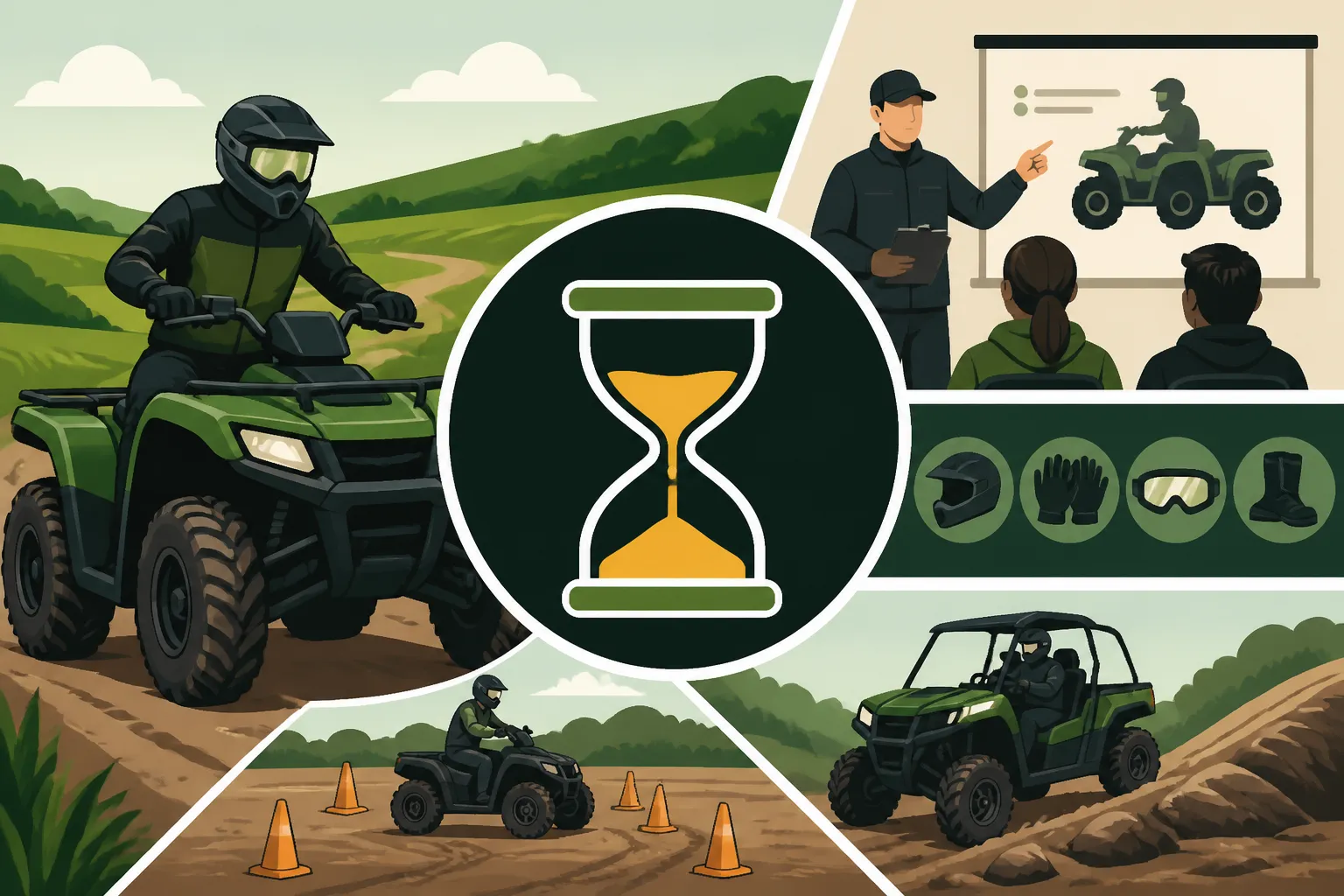
A six-to-eight-hour course is not necessarily six to eight hours of continuous riding. The time can include instruction, demonstrations, practical exercises, questions, breaks and any assessment the provider uses. The course is intended to give riders time to understand safe operation and apply it, rather than simply sit through a short rules briefing.
Course length also reflects the range of skills a learner may need. A new rider may need extra time to get comfortable with controls, braking, turning and judging terrain. Someone with experience may already understand some of the practical basics, but still needs to follow the instructor’s process and learn any material that is new to them.
The listed duration is a useful planning estimate, not a promise that every session will end at the same time. A group may move through exercises at different speeds, and the instructor may need to repeat a demonstration or answer questions. Ask the provider whether the stated hours include breaks, check-in and any final assessment.
| Course feature | Why it can affect the schedule | What to confirm |
|---|---|---|
| Classroom or group instruction | Riders need time to work through safety topics and ask questions | Whether instruction is in person and how the session is structured |
| Demonstrations and practice | Learners may need to see and try skills more than once | Whether the course includes hands-on practice |
| Group size and experience | A mixed group may need extra explanation or practice time | Whether the provider groups riders by age or experience |
| Breaks and check-in | These may be included in, or added to, the advertised duration | The expected arrival time and finish time |
| Assessment or completion steps | The instructor may need time to check understanding or record completion | What learners must do to complete the course |
These are planning considerations, not a standard timetable shared by every provider. For the course’s specific format, check with the organization offering it. The Saskatchewan Safety Course Providers can help you identify where to ask about available sessions and what each one covers.
If you are arranging the course to meet a Saskatchewan youth riding requirement, make sure the specific course is accepted for that purpose. Do not assume that any safety class, online module or certificate will count. The relevant rules and approved-course details are addressed in Which ATV Training Courses the Administrator Has Approved and Saskatchewan Youth Training Requirements.
What may happen during the course
Providers can organize their sessions differently, so there is no single hour-by-hour agenda that applies everywhere. A course may combine explanation with demonstrations and supervised practice. The overall aim is to help a rider make safer decisions before and during a ride, and to understand how the machine responds to common actions.
Instruction and safety topics
The instructional portion may cover the machine’s controls, basic operating procedures, protective equipment and ways to reduce risk. Depending on the course, the instructor may also discuss riding conditions, terrain, passengers, pre-ride checks and how to respond when something goes wrong.
Some topics are more useful when learners can ask questions about their own situation. A young rider, for example, may need to understand the difference between being trained and being legally permitted to ride in a particular place. A course certificate does not automatically override every age, supervision, road-use, insurance or land-access rule. For the wider age framework, see Saskatchewan ATV Age Requirements and Saskatchewan Rules for a 12-Year-Old Rider.
Demonstrations and practical exercises
If the session includes hands-on practice, learners may have time to become familiar with the controls and work through basic riding skills under an instructor’s direction. The amount of practice can depend on the facility, equipment, group size and the range of experience in the group.
Practical learning takes time because rushing can defeat the point. Riders need a chance to follow instructions, try a skill, get feedback and try again when appropriate. That does not mean every course includes the same exercises or that every learner will finish with identical experience. Ask the provider what equipment is supplied, whether participants use their own machines, and what protective gear is required.
A course is also a chance to identify questions that are hard to settle by watching a video alone. For instance, learners can ask how a particular control works, why a riding position matters, or what to do when a trail surface changes. The instructor’s answer may be specific to the course setup and the machine being used, so follow the provider’s guidance rather than assuming one technique suits every model.
Breaks, group pace and completion
A full-day session needs time for breaks and transitions between activities. The posted duration may or may not include those periods. If you have a ride or pickup scheduled afterward, leave a buffer rather than planning to leave the moment the advertised hours are up.
Group pace is another reason a course can run toward the longer end of the estimate. A group with several beginners may need more explanation and practice than a group of experienced riders. Instructors may also adjust the session to weather, site conditions or the needs of participants.
Before booking, ask what counts as successful completion. Some providers may require attendance for the full session; others may explain particular participation or assessment steps. If you need a certificate for a legal purpose, confirm how and when it is issued, and keep the document somewhere you can find it later.
How to plan and book a course
The easiest way to avoid a scheduling surprise is to confirm the details before committing. Course listings may give a broad duration but leave out practical matters such as arrival time, equipment, age eligibility or the certificate process. A short call or message to the provider can answer those questions.
- Check why you need the course. If it is for a youth riding requirement, verify that the course is accepted for that requirement. The rules may distinguish between completing an approved course and riding under a qualifying supervisor; those are not interchangeable in every situation. See How a Safety Course Replaces a Supervisor for the relationship between training and supervision.
- Confirm the full schedule. Ask when participants should arrive, when the session is expected to finish, and whether breaks are part of the stated six to eight hours.
- Ask about age and prerequisites. Confirm who can attend, whether a parent or guardian must be present, and whether learners need any previous experience.
- Find out what equipment is provided. Ask whether the provider supplies an ATV, helmet or other gear, or whether participants must bring their own. If you are bringing equipment, ask about any requirements before the session.
- Check the location and weather plan. Practical instruction may take place outdoors. Confirm where to meet, what clothing is suitable and what happens if conditions affect the session.
- Clarify the completion record. Ask whether the provider issues a certificate or other confirmation, how it is delivered, and whether you should keep a copy for later.
If the course is aimed at a young rider, explain the purpose when contacting the provider. That helps the provider confirm that the session is suitable and that its completion record will meet the need you have in mind. The details matter especially when a certificate is intended to satisfy a legal requirement rather than simply provide useful training.
Keep the course confirmation and completion document with other important machine paperwork. A certificate can show that a rider completed training, but it is not a substitute for proof of insurance or permission to use land. The materials an officer may ask to see are a separate question; Proof Shown to a Peace Officer explains why it is useful to understand what documents serve which purpose.
What the course does and does not do
A safety course can build knowledge and practical awareness, but it does not grant blanket permission to ride anywhere in Saskatchewan. Riders still need to follow applicable rules for age, supervision, equipment, insurance, roads, trails and land access. A course certificate does not create a provincial ATV registration or replace local restrictions.
The legal value of the course depends on the rule it is meant to address and whether the course is accepted for that purpose. If you are relying on training instead of a supervisor, confirm that the course and completion record meet the applicable requirement before riding. The details in Saskatchewan’s 365-Day Supervisor Rule can help clarify what supervision involves when that route applies.
It is also worth separating course duration from course quality. A longer session is not automatically a better fit for every learner, and a short course is not automatically inadequate. Compare the provider’s approved status, topics, practical component, instructor information and completion requirements. If the course is for a new or young rider, make sure there is enough opportunity to ask questions and practise under direction.
After training, continue learning from the rules that apply to the specific ride. A course does not tell you whether a municipal road is open to ATVs, whether a park requires a permit, or whether you have permission to cross private land. Check the relevant local rules before unloading or setting out. When you book, treat six to eight hours as a realistic block of time, then verify the provider’s schedule and requirements directly.
Disclaimer
This article is for general informational purposes only and does not constitute professional advice. Laws, prices and regulations vary by location and change over time. Consult a qualified professional for guidance on your specific situation.