Gates on a Grazing Lease
There's nothing quite like the open prairie and bush of Saskatchewan, the thrill of exploring on your ATV or UTV. But as riders, we often come across gates, especially when navigating Crown land that's been leased out for grazing. That moment of hesitation is real: can I open this? Do I need permission? What happens if I leave it open? This guide is here to help you understand the rules and etiquette around gates on grazing leases, ensuring you can ride responsibly and respect the land and its occupants.
Understanding Grazing Leases in Saskatchewan
Riding an ATV or UTV across Saskatchewan's vast landscape often means encountering various types of land, from pristine wilderness to working agricultural areas. Among the most common are Crown grazing leases, which can sometimes be a source of confusion for recreational riders. It’s crucial to understand what these leases entail and why they're managed the way they are.
What is a Grazing Lease?
Essentially, a grazing lease is an agreement where the provincial government, as the owner of Crown land, allows a rancher or farmer to use that land for livestock grazing for a specific period. While the land remains Crown land—meaning it's technically public property—the leaseholder has specific rights and responsibilities to manage it for agricultural purposes. This creates a unique dynamic: it's public land you can often access, but it's also actively used for private business. Think of it like a shared pathway through someone's garden; you have the right to pass, but you wouldn't start digging up their carrots.
For ATV riders, this means exercising a heightened level of awareness and respect. You're not just riding through open wilderness; you're traversing someone's livelihood. The cattle you see, the fences, and especially the gates, are all part of a rancher's operation. Understanding this dual nature – public access for recreation alongside private use for livestock – is the first step toward responsible riding. You might be out for a relaxing ride, but the rancher is out there working. It's a fundamental aspect of [Saskatchewan Crown Land Riding Explained].
Why Are There Gates on Grazing Leases?
The reason gates exist on grazing leases is straightforward and vital: to contain livestock. Cattle, sheep, or horses grazed on these lands need to be kept within specific boundaries to prevent them from wandering off. Imagine the nightmare for a rancher if their entire herd dispersed across the countryside, potentially onto busy highways or neighbouring properties. Gates are the primary defense against this.
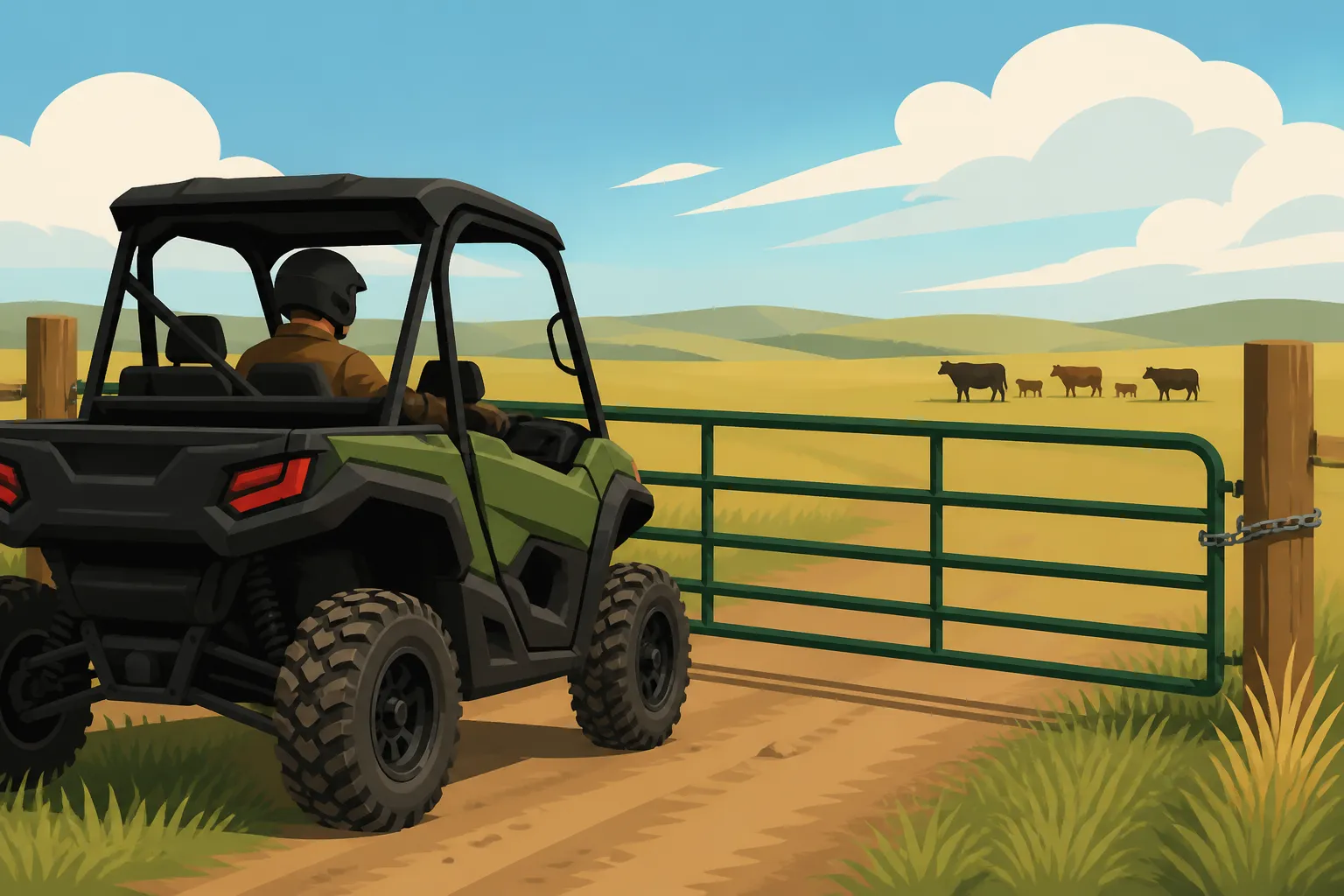
These gates serve multiple critical functions beyond just containment. They prevent animals from straying onto public roads, which could lead to dangerous accidents and significant financial loss for the rancher. Gates also help manage the herd by separating different groups of animals, allowing for rotational grazing, or protecting vulnerable areas like calving pastures. You might encounter various types, from simple wire gates that require careful unhooking and rehooking, to more substantial wooden or metal gates. Even in areas with cattle guards, you might still find a gate alongside for vehicles or situations where the cattle guard isn't sufficient for containment. Understanding their purpose makes the "close the gate" rule much more impactful.
Navigating Gates on Leased Crown Land
Encountering a gate on a grazing lease can feel like a test of your trail etiquette. The key is to remember that these aren't just obstacles; they're essential tools for the rancher. Your actions at each gate have direct consequences for their operations and the welfare of their animals.
The Golden Rule: Close All Gates Behind You
This isn't just a suggestion; it's the most critical rule of riding on grazing leases. Always close all gates behind you, and ensure they are properly secured. Failing to do so can have devastating repercussions. Livestock can wander onto roads, causing collisions with vehicles, which is dangerous for both drivers and animals, and results in significant financial loss for the rancher. Animals might mix with other herds, leading to disease transmission or lost genetic lines. In some cases, cows might separate from their calves, or vice versa, causing distress and potential death.
Imagine you're riding through a beautiful section of Crown land, enjoying the solitude. You come across a gate, open it, pass through, and in your haste to continue the adventure, you simply don't latch it properly. A few hours later, a small herd of cattle ambles through the open gate, eventually finding their way onto a busy grid road. A family in a car, enjoying their weekend drive, suddenly encounters cattle on the road, resulting in a serious accident. Who is responsible? Legally and morally, the rider who left the gate open bears a heavy burden. It’s a preventable tragedy that costs everyone involved. Always take the extra minute to ensure the gate is firmly latched, whether it's a wire, chain, or simple hook.
Seeking Permission vs. Implied Access
While Crown grazing leases generally allow public access for recreational activities like ATV riding, a little respect and communication go a long way. Technically, you don't always need explicit permission to ride on Crown land that's under a grazing lease, as it's still public property. However, this implied access comes with the expectation of responsible behaviour. The best practice, especially if you plan to stray from established trails or roads, or if you're exploring a new area, is to seek permission from the leaseholder.
Contacting the rancher isn't just a courtesy; it can prevent misunderstandings and potential conflicts. They might be able to tell you about active calving areas you should avoid, recent fence repairs, or specific hazards on the land. They might even share helpful tips about the best routes. This kind of due diligence aligns with responsible land use and can be a huge benefit. You can often find leaseholder information through local Rural Municipalities (RMs) or by looking for signage at access points. By taking this proactive step, you're building goodwill and ensuring a smoother experience for everyone. This is a crucial aspect of [Getting Consent From a Grazing Lease Holder] and [Reaching a Rancher Before You Cross Their Lease]. Remember, while the land is Crown, it's also someone's workplace.
What to Do If You Encounter Livestock
It's almost inevitable that you'll encounter livestock when riding on Crown grazing leases. When you do, the key is a calm, slow, and respectful approach. Never, under any circumstances, should you attempt to herd, chase, or harass livestock with your ATV or UTV. These are working animals, and startling them can have serious consequences.
Approach animals slowly and quietly. Give them ample space to move away from your path. If they're blocking a trail, stop your machine and wait patiently. Most cattle will eventually move on their own. If you have to pass, do so at a crawl, maintaining as much distance as possible. Be especially cautious around cows with calves, as mother cows can be very protective. Bulls, too, demand a wide berth. Remember, your ATV is a powerful machine, and while you might be having fun, for livestock, it can be a source of stress and fear. Respecting their space and well-being is paramount for [Riding Around Cattle on a Grazing Lease] and ensuring continued access to these areas for all riders.
Responsibilities and Etiquette for ATV Riders
Riding an ATV or UTV on Saskatchewan's Crown grazing leases is a privilege that comes with significant responsibilities. It's not just about following the law; it's about being a good steward of the land and a respectful neighbour to those who rely on it for their livelihood.
Respecting Property and Infrastructure
When you're riding on a grazing lease, every fence, gate, and water trough is part of a rancher's operational infrastructure. Damaging these items can have immediate and severe consequences for their ability to manage their livestock, leading to lost animals or significant repair costs. It should go without saying, but cutting fences, breaking locks, or vandalizing any part of this infrastructure is not only disrespectful but also illegal. Such actions can lead to serious charges, including property damage and trespass, under [Saskatchewan Trespass Law for Riders].
Beyond intentional damage, even careless actions can cause problems. For instance, repeatedly riding alongside a fence line in wet conditions can damage the ground and compromise the fence's integrity. Always stay on established trails or routes where possible. If you need to stop, do so in a way that doesn't block gates or access points. And, of course, the "leave no trace" principle applies vigorously here: pack out everything you pack in, including any trash, to keep the land pristine and free from hazards for livestock. This diligence is a core part of [Saskatchewan Crown Land Access Rules].
Communication and Due Diligence
Before heading out to ride on Crown land with grazing leases, doing a little homework can save you a lot of headaches. Start by checking with the local Rural Municipality (RM) office. They can often provide information about specific bylaws, temporary closures, or even contact details for leaseholders in the area you plan to visit. A quick phone call or a visit to their website can clarify many questions and ensure you’re not inadvertently riding where you shouldn’t be. This proactive step is invaluable and an excellent habit to form, much like checking with your RM about [Asking Your Rural Municipality About a Grid Road].
Furthermore, consider how your equipment can support responsible riding. While you shouldn't use your ATV to move cattle, sometimes debris or mud near a gate can make it tricky to pass. Equipping your UTV with a reliable winch from a reputable brand like SuperATV can be a lifesaver if you get momentarily stuck, allowing you to quickly self-recover without causing further disturbance. Similarly, robust skid plates, also available from SuperATV, protect the underside of your machine from rocks and stumps, preventing breakdowns that could leave you stranded and potentially needing to trespass for recovery. Being prepared means being responsible.
Penalties for Misuse
It’s important to understand that irresponsible behaviour on Crown grazing leases carries real consequences. Beyond the ethical implications, there are legal and financial penalties for actions that harm livestock or damage property. If your actions lead to livestock escaping, being injured, or dying, you could face civil liability for the rancher’s losses, which can be substantial. This might include the cost of searching for lost animals, veterinary bills for injured ones, or the market value of deceased livestock.
Beyond civil claims, you could also face fines for property damage, trespass, or other infractions under provincial legislation like [The All Terrain Vehicles Act Runs 36 Sections]. These aren't minor issues; they directly impact someone's livelihood and can quickly escalate into costly legal battles. The message is clear: ride with respect, understand your responsibilities, and avoid actions that could lead to these severe penalties. It's about protecting yourself and respecting the working landscape.
Practical Tips for Gate Navigation
Navigating gates on grazing leases is a routine part of ATV and UTV riding in Saskatchewan, and with a few practical tips, you can make it a smooth and respectful experience for everyone. Preparation and awareness are your best allies.
Tools and Gear for Gates
While you won't need a specialized "gate-opening tool," a few items can make the process easier and safer:
- Gloves: Always wear a good pair of riding gloves. Gates, especially older wire gates, can be rusty, have sharp edges, or even loose wires. Gloves protect your hands from scrapes, dirt, and potential tetanus. They also improve grip, making it easier to handle latches.
- Winch: Not for opening gates, but incredibly useful if you find yourself bogged down in mud or stuck on a tricky patch near a gate. Instead of struggling for an hour and potentially damaging the surrounding area, a winch lets you extricate your machine efficiently. Companies like SuperATV offer a range of powerful, reliable winches that can get you out of a bind without excessive effort. This allows you to quickly get through the gate and close it without lingering unnecessarily.
- Awareness: This is perhaps your most important "tool." Before you even approach a gate, slow down. Look for any signage that might indicate specific rules or closures. Observe the condition of the gate and how it's latched. Plan your approach and exit, ensuring you have enough space to stop, dismount (if necessary), open the gate, pass through, and then securely close it.
Planning Your Route
Effective route planning is crucial when riding through areas with grazing leases. Don't just point and go. Utilize maps – whether digital on your phone or a traditional paper map – to identify Crown land, known grazing lease boundaries, and potential access points. Many online mapping tools allow you to overlay land ownership data, which can highlight these areas.
Before you leave, consider making contact. If you know who holds the lease, a quick call to say you plan to ride through their leased area is an act of goodwill that can prevent any misunderstandings. They might even offer valuable insights into current conditions, such as recent cattle movements or areas to avoid due to wet ground. This proactive approach mirrors the advice for [Getting Written Permission From a Farm Landowner] and [Occupied Crown Land and Permission], showing respect for those who manage the land daily. Knowing where you are and what to expect will not only enhance your ride but also minimize the risk of accidental trespass or conflict.
Sharing the Land Responsibly
Ultimately, riding on Saskatchewan's Crown grazing leases is about sharing a valuable resource. These lands are used by ranchers, hunters, hikers, and other recreationalists. Your actions directly impact others' ability to use and enjoy these spaces. When you demonstrate respect for the land, the livestock, and the leaseholders, you contribute to a positive reputation for ATV and UTV riders as a whole.
This means not just closing gates but also maintaining appropriate speeds, especially near livestock, and staying on designated trails or routes to minimize environmental impact. It means being prepared for emergencies and carrying a basic first-aid kit, as well as being mindful of fire bans, which are especially critical in dry grazing areas. By being a responsible rider, you help ensure that these beautiful and productive lands remain accessible for generations to come, fostering a sense of community among all who appreciate Saskatchewan's diverse landscape. Remember, your goal is to enjoy the ride without negatively affecting the land or its current occupants, ensuring adherence to [Saskatchewan Grazing Lease Permission].
Gate Etiquette on Grazing Leases
| Action | Why It Matters | Best Practice |
|---|---|---|
| Opening Gates | Essential for passage, but easy to forget to close. | Open, pass through quickly, then close immediately and securely. |
| Closing Gates | Prevents livestock escape, road hazards, financial loss. | Always close and properly latch the gate behind you, every single time. |
| Contacting Leaseholder | Shows respect, provides valuable information. | Attempt to reach the rancher for specific area info or if you have questions. |
| Encountering Livestock | Avoids startling animals, prevents harm. | Slow down, give wide berth, never chase or herd with your machine. |
| Respecting Infrastructure | Prevents damage to vital ranching equipment. | Do not cut fences, break locks, or damage troughs; stay on established paths. |
| Leaving No Trace | Keeps land pristine, safe for animals. | Pack out all trash and debris; minimize environmental impact. |
Disclaimer
This article is for general informational purposes only and does not constitute professional advice. Laws, prices and regulations vary by location and change over time. Consult a qualified professional for guidance on your specific situation.