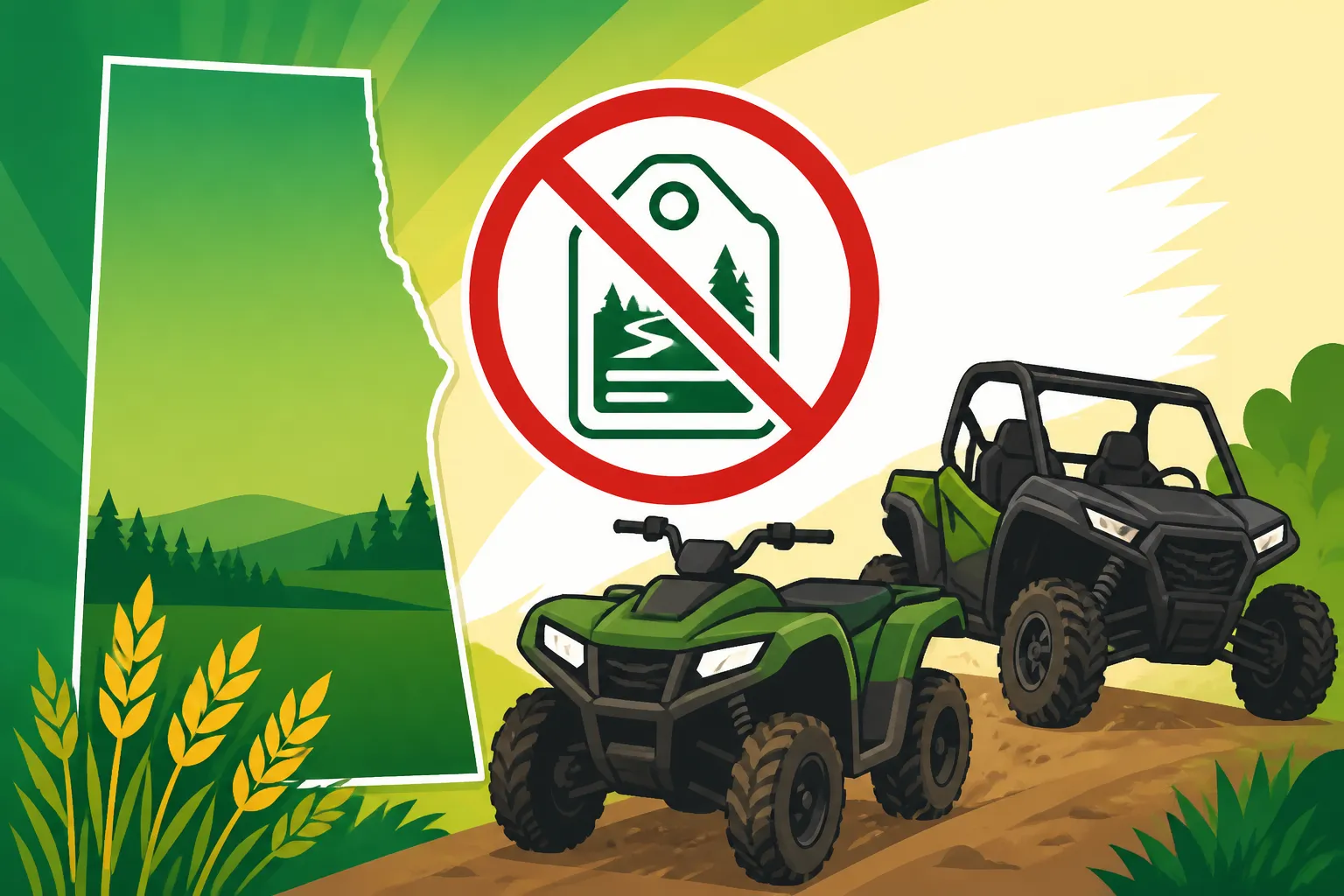
Saskatchewan Has No Provincial Trail Pass
Saskatchewan riders often expect one trail pass to cover every provincial park, Crown land route, club trail and municipal road. That pass does not exist. The practical answer is to check the rules for each place you plan to ride, then carry the separate permits, proof of insurance and ownership documents that may apply along the way.
What Saskatchewan means by having no provincial trail pass
There is no single pass for every Saskatchewan trail
Saskatchewan does not issue one province-wide ATV or UTV trail pass that gives riders general access to every riding area. You cannot buy a universal permit and assume it covers a provincial park trail, a club-maintained route, a municipal road and a Crown land area. Access is managed differently depending on who controls the land and what kind of route you intend to use.
That can feel needlessly complicated when you are planning a weekend trip. A rider may have a permit for one park, a local plate from a municipality and insurance for the machine, yet still need to check whether a nearby trail is open or whether permission is required. The key is to treat each permission as specific to its issuer and location rather than as a province-wide credential.
The absence of a provincial trail pass also does not mean that every trail is freely open. Some areas have designated routes, seasonal closures, permit conditions, municipal bylaws or landowner requirements. A place that appears on a map—or that someone rode last summer—may not be available for riding today.
A trail pass is different from a municipal plate
Some Saskatchewan municipalities operate local ATV plate or permit schemes. These can apply to riding within the municipality, on specified roads or in other areas set out by local rules. A municipal plate is not a provincial trail pass, and it does not automatically grant access to routes outside the municipality that issued it.
That distinction matters when you are trailering to a ride. If you pick up a local plate near your destination, do not assume it will be accepted in another town or resort area. Ask which land and routes it covers, whether there are prohibited streets or areas, and whether the permit has an expiry or display requirement. The local rules—not the word “plate” on the permit—determine what it authorizes.
For a fuller explanation of how these local schemes differ from a province-wide credential, see [Saskatchewan Municipal ATV Plates Explained]. A local plate may be useful or required for a particular place, but it should not be treated as a substitute for checking trail access.
A permit does not replace the other riding requirements
A trail permit, where one is required, generally addresses access to a particular area or route. It does not replace other requirements that may apply to the rider or machine. Riders still need to consider insurance, age and supervision rules, equipment requirements, land access, fire restrictions and any road-use bylaws.
It helps to keep these questions separate. “Am I allowed to ride this route?” is not the same as “Do I have permission to use the land?” or “Can I ride on this road?” A permit may answer one question while leaving the others untouched. For example, permission to use a designated trail does not necessarily authorize riding along an adjacent road or crossing private land to reach it.
If you are just starting to sort out the paperwork, Saskatchewan Registration Questions Riders Ask can help distinguish provincial registration questions from local access rules. Saskatchewan’s lack of a provincial trail pass should not be mistaken for a lack of rules.
Which permissions may apply to your ride
Provincial parks can have their own trail permit process
Some Saskatchewan provincial park riding areas use their own permit or acknowledgement process for designated ATV routes. The details depend on the park and its operating rules. A permit for one park should not be assumed to work at another, and a park permit should not be treated as permission to ride anywhere else in the province.
In areas where a permit is required, the process may involve receiving information about the park rules, completing a use acknowledgement and displaying or carrying the permit as directed. The steps can be different from what a rider expects if they are used to a paid pass or a vehicle registration sticker. Check the park’s own instructions before loading up, especially if you are arriving outside regular office hours or plan to ride early.
Some park trail permits are provided without a charge, but “free” does not mean “optional.” A no-cost permit can still be a condition of using a designated trail. See Saskatchewan Park Trail Permits Are Free and How to Get a Saskatchewan Park Trail Permit for more on the general process, and confirm the current instructions with the park you plan to visit.
Crown land access is not a general permit system
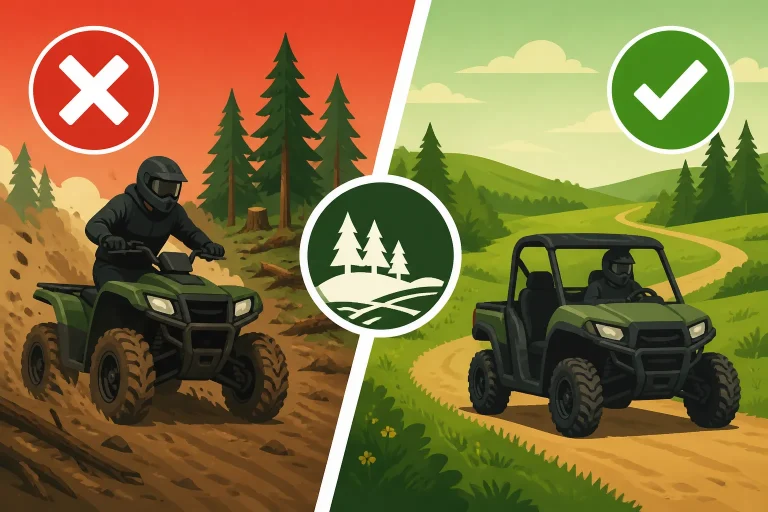
Crown land is not one continuous open riding area with a universal access pass. The route may be affected by closures, land use, an order, an occupied area or the need to obtain permission. A rider should identify the specific land and route, rather than assuming that public ownership automatically means motorized recreation is allowed everywhere.
If a route crosses land occupied or used by someone else, access may require contacting the appropriate person or land user. Grazing leases, camps, cabins and other occupied areas can raise access questions even when the land itself is Crown land. Staying on an established route and respecting gates, signs and closures helps avoid turning a planned ride into a trespass or conflict.
For the broader access picture, read Saskatchewan Crown Land Access Rules. If you are considering a club-maintained route, Saskatchewan Club Trails on Crown Land is also relevant: a club trail agreement or route map does not create universal access to all nearby Crown land.
Private land and municipal roads have separate rules
Private land access depends on the landowner’s permission and any applicable rules. A rider should not assume that a trail, field edge or cutline is open because it looks unused. If you need to cross private land to reach a public trail, get permission before the ride and be clear about where you intend to travel.
Municipal roads and local trails can be governed by bylaws that differ from one community to another. A route might be open to ATVs in one municipality and prohibited in the next. A local plate may be required in some places, while another area may not have a plate scheme at all. Posted signs and local rules matter, including restrictions on beaches, lakeshores, streets and designated areas.
If your plan includes riding beyond a park trail, ask the municipality or land manager which routes are open and whether a local permit applies. The province-wide pass that would simplify all of this is not available, so verifying each transition between land types is part of the trip planning.
How park permits and local plates differ
Compare the permission with the place it covers
Before buying or applying for anything, identify where you plan to ride and who manages that area. A park office, rural municipality, village office, trail club and private landowner may each answer different questions. The most useful question is not simply “Do I need a pass?” but “What permission applies to this exact route, and who issues it?”
The table below is a planning aid, not a substitute for local confirmation. It shows why one document rarely answers every access question.
| Riding location or route | Possible requirement | Who to check with | What not to assume |
|---|---|---|---|
| Designated provincial park trail | Park-specific permit or acknowledgement may apply | Park office or official park instructions | That a permit from another park is accepted |
| Municipal road or local riding area | Local bylaw and, where applicable, a municipal plate | Town, village or rural municipality | That a plate covers neighbouring communities |
| Club-maintained route | Route access conditions, seasonal status and club guidance | Trail club or route manager | That club membership alone opens all nearby land |
| Crown land route | Access status, closures, orders or permission for occupied land | Relevant land manager or occupant | That all Crown land is open to motorized riding |
| Private land crossing | Landowner permission | Landowner | That an old track or open gate means permission |
| Public road connection | Road-use rules and local bylaw | Municipality and applicable authorities | That a trail permit authorizes road riding |
Confirm what a local plate actually authorizes
Municipal permits can be especially confusing because they may look like registration plates. Saskatchewan does not have a provincial ATV registration plate that functions as a universal trail credential. A municipal plate or sticker should be understood through the local scheme that issued it: where it is valid, what machine it covers, how it must be displayed and when it expires.
If a ride crosses municipal boundaries, do not rely on the first municipality’s answer for the whole trip. Ask each relevant community whether its rules allow the planned route and whether it has a permit requirement. A road that connects two permitted riding areas can still have its own restriction.
Visitors should also check whether a local scheme applies to out-of-area machines and riders. The answer may depend on the municipality’s bylaw and the intended use. For more on the visitor question, see Saskatchewan Plate Rules for Visitors. Local permission is local; it does not become provincial simply because the rider is visiting from elsewhere.
Don’t confuse trail access with road permission
A trail permit is not automatically permission to ride on a road, ditch or highway. Road access can be limited by provincial rules and municipal bylaws, and the route may have specific restrictions. Likewise, permission to use a road connection does not necessarily authorize riding on a trail or parcel of land beside it.
This distinction is easy to overlook when a trailhead is reached by a short road segment. A map may show the trail and the road as one continuous line, but they can fall under different authorities. Before setting off, identify where the trail ends, whether the connector is open to ATVs and whether the rules change at a municipal boundary.
When in doubt, check the route with the authority responsible for that section. If you cannot establish that a road or trail is open, choose a confirmed route instead of relying on what another rider remembers. Conditions and bylaws can change, and a past ride is not proof of current permission.
Planning a trip without a universal pass
Make a route-by-route permission checklist
Start with the actual route rather than with a pass. Write down the trailhead, planned trails, road crossings, municipal areas and any land you need to cross. Then identify the manager or authority for each part. This sounds like extra work, but it prevents the common problem of arriving with the right document for the first stop and no permission for the next one.
A practical checklist can include the following:
- Identify the riding area and the trailhead.
- Confirm that the route is open for ATV or UTV use on your planned date.
- Check whether a park permit, acknowledgement or local plate is required.
- Confirm any municipal road or local area restrictions.
- Ask whether Crown land access or land-user permission applies.
- Check seasonal closures, fire restrictions and posted notices.
- Confirm insurance and rider requirements for the machine and group.
- Save contact information for the relevant park office, municipality or club.
For a trip that crosses multiple land types, keep the answers beside the route notes. A quick call or message before departure can be easier than trying to interpret a sign at the trailhead after a long drive.
Check the rules close to departure
A route that was open when you first planned the trip may later be affected by a fire restriction, weather damage, seasonal closure or local decision. Recheck close to departure, especially if you are travelling to northern riding areas or a park where access depends on designated trails.
Make a habit of checking official park or municipal information and asking a trail club about current conditions when the route is club-maintained. Do not treat a social media post or an old screenshot as the final word. Those can be useful clues, but they may not reflect a closure or a rule change.
For fire-related planning, Saskatchewan Wildfire Season Rules for Riders is a useful companion topic. Fire conditions can affect where riding is allowed and what precautions are expected, so a trail permit alone is not enough to settle whether the route is available.
Plan for weak cell service and keep records accessible
Some riding areas have limited or unreliable cell service. Save key information before leaving home: permit instructions, route details, office contact numbers and any confirmation of access. If the permit is digital, make sure it is available offline or keep a copy in a format you can access without a signal.
Paper records can help as a backup. A small waterproof document pouch—whether bought locally or through a retailer such as Amazon—can keep a printed permit, insurance information and ownership notes together in a wet gear bag. The point is not the brand or container; it is being able to find the documents when a park employee or officer asks.
A saved map is also useful when a route changes or a trail junction is unclear. If you use an electronic map, consider carrying a charged power bank and a paper backup for remote sections. An Amazon power bank may be one option for someone who needs to keep a phone or GPS charged, but check that the device and charging setup suit your equipment and the conditions. Keep the information organized before departure rather than trying to download it at the trailhead.
What riders from outside Saskatchewan should know
An out-of-province pass does not create Saskatchewan access
A visitor may arrive with a trail pass, registration or permit from Alberta, Manitoba or another jurisdiction. That credential may be useful in its home area, but it does not automatically replace Saskatchewan park, municipal or land-access requirements. There is no provincial Saskatchewan trail pass for it to reciprocate with.
Think of an out-of-province permit as a document whose authority is tied to the place that issued it. It might help identify the machine or show that the rider follows certain rules elsewhere, but it does not grant permission to ride a Saskatchewan route unless the local authority specifically recognizes it for that purpose.
Visitors should confirm the route rules just as a Saskatchewan resident would. Start with the destination park or municipality, then check the land access and insurance requirements. Saskatchewan Rules for an Out-of-Province Machine covers the broader issue of bringing a machine into the province.
Carry insurance information and ownership records
Even when a provincial ATV registration document is not part of the process, carrying proof of ownership is sensible. A bill of sale, purchase receipt, insurance documents and a clear record of the machine’s serial number can help answer practical questions if the machine is stopped, damaged or involved in a dispute.
Keep the documents together and make a digital backup, but do not rely only on a phone if the route has poor service or the battery may run down. A printed insurance card or policy information can be a useful backup. If you carry documents on the machine, protect them from water, dust and vibration.
Visitors should also check the insurance requirements that apply to their riding location and circumstances. A policy from another province may have terms worth reviewing before the trip, particularly if the machine will be used off-road or by another rider. See Saskatchewan Insurance Rules for Visitors for more on the visitor-specific insurance question.
Ask about local permits before unloading
If you are trailering into a community with its own plate scheme, contact the local office before the trip. Ask whether a visitor needs a permit, whether the machine must display it in a particular way and which routes the scheme covers. Do not assume the permit is available at the trailhead or that the office will be open when you arrive.
This is particularly helpful for riders who are planning to arrive after work, on a weekend or during a busy riding event. A quick call in advance can prevent a wasted trip or an awkward search for an open office. Save the answer and, if practical, note the name of the office or staff contact who provided it.
Visitors should also ask whether any local rules apply to passengers, road crossings or specific prohibited areas. A visitor’s home-jurisdiction rules may differ from Saskatchewan rules, and local bylaws can add another layer. Arriving prepared is easier than discovering a restriction after unloading.
What to carry when there is no one-pass solution
Keep access documents separate from machine paperwork
It helps to organize papers into two groups. Access documents include park permits, local plates or acknowledgements, and written permission for land access. Machine paperwork includes insurance information, proof of ownership and any sale documents. They answer different questions, so keeping them together but clearly separated can make a roadside or trailhead check less stressful.
For example, a park employee may need to see the permit associated with the trail, while an officer or insurer may ask for different information about the machine or rider. If everything is buried in a phone gallery or mixed into a gear bag, a simple request can turn into an irritating search.
Keep digital copies in an offline folder and carry a paper backup for essential documents. A waterproof pouch can be helpful for the paper copies, especially on a muddy or rainy ride. If you choose one through Amazon, check the size and closure rather than assuming every pouch will protect papers from prolonged exposure to water.
Carry the contact details that answer the right question
A list of phone numbers can save time when a route question comes up. Include the park office, municipality, club contact and land user if permission was arranged directly. Label each number so you know who handles what. A park office may answer permit questions but not a municipal road bylaw; a town office may know its local plate process but not whether a Crown land trail is open.
If a question arises on the route, stop somewhere safe before using your phone. A photograph of a sign or a saved map pin may help you explain your location. Keep in mind that a phone call does not automatically replace a permit or written permission when one is required; use the contact to clarify the rule and follow the process they provide.
For groups, share the trip notes with everyone before leaving. It is frustrating when the rider carrying the paperwork is separated from the rest of the group or has no signal. Each rider should know the route, the access conditions and what to do if the group becomes separated.
Build a practical pre-ride document check
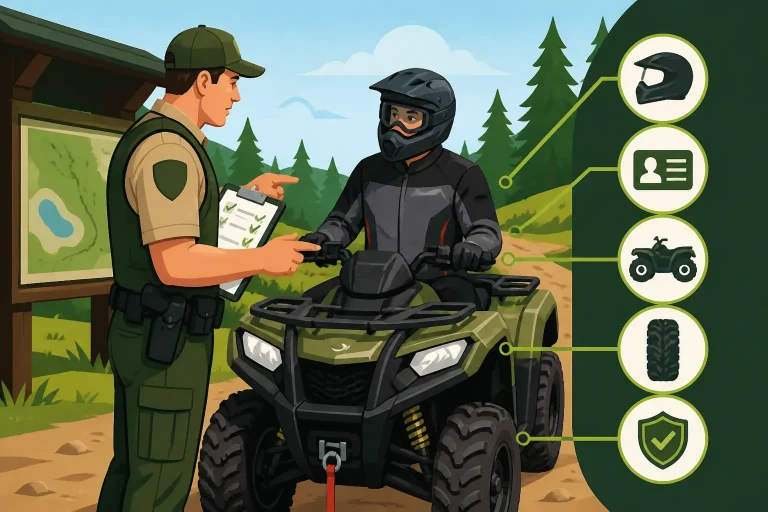
A short document check the night before a trip is more reliable than trying to remember everything at the trailhead. Confirm that the permit covers the specific park or municipality, that any local plate is current and displayed as required, and that insurance information is available. Check that the machine’s serial number and ownership paperwork are legible.
For a group ride, have a designated person check that everyone understands the access rules. A rider who joins at the last minute may not know that a route crosses a municipal boundary or that a park uses a separate permit process. Share the key restrictions and meeting points before the convoy leaves.
You can keep a simple checklist on paper or on your phone. A printed checklist stored with your riding papers can be handy if your phone is unavailable. If you use a document sleeve or small organizer from Amazon, treat it as a way to keep the materials together—not as a replacement for verifying whether the documents themselves are valid for the route.
Common assumptions that lead to trouble
“The permit is free, so I don’t need one”
A permit’s price and its requirement are separate things. A free permit may still be required before using a designated park trail. Riders can easily miss this when they expect a fee-based pass and see that no payment is requested.
Read the park’s instructions carefully and follow any sign-in, acknowledgement or display directions. If you are uncertain whether the process applies to your machine or route, ask the park office before riding. Do not interpret “no charge” as “no conditions.”
“My municipal plate works everywhere”
A municipal plate is tied to the municipality and the terms of its scheme. It does not become valid across the province just because it is attached to the machine. If the ride takes you into another community, verify that community’s rules separately.
A plate may also have an expiry date, display requirement or limits on the routes it covers. Keep track of those conditions, and ask the issuing municipality what happens if you sell the machine or move. Having a visible plate is not the same as having permission for every trail.
“It is public land, so I can ride there”
Public ownership does not mean unrestricted motorized access. A route may be closed, subject to an order, seasonally restricted or affected by another person’s lawful use of the land. It may also cross private property or an occupied area.
Check the actual route and any posted notices. Respect gates, barriers and closures rather than treating them as informal suggestions. If you cannot confirm permission, choose a route with clear access conditions. This is especially important when a trail map is old or when a route crosses more than one type of land.
A clear way to think about permits and reciprocity
Saskatchewan has no province-wide ATV or UTV trail pass, so the question is not which universal pass to buy. The question is what rules apply to each part of your route. A park may have a permit process; a municipality may operate a local plate scheme; a club route may have specific access conditions; Crown or private land may require separate checks or permission.
Visitors should not expect an out-of-province pass to substitute for local authorization. Residents should not assume a permit from one park or municipality carries over to another. In both cases, the safest approach is to verify the route, carry the documents that apply and recheck for closures or restrictions close to departure.
With those distinctions clear, planning becomes more manageable. You can build a route around confirmed access rather than chasing a pass that does not exist, and you can avoid the unpleasant surprise of arriving at a trailhead only to learn that the permission you brought applies somewhere else.
Disclaimer
This article is for general informational purposes only and does not constitute professional advice. Laws, prices and regulations vary by location and change over time. Consult a qualified professional for guidance on your specific situation.