What to Wear on a Cold Northern Morning
A cold northern Saskatchewan morning can feel manageable at the truck and miserable once you’re moving through wind, damp bush, or shaded trails. The tricky part is dressing for both the chilly start and the warmer effort of riding. This guide explains how to layer for an ATV or UTV ride, protect your hands and feet, and avoid clothing that interferes with safe riding.
Build layers for changing conditions
Start with a moisture-managing base layer
Wear a close-fitting base layer next to your skin, ideally made from a fabric that moves sweat away rather than holding it. Merino wool and synthetic fabrics are common options. A cotton T-shirt may feel comfortable at first, but if it gets damp from sweat or spray, it can stay clammy and make you feel colder during a stop.
Think about the whole ride, not just the temperature when you leave home. Unloading a machine, walking around the trailhead, and working through rough terrain can all make you sweat. A base layer that stays reasonably dry helps you avoid cooling down sharply when you slow down or take a break.
For a longer ride, pack a dry spare base layer in a sealed bag. It may seem like an unnecessary extra until you’ve sweated through your shirt early in the day and then stopped for lunch in the shade. Changing into something dry can make the rest of the ride much more comfortable.
Add insulation you can adjust
Over your base layer, choose an insulating layer that traps warmth without making it hard to move. A fleece or lightweight insulated jacket can work well under a wind-resistant outer layer. The right amount depends on your pace, the day’s conditions, and how much time you expect to spend exposed to wind.
Avoid dressing so heavily that you overheat as soon as you start riding. A useful approach is to begin with a little extra warmth, then open vents or remove a layer during a more active stretch. Keep the removed layer somewhere dry and easy to reach, rather than tied loosely around your waist or hanging from the machine.
A UTV cab can block some wind, but it should not be treated as a guarantee that you’ll stay warm. Cold air can still enter, and stops or open sections of trail can change how exposed you feel. On an ATV, your body is generally more directly exposed to moving air, so you may need a more wind-resistant outer layer.
Choose an outer layer that blocks wind and moisture
Your shell is the barrier between your insulation and the conditions outside. Look for a jacket and pants that block wind and offer protection from wet brush, snow, or trail spray. Water resistance can be helpful, but a shell also needs to let some body moisture escape, especially if you ride at a pace that makes you sweat.
Check the fit while sitting as you would on the machine. A jacket that rides up may leave your lower back exposed, while tight sleeves can restrict movement or make it difficult to layer underneath. Pants should allow you to bend your knees and move your legs without pulling uncomfortably across the seat.
Pay attention to closures and openings. Secure cuffs, a properly closed collar, and a jacket that overlaps your pants help keep cold air from working its way inside. Avoid loose drawstrings or dangling pieces that could catch on controls, branches, or other equipment.
Protect the parts that get cold first
Keep hands warm without losing control
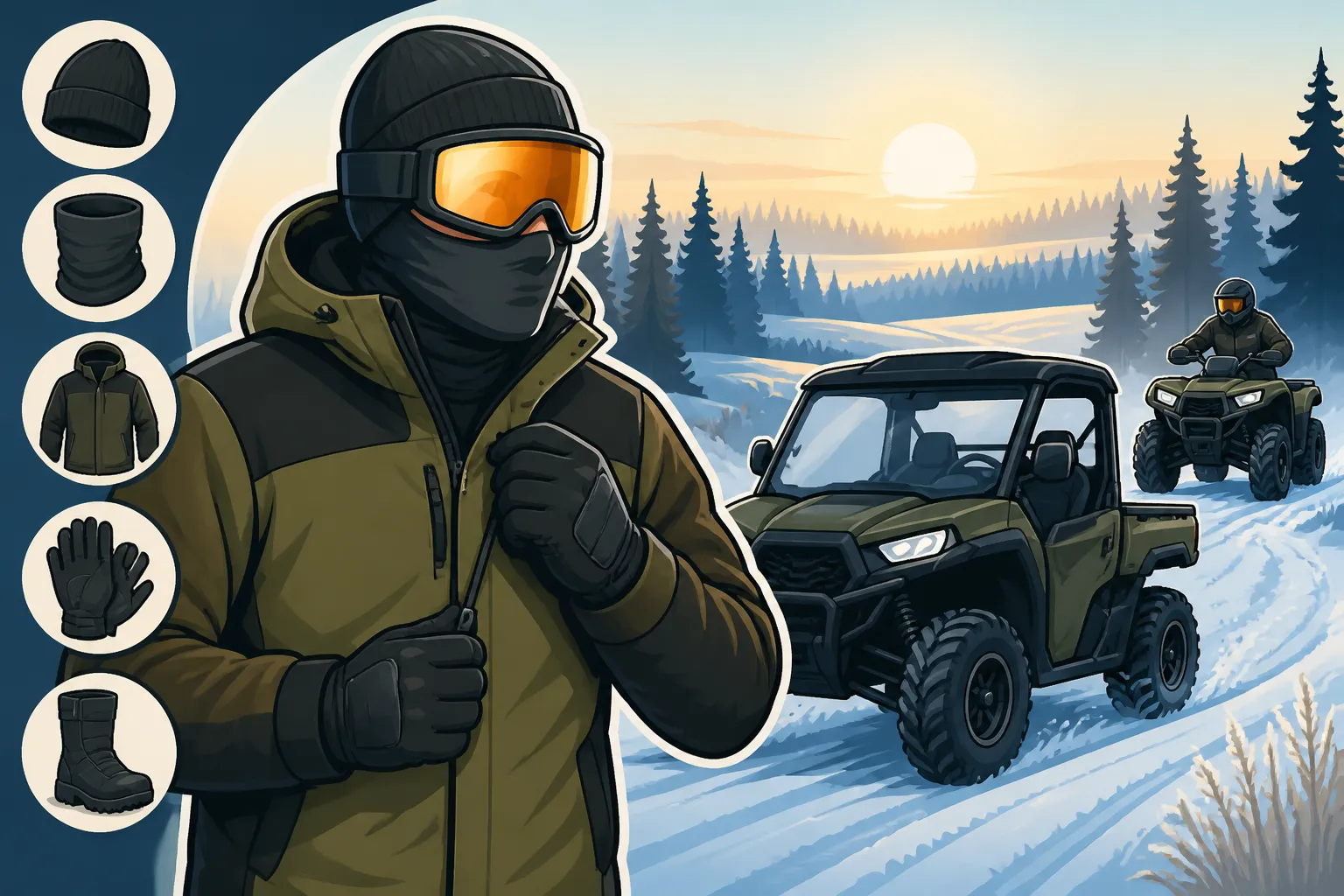
Cold fingers can make simple tasks frustrating: operating controls, adjusting a strap, or handling a phone at a stop. Choose gloves that keep your hands warm while still allowing you to grip the handlebars and use the controls confidently. Very bulky gloves may feel cozy off the machine but can reduce dexterity.
A layered glove system can be more practical than relying on one thick pair. Thin liner gloves under insulated riding gloves give you options if the temperature changes or your hands warm up. Bring a dry spare pair in a sealed bag; gloves can become damp from snow, wet vegetation, or perspiration.
Some riders use heated grips or heated gloves, but warmth should not come at the expense of safe control. Test any setup before a long ride and make sure wiring or straps cannot interfere with steering or other controls. If your hands become numb, painful, or clumsy, stop somewhere safe and warm them before continuing.
Keep feet dry and insulated
Cold feet often begin with damp socks or footwear that is too tight. Choose socks that keep your feet comfortable without bunching, and wear boots with enough room for your toes to move. If thick socks compress your feet inside your boots, they may make the problem worse rather than better.
Boots should suit the terrain as well as the temperature. They need to stay secure on your feet and provide protection appropriate for riding, while also helping keep out water and cold air. If your route includes wet ground, snow, or muddy sections, consider how quickly your footwear might get soaked and whether you have a dry backup pair.
Bring spare socks in a waterproof bag, particularly for a long day away from the truck. A small change of socks can make a damp-foot problem much easier to manage. Before leaving, check boot closures and pant cuffs so they do not leave an easy path for water or cold air.
Cover your head, neck, and face carefully
Wear a helmet that fits correctly and is suitable for ATV riding. Any balaclava, hood, or other layer worn underneath must not interfere with the helmet’s fit, retention system, or comfort. If adding a layer makes the helmet sit differently or feel unstable, change the layer rather than compromising the fit. Review Saskatchewan Helmet and Eye Protection Rules before heading out.
A neck warmer can reduce the draft at your collar, but it should sit securely and stay clear of your face and controls. Avoid long scarves or loose fabric that could flap, snag, or obstruct your view. Make sure your eye protection works with your helmet and the conditions; fogged lenses can become a real problem when temperatures shift or you stop and start.
Keep facial coverage comfortable enough that you can breathe easily and communicate with your riding group. If your goggles or shield fog, stop in a safe place to address it rather than continuing with reduced visibility. For practical preparation beyond clothing, Packing for a Cold Morning at Moose Mountain offers another useful checklist.
Dress for the ride, not just the forecast
Adjust your clothing to the machine and route
An ATV rider is usually more exposed to wind than someone inside a UTV, while a UTV rider may have different challenges depending on the cab, ventilation, and whether windows are open. Dress for the conditions you’ll actually encounter, not an assumption that one type of machine automatically keeps you warm.
Route matters too. A sheltered trail through trees can feel very different from an open stretch where wind reaches you directly. Shaded areas may stay colder or wetter, and a slow technical section may leave you feeling less warm than a steady ride. If you’re choosing a route, check local conditions and closures before setting out; Saskatchewan Trail Conditions Before You Haul can help you plan that part of the day.
For unfamiliar areas, route planning can also help you think through how long you may be exposed and where you could safely stop. Riders who use onX Offroad or another mapping tool can review the route before leaving and keep a backup navigation option available. A map does not tell you what clothing to wear, but knowing whether you’re planning a short loop or a long remote ride can help you pack appropriately.
Use a simple clothing checklist
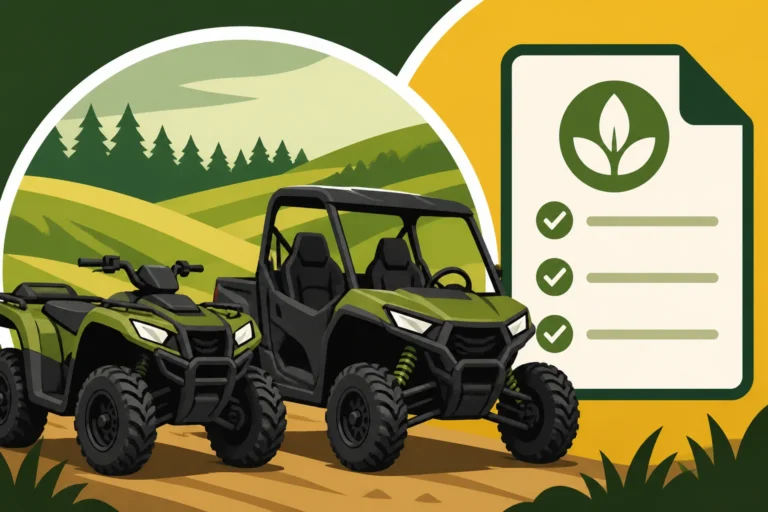
Before leaving, check that you have clothing for warmth, wind, moisture, and a change of conditions. The table below is a starting point, not a rigid formula. Adjust it for your comfort, your machine, and the route.
| Clothing or gear | What it helps with | Practical check before riding |
|---|---|---|
| Moisture-managing base layer | Moves sweat away from skin | Wear a dry layer and pack a spare for longer rides |
| Insulating mid-layer | Holds warmth during stops and slower sections | Make sure it allows comfortable movement |
| Wind-resistant outer layer | Reduces wind chill and blocks trail spray | Sit on the machine and check for gaps at the waist and wrists |
| Riding gloves | Keeps hands warm while maintaining grip | Test that you can operate controls comfortably |
| Insulated riding boots | Helps protect feet from cold and wet ground | Check fit with your riding socks and keep a dry pair available |
| Helmet-compatible face layer | Reduces cold air around the head and neck | Confirm that the helmet still fits and fastens properly |
| Eye protection | Shields eyes from wind and debris | Check for a clear view and a plan for fogging |
| Dry spare clothing | Helps recover from damp layers | Seal it in a waterproof bag |
Keep safety and visibility in the clothing choices
Warmth is important, but clothing should not hide or interfere with essential safety equipment. Make sure your helmet fastens securely, your eye protection stays in place, and your gloves allow you to operate controls. Avoid loose fabric, dangling straps, and anything that could snag on the machine or nearby brush.
Think about visibility as well as comfort, especially when riding in dim conditions or later in the day. Clothing in noticeable colours can make it easier for your group to see you, but it does not replace required machine lighting or safe riding practices. Review Saskatchewan Lighting Requirements on a Machine if your ride may extend into low-light conditions.
A quick fit check can catch problems before they become uncomfortable on the trail. Sit in your normal riding position, turn your head, reach for the controls, and make sure your clothing does not bunch, pull, or block your view. If you’re riding with others, agree on a stop plan and stay aware of anyone who is struggling with cold or wet gear. Saskatchewan Trail Etiquette Locals Expect is also worth reviewing when planning a group ride.
Manage warmth throughout the day
Start warm, but avoid sweating through your layers
It’s tempting to bundle up as much as possible before leaving the driveway. But if you begin sweating heavily as soon as you unload or ride, damp clothing can leave you colder later. Start with layers you can adjust, and open vents or remove an insulating layer before you get overheated.
Take short breaks when needed, especially if your hands or feet are getting uncomfortable. Use a safe stopping place away from the trail, and add a layer before you become chilled rather than waiting until you’re shivering. If someone in the group is unusually quiet, clumsy, confused, or unable to warm up, treat that as a reason to stop and address the situation rather than pressing on.
At the start of the day, check the route and expected ride length so your clothing and spare gear match the plan. If you use onX Offroad, reviewing your route beforehand may help you anticipate whether the day includes a long exposed section or a remote stretch. Keep the phone protected from cold and moisture, and do not rely on a single electronic device as your only way to navigate.
Pack for delays, not just the planned ride
A ride can take longer than expected because of a stuck machine, a mechanical issue, changing trail conditions, or a regrouping stop. Carry a dry layer and spare gloves in a waterproof bag, and consider bringing a warm hat or additional insulation for time spent off the machine. These items take up space, but they can be valuable if you have to wait outdoors.
Keep extra gear secured so it cannot shift or fall off while riding. In a UTV, store it where it remains dry and accessible; on an ATV, use appropriate storage that keeps items firmly attached. Do not pack clothing where it blocks controls, visibility, or access to essential equipment.
Before heading into an unfamiliar area, tell someone your plan and when you expect to return. Save route information ahead of time if you use onX Offroad, and have a backup plan in case your phone battery runs down or service is unavailable. For winter-specific riding considerations, see Saskatchewan Riding in Winter and Saskatchewan Riding Season Month by Month.
Reassess before you leave the trailhead
A few minutes spent checking your gear can save a lot of discomfort later. Make sure your base layer is dry, your outer layer closes properly, your gloves allow control, and your helmet and eye protection fit as intended. Put spare clothing somewhere it will stay dry, then check that nothing loose can catch on the machine.
Conditions can vary between the parking area and the trail, so pay attention to wind, wetness, and how your body feels once you start moving. If you’re already cold before the ride begins, add a layer or reconsider the plan. If you’re overheating, adjust early rather than waiting until sweat has soaked your clothing.
The goal is not to dress for the coldest imaginable moment and stay bundled all day. It’s to stay warm enough, dry enough, and comfortable enough to ride safely while being prepared for a stop or delay. A few well-chosen layers and a dry backup usually serve you better than one bulky outfit you can’t adjust.
Disclaimer
This article is for general informational purposes only and does not constitute professional advice. Laws, prices and regulations vary by location and change over time. Consult a qualified professional for guidance on your specific situation.