Saskatchewan Riding Areas With Group Space
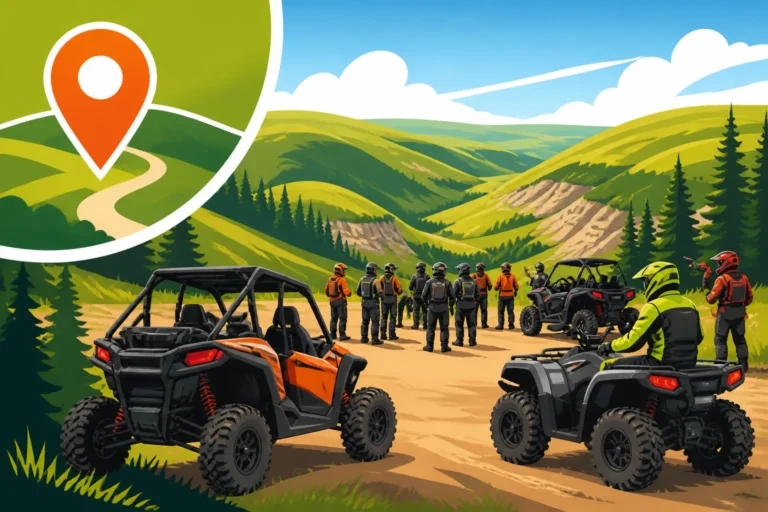
A group ride can turn awkward before anyone starts the engine: trailers are blocking a narrow entrance, half the riders have no signal, and nobody knows whether the trail can handle a large party. This guide explains how to choose Saskatchewan riding areas with room to meet, unload, regroup, and ride responsibly—without assuming that a popular trailhead is automatically suitable for a crowd.
What makes a Saskatchewan riding area work for a group
“Group space” can mean several different things. A useful meeting point needs room for vehicles and trailers, somewhere safe to unload, and a place to gather without blocking other visitors. The trail network also needs to suit the group’s abilities, and the rules must allow the planned ride.
A big parking area alone does not guarantee a comfortable group outing. A narrow trailhead can become congested when several trucks arrive together, while a large trail system can still be difficult for a group if it has poor cell reception or few safe places to stop. Think of the outing as two parts: the staging area and the route.
Start with parking and unloading
Before inviting everyone, find out how the group will arrive. Ten riders in three vehicles have different staging needs from ten riders in ten trucks with trailers. Ask whether the site has a designated parking or unloading area, whether trailers can be left there during the ride, and whether the space is suitable for turning around.
Avoid making a roadside pullout your unofficial staging area. Vehicles and trailers can obstruct traffic, restrict access for emergency vehicles, or create problems for nearby land users. If you cannot confirm that a location is intended for parking and unloading, choose a recognized trailhead or contact the relevant park office, municipality, or trail club.
For trip planning, [Saskatchewan Trailheads With Trailer Parking] is a useful related topic. Confirm the details for your specific destination before the drive: parking arrangements can vary between trail systems, and a map pin does not tell you whether a trailer can safely maneuver at the site.
Look beyond the parking lot
A group ride needs room to move as well as room to arrive. Consider whether the trail system gives riders safe places to pause, let faster riders wait, or regroup after a fork. Stops should not block the trail or force other users into an unsafe pass.
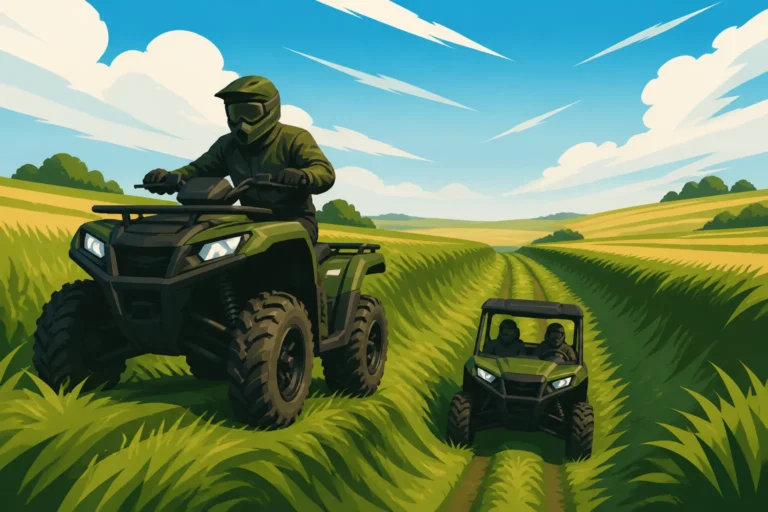
Match the route to the least experienced rider, not just the person who proposed the ride. A route that feels easy to a regular rider may be tiring or intimidating for a beginner, a younger rider, or someone on a different machine. If the group includes side-by-sides and ATVs, check trail rules and widths rather than assuming every route accommodates every vehicle.
For a large party, [Saskatchewan Group Size on a Club Trail] is a useful reminder to check with the trail operator. A club may have expectations or conditions for group use, and a special event may require additional permission. Do not assume a trail is open to an organized ride simply because individual riding is allowed.
Use mapped routes as a starting point, not permission
Digital maps can help a group understand the general layout, identify junctions, and share a planned route. Some riders use onX Offroad to review mapped riding areas and prepare a route before leaving home. That can be helpful when several vehicles are driving in from different towns, but a mapped line does not establish that the land is open, that a trail is maintained, or that a route is suitable for a large group.
Download or save the information your group will need before setting out, especially if you expect patchy reception. The [Saskatchewan ATV Trail Map Downloads] topic can help with map planning. Compare any digital route with current official notices, posted signs, and directions from the park, municipality, or trail organization responsible for the area.
| Group need | What to confirm before you go | Why it matters |
|---|---|---|
| Vehicle and trailer parking | Designated parking, trailer space, and room to turn | Prevents congestion and roadside obstruction |
| Unloading | Whether unloading is allowed and where it should happen | Keeps people and machines away from moving traffic |
| Route suitability | Trail access, surface, distance, and vehicle restrictions | Helps the whole group ride within its abilities |
| Stops and regrouping | Safe pullouts or suitable places to pause | Avoids blocking trails and junctions |
| Communication | Reception, offline maps, meeting points, and backup plans | Reduces confusion if riders become separated |
| Current access | Closures, permits, fire restrictions, and local rules | Prevents an otherwise well-planned ride from entering a closed area |
Saskatchewan areas to investigate for a group outing
Saskatchewan has several recognized riding destinations and club trail networks, but the right choice depends on your group’s size, experience, season, and vehicle type. Treat each destination as a starting point for research, not a promise of a particular parking layout or group facility. Confirm access and staging arrangements before travelling.
Moose Mountain Provincial Park
Moose Mountain is one destination to investigate if your group wants a managed park setting and designated riding routes. Before choosing it, contact the park or check its official information for trail access, operating conditions, permits, and any restrictions that could affect your dates or machines. A route that works for a small family ride may not suit a large gathering arriving in many trailers.
Plan where the group will meet and how late arrivals will find everyone. Do not rely on a single rider’s phone signal to coordinate the day. Pick a clear rendezvous point, share directions in advance, and have a backup plan if the main parking area is busy or access changes.
The park setting may bring visitor rules that are distinct from those on municipal or club-managed trails. Review [Saskatchewan Park Trail Permits Are Free] and confirm the rules that apply to your particular trip. Permit and acknowledgement requirements can be easy to overlook when the group organizer assumes one person’s paperwork covers everyone.
Narrow Hills Provincial Park
Narrow Hills is another area to research for a group ride, especially if riders are travelling from different parts of the province and want to plan around a designated trail network. Confirm which routes are open, what types of machines are permitted, and whether the access point you intend to use can handle your group’s vehicles and trailers.
The more spread out the riding area, the more important it becomes to set expectations before departure. Agree on the route, stopping points, and a time to check in. A rider who takes a wrong turn should know whether to wait at a junction, return to the last regroup point, or contact the lead rider. These small decisions are much easier to settle at home than beside a trail fork.
If your group is relying on a phone-based map such as onX Offroad, save the planned route for offline use where possible and make sure riders understand how to read it. Also carry a backup map or written directions. Digital tools are useful for orientation, but posted closures and directions from the responsible authority take precedence.
Great Blue Heron Provincial Park and club trail systems
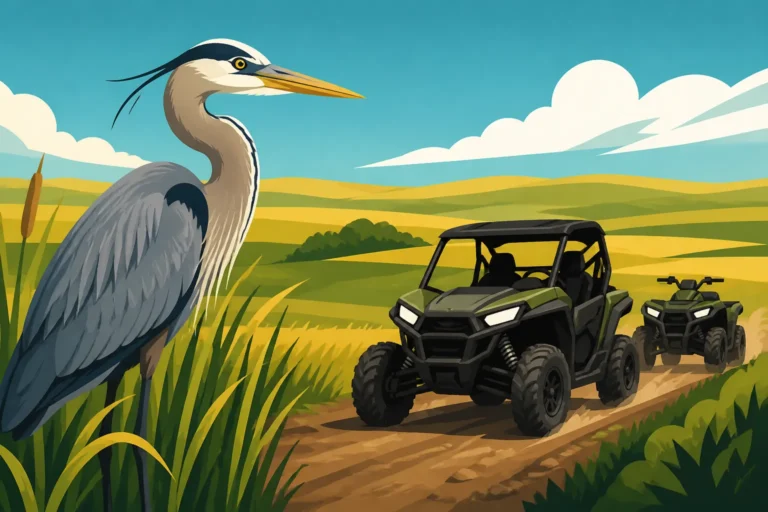
Great Blue Heron Provincial Park and club trail networks, including areas associated with Little Bear Lake or Big River, may be worth comparing with your group’s preferred location. Trail conditions, access, facilities, and rules are not identical across these destinations. Check directly with the park or club rather than assuming that information for one trail system applies to another.
Club trails can offer a different experience from a park route, but access may depend on agreements, seasonal conditions, and club or land-manager guidance. Ask whether a large group can use the route as planned, whether any restrictions apply to side-by-sides, and whether an organized event needs advance approval. For general preparation, see [Saskatchewan Club Trails on Crown Land] and [Saskatchewan Group Ride Planning].
Use [Saskatchewan Riding Areas With Shelters] as a prompt to ask about sheltered stopping places, not as a guarantee that your chosen route has one. A shelter or warming space can be useful in changeable weather, but your group should still plan for the possibility that it is occupied, unavailable, or not near the route you ride.
How to organize the group before leaving home
A little planning prevents the most common group-ride frustrations: late arrivals circling the wrong entrance, riders missing the turn, and people discovering at the trailhead that they have different ideas about distance or pace. The organizer does not need to control every detail, but should make the basics clear before the convoy leaves.
Set a realistic group size and riding plan
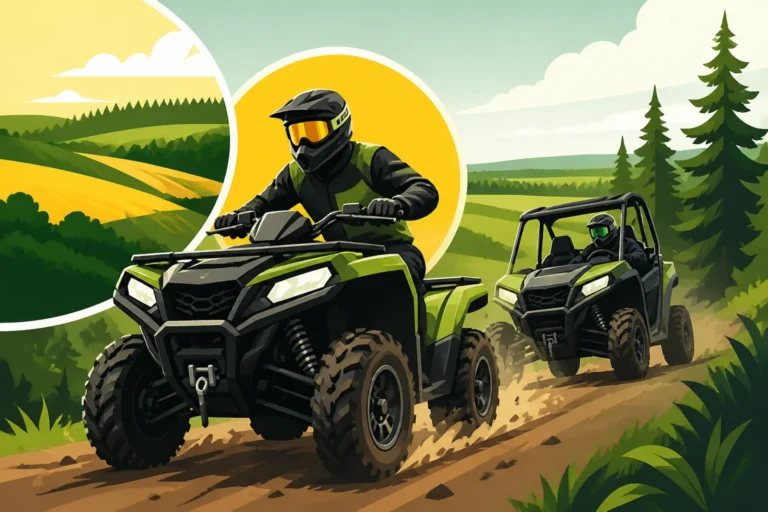
There is no magic number that makes a group manageable. The practical limit depends on parking, trail width, terrain, rider experience, and the rules of the area. A large group can reduce congestion by splitting into smaller riding parties, provided the site and trail operator allow it and each party has a competent lead and sweep rider.
Choose a route that leaves room for breaks and unexpected delays. If one rider has a mechanical issue, the whole group may need to stop. Tell participants the approximate ride length, expected pace, terrain, and return time. Make it easy for someone to opt out or choose a shorter route without feeling pressured.
For a first outing with mixed experience, keep the plan conservative. A route that is simple to follow and easy to shorten is often better than an ambitious loop that leaves no comfortable way to turn back. Share the plan in writing so that everyone has the same meeting location and knows what to bring.
Agree on communication and regrouping
Cell service can be unreliable in some riding areas. Before departure, identify a lead rider, a sweep rider, and planned regroup points. Explain what to do if someone becomes separated. For example, the group might agree to stop at the next safe junction and wait, rather than continuing until the missing rider has no idea which direction the others took.
Share a map or route with participants before the trip. onX Offroad may help riders review a planned route, but do not make it the only way to navigate. Save relevant map information in advance, bring a backup, and make sure everyone knows the destination name and the agreed meeting point. If the lead rider’s phone battery fails, the rest of the group should still be able to make sensible decisions.
A concise pre-ride briefing can cover speed, spacing, hand signals, passing, stopping, and what to do if a machine breaks down. Keep the briefing practical rather than turning it into a lecture. A few minutes spent agreeing on how the group will behave can prevent a stressful trail-side argument later.
Confirm rules, permits, and changing conditions
Rules depend on where you ride. A provincial park, a municipal trail, a private land access route, and Crown land may have different requirements. Confirm the rules for the specific area, including machine access, required permits, insurance, and any restrictions on organized rides.
Check conditions close to departure. Heavy rain, wildfire restrictions, trail maintenance, or other closures can change what is safe or permitted. The [Saskatchewan Wildfire Closures and Riding] topic is particularly relevant during fire season. Do not rely on an old social media post or a saved route if official notices indicate a closure.
Likewise, review local expectations before riding through a community or near other trail users. [Saskatchewan Trail Etiquette Locals Expect] offers useful context for considerate riding. Keep noise and speed under control near homes, yield appropriately, and leave room for other visitors at trailheads and stopping areas.
A practical checklist for choosing and using group space
A destination can sound ideal online and still be a poor fit for your particular group. Use a short check before confirming the outing. If you cannot get a clear answer about parking, access, or group use, choose a location with better-established information rather than improvising when everyone is already on the road.
Ask the right questions before the trip
Contact the park office, municipality, or trail club responsible for the area. Explain how many machines and support vehicles you expect, whether trailers are involved, and whether you are planning an informal ride or an organized event. Specific details help staff answer more usefully than a general question about whether “groups are allowed.”
Ask where to meet, whether unloading is permitted, and whether parking is first-come or otherwise managed. Confirm whether the route is suitable for your machine types and whether there are seasonal restrictions. If the group is large, ask whether you should divide into smaller units or arrange an alternative meeting point.
A route-planning app such as onX Offroad can help you prepare questions by showing the route you have in mind, but the land manager is the right place to confirm current access. Keep a record of the guidance you receive and share any important conditions with the entire group.
Use the staging area considerately
Arrive with enough time to unload without rushing. Park so that other visitors can enter, turn around, and leave. Keep machines, ramps, and gear out of travel lanes. If the area is busy, do not expand your group’s footprint into an unofficial parking area unless you have confirmed that it is allowed.
Keep the pre-ride gathering brief and move away from the entrance if you need a longer discussion. A large cluster of riders can make a trailhead feel closed to everyone else, even when there is technically space. Be prepared to adjust the plan, split the group, or relocate if the designated area is full.
After the ride, check the staging area for garbage, loose straps, and gear. Leave the site as you found it. The way a group treats shared space affects whether it remains welcoming to riders and other visitors.
Make a go-or-no-go decision
Use this table as a final decision aid. If the essential items are uncertain, pause and confirm them rather than treating a long drive as a reason to proceed.
| Check | Good to proceed when | Reconsider when |
|---|---|---|
| Parking and unloading | The responsible authority confirms a suitable area | The plan depends on roadside parking or blocking access |
| Group size | The site and route can accommodate the party | The group would overwhelm a narrow trailhead or route |
| Route | It matches the least experienced rider and machine type | Riders have not agreed on distance, pace, or difficulty |
| Navigation | Everyone has the route and a backup plan | Only one person has the map or knows the way |
| Access and rules | Current conditions and requirements are confirmed | The route relies on old information or unclear permission |
| Weather and fire conditions | Restrictions have been checked close to departure | A closure, fire restriction, or unsafe condition applies |
A good Saskatchewan group ride is not defined by finding the biggest parking lot. It comes from matching the group to a suitable trail system, confirming that the meeting area can handle the vehicles, and making sure everyone understands the route and local rules. When those pieces are in place, riders can spend less time sorting out logistics and more time enjoying the day.
Disclaimer
This article is for general informational purposes only and does not constitute professional advice. Laws, prices and regulations vary by location and change over time. Consult a qualified professional for guidance on your specific situation.