The Supervisor Needs a Licence Held 365 Days
One of the most common headaches and points of confusion for ATV riders in Saskatchewan, especially those with young family members eager to hit the trails, revolves around who can actually supervise a minor. It's a question that often catches people off guard, leaving them wondering if their spouse, grandparent, or even a seasoned riding buddy truly qualifies. This guide is here to untangle the specific requirements for ATV supervisors in Saskatchewan, focusing on the crucial 365-day licence rule, so you can ride with confidence and keep everyone safe and legal.
Unpacking Saskatchewan's Supervisor Rule for ATV Riders
You've probably heard bits and pieces about the rules for young ATV riders, but the specifics around supervision often get lost in translation. It's not just about having an adult nearby; Saskatchewan has a very clear, often-missed requirement for who can legally act as a supervisor for someone under the age of 16. This rule is designed with safety in mind, ensuring that the person responsible has a solid foundation of driving experience.
The 365-Day Licence Requirement Explained
Alright, let's get right to it. In Saskatchewan, if you're supervising an ATV operator under the age of 16, you, the supervisor, must hold a valid driver's licence that you've possessed for at least 365 days. That's a full year. It's not just about being an adult with a licence; it's about having a year of accumulated driving experience under your belt. This rule is enshrined in the [Saskatchewan's All Terrain Vehicles Act] and is pretty non-negotiable.
This means if you just got your Class 5 driver's licence last month, or even six months ago, you can't legally supervise a 14-year-old on their quad. It's a common trap that many new drivers or even those who recently moved to the province might fall into. The intent is clear: the person in charge needs to have demonstrated a sustained level of responsibility and familiarity with road rules and vehicle operation that comes with a year of driving.
Why This Rule Exists: Safety First
Now, you might be thinking, "Why such a specific rule?" Well, it all boils down to safety. Operating an ATV, especially for a younger rider, comes with inherent risks. When a minor is learning or riding, they need a supervisor who can not only physically monitor them but also anticipate potential hazards, understand the rules of the trail, and react appropriately in an emergency. A supervisor with a year of driving experience is generally presumed to have a better grasp of these critical elements.
Consider a scenario where a young rider encounters an unexpected obstacle, like a sudden drop-off or another trail user. A supervisor with substantial driving experience is more likely to assess the situation quickly, offer clear instructions, or even intervene if necessary, drawing on their own experience with vehicles and potential hazards. It's about providing a layer of informed guidance that inexperienced supervisors might not be able to offer, ultimately contributing to fewer accidents and a safer riding environment for everyone. This is part of the overall emphasis on [Saskatchewan ATV Age Requirements].
Who Qualifies as a Supervisor?
So, who makes the cut? A qualified supervisor is anyone 16 years of age or older who holds a valid driver's licence for at least 365 days. This licence could be a Class 1, 2, 3, 4, or 5. It doesn't have to be a special ATV-specific licence, because, as we know, [Saskatchewan Does Not Register ATVs] nor does it require a special licence for operating them. The key is that year of general driving experience.
This means a parent, an older sibling, a grandparent, or even a family friend can be a supervisor, as long as they meet that 365-day licence criterion. They don't need to be riding their own ATV right beside the youth, but they must be "present and directly supervising" the operation of the ATV. This generally implies being close enough to maintain visual and auditory contact and be able to intervene quickly if needed. It's not about being in the same general area; it's about active, immediate oversight.
Navigating the Rules for Young Riders (Under 16)
Saskatchewan has a pretty clear stance on who can operate an ATV, and age plays a significant role. While the 365-day supervisor rule is critical, it's just one piece of the puzzle when it comes to getting young riders out on their machines. Understanding the full scope of these regulations helps avoid potential fines and, more importantly, keeps everyone safe.
The Age Floor and Its Exceptions (12 and Over)
Generally speaking, you have to be at least 16 years old to operate an ATV in Saskatchewan. This is the baseline, the standard rule you should always remember. However, there are crucial exceptions, particularly for youth aged 12 to 15. A person who is 12 years of age or older but under 16 years of age can operate an ATV, but only if they are being directly supervised by a person who meets the aforementioned 365-day licence requirement.
This means a 12-year-old isn't allowed to just hop on a quad and ride around unsupervised, even on private land, if that private land falls under the Act's jurisdiction. The supervisor must be actively engaged in their oversight. Without that qualified supervisor, the young rider is not legally permitted to operate the machine. This rule is fundamental to [Saskatchewan Rules for a 12-Year-Old Rider] and older youth.
When a Safety Course Steps In
There's another important layer to the youth rider rules: safety training. While the supervisor rule is generally in place, a person who is 12 years of age or older but under 16 can also operate an ATV without direct supervision if they have successfully completed an approved ATV safety course. This is a huge benefit for families who might not always have a qualified supervisor readily available, or for youth who have demonstrated a strong commitment to safe riding practices.
The Administrator of the Act approves these courses, ensuring they meet specific standards for comprehensive safety education. Completing such a course teaches young riders not just the mechanics of operating an ATV, but also crucial safety protocols, environmental awareness, and responsible riding habits. It's an investment that pays dividends in skill and confidence, and it provides an alternative path to independent riding for eligible youth. This is how [How a Safety Course Replaces a Supervisor] for these young operators.
Practical Scenarios for Supervised Riding
Let's look at a few common scenarios to illustrate how these rules play out:
- Scenario 1: Family Farm Riding. Your 14-year-old wants to ride their quad on the family farm. If you, the parent, have held your Class 5 licence for more than a year, you can supervise them. You'd need to be out there with them, watching their operation. If you just got your licence six months ago, you couldn't legally supervise them, and they'd either need to take an approved safety course or wait until someone with a 365-day licence could supervise. [Riding on Family Land Falls Outside the Act] for some operational rules, but the age and supervision requirements often still apply to the operator.
- Scenario 2: Trail Riding with Friends. A group of friends goes quad riding. One of the riders is 15 years old. For that 15-year-old to legally operate their ATV, an adult in the group must be acting as their direct supervisor, and that adult must have held a valid driver's licence for at least 365 days. If the 15-year-old has completed an approved ATV safety course, they could ride independently.
- Scenario 3: Aunts and Uncles. Your niece, 13, is visiting and wants to try out your quad. You've been driving for decades. You absolutely qualify as a supervisor. However, if your niece's 18-year-old cousin, who just got their licence yesterday, wanted to supervise, they would not meet the 365-day requirement.
These examples highlight the importance of knowing who is actually eligible to supervise, ensuring compliance and, most importantly, the safety of the younger rider.
The Supervisor's Responsibilities and Liabilities
Being an ATV supervisor in Saskatchewan is more than just a formality; it carries significant responsibilities and potential legal ramifications. It's not a role to take lightly, as the law treats the supervisor almost as if they are the operator themselves when it comes to ensuring safe and legal riding practices.
More Than Just Watching: Active Supervision
When the Act refers to "direct supervision," it means exactly that: active, engaged oversight. This isn't about being in the general vicinity while a young person goes off exploring. It means being close enough to intervene, communicate, and correct behaviour immediately. Think of it like a driving instructor in a car – they're not just a passenger; they're actively monitoring and ready to take control.
An effective supervisor should:
- Maintain visual contact: Always be able to see the youth and their ATV.
- Be within audible range: Be able to communicate instructions and hear any calls for help.
- Understand the terrain: Know the riding area and potential hazards.
- Model safe behaviour: Wear appropriate safety gear and follow all rules themselves.
- Provide guidance: Offer real-time coaching on riding techniques, obstacle navigation, and throttle control.
This hands-on approach is critical. For instance, if a young rider is attempting a tricky climb, the supervisor should be positioned to offer immediate advice on body positioning or gear selection. It's about being a constant, guiding presence, not just a distant observer.
Understanding the Legal Ramifications
This is where the rubber meets the road, quite literally. Under [Saskatchewan Owner Liability Rules], a supervisor can be held responsible for the actions of the young operator they are overseeing. The Act states that "an owner or operator who permits a person to operate an all-terrain vehicle shall take reasonable steps to ensure that the operator complies with this Act and the regulations." Furthermore, the Act explicitly treats the supervisor as the operator for the purpose of certain sections, meaning the supervisor can be ticketed for an infraction committed by the youth rider.
Imagine a scenario: you're supervising your 14-year-old, and they accidentally ride where they shouldn't, maybe on prohibited Crown land or too close to a protected area. If a peace officer intervenes, it's not just the young rider who faces consequences. You, as the supervisor, could receive a ticket for failing to ensure compliance with the Act. This is a powerful deterrent designed to ensure supervisors take their role very seriously. It highlights why [Why a Supervisor Can Be Ticketed for a Rider] is an important concept.
It's also why carrying appropriate insurance is paramount. While [Saskatchewan Has No ATV Plate or Decal] and thus no provincial registration that bundles insurance like snowmobiles do, having your own liability coverage is essential. In the event of an accident where the young rider causes damage or injury, the supervisor's liability coverage might come into play, potentially saving them from significant financial hardship. [Saskatchewan Insurance Requirements for Riders] are important for everyone.
Equipping Your Machine for Supervised Rides
While the supervisor's primary role is guidance and oversight, their own machine (if they're riding one) should also be optimally equipped for safety. This isn't just about personal protection, but also about being prepared for any situation that might arise when supervising a less experienced rider.
Consider:
- Communication devices: Walkie-talkies or helmet communicators can be invaluable for real-time communication, especially in noisy environments or when terrain separates you slightly.
- First-aid kit: Accidents, scrapes, and bumps happen. A well-stocked first-aid kit is a must for any ride, especially with youth.
- Recovery gear: A small tow rope or winch can be a lifesaver if the youth gets stuck in mud or a ditch. Brands like SuperATV offer a range of durable winches and recovery gear that could be a game-changer in those unexpected moments, allowing for quick and safe extraction without waiting for external help.
- Navigation tools: GPS or detailed maps are crucial, especially if you're venturing into unfamiliar territory. Knowing exactly where you are and how to get back is critical for safety.
Being prepared with the right equipment reinforces the supervisor's ability to manage the situation effectively and keep the riding experience positive and safe for everyone involved.
Common Misconceptions and Frustrations About the Rule
The 365-day licence rule for ATV supervisors in Saskatchewan, while well-intentioned for safety, often leads to confusion and, frankly, a fair bit of frustration among riders and families. Many people assume a simpler set of guidelines, and when faced with the specific details, they can feel a little blindsided.
The Myth of the "Any Adult" Supervisor
One of the biggest misconceptions is the idea that "any adult" can supervise a young ATV rider. This is simply not true in Saskatchewan. The image of a teenager riding their quad while a parent sips coffee on the porch nearby might seem harmless on private property, but legally, the supervision requirements are much stricter than just having an adult present. The adult must not only be over 16 but also meet that crucial 365-day licence criterion.
This myth can lead to awkward situations or, worse, unintended legal infractions. A well-meaning grandparent who has only held their licence for a few months, or an older cousin who recently passed their driving test, might genuinely believe they are capable of supervising. However, the law sees it differently. This is why understanding [What the 365-Day Supervisor Rule Actually Requires] is so vital for all ATV enthusiasts in the province.
Why This Rule Can Feel Onerous for Families
For many families, this specific rule can feel quite restrictive. It means that if both parents are new drivers, or if their primary supervisor is unavailable, their kids might be sidelined even if they're eager to ride. This can be especially frustrating for those who rely on a wider network of family and friends for childcare and recreational supervision. The rule, while logical from a safety perspective, can sometimes feel like it places an unfair burden on families in rural or remote areas where ATV riding is a common and often necessary activity.
Consider a single-parent household where the parent recently got their licence. Their 14-year-old might be a responsible rider, but without an alternate supervisor with a 365-day licence or the completion of a safety course, they cannot legally ride. This can limit recreational opportunities and even hinder participation in farm-related tasks where ATVs are frequently used. The struggle is real, and it often leads to people asking [Saskatchewan Registration Questions Riders Ask] about various aspects of ATV laws.
Comparing Saskatchewan's Approach to Other Provinces
It's also worth noting that ATV regulations, including those around supervision and age, can vary significantly from province to province. What's perfectly legal in Alberta or Manitoba might not fly in Saskatchewan, and vice-versa. This variance can be particularly confusing for residents who have moved to Saskatchewan or for visitors from other jurisdictions.
For example, some provinces might have different age cut-offs, or different requirements for safety courses, or less stringent rules around supervisor licence tenure. This patchwork of regulations across Canada means that you can't assume that what you know from another province applies here. For those coming from Manitoba, for instance, it's a good idea to research [Saskatchewan Registration Compared to Manitoba] for all relevant rules. Saskatchewan's focus on the 365-day licence is a distinctive element aimed at ensuring a high level of supervisory experience.
Understanding these differences, and the rationale behind Saskatchewan's specific approach, can help mitigate frustration and encourage compliance. It's not about making things harder; it's about trying to make things safer, even if the rules sometimes feel complex.
Essential Gear and Machine Considerations for Supervised Riding
When a young rider is under supervision, the focus isn't just on the supervisor's licence. It's equally vital to ensure the rider is properly equipped and the ATV itself is in peak condition and suitable for their age and skill level. This holistic approach to safety is what truly minimizes risk and maximizes enjoyment.
Helmets, Eye Protection, and Proper Attire
This is non-negotiable. Every ATV rider in Saskatchewan, regardless of age or experience, must wear an approved helmet. For youth, this is even more critical. The helmet must be properly fitted, securely fastened, and meet recognized safety standards. [Saskatchewan Helmet and Eye Protection Rules] are very clear on this. Beyond the helmet, eye protection – whether goggles or a face shield – is essential to protect against dust, debris, and insects.
Proper attire also makes a huge difference. Long pants, long-sleeved shirts, gloves, and sturdy over-the-ankle boots provide protection against scrapes, cuts, and minor impacts. Think about branches on the trail, flying gravel, or simply falling off the machine. Dressing appropriately provides a crucial layer of defense, turning a minor incident into just that, rather than a more serious injury. No one wants to end a fun day of riding with a trip to the emergency room for preventable injuries.
Machine Suitability and Maintenance
The ATV itself needs to be appropriate for the young rider's size, strength, and experience. Overpowering machines can quickly get out of control, especially for novices. Many manufacturers offer youth-specific ATVs that are smaller, lighter, and have throttles that can be limited to lower speeds. This gradual progression in power and size is a smart way to build skills safely.
Beyond suitability, regular maintenance is paramount. Before any ride, especially with a young operator, always perform a pre-ride inspection:
- Tires: Check air pressure and tread condition.
- Brakes: Ensure they are functioning effectively.
- Lights: Verify headlights and taillights work.
- Fluids: Check oil, coolant, and fuel levels.
- Chain/Drive Belt: Inspect for proper tension and wear.
- Throttle: Ensure it operates smoothly and returns to idle properly.
A well-maintained machine is a predictable machine, reducing the chance of mechanical failure that could lead to an accident. Think of it as putting the odds in your favour for a trouble-free ride.
Adding Safety Accessories for Peace of Mind
While not strictly required by law, investing in certain safety accessories can significantly enhance the riding experience for youth and the supervisor's peace of mind. Aftermarket accessories can offer extra protection and functionality that stock machines might lack.
For example:
- Skid plates: These protect the underside of the ATV from rocks and debris, preventing costly damage to critical components.
- Handguards: They shield the rider's hands from branches, rocks, and cold wind.
- Wider fender flares: These can reduce the amount of mud and debris kicked up by the tires, keeping the rider cleaner and improving visibility.
- Safety flags: Especially in open fields or dusty conditions, a brightly coloured flag mounted high on the ATV increases visibility to other riders and vehicles.
For serious enthusiasts, brands like SuperATV specialize in durable aftermarket parts and accessories that can enhance both the safety and performance of an ATV or UTV. From robust winches for recovery situations to protective cages and bumpers for UTVs, investing in these upgrades can make a significant difference in protecting your investment and, more importantly, your rider. Equipping the machine thoughtfully is another way the supervisor extends their duty of care.
Proving Compliance: What an Officer Might Ask
Even when you're doing everything right, encountering a peace officer on the trail or road can be a bit nerve-wracking. Knowing what they're looking for and what you need to provide can make the interaction smooth and stress-free. In Saskatchewan, officers are keen to ensure compliance with the [Saskatchewan's All Terrain Vehicles Act], especially when it involves youth riders.
Carrying Your Licence and Proof of Age
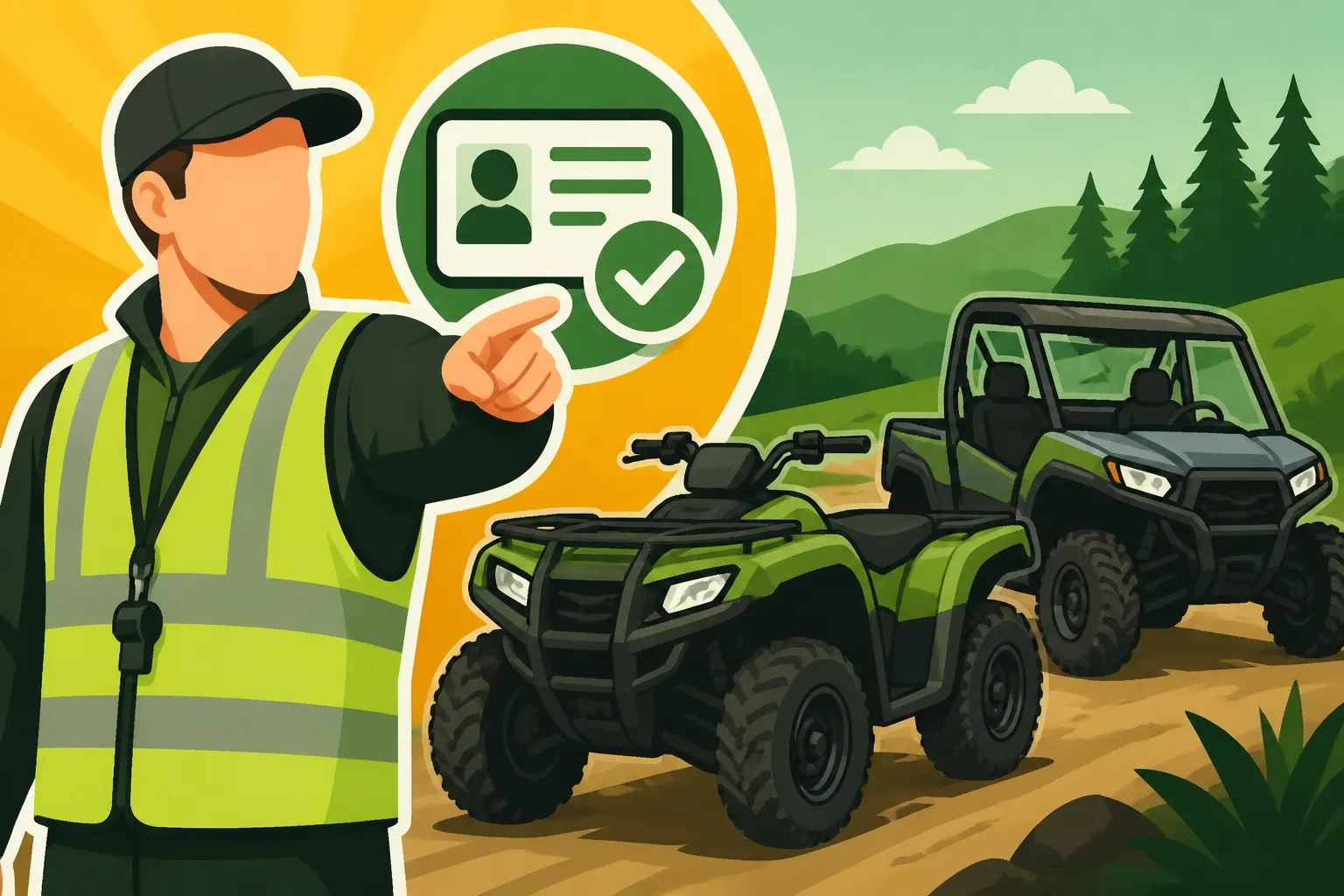
This might seem obvious, but it's often overlooked. As a supervisor, you must carry your valid driver's licence with you when supervising a young ATV operator. This is how you prove you meet the 365-day requirement. If you can't produce it, an officer has no way of verifying your eligibility, and you could face repercussions. It's a fundamental part of [Proof Shown to a Peace Officer].
For the youth rider, proof of age is important, particularly if they are between 12 and 15 years old. While they aren't required to carry a driver's licence (they don't have one!), having some form of identification that clearly shows their date of birth can save time and questions. This could be a health card, a student ID, or a copy of their birth certificate (though a waterproof copy is probably best for a trail!). If the youth has completed an approved ATV safety course, they should also carry proof of that certification.
Demonstrating Due Diligence
Beyond just showing documents, an officer might observe the actual supervision in action. They'll want to see that you are actively supervising the youth, meaning you're close by, attentive, and appear to be engaged in the activity. If the officer finds the youth riding unsupervised, and you are far away or preoccupied, your claims of supervision won't hold much weight, and you could face a ticket.
This is where the "active supervision" comes into play. If an officer sees you riding 500 metres ahead while the youth struggles with a hill, or if you're engrossed in your phone while they're exploring out of sight, that's not demonstrating due diligence. Being responsive, aware of the youth's movements, and ready to intervene are key indicators that you're taking your supervisory role seriously.
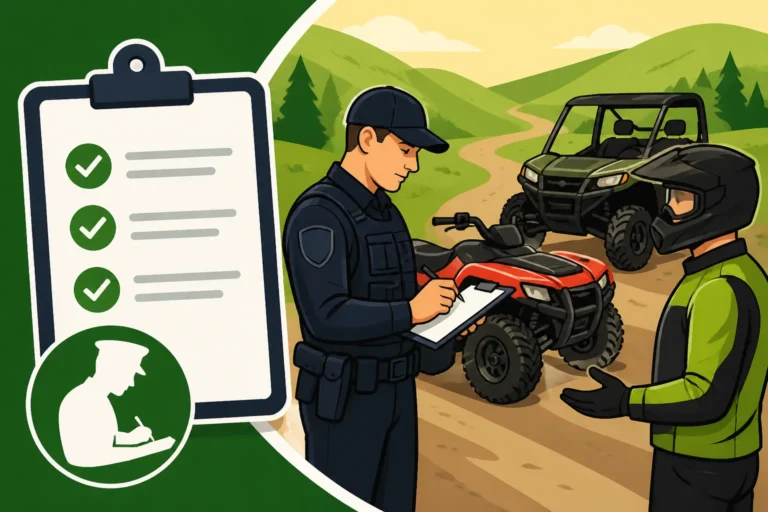
Preparing for a Checkpoint or Trailside Stop
The best way to handle any interaction with law enforcement is to be prepared and cooperative. Here's a quick checklist for supervisors:
- Have your documents ready: Driver's licence, proof of insurance (if applicable, for your machine or general liability), and the youth's proof of age/safety course completion.
- Be polite and cooperative: Answer questions clearly and respectfully.
- Know the rules: Familiarity with the Act will help you explain your compliance confidently.
- Ensure the ATV is legal: Check that the youth's machine has the necessary safety equipment (e.g., lights if riding after dark), and that they are wearing all required safety gear.
Remember, officers are there to enforce safety and the law. By demonstrating that you understand and comply with the regulations, you're not only protecting yourself from potential fines but also setting a great example for the young riders you're supervising. It makes for a much smoother and more pleasant experience for everyone involved, allowing you to get back to enjoying the beautiful Saskatchewan outdoors.
Disclaimer
This article is for general informational purposes only and does not constitute professional advice. Laws, prices and regulations vary by location and change over time. Consult a qualified professional for guidance on your specific situation.