What Your Bill of Sale Needs to Cover
Buying or selling an ATV or UTV in Saskatchewan can sometimes feel like a bit of a Wild West show when it comes to paperwork. With no provincial registry for these machines, many folks are left scratching their heads, wondering what exactly they need to prove ownership. This guide will walk you through exactly what essential information your bill of sale needs to include to protect both you and the other party, ensuring a smooth and legitimate transaction.
Why Your Bill of Sale Is Crucial in Saskatchewan
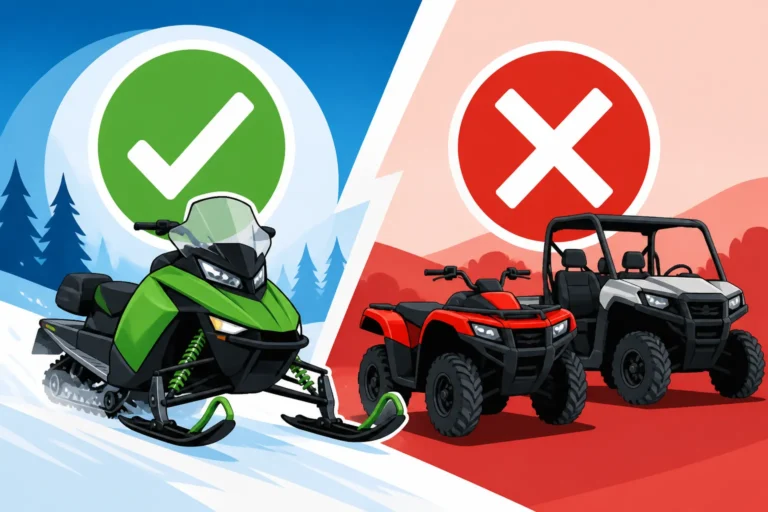
Let's be real, trying to figure out the official paperwork for an ATV or UTV sale here in Saskatchewan can feel like you're navigating a maze without a map. Unlike snowmobiles, which have a provincial registration system, your quad doesn't get a plate or a paper title from the government. This absence of a formal registry means that the humble bill of sale steps up to become the single most important document you possess to prove ownership. It’s not just a nice-to-have; it’s your core proof.
Imagine you've just bought a used quad from a private seller out near Swift Current. You shake hands, exchange cash, and they scrawl "Sold to John" on a napkin. While the intentions might be good, this isn't going to cut it if you ever run into trouble. Without a robust bill of sale, you could find yourself in a really tough spot if the machine turns out to be stolen, if there's a dispute over the sale, or if you simply need to prove you own it for insurance purposes. In Saskatchewan, your bill of sale isn't just a receipt; it’s your legal anchor. It’s what stands in for a formal title.
This document acts as a clear record of the transfer of ownership from one party to another. When you pick up a brand-new machine from a dealer in Saskatoon, they'll always provide a detailed bill of sale, often with all the bells and whistles of taxes and warranties. But when you’re dealing with a private sale, especially on a farm or out in a rural setting, it’s often up to the buyer and seller to ensure this document is properly created. It’s the primary piece of paper an officer will ask for if you're ever stopped and questioned about your machine on a grid road, or if you need to make an insurance claim. This is why understanding [Saskatchewan Proof of Ownership Without a Registry] is so critical.
Essential Information Every Bill of Sale Must Include
When you're putting together a bill of sale, whether you're writing it by hand at a farm gate or using a template, there are a few absolute non-negotiables. These are the details that are going to prevent a world of headaches down the line and ensure the transaction is legally sound. Think of these as the foundation of your ownership proof. For those who prefer a structured approach, online platforms like LawDepot offer customizable bill of sale templates that can guide you through these critical sections.
Full Buyer and Seller Details
This might seem obvious, but it's often where people get lazy. You need the full legal names of both the buyer and the seller. Not just "Dave" or "Sarah," but "David Michael Smith" and "Sarah Elizabeth Jones." Along with their full names, you need current addresses, including street number, city, and postal code. A phone number and email address for both parties are also highly recommended for any follow-up questions or issues that might arise. This level of detail helps establish identity and ensures that both parties are clearly identified in the transaction.
If you ever need to contact the seller about an issue after the sale, having complete contact information is invaluable. Imagine discovering a hidden mechanical problem a week after your purchase. If you only have a first name and no way to reach them, your options for resolution are severely limited. Conversely, as a seller, having the buyer's full information provides peace of mind that you know who now legally owns the machine you’ve sold. This full disclosure is a basic step in safeguarding both parties and making sure your [Saskatchewan Bills of Sale Do the Work] they are intended for.
Complete ATV or UTV Description
You can’t just write "one quad." You need to provide a thorough description of the machine being sold. This includes the make (e.g., Polaris, Can-Am, Honda), the model (e.g., Sportsman 570, Outlander 650, Foreman 520), and the model year. The colour of the machine is also helpful, as is the engine size in cubic centimetres (cc). For example, "a 2020 green Polaris Sportsman 570" is a good start.
Crucially, you absolutely must include the Vehicle Identification Number (VIN) or the serial number. This is the unique identifier for that specific machine, much like a fingerprint. It's usually stamped on the frame, often near the front wheel, under the seat, or on a crossmember. Make sure to [Checking a Serial Number Twice Before You Pay] – physically verify it matches the number on the bill of sale. A photograph of the VIN as part of your records isn't a bad idea either. This number is what differentiates your machine from every other one of the same make and model. Without an accurate VIN, proving that this specific machine was transferred in this specific transaction becomes incredibly difficult.
Purchase Price and Payment Method
State the exact amount of money exchanged in the transaction. This should be a clear, unambiguous figure. In addition to the total price, specify how the payment was made. Was it cash? A certified cheque? An e-transfer? If it was an e-transfer, note the date and confirmation number. If there was a trade-in involved, the bill of sale should clearly detail the value assigned to the trade-in and the remaining balance paid.
Transparency in the payment details prevents disputes down the road. It also provides a clear record for tax purposes, particularly for the buyer, as PST applies to ATV purchases even without a provincial registry. While Saskatchewan doesn't have a province-wide quad plate, the PST still needs to be accounted for. [Saskatchewan PST at Purchase] is something many private sellers and buyers overlook, but it's a real obligation. Clearly documenting the price helps both parties fulfil their tax responsibilities, even if they're self-assessing after a private sale.
Protecting Yourself with Additional Bill of Sale Details
While the basic information is essential, adding a few extra clauses and details to your bill of sale can provide an additional layer of protection for both parties. These are the elements that address potential ambiguities or issues that might arise after the transaction is complete. Thinking ahead about these details can save you significant hassle.
"As Is, Where Is" Clause
Most private sales of used ATVs and UTVs are conducted "as is, where is." This means the buyer is purchasing the machine in its current condition, with all its faults, latent or patent, and without any warranties or guarantees from the seller. Including this clause explicitly in your bill of sale clarifies that the seller is not responsible for any repairs or issues that arise after the sale. It manages expectations and limits the seller's liability.
However, even with an "as is" clause, sellers still have a responsibility not to misrepresent the machine deliberately. For buyers, understanding this clause means you should perform a thorough inspection, ask lots of questions, and ideally, test ride the machine before handing over your money. This clause is a standard practice in private recreational vehicle sales, and platforms like LawDepot include it in their standard templates for this very reason. It’s a key piece of clarity in a transaction that lacks the regulatory oversight of a registered vehicle.
Declaration of No Liens or Encumbrances
As a buyer, you want assurance that you’re buying the machine free and clear, meaning no one else has a claim on it. Ask the seller to include a statement declaring that they are the sole owner of the ATV/UTV and that there are no outstanding liens, loans, or other financial encumbrances against the machine. While there's no central registry for ATVs in Saskatchewan to formally check for liens like you would for a car, this declaration holds the seller legally accountable.
This clause is particularly important because [Saskatchewan Liens on an Unregistered Machine] can still exist, even if there's no provincial registration. For instance, if the seller financed the machine through a bank or credit union, that institution could have a lien against it. If you buy a machine with a lien, that lien could potentially follow the machine, leaving you responsible for someone else's debt. A seller signing a declaration that there are no liens provides a legal safeguard for the buyer, making the seller liable if that statement proves false.
Signatures of Witnesses and Date of Sale
Always, always, always get both the buyer and seller to sign and date the bill of sale. The date of the sale is crucial for establishing the precise moment ownership transferred, which can be important for insurance coverage, liability, and tax purposes. Furthermore, having one or two independent witnesses sign the document adds another layer of credibility and verification. These witnesses should print their full names and include their contact information.
Witnesses can attest that the signatures are legitimate and that the transaction took place as described. This can be invaluable in case of a dispute where one party claims their signature was forged or that the terms of the sale were different. While it might feel like overkill when you're just looking to get out on the trails, a signed and witnessed bill of sale is your best defense against future legal challenges. Remember, for ATVs in Saskatchewan, [Your Bill of Sale Stands In for a Registration], making every detail count.
Common Mistakes to Avoid When Drafting Your Bill of Sale
Even with the best intentions, it's easy to overlook crucial details or make simple errors when drafting a bill of sale, especially for a private sale where you might not have a dealer guiding you. These mistakes can lead to major headaches down the road, from legal disputes to difficulties proving ownership. Being aware of these pitfalls can help you create a bulletproof document.
Incomplete or Vague Information
One of the most frequent mistakes is leaving out essential details or being too vague. Forgetting a full address, using only a first name, or describing the machine simply as "a red quad" rather than providing make, model, year, and VIN are common errors. This lack of specificity makes it incredibly hard to identify the parties or the machine accurately if an issue arises. For instance, if the machine is stolen, law enforcement needs an exact VIN to enter it into databases and [Saskatchewan Stolen Machine Reports] require that precise information.
Another common oversight is not explicitly stating the purchase price or the method of payment. Ambiguity here can lead to disputes about how much was paid, or even claims that the transaction didn't occur as agreed. A well-drafted bill of sale leaves no room for interpretation about who bought what, from whom, for how much, and when. Always double-check every blank space and ensure all details are filled out clearly and accurately. This is why tools like LawDepot's templates are so valuable, as they prompt you for all necessary fields, minimizing the chance of omission.
Not Verifying the Seller's Ownership
This is a big one for buyers. In Saskatchewan, because there's no registration, it can be challenging to confirm that the person selling you the ATV or UTV is the legitimate owner. A common mistake is simply taking the seller's word for it. Always ask to see their existing bill of sale or any other proof of ownership they have. Compare the VIN on their document to the VIN on the machine you're buying. If the seller can't provide any proof of how they acquired the machine, that's a huge red flag and you should walk away.
Buying a machine from someone who isn't the rightful owner could mean you're purchasing stolen property, even if you do so unknowingly. This can lead to the machine being seized by the police, and you losing both the quad and your money. While there's no provincial registry to cross-reference, a legitimate seller will always have their own paperwork. If you’re looking at [Saskatchewan Machines With No Paperwork], be extremely cautious. It’s also wise to check the VIN against known stolen vehicle databases (often through law enforcement or some insurance providers) before you finalize the purchase.
Skipping Signatures or Witnesses
In the excitement of a sale, it’s tempting to rush through the final steps. But neglecting to get both parties' signatures, or failing to have independent witnesses sign, can severely weaken the legal standing of your bill of sale. A document that isn't signed by all involved parties might not be legally binding, making it difficult to enforce any terms if a disagreement occurs.
Similarly, witnesses provide an impartial third-party verification that the transaction took place. Without them, it can become a "he said, she said" situation if questions about the validity of the sale or the authenticity of signatures arise. Take the extra few minutes to ensure everyone signs, dates, and witnesses the document. It's a small effort that provides enormous security. This diligence is especially important since [Saskatchewan Has No ATV Plate or Decal] to verify ownership through a government record, making the bill of sale your primary evidence.
Understanding the Legal Context of Your Bill of Sale
While a bill of sale is critical, it's helpful to understand its place within the broader legal landscape of ATV and UTV ownership in Saskatchewan. Since there's no provincial registry, the reliance on this single document becomes even more pronounced, impacting everything from theft recovery to insurance claims.
The Bill of Sale as Your "Title"
Many provinces have a formal "title" document that proves ownership of a vehicle, often issued by the provincial government. Saskatchewan, however, operates differently for ATVs and UTVs. There is [Saskatchewan Has No Title to Transfer] for these machines. This means your bill of sale effectively functions as your proof of ownership, akin to a title in other jurisdictions. When you move to Saskatchewan with a machine from another province, or when you buy a machine here, this document is what verifies you as the legal owner.
This unique situation underscores why every detail on your bill of sale is so important. Without a government-issued certificate, the burden of proof falls entirely on this private document. This is also why [Saskatchewan Bills of Sale Do the Work] of establishing the transfer of ownership, recording the sale, and serving as the primary evidence if your ownership is ever challenged. It’s the cornerstone of your documentation for your quad or side-by-side.
Implications for Insurance and Financing
When you're trying to insure your ATV or UTV, especially if you're getting a standalone policy rather than bundling it with other vehicles, your insurance provider will almost certainly ask for proof of ownership. Guess what that proof will be? Your bill of sale. It's their confirmation that you legally own the asset you're asking them to cover. If you have a poor or incomplete bill of sale, it could complicate your insurance application or even lead to issues if you ever need to file a claim for theft or damage.
Similarly, if you plan on [Financing an Unregistered Machine in Saskatchewan], any lender will require a robust bill of sale. They need to ensure that the machine you're using as collateral actually belongs to you. A clear, comprehensive bill of sale with all the correct details makes this process much smoother and demonstrates your legitimate ownership to financial institutions. Without it, you might find it difficult to secure a loan against the machine.
What Officers Look For
If you're out riding on Crown land, a rural road, or even just crossing a highway, a peace officer might stop you. Among other things, like your driver's license and proof of insurance, they might ask for proof of ownership for your machine. Your bill of sale is what you’ll present. An officer will be looking for a document that clearly identifies the machine by its VIN, lists you as the buyer, and is dated. If you can't produce a proper bill of sale, it could raise questions about the machine's origins and your right to operate it, potentially leading to further investigation.
This is not to say an officer is going to demand your original bill of sale every time, but having a copy or easily accessible proof on your person or with your machine is always a good idea. Knowing [Saskatchewan Paperwork for a Buyer] helps you be prepared for these situations, ensuring your riding experience remains hassle-free. Keep a digital copy on your phone or a laminated physical copy in a waterproof bag on your quad.
A Template for Your Saskatchewan ATV Bill of Sale
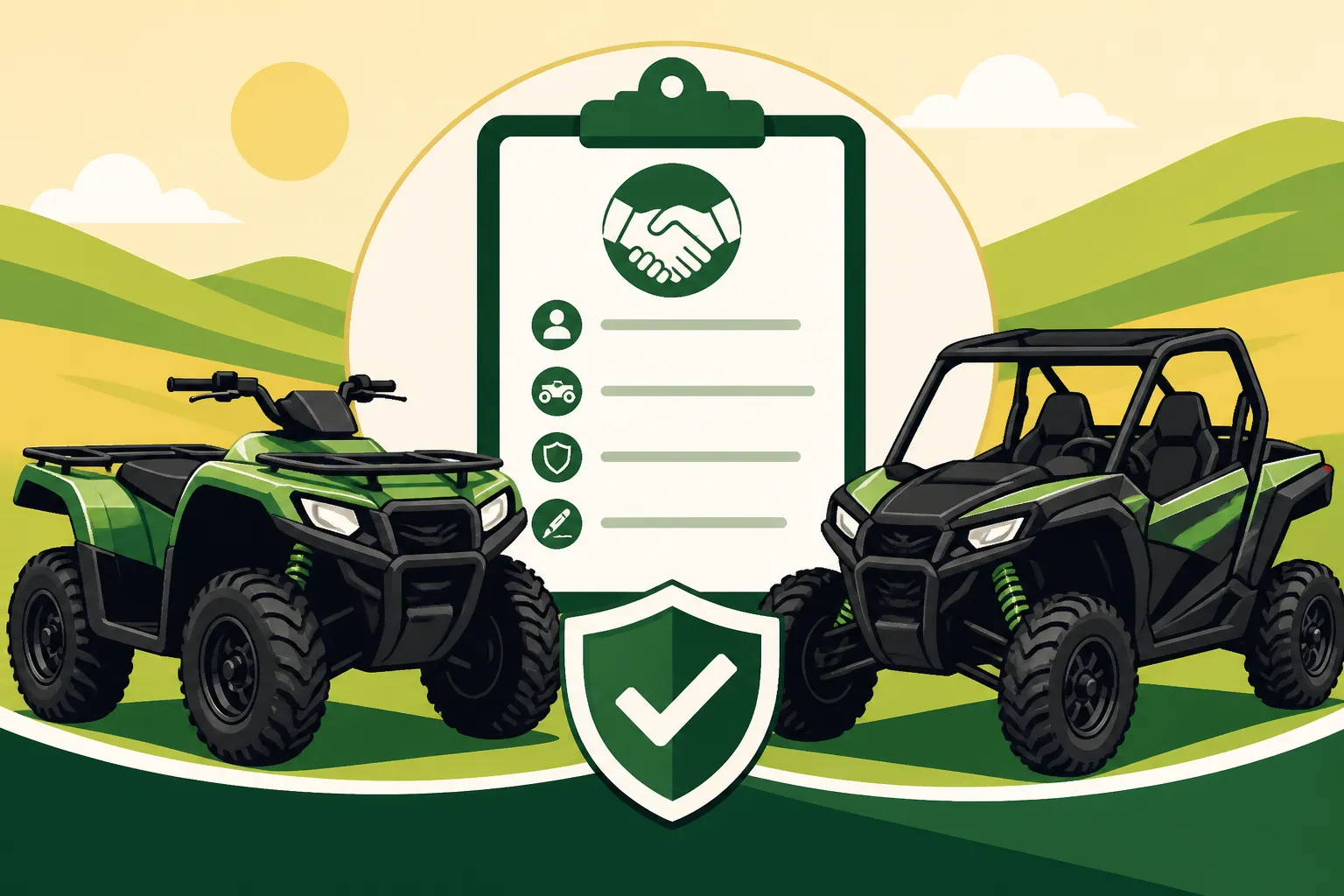
To make things a bit easier, here’s a simple breakdown of what a comprehensive bill of sale should include. You can use this as a checklist or a starting point when creating your own document. Remember, accuracy and completeness are key.
| Section | Details to Include | Importance |
|---|---|---|
| Document Title | Bill of Sale (or ATV/UTV Bill of Sale) | Clearly identifies the purpose of the document. |
| Date of Sale | Full Date (Day, Month, Year) | Establishes the exact moment ownership transferred, crucial for legal and insurance purposes. |
| Seller's Information | Full Legal Name, Current Address, Phone Number, Email | Identifies the previous owner and allows for contact if needed. |
| Buyer's Information | Full Legal Name, Current Address, Phone Number, Email | Identifies the new owner and allows for contact if needed. |
| Machine Description | Make, Model, Model Year, Colour, Engine Size (cc), Vehicle Identification Number (VIN) or Serial Number | Uniquely identifies the ATV/UTV being sold; critical for proving ownership, theft recovery, and insurance. |
| Purchase Price | Exact numerical and written amount, Currency (CAD) | Clear record of financial transaction for both parties and for tax purposes. |
| Payment Method | Cash, Certified Cheque, E-transfer (with date/ref#), Trade-in details | Documents how the payment was rendered, helps prevent payment disputes. |
| "As Is" Clause | Statement that machine is sold "as is, where is" with no warranties, express or implied. | Limits seller's liability after the sale and clarifies buyer's acceptance of current condition. |
| Lien Declaration | Seller confirms they are the sole owner and machine is free of all liens, encumbrances, or claims. | Protects buyer from inheriting seller's debts against the machine. |
| Signatures | Buyer's Signature, Seller's Signature | Legal affirmation of agreement by both parties. |
| Witnesses | Witness 1 Full Name, Signature, Contact Info; Witness 2 Full Name, Signature, Contact Info (Optional but recommended) | Provides independent verification of the transaction and signatures, adding credibility in case of dispute. |
Using a template, whether it's one you create or one from a service like LawDepot, ensures you don't miss any of these vital components. It brings order to what can sometimes feel like a casual transaction, and in the world of [Saskatchewan Has No ATV Plate or Decal], that order is your best friend.
Disclaimer
This article is for general informational purposes only and does not constitute professional advice. Laws, prices and regulations vary by location and change over time. Consult a qualified professional for guidance on your specific situation.