Saskatchewan Wildfire Penalties for Riders
A wildfire-related ticket can turn a Saskatchewan ATV ride into a much bigger problem than a trail violation. Riders need to know that penalties may depend on what they did, whether a fire restriction was in effect, and whether their machine or actions caused a fire. This article explains the main risk areas and how to reduce the chance of a costly mistake.
What wildfire penalties can apply to ATV and UTV riders
Wildfire penalties are not one fixed fine that applies whenever someone rides during fire season. The consequences depend on the rule involved, the location, the conditions, and the facts of the incident. Riding through a closed area, ignoring an active fire restriction, failing to take required precautions, and causing a wildfire are different situations—and can be treated differently.
That distinction matters. A rider may face enforcement for breaking an access restriction even if no fire starts. If a machine or rider’s conduct does start a fire, the consequences can be more serious because firefighting resources and property may be affected. Depending on the applicable law and circumstances, enforcement could involve a ticket, prosecution, financial penalties, or other legal consequences. A rider may also face separate claims or costs connected with damage caused by a fire. The specific outcome is not automatic and should not be assumed from the fine for an unrelated ATV offence.
The Saskatchewan Wildfire Act and related rules are separate from the rules that govern ATV operation. A rider should not assume that a penalty under one set of rules is the maximum exposure for every part of an incident. For example, a fire-related investigation could involve questions about compliance with fire-prevention duties as well as where and how the machine was being operated. For background on rider responsibilities, see Saskatchewan Wildfire Act Duties for Riders.
The ATV Act has its own penalties. Its maximum fine is often discussed in the context of ATV offences, but that figure does not set a ceiling for wildfire-related enforcement. The laws address different conduct and may apply at the same time. See Saskatchewan Fines Capped at $1,000 for the separate ATV Act context, and do not use that figure to estimate the consequences of violating a wildfire rule.
| Situation | Why it can lead to enforcement | What to do |
|---|---|---|
| Riding in an area closed by a fire restriction | The restriction may prohibit access or specified activities, regardless of whether a fire starts | Check current closures and obey posted signs and orders |
| Riding when fire-prevention rules apply | Riders may have duties to prevent sparks or other ignition risks | Inspect the machine and follow current official requirements |
| A machine starts or contributes to a fire | The incident may lead to an investigation into its cause, the rider’s conduct, and resulting damage | Stop safely, report the fire promptly, and cooperate with emergency responders |
| Assuming a general fire-season date is the whole rule | Local restrictions can change with conditions and may apply to particular lands or activities | Check the rules for the exact area and date of the ride |
The table is a practical overview, not a penalty schedule. A fire restriction can change quickly, and an offence’s consequences depend on the wording of the specific rule and the evidence. Confirm current requirements with the official source responsible for the area before riding.
Fire restrictions can close an area even when the trail is familiar
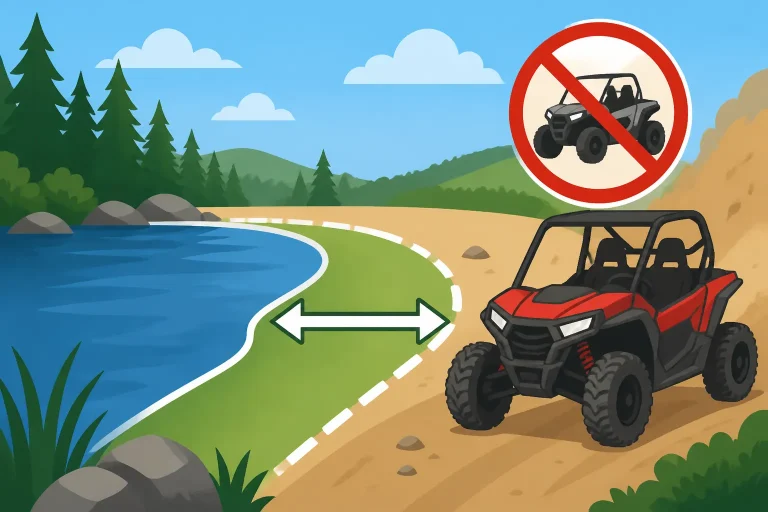
A route that was open on an earlier ride may be closed later because of fire danger. Restrictions can apply to public land or specific areas, and a closure may prohibit access or particular activities. Do not rely on last week’s trail report, an old map, or the fact that other vehicles are already on the route.
Start by checking whether a current fire ban or closure affects the place you intend to ride. Then read what the restriction actually prohibits. The details matter: some orders may limit access broadly, while others may restrict specific activities or apply to designated locations. A sign at a trailhead is important, but it is not the only way to learn about current restrictions. Make checking part of your trip planning with Saskatchewan Fire Bans That Close Riding and Saskatchewan Fire Season Riding Restrictions.
A fire ban also should not be confused with a general ATV permit or local plate. Having paperwork that lets you ride somewhere under ordinary conditions does not override a temporary closure. Likewise, permission to cross private land does not cancel a public restriction that applies to the route or surrounding area. If the route crosses several land types, check the rules for each part.
Seasonal dates are useful for planning, but they are not a substitute for checking current orders. Fire danger and restrictions can change during a season. Even if a rider expects a particular part of the year to be lower risk, a local closure may still be in effect. Check the current map or notice for the area, and confirm the restrictions close to departure. Checking a Fire Ban From Your Phone at the Trailhead can help make that last check part of the routine.
If you find a closure, treat it as a stop sign for the affected route. Do not assume that a short detour around a gate or sign is allowed. Find a legal alternate route, or postpone the ride. For more on where access rules come from, see Saskatchewan Crown Land Access Rules and Saskatchewan Penalties for Riding a Closed Area.
How a rider can create wildfire risk
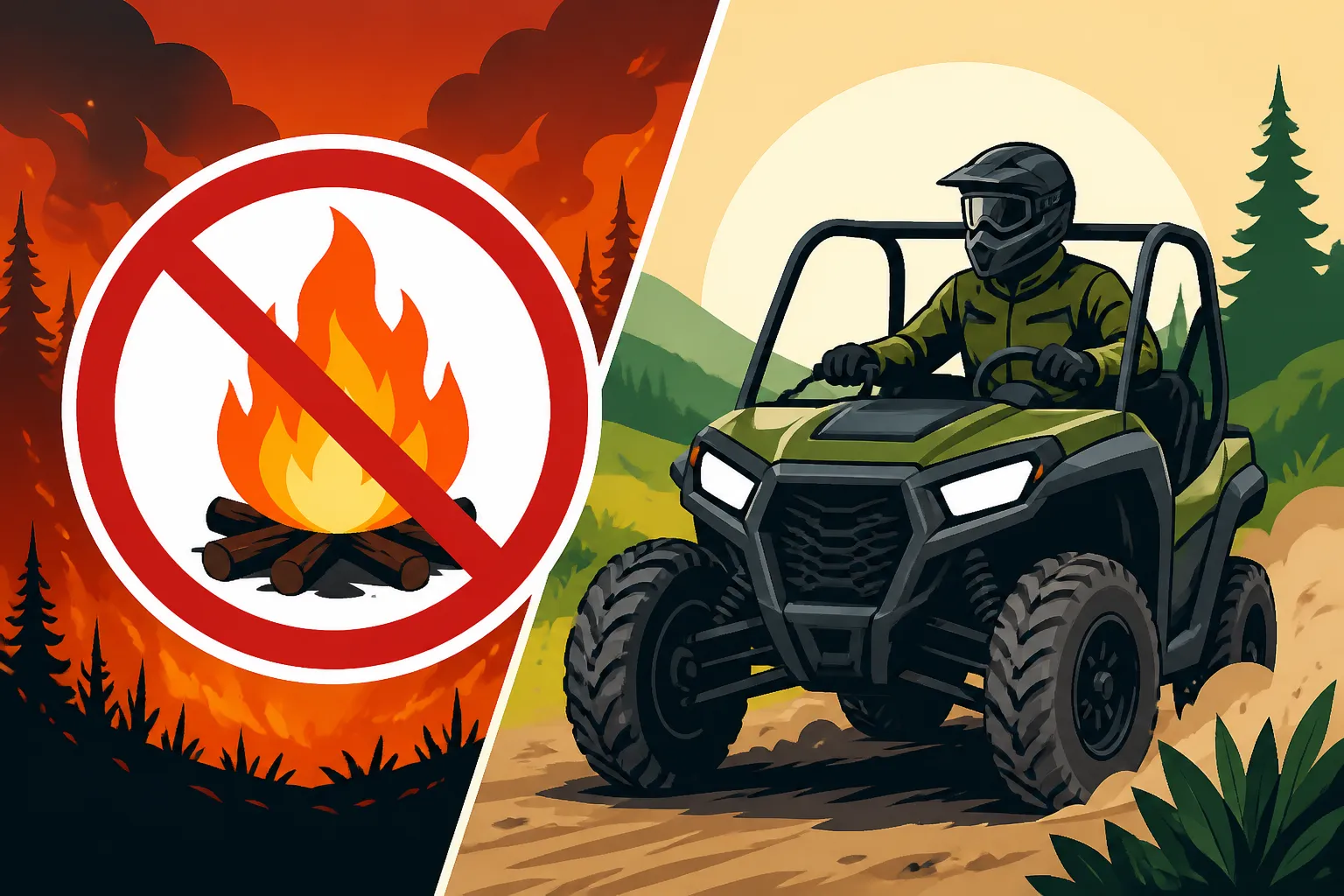
An ATV or UTV can present ignition risks in dry conditions, particularly when hot parts contact dry vegetation or debris builds up around the engine or exhaust. Sparks and heat may also come from damaged equipment, dragging parts, or a mechanical problem. A fire can start even when the rider has no intention of causing one, which is why routine inspection and sensible riding choices matter.
Saskatchewan riders should understand their responsibilities under wildfire rules rather than relying on general habits or assumptions. The relevant duties and restrictions can depend on the current law and circumstances. Read Your Legal Duty to Check for Combustible Debris for a closer look at one key prevention issue.
Before leaving, inspect the machine for grass, leaves, or other material caught near hot components. Check for loose or damaged parts that could create sparks or scrape against the ground. During a long ride, stop periodically to look again, especially after travelling through tall grass, brush, or other vegetation. A quick check at the start of the day does not guarantee that debris will not collect later. Inspecting Your Machine Throughout a Day of Riding covers how to make those checks part of a ride.
Conditions also affect the way a machine should be used. Avoid riding through dry vegetation when a safer established route is available. Do not park a hot machine on dry grass or brush if it can be placed on a suitable cleared surface instead. If you notice smoke, sparks, unusual heat, or a burning smell, stop in a safe place and investigate only if it is safe to do so. Do not keep riding and hope the problem will disappear.
Fire-suppression equipment can be useful, but carrying equipment does not give permission to ride during a closure or replace any legal duty. Riders should follow the current official requirements for the location and activity, and make sure any equipment carried is appropriate and usable. Carrying a Shovel and an Extinguisher on Board discusses practical preparation. If you buy equipment through a retailer such as Amazon, check the product details carefully and make sure it suits your intended use; a shopping listing is not a source of legal requirements.
A practical pre-ride check can be short:
- Check current fire restrictions and area closures for the route.
- Inspect the machine for debris, damaged parts, and possible ignition hazards.
- Confirm that any required equipment is present and accessible.
- Plan to stay on permitted, established routes and avoid dry vegetation where possible.
- Decide what to do if conditions worsen or a restriction is announced while you are out.
These steps do not guarantee that a fire cannot happen. They do help reduce preventable risks and show why preparation is more than a paperwork exercise.
What to do if a fire starts or an officer contacts you
If you see smoke or flames, treat it as an emergency. Move yourself and others to a safe location, alert emergency services through the appropriate channel, and provide the location as clearly as possible. Do not put yourself in danger trying to fight a fire that is spreading or beyond your ability to control. If it is safe, tell other riders nearby and help them leave the area without blocking emergency access.
If your machine may have started the fire, stop using it when it is safe to do so. Preserve the scene as much as possible and avoid disturbing anything that could help explain what happened. Be prepared to provide accurate information about your route, timing, machine, and what you observed. Do not guess about the cause if you do not know it. A prompt report can help responders locate the fire, while speculation can confuse the account.
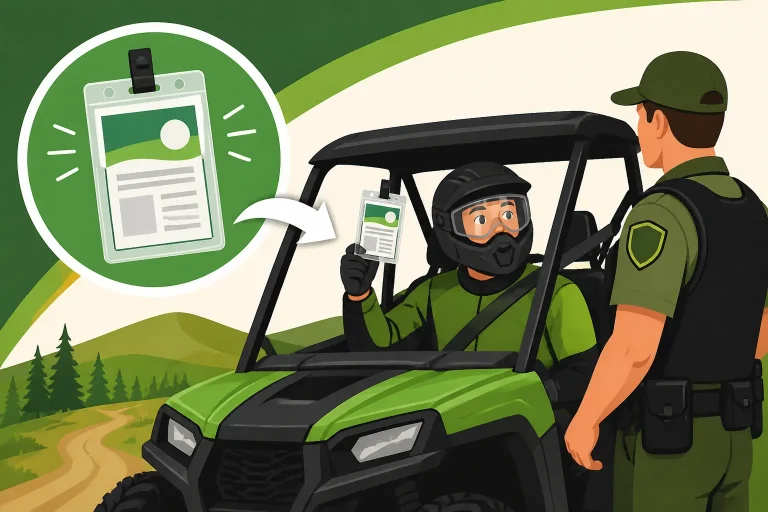
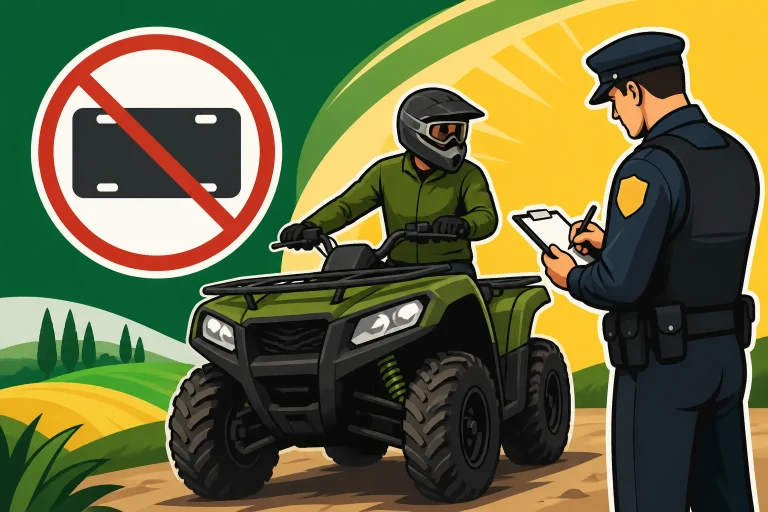
An officer or investigator may ask questions about the route, machine condition, restrictions, and steps taken before or during the ride. Be respectful and provide truthful information. If you receive a ticket, order, or notice, read it carefully and note any response deadlines or next steps. Do not ignore it because you believe a fire did not occur; a restriction-related offence may not require a fire to have started. If you are unsure what a notice means or what response is appropriate, seek qualified legal advice.
Keep useful trip records where practical: the route, date, group members, and any restriction information checked before departure. Photos of machine condition or posted notices may also help establish what you observed, but do not trespass or delay reporting an emergency to collect evidence. Records are not a shield from liability, and they cannot replace compliance with the law. They may, however, help you give a clear account if questions arise later.
Before each ride, use this simple decision rule: if you cannot confirm that the route is open and you can meet the current fire-prevention requirements, do not ride that route. Choose a confirmed open area or wait. The cost of a changed plan is small compared with the consequences of riding into a closure or contributing to a wildfire.
Disclaimer
This article is for general informational purposes only and does not constitute professional advice. Laws, prices and regulations vary by location and change over time. Consult a qualified professional for guidance on your specific situation.