Your Legal Duty to Check for Combustible Debris
A ride through dry grass can leave more than dust on an ATV or UTV: grass, leaves and other combustible material can collect near hot parts and become a fire risk. Saskatchewan riders have a duty to check for that buildup during fire season, not just before leaving home. Here’s what to inspect, when to stop and clean, and how to plan around current fire restrictions.
What the combustible-debris duty means
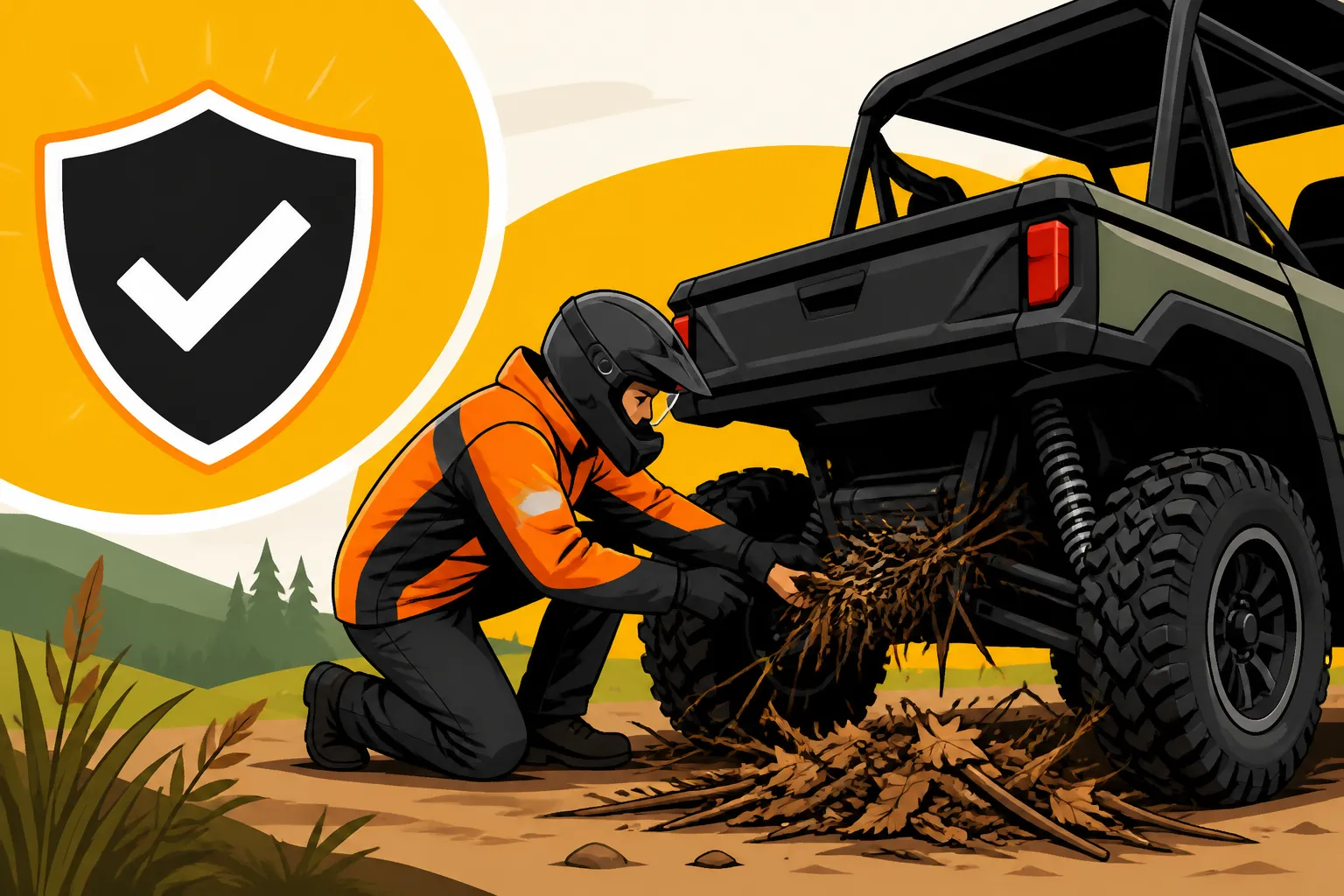
During Saskatchewan’s wildfire season, riders must pay attention to combustible material on their machines. Dry grass, leaves, needles and similar debris can lodge around the engine, exhaust or underside. If it contacts a hot surface, it may smoulder or ignite. A fire can start after the machine has stopped, so a quick glance at the bodywork alone is not enough.
The practical point is simple: check the machine for material that could catch fire, remove it safely, and keep checking as conditions and riding change. A clean machine at the trailhead may pick up dry vegetation on a grassy route. A long ride through brush or tall grass can create more buildup than a short trip on a maintained trail.
The season is commonly described as running from April 1 through October 31. Dates, restrictions and local conditions can change, so confirm the current rules before a ride. The season’s legal requirements are separate from temporary fire bans or area closures, which may add restrictions. For a broader overview, see Saskatchewan Wildfire Season Rules for Riders and Saskatchewan Wildfire Act Duties for Riders.
A debris check is not a guarantee that a machine cannot start a fire. It is one part of reducing risk. Riding conditions matter, too: dry vegetation, wind, recent closures and a machine working hard in low-speed terrain can all make a careless stop more consequential.
| Situation | What to check or do |
|---|---|
| Before unloading | Look for dry material under the machine and around hot components |
| After riding through grass or brush | Stop in a safe spot and check again |
| During a long ride | Inspect at breaks, especially after demanding or slow-speed travel |
| Before parking | Check for debris and avoid leaving the machine in dry vegetation |
| If you see smoke or smell burning | Stop safely, shut down if safe, and investigate without touching hot parts |
| If fire is spreading or cannot be controlled safely | Move away and contact emergency services |
The duty is about the condition of the machine while it is being used, not simply whether it passed a once-over at home. Make the inspection part of the ride routine, especially when vegetation is dry or the route has tall grass, brush or other material that can catch underneath.
How and when to inspect your ATV or UTV
Start with a cold or safely cooled machine before the ride. Check beneath the frame, around the engine and exhaust, behind shields, and in places where vegetation can get trapped. On a UTV, look around the engine compartment and under the seats or cargo area if those spaces can collect debris. On either type of machine, check near the skid plate, radiator area, wheel wells and any openings where grass can be pulled in.
A flashlight helps reveal buildup in shaded areas. A small brush or suitable tool can help remove dry material, but do not reach into a hot or moving part. Shut the machine off, remove the key, and let hot components cool before working near them. A quick inspection should not turn into a burn or injury.
Pay special attention after riding through tall grass, weeds, brush, or a route with loose plant material. Also check after a slow, demanding stretch where the machine has been working hard. Dust and mud can make debris harder to spot, so do not assume that a dirty underside is clear. If you see packed material, clear it before continuing.
A useful routine is:
- Before setting out: Inspect the underside, engine area, exhaust area and any other places that collect vegetation.
- After a debris-heavy section: Stop somewhere safe, away from dry grass, and look for fresh buildup.
- At regular breaks: Check again, particularly on a long ride or in dry conditions.
- Before parking for a while: Make sure no dry material is caught against hot components and park clear of combustible vegetation.
Do not wait for smoke. Grass can sit against hot parts without obvious flames, and a smell of burning or unusual smoke should prompt an immediate stop in a safe location. Shut down the machine if you can do so without putting yourself at risk. Let hot components cool before removing material; do not pull at debris with bare hands or reach under a running machine.
For a more detailed inspection routine, see Inspecting Your Machine Throughout a Day of Riding. The goal is to build a repeatable habit rather than rely on memory when the group is eager to keep moving.
The machine’s condition matters as well as the route. Keep exhaust components and protective shields in good repair, and do not remove or alter equipment intended to reduce fire risk. Check applicable requirements for your machine and riding area; Saskatchewan Spark Arrestor Requirements covers a related equipment question. A spark arrestor does not replace debris checks, and a debris check does not replace required equipment.
What to do when you find debris, heat or smoke
If you find dry vegetation caught on the machine, stop in a location where you are not adding to the risk. Avoid parking in long grass or beside dry brush. Turn the machine off and allow hot parts to cool before cleaning. Use a tool rather than your hands near hot surfaces, and make sure the debris is fully removed rather than pushed into another gap.
If the material is smoking, glowing or burning, do not treat it as ordinary cleanup. Move people away from the machine and assess whether it is safe to act. A small incident may look manageable at first but can spread quickly in dry, windy conditions. Do not put yourself between the fire and a safe exit, and do not continue riding to “get somewhere safer” if the machine may be carrying a smouldering source.
If a fire is spreading or you cannot deal with it safely, leave the area and contact emergency services. Give a clear location and follow directions. Do not assume another rider has already reported it. Once people are safe, do not return to the machine or fire area until it is safe to do so.
Carrying appropriate fire-suppression equipment may help with a small, early incident, but equipment does not make a risky situation safe. Requirements can depend on the activity, location and current rules. Confirm what applies before you go, and know how to use any equipment you carry. Related reading includes Fire Suppression Gear on a Machine and Carrying a Shovel and an Extinguisher on Board.
If there is no active fire but the machine has collected a heavy amount of vegetation, clean it before continuing. Check again after cleanup to make sure the material has not shifted onto a hot part or become packed into a different area. If the machine is damaged or a shield is missing, consider ending the ride until it can be checked and repaired.
Avoid using fuel, solvents or other flammable products to clean debris. Do not spray water onto hot electrical components, and do not use a method that could scatter burning material. When in doubt, wait for the machine to cool and use a safe, non-flammable approach.
Plan the ride around fire conditions
A careful inspection cannot make every route appropriate on every day. Before leaving, check whether the riding area is open and whether a fire ban, access restriction or closure applies. Restrictions can change with conditions, and rules for one area may not apply to another. Do not rely only on an old map, a past trip or a social media post.
Stay on permitted, established routes. Riding through dry vegetation can increase the chance of collecting debris, while leaving a trail may cause damage or take you into an area where access is not allowed. Staying on Established Trails in Fire Season and Saskatchewan Crown Land Access Rules can help clarify why route permission matters as well as fire precautions.
Choose stopping places carefully. A break beside a dry ditch or in tall grass can put hot components close to fuel. When possible, stop on a clear, durable surface away from dry vegetation. Avoid leaving a hot machine parked where grass or leaves can contact the exhaust or underside.
Make the inspection part of group-ride planning. Agree that anyone can call for a debris check without pressure to keep pace. Riders should give each other room to stop safely, and the group should know where to regroup if someone needs to clean a machine or deal with a problem. For a longer ride, carry a way to communicate and know how to describe your location if you need help.
A fire ban is not the only reason to change plans. Recent dry weather, high winds, smoke, closed routes or a machine that repeatedly picks up material may make a different area or another day the sensible choice. Check official updates close to departure, then check again if conditions change. For help locating current information, see Saskatchewan Fire Ban Lookups.
If an officer asks about fire precautions or a fire-related incident occurs, accurate, calm answers are more useful than guessing. Keep your machine in a condition you can explain, follow directions, and do not assume that a lack of visible flame means there was no hazard. Penalties can apply to wildfire-related offences; Saskatchewan Wildfire Penalties explains why checking the applicable rules is part of responsible trip planning.
A practical rule is to inspect before riding, after vegetation-heavy sections, and before parking. That routine takes only a few minutes, but it can catch a dangerous buildup before it becomes a fire. Conditions and restrictions are not identical across Saskatchewan, so verify the current requirements for the place and date of your ride.
Disclaimer
This article is for general informational purposes only and does not constitute professional advice. Laws, prices and regulations vary by location and change over time. Consult a qualified professional for guidance on your specific situation.