Buying From an Alberta Seller in Saskatchewan
Buying an ATV or UTV from a private seller in a different province can feel like navigating a maze, especially when you're a Saskatchewan resident looking at a machine in Alberta. You’re already thinking about the drive, the price, and picturing yourself hitting the trails, but the paperwork can quickly become a headache, particularly since our province handles ATV ownership so differently. This guide will walk you through the specifics of purchasing an ATV or UTV from an Alberta seller, ensuring you understand the necessary steps and documents to make the process smooth and stress-free.
Understanding the Cross-Border Purchase Basics
There’s no denying it, Saskatchewan has a unique approach to ATV and UTV ownership, which can throw a wrench into things when you're dealing with sellers from other provinces that have stricter registration and titling requirements. This difference is the first hurdle you'll encounter, but with a bit of understanding, it's easily cleared.
The Tale of Two Provinces: Registration Differences
Here in Saskatchewan, we've grown accustomed to the fact that the province itself doesn't issue registration for ATVs or UTVs. There's no provincial plate, no sticker, and no central registry for these machines. This often comes as a surprise to newcomers or those dealing with out-of-province sellers. For us, the bill of sale is king – it’s your primary proof of ownership. [Saskatchewan Has No Title to Transfer] and [Saskatchewan Bills of Sale Do the Work] are realities we live with. It can feel a bit Wild West at times, but it’s how things operate here.
Alberta, on the other hand, operates quite differently. Like many other provinces, Alberta does require ATVs and UTVs to be registered with their provincial registry, and they issue a plate. This means that an Alberta seller likely has a registration document and a license plate for their machine, which they’ve dutifully maintained. This distinction is crucial because it affects what documentation the seller will have and what you, as a Saskatchewan buyer, will need to be aware of. You're essentially moving a machine from a regulated system into a largely unregulated one, from a provincial perspective.
Why Alberta's Registration Matters (Even if Saskatchewan Doesn't Care)
Even though Saskatchewan won't ask you to register the ATV once you bring it home, the Alberta registration is incredibly important during the purchase process. Why? Because it serves as the Alberta seller's official proof that they are indeed the legal owner of the machine. Without it, or at least clear evidence of its cancellation, you run the risk of purchasing a stolen vehicle or one with outstanding liens. Imagine buying a quad, only to find out later that the previous owner still has it registered in their name in Alberta, and perhaps even has a loan against it! That's a mess you absolutely want to avoid.
The Alberta registration provides a paper trail that protects you. It allows you to verify that the person selling the machine actually has the right to sell it. While our province doesn't care about a plate, a law enforcement officer in Alberta would, and any legitimate seller will have these documents readily available. It’s about ensuring a clean transfer of ownership and avoiding future legal headaches, regardless of our provincial system. Think of it as an extra layer of security that you wouldn't necessarily get with an in-province private sale, simply because the Alberta system provides it.
Essential Steps for the Saskatchewan Buyer
Making a cross-border purchase requires a bit more diligence than buying from your neighbour down the road. You can't just hop over for a quick peek at the machine. There are specific checks you need to make to protect yourself and ensure you're getting a legitimate deal.
Verifying the Machine and the Seller's Ownership
Before you even think about handing over cash, thorough verification is paramount. This isn't just about looking at the machine's condition; it's about confirming its identity and the seller's right to sell it.
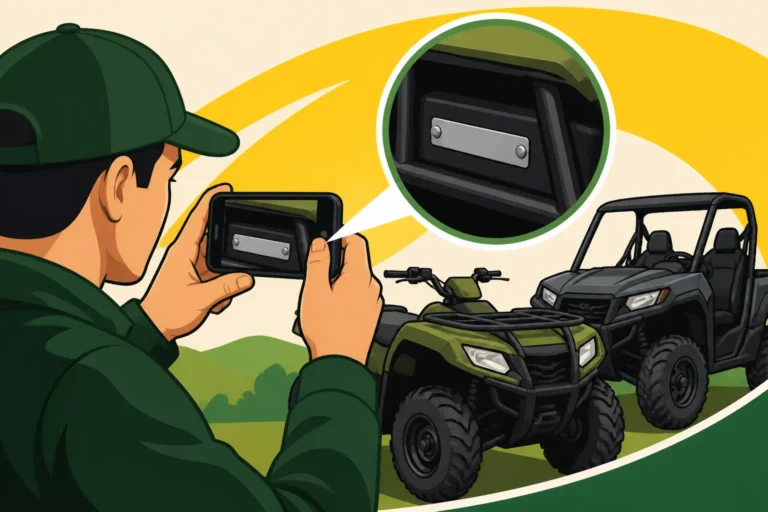
First, inspect the machine's VIN (Vehicle Identification Number) or serial number. This number is usually stamped on the frame in a visible location. Compare this number meticulously to the one listed on the seller's Alberta registration papers. If they don't match, or if the VIN appears tampered with, walk away immediately. It's a huge red flag. Take a photograph of the VIN yourself when you're there. [Checking a Serial Number Twice Before You Pay] is critical for your protection.
Second, request to see the seller's valid government-issued ID and compare the name on it to the name on the Alberta registration document. A legitimate seller should have no problem providing this. Again, inconsistencies are a cause for concern. If the machine is registered in a business name, ask for proof of ownership for the business and that the person selling it is authorized to do so.
Third, and perhaps most importantly, ask for a lien search. In Alberta, you can perform a Personal Property Registry (PPR) search online to check if there are any financial liens (like outstanding loans) attached to the ATV's VIN. This is a small fee, but it's an invaluable safeguard. Imagine driving all the way home to Saskatchewan with your new quad, only to find out it's technically still owned by an Alberta bank! The Alberta seller should be able to provide you with a clean search, or you can run one yourself for peace of mind. Without this, you could inherit someone else's debt.
The All-Important Bill of Sale
Even though Alberta uses registration, for your purposes in Saskatchewan, the bill of sale remains the most critical document for proving ownership. This document needs to be comprehensive and legally sound. Don't rely on a hastily scribbled note on a napkin.
A strong bill of sale should include:
- Date of sale: The exact day the transaction takes place.
- Full names and contact information of both buyer and seller: Including addresses and phone numbers.
- Detailed description of the ATV/UTV: Make, model, year, colour, and most importantly, the full VIN/serial number.
- Purchase price: The agreed-upon amount, clearly stated.
- Statement of "as-is" condition: This protects the seller, but it's good for you to know the terms.
- Seller's guarantee of ownership: A statement from the seller confirming they are the legal owner and the machine is free of encumbrances (liens, outstanding debts).
- Signatures of both buyer and seller: And ideally, a witness or two, though not always mandatory for validity.
You can find excellent templates for a bill of sale online. Resources like LawDepot offer templates that cover all the necessary legal bases, ensuring you don't miss any critical details. Having a proper, thorough [Saskatchewan Bills of Sale for a Quad] will be your ultimate proof of ownership back home. Make sure you get two copies, one for you and one for the seller.
Handling the Alberta Registration (or Lack Thereof)
This is where the Alberta system directly interacts with Saskatchewan's lack of one. When you purchase the ATV, the Alberta seller should, by law, remove their license plate and cancel the registration associated with the machine. This is crucial for them to avoid liability and for you to ensure a clean break from Alberta's system.
Ask the seller to provide you with proof that they have either initiated the cancellation of their Alberta registration or that they have already done so. They should be able to show you a receipt or confirmation from an Alberta registry agent. If they haven't done it yet, make it a condition of the sale that they will provide this proof to you within a specific timeframe after the transaction.
For your records, you’ll want a copy of their cancelled Alberta registration document. While you won't be using it to register anything in Saskatchewan (because [Saskatchewan Does Not Register ATVs]), it still acts as part of the machine's history and further validates the chain of ownership. This documentation, alongside your comprehensive bill of sale, will form your complete [Saskatchewan ATV Paperwork for a Buyer].
Bringing Your New-to-You Quad Home to Saskatchewan
Once the handshake is done and the paperwork is signed, the next hurdle is getting your new ATV or UTV from Alberta to Saskatchewan and making sure it's properly accounted for in our province, particularly regarding taxes.
Transporting Your ATV Across Provincial Lines
Hauling your new machine home usually involves a truck and a trailer. Before you hit the road, ensure your trailer is properly registered and insured. Alberta will require this for any trailer on their roads. Once you cross into Saskatchewan, the same rules apply. Make sure your trailer's lights are working, and the machine is securely tied down. You don't want any surprises from law enforcement on your journey.
Remember that while you won't have an ATV plate in Saskatchewan, you are still bound by the rules of the road for transporting vehicles. This means ensuring your load is safe, secure, and doesn't pose a hazard. If you're pulled over, the officer will be interested in your trailer's compliance and the safety of your cargo, not whether your ATV has a plate.
Navigating Saskatchewan Sales Tax (PST & GST)
This is a common point of confusion for many Saskatchewan buyers, especially when buying out of province. The general rule is that even if you buy a used ATV or UTV from a private seller outside of Saskatchewan, you are still obligated to pay Saskatchewan Provincial Sales Tax (PST) and federal Goods and Services Tax (GST) if you bring it into the province for use.
Here's a breakdown of how it typically works:
- PST (Provincial Sales Tax): Saskatchewan has a provincial sales tax rate that applies to most goods and services. When you purchase an ATV privately from an Alberta seller and bring it into Saskatchewan, you are expected to self-assess and remit the PST on the purchase price. There's no provincial registry to automatically collect it, so it's your responsibility to do so. This is a common requirement for vehicles brought into the province. The exact amount will be based on the purchase price listed on your bill of sale. [Saskatchewan PST at Purchase] is something many people overlook.
- GST (Goods and Services Tax): This is a federal tax that also applies to most goods and services in Canada. Similar to PST, when you purchase from a private seller, you are typically responsible for remitting the GST on the purchase price. However, there's a specific exemption under the GST rules that often applies to used goods sold privately, which may mean GST isn't applicable in some private sale scenarios. It's always best to verify the latest regulations from the Canada Revenue Agency or a tax professional for clarity on [Saskatchewan GST at Purchase].
To remit PST, you'll need to contact the Saskatchewan Ministry of Finance – Revenue Division. They will guide you through the process of declaring your purchase and paying the tax. It’s important to do this promptly after bringing the machine into the province to avoid any penalties. Think of it as your civic duty to ensure your new machine is properly accounted for in the provincial tax system. [Saskatchewan ATV Sales Tax Rate] and [Saskatchewan Tax on a Private ATV Sale] are resources worth consulting.
Here's a simplified table comparing tax obligations for new vs. used ATVs:
| Item | New ATV (Dealer Purchase) | Used ATV (Private Sale, In-Province) | Used ATV (Private Sale, Out-of-Province) |
|---|---|---|---|
| Saskatchewan PST | Yes, collected by dealer | Yes, buyer self-assesses & remits | Yes, buyer self-assesses & remits |
| Federal GST | Yes, collected by dealer | Usually No, if used goods exemption applies | Usually No, if used goods exemption applies |
| Who Collects/Remits | Dealer collects both | Buyer remits PST to province | Buyer remits PST to province |
| Bill of Sale Needed | Yes | Yes | Yes (crucial for PST) |
Note: Tax regulations can be complex and change. Always verify current rates and rules with official government sources or a tax professional.
Post-Purchase To-Dos for Peace of Mind
You've got your machine home, the bill of sale is in hand, and you've handled the taxes. Now what? There are a couple more crucial steps to ensure your ownership is solid and you're ready to safely and legally hit the trails or get to work.
Securing Your Saskatchewan Proof of Ownership
Since Saskatchewan doesn't have a central registry for ATVs, your "proof of ownership" relies heavily on the documents you’ve diligently collected. It's not a single card or title like you might get for a car. It's a combination of key paperwork that tells the story of who owns the machine.
Your primary proof will be the detailed bill of sale from the Alberta seller. This document, particularly if you used a robust template from LawDepot, clearly states the transfer of ownership to you. Keep this original safe! It's your most important record.
In addition to the bill of sale, keep copies of:
- The seller's cancelled Alberta registration: This shows the machine was properly removed from their provincial system.
- Any lien search results: Demonstrating a clear title at the time of purchase.
- Proof of PST payment: Your receipt or confirmation from the Saskatchewan Ministry of Finance.
It's a good practice to keep these documents organized in a safe place, both physically and perhaps a digital scan. When you're out riding, especially on Crown land or in provincial parks, a peace officer might ask for proof of ownership. While they understand there's no "registration" here, having your bill of sale handy can prevent a lot of questions. [How to Prove You Own an ATV in Saskatchewan] is a challenge many riders face, but having these documents helps immensely.
Getting Your Machine Insured
While Saskatchewan doesn't require provincial registration, it absolutely requires ATVs and UTVs to carry liability insurance. This isn't just a good idea; it's a legal requirement under The All Terrain Vehicles Act. Many people assume their home or auto insurance will cover their ATV, but this isn't always the case, or the coverage might be insufficient.
You'll need to contact an insurance broker to obtain a standalone ATV insurance policy. This policy should include at least the minimum liability coverage mandated by the province, which is usually $200,000. This protects you in case you are found at fault for an accident that causes injury or property damage to others. Beyond liability, you might also consider additional coverage such as:
- Collision and Upset: Covers damage to your own ATV in an accident.
- Comprehensive: Covers damage from non-collision events like theft, vandalism, fire, or weather.
- Agreed Value: Ensures you get a specific amount if your ATV is written off.
Having proper insurance protects your investment and ensures you're riding legally. Make sure to get an insurance card or proof of coverage that you can carry with you when you ride. [Saskatchewan Insurance Requirements for Riders] are non-negotiable, and it’s important to understand your [Saskatchewan Insurance Costs Per Year] when budgeting for your new machine. Don't wait until you're about to hit the trails; get your insurance sorted as soon as your machine is safely in your possession.
Disclaimer
This article is for general informational purposes only and does not constitute professional advice. Laws, prices and regulations vary by location and change over time. Consult a qualified professional for guidance on your specific situation.