Getting Written Permission From a Farm Landowner
Few things are as frustrating as having a perfect riding day planned, only to realize you have no idea if you're legally allowed to be on that promising stretch of land. Many riders mistakenly assume that if land isn't explicitly posted with "No Trespassing" signs, it's fair game for their ATV or UTV. This assumption can lead to serious legal trouble, fines, and strained relationships with landowners. This guide will walk you through why getting written permission from a farm landowner in Saskatchewan is not just a good idea, but a critical step, and how to go about securing it respectfully and effectively.
Why Written Permission Isn't Just Good Etiquette – It's Essential
Out here on the prairies, the landscape can feel open and endless, but almost every inch of it has an owner. Whether it's a vast agricultural operation, a family farm, or a smaller hobby acreage, that land is someone's private property. Blithely riding across it without permission is not only disrespectful; it carries real legal risks that can put a serious damper on your off-road adventures.
Understanding Saskatchewan's Trespass Laws
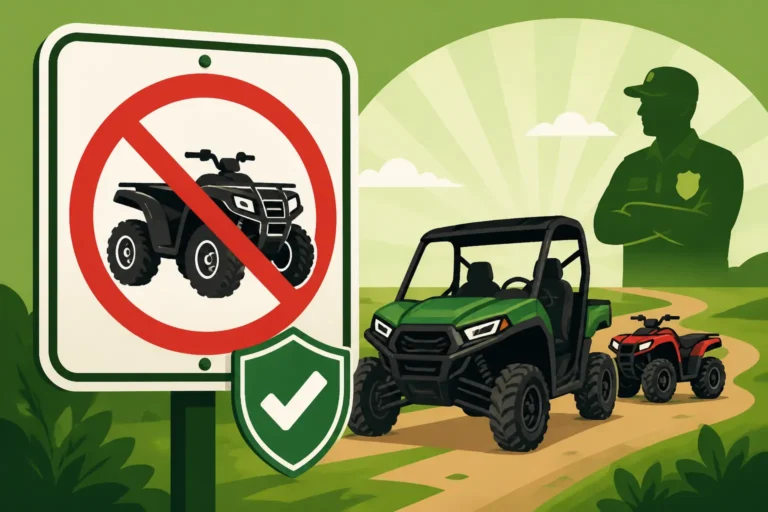
In Saskatchewan, our trespass laws are quite clear: land is considered private property, and you generally need permission to be on it. It doesn't always need a fence or a "No Trespassing" sign to be off-limits. Imagine a farmer who relies on their fields for their livelihood; an unexpected quad tearing through a canola crop could cause significant damage, even if unintended. This is why having explicit permission is so crucial.
The consequences of trespassing can range from a polite request to leave to more serious actions. A landowner has the right to ask you to vacate their property, and if you refuse, they can contact law enforcement. Peace officers have the authority to issue fines, and in some cases, your machine could even be subject to seizure and impoundment. Beyond the immediate legal repercussions, there's the long-term damage to the reputation of all ATV and UTV riders in the community. One bad apple can spoil the bunch, making it harder for others to secure permission in the future. We've talked about this before in [Saskatchewan Trespass Law for Riders].
Protecting Yourself and Your Ride
Think of written permission as your legal shield. Should you ever encounter a misunderstanding while riding on private land, a signed document in your pocket can clear up any confusion immediately. It demonstrates that you've done your due diligence and that you are a responsible operator, rather than someone just taking advantage of an open space. This is particularly important if you're exploring areas that might look unused but are still actively part of a farm's operations or grazing leases.
Beyond just avoiding a trespass charge, having written permission offers a layer of protection regarding liability. If an accident were to occur while you're riding on someone else's land, questions of liability can quickly arise. While a landowner may still hold some responsibility for their property, your unauthorized presence could complicate any claims. Furthermore, some insurance policies might have stipulations regarding riding on private land without explicit permission. Ensuring you have that written consent helps to protect not only you from potential legal issues but also the landowner from unexpected burdens, making it a win-win for everyone involved. [Saskatchewan Owner Liability Rules] also delves into scenarios where owners can be held responsible for riders' actions, highlighting the importance of clear agreements.
The Art of Approaching a Farm Landowner for ATV Access
Successfully securing permission often comes down to how you approach the landowner. This isn't about being sneaky or entitled; it's about being respectful, clear, and understanding of their perspective and priorities. They are granting you a privilege, not fulfilling an obligation.
Researching the Land and Its Owner
Before you even think about knocking on a door or making a phone call, do a little homework. Try to identify the actual landowner. Sometimes, land that looks like prime riding territory might be leased to someone else, or the person living in the farmhouse isn't the owner. Local municipal offices often have maps or assessment rolls that can help you identify property owners. If that's not feasible, a quick chat with long-time locals might point you in the right direction. Knowing who you're talking to and what type of farming they do can help you tailor your request respectfully.
Timing is everything in farming. Never approach a farmer during peak busy seasons like seeding in the spring or harvest in the fall. Their days are long, stressful, and every minute counts. Approaching them when they're trying to get a crop in or off the field is a sure-fire way to get a quick "no." The off-season, perhaps late fall after harvest or in the quiet of winter, is often a much better time when they might have a few minutes to spare and consider your request without feeling rushed or bothered. Remember, their farm is their business, and showing respect for their schedule is paramount.
What to Include in Your Permission Request
When you do make contact, whether in person or over the phone, be prepared with clear and concise information. Start by introducing yourself, explaining why you're calling, and expressing your respect for their property. Clearly state what you're asking for: "I'd like permission to ride my ATV on your property for recreational purposes," or "I'm hoping to access some hunting grounds that require crossing your land."
Be specific about your machine and your intentions. Provide your name, contact information, and details about your ATV or UTV, including its make, model, and even the VIN if they ask for proof of ownership – this shows you're transparent and responsible. Explain where you'd like to ride (e.g., "along the treeline on the north quarter," or "to access the bluffs near the river"), when (specific dates or a general timeframe), and why (e.g., recreational riding, hunting access, game retrieval). Address potential concerns upfront: assure them you'll drive slowly, be mindful of noise, respect all gates and fences, and stay clear of crops and livestock. You might even mention that your machine is equipped with responsible riding accessories, like a SuperATV winch for self-recovery or a sturdy cargo box to ensure nothing falls out, showcasing your preparedness.
Crafting Your Written Permission Agreement
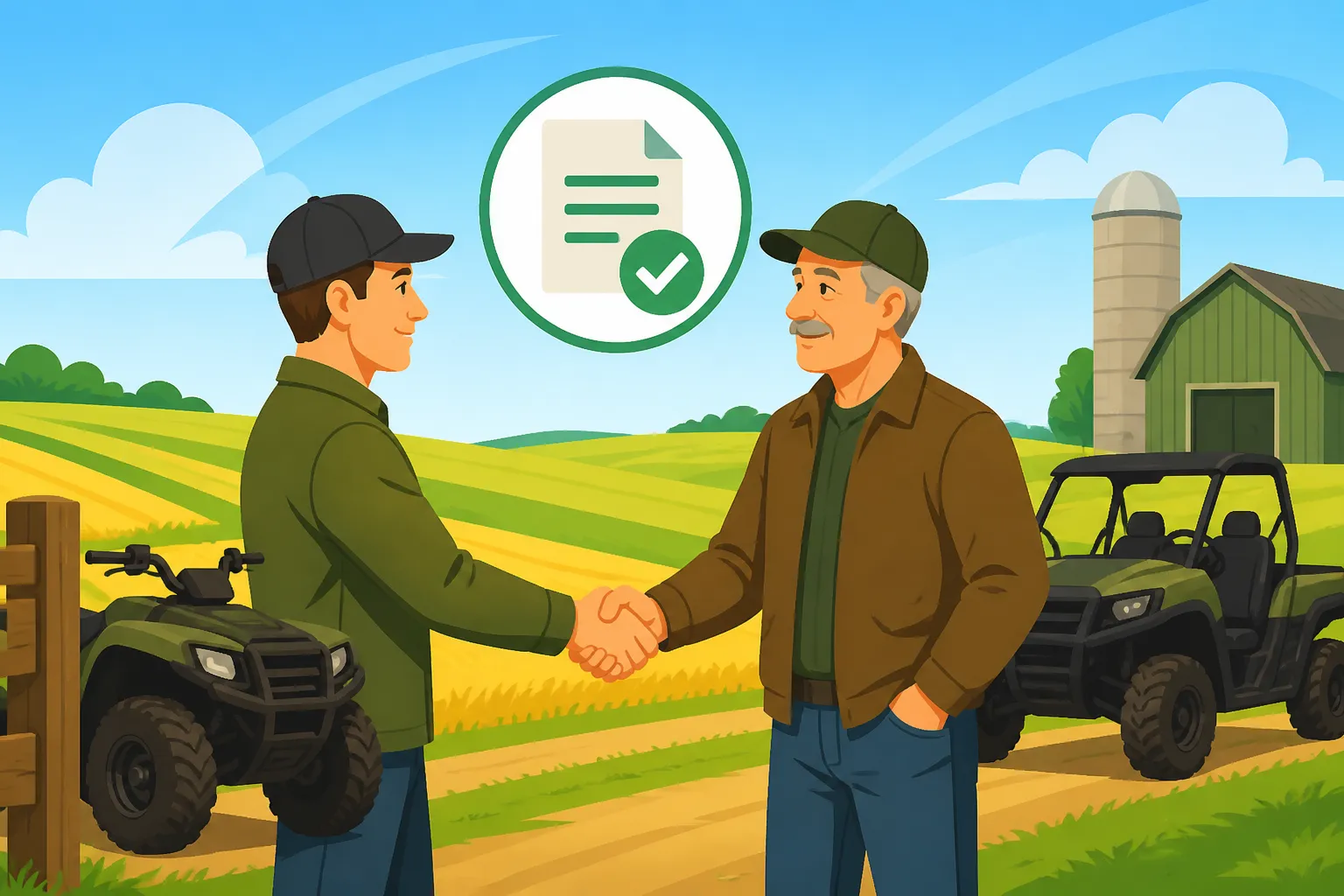
Once you've had a positive conversation and the landowner seems amenable, the next step is to put it in writing. This protects both you and the landowner by documenting the terms of your agreement. It removes ambiguity and provides a clear reference point if questions arise later.
Key Elements of a Solid Permission Letter
A good written permission letter doesn't need to be a complex legal document, but it should cover the essential details. Start with the date, your full name and contact information, and the landowner's full name and contact information. Crucially, include a clear description of the property – a legal land description (e.g., NW 1/4 Sec 14, Twp 25, Rge 18, W2M) is ideal if you can get it, or a clear physical description that leaves no doubt.
Next, specify the duration of the permission. Is it for a single day, a weekend, a hunting season, or perhaps indefinitely until revoked? Clearly outline any agreed-upon restrictions:
- Areas: Are you allowed on all parts of the property or only specific sections?
- Times: Are there certain hours or days when riding is prohibited?
- Conditions: For example, "stay on existing trails only," "no riding near livestock," "close all gates," "no riding in cultivated fields," "carry a shovel for fire prevention."
It's also a good idea to include a simple statement about liability, acknowledging that you understand and accept the risks associated with riding on their property. This doesn't entirely absolve the landowner of all responsibility, but it shows good faith. Finally, ensure both you and the landowner sign and date the document, and make two copies so each party has an original. For clarity, here’s a quick comparison of verbal versus written permission:
| Feature | Verbal Permission | Written Permission |
|---|---|---|
| Clarity | Prone to misunderstanding, forgotten details | Clear, documented terms and conditions |
| Proof | Your word against theirs | Tangible evidence for law enforcement or disputes |
| Scope | Often vague on areas, dates, or restrictions | Specifies exactly where, when, and under what rules |
| Liability | Ambiguous, harder to defend positions | Provides a record of understanding, helps define risk |
| Relationship | Can be strained by disagreements | Fosters trust through clear communication |
| Reproducible | Not easily shared or referenced | Multiple copies ensure everyone has the same document |
This document effectively stands in for what might otherwise be recorded on a [Saskatchewan Machines Used on a Farm] or [Saskatchewan Private Land Permission] form if there were a provincial registry for ATVs. Since Saskatchewan doesn't have one, this letter is your proof of legal access.
Maintaining a Positive Relationship for Future Access
Getting permission once is great, but maintaining that relationship for future access is even better. The key here is to consistently be a responsible and respectful rider. Always adhere strictly to the terms you agreed upon in your written permission. If they said "stay on existing trails," do exactly that, even if that tempting shortcut through a grassy field looks harmless. [Reading Posted Land Signs Before You Unload] is a good habit to extend to understanding the nuances of private land.
Closing gates, avoiding disturbing livestock, not littering, and reporting any issues you notice (like a broken fence or a downed tree) go a long way. After you've used the land, a simple thank you note or even a small gesture like offering to help with a minor chore can reinforce the landowner's decision to grant you access. A real-life scenario: I once knew a rider who was granted access for hunting. He always made sure to share a bit of his harvest with the farmer and would offer to help mend fences or haul some firewood in return. That simple act of gratitude ensured he had access for years. On the flip side, leaving garbage or damaging property will almost certainly result in your permission being revoked, not just for you, but potentially for anyone else hoping to ride there in the future.
Practical Tips for Riding on Permitted Farm Land
Now that you've got your permission in hand, it's time to hit the trails! But remember, riding on private farm land requires a heightened sense of responsibility. You're a guest, and your actions reflect not just on you, but on all ATV and UTV riders.
Being a Responsible Rider on Private Property
First and foremost, always carry your written permission letter with you, along with your identification and proof of insurance. If you encounter the landowner, another person on their property, or even law enforcement, being able to quickly produce your documentation can prevent misunderstandings. [Carrying Papers on a Grid Road] highlights the importance of having your documents readily available, and the same principle applies here.
Stick to the routes you discussed. If the landowner said "stay off the fields," then stay off the fields, even if they look dry and firm. Avoid riding in wet areas, as ruts can cause significant damage and erosion that takes time and effort for the farmer to repair. Be mindful of noise, especially near residences or where livestock are present. Respect any specific instructions, like observing fire bans, which can be critical during dry seasons. Equip your machine for responsible use; a well-maintained ATV or UTV with proper tires and a spark arrestor is a must. Accessories like a SuperATV recovery strap or a small first-aid kit also show you're prepared for unexpected situations and can handle minor issues without needing assistance from the landowner. For those using their machines for hunting, understanding [Saskatchewan Hunting Access by Machine] and [Saskatchewan Game Retrieval by Machine] is crucial, and permission from the landowner is the first step.
Handling Unexpected Encounters
It's not uncommon to encounter other people on a large farm property. This could be farmhands, family members, other recreational users with their own permission, or even the landowner themselves checking on things. Your best approach is always to be polite, friendly, and respectful. Slow down, stop your machine, and greet them. Explain that you have permission to be there and offer to show your letter.
Sometimes, people might be understandably wary of unfamiliar machines on their land. A calm, respectful explanation can quickly diffuse any tension. Avoid getting defensive or argumentative, even if you feel you're in the right. Remember, you're representing yourself and the entire riding community. A positive interaction can reinforce the landowner's trust, while a negative one can jeopardize your future access and that of others. By being prepared, carrying your written permission, and maintaining a respectful attitude, you can ensure your rides on private farm land are safe, enjoyable, and free of unnecessary stress.
Disclaimer
This article is for general informational purposes only and does not constitute professional advice. Laws, prices and regulations vary by location and change over time. Consult a qualified professional for guidance on your specific situation.